When you spend every day working on a farm, you tend to get caught up in whatever needs fixing or what needs to get done next.
In today’s rapidly changing world, economic resilience is crucial. For farmers and agricultural workers, diversifying their income sources can be a key strategy in achieving financial stability and success. By exploring alternative and supplementary revenue streams, these individuals can better adapt to market fluctuations, climate change, and other challenges. As a part of this series, we had the pleasure to interview Todd Olander.
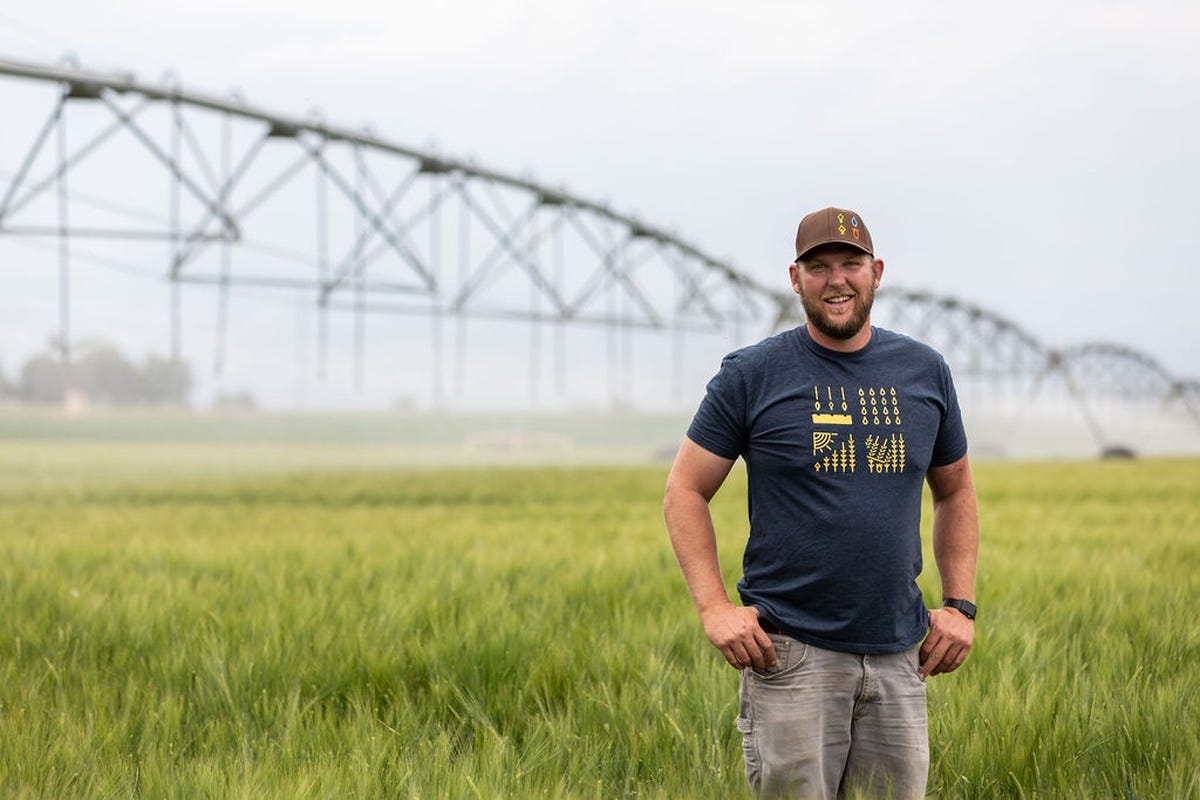
Todd Olander is a fifth-generation Colorado farmer and first-generation maltster whose family celebrated 100 years of Olander Farms in 2026 and currently farms approximately 1,500 acres in Northern Colorado. In 2016, Todd founded Root Shoot Malting, a craft malthouse in Loveland, Colorado, connecting his family’s farm to the craft beverage industry and later expanding into whiskey production with Root Shoot Spirits. Through regenerative farming practices, livestock integration, and value-added agriculture, Todd is focused on improving soil health, conserving water, promoting traceability, and keeping the family farm viable for future generations.
Thank you so much for joining us in this interview series! Before we dig in, our readers would like to get to know you a bit more. Can you tell us a bit about your “backstory”? What led you to this particular career path?
My family’s farming history in Colorado goes back to 1887, when my ancestors immigrated from Sweden and purchased farmland near Longmont. On the other side of my family, my great-great-grandparents, W.D. and Effie Saulcy, purchased our current farm in Loveland in 1926. Between the two families, there’s quite a bit of agricultural history. I grew up working alongside my dad, Steve, who started a custom harvesting business in 1980. While most kids in high school were saving up for a car, I bought a combine. It was a 1983 New Holland TR85 that cost me $18,000, and my grandmother co-signed the loan. I started doing some custom harvesting of my own and officially joined the family farming operation in 2006. Our family has grown malting barley for major breweries for decades. We have records of barley being harvested for Coors as early as 1945, and my dad continued growing for Coors and eventually Budweiser. As I became more involved in the farm, I started looking at what the future of agriculture in Northern Colorado might look like. Development was taking up farmland, water was becoming more valuable, and opportunities to expand our farming operation were getting harder to come by. At the same time, Colorado’s craft beer industry was growing rapidly. We had the land, the equipment, and generations of experience growing barley. In 2016, we built Root Shoot Malting on the family farm and began supplying malt directly to craft breweries and distilleries. In 2023, we released our first whiskey under Root Shoot Spirits. I still spend most of my time farming, although my job description has gotten considerably longer over the years.
Can you share the most interesting story that happened to you since you began this fascinating career?
I’d probably have to go with what happened this year. We celebrated 100 years of our family farm, 10 years of Root Shoot Malting, and our American Single Malt Whiskey was named Whisky of the Year at the 2026 London Spirits Competition. The building site where our malthouse now stands was once used to raise pigs. My family raised around 900 pigs a year for several decades, and today we’re producing award-winning malt on that same property. I find it pretty fascinating to look at how much the farm has changed within my dad’s lifetime alone. He went from raising hogs and growing sugar beets to watching his son build a malthouse and start a whiskey company.We’ve spent generations growing barley for other people’s beer. Now we get to see our name on the grain bags, beer menus, and whiskey bottles. That’s been a pretty rewarding experience for our family.
You are a successful leader. Which three character traits do you think were most instrumental to your success? Can you please share a story or example for each?
Curiosity. I’m constantly researching something. Right now, much of my interest is in soil biology, plant nutrition, and how we can grow crops with fewer inputs. We’ve set up field trials comparing biological products, compost extracts, and untreated areas to see how the plants respond. I enjoy getting into the details and figuring out why something works. Occasionally, the results challenge something I’ve believed about farming for years. Willingness to take risks. There’s quite a history of that in our family. Family stories recall my great-great-grandfather bringing one of Colorado’s earliest self-propelled combines to the state, and his son purchased one of the early John Deere Model D tractors. Those were significant investments at the time. Building Root Shoot Malting was probably my version of that. We purchased specialized equipment from Germany, built a facility, and entered a completely unfamiliar industry. Looking back, I’m glad we took the chance, although there were certainly some expensive lessons along the way. Adaptability. This past growing season was a good example. Some of our farms had approximately seven days’ worth of irrigation water available for the entire season. We had to abandon much of our winter barley and make decisions about alternative crops and forage production. We’d already invested time and money into those crops, which made those decisions difficult. Farming requires you to reassess things pretty regularly, sometimes on a daily basis.
Can you please give us your favorite “Life Lesson Quote”? Can you share how that was relevant to you in your life?
“The only constant in life is change.” Farming has taught me that pretty well. Markets change, technology changes, the weather rarely cooperates, and what worked five years ago may no longer make sense today. Looking back at our family’s 100-year history on this farm, every generation has had to make some pretty significant changes to keep the operation going. For my dad, that meant building a custom harvesting business. For me, it meant starting Root Shoot Malting and, more recently, rethinking how we farm altogether. I’m sure some of the decisions we’re making today will be questioned by the next generation, and I hope they are. I’d like to think we’re leaving them with a farm they can continue to build upon and the freedom to do things differently.
Can you share something about your work that makes you most proud? Is there a particular story or incident that you found most uplifting?
In 2022, my parents and I permanently conserved 112 acres of our family farm through a conservation easement with Colorado Open Lands. That includes our historic homestead and the property where Root Shoot Malting operates. My parents rented the farm for 25 years before purchasing it from the family estate in 2001. Knowing how hard they worked to keep the property in our family made protecting it particularly meaningful. This summer, we received our Centennial Farm designation and hosted a celebration at Root Shoot. We spent quite a bit of time going through old family photographs, researching the history of the farm, and putting together a historical walking tour. There are still marks in our old barn floor from the steel wheels of one of my ancestors’ tractors. The houses were built in 1918, the barns in 1920, and my parents live in the same house where my grandmother grew up. When you spend every day working on a farm, you tend to get caught up in whatever needs fixing or what needs to get done next. Having an opportunity to stop and appreciate everything that happened here before us was pretty special. I’m proud that we’ve been able to keep the farm going, build Root Shoot, and protect a piece of agricultural ground in an area that’s changing incredibly fast.
Ok super. Let’s now shift to the main part of our discussion about ‘How Farmers And Agricultural Workers Diversify Their Income Streams’. This might be intuitive to you but it will be helpful to expressly spell this out. Can you share with our readers why this has become a necessity?
The economics of farming are tough, particularly for a family operation in an area like Northern Colorado. When we were researching our farm’s history for our centennial celebration, we came across the original purchase price. In 1926, my great-great-grandparents paid $20,000 for 72 acres, or approximately $278 an acre. Today, irrigated farmland along Colorado’s Front Range can easily sell for $15,000 to $30,000 an acre or more. The price of the crops we grow hasn’t kept pace with those increases. Add in equipment, labor, fertilizer, fuel, interest rates, and water, and it becomes increasingly difficult to justify purchasing farmland based on what you can earn from growing crops on it. Historically, farmers have addressed shrinking margins by becoming more efficient and farming more acres. We have limited opportunities to do that here. Much of the land we farm is leased, and we’re competing with development for both land and water. Root Shoot Malting came about because we needed to find more value in the crops we were already growing. We had decades of experience producing malting barley, and there was a growing craft brewing industry practically in our backyard. Processing our own grain gave us access to a different market and more control over what we could earn from it. Diversification certainly comes with its own risks. We’re now exposed to the ups and downs of the beer and spirits industries, in addition to agriculture. We’ve seen firsthand how quickly those markets can change, too. For our family, continuing to develop different sources of income is an important part of keeping the farm financially viable.
What are the most common barriers that farmers and agricultural workers face when trying to diversify their income streams?
Access to capital is a big one. Most farmers already have a considerable amount of money tied up in equipment, land, and operating expenses. Taking on another business can require substantial borrowing, and it may be several years before that investment generates a return. There’s also a tremendous amount of learning involved. When we opened Root Shoot, we had to learn the science behind malting, how to operate a manufacturing facility, how to maintain consistent quality, and how to package and distribute our products. Then we had to find customers. We had spent our careers growing grain, and suddenly we needed a sales and marketing team. The labor requirements are different, too. Finding someone who can operate a combine and finding someone who can manage a commercial malting system are two very different hiring processes. Time is another consideration. Agriculture is demanding enough on its own. Starting a new business while continuing to manage a farm can put a lot of pressure on a family and its employees. I’d encourage farmers to spend a considerable amount of time evaluating the market and understanding the financial requirements before committing to something new.
How have government policies and regulations impacted the ability of farmers and agricultural workers to diversify their income? Are there any specific policies or programs that support or hinder this process?
We’ve benefited from Federal grant programs, which has helped us develop and expand markets for Root Shoot Malting. Marketing agricultural products is expensive, particularly when you’re a small producer competing against established national and international companies. There are also opportunities through conservation programs, and state-level initiatives. We’re currently exploring State tax credit programs as we continue to incorporate different soil health practices and livestock grazing into our crop rotations. I’d like to see more financial support for farmers during the transition to regenerative farming practices. Changing a farming system can involve purchasing different equipment, establishing cover crops, installing fencing, conducting soil tests, and accepting some uncertainty around yields. The benefits may take several years to materialize, and farmers need to be able to afford that transition. Regulations become considerably more complicated when you diversify into processing or manufacturing. Food safety requirements, zoning, building permits, alcohol regulations, and distribution laws all come into play with the businesses we’ve developed.Navigating these things takes a lot of time, and small agricultural businesses rarely have the resources to employ someone solely to manage regulatory compliance and grant applications.
How can farmers and agricultural workers access information, resources, and support to help them explore and implement new income streams?
I’ve learned a lot from visiting other farms and talking with people who are willing to share what they’re doing. Field days and agricultural conferences are particularly valuable because you can see things firsthand and ask questions. Extension groups, local conservation districts, and federal/ state departments of agriculture are good resources. There are also industry-specific organizations that can be incredibly helpful. The Craft Maltsters Guild, for example, has connected us with other small malthouses facing many of the same challenges we are. I also think it’s worth looking outside your own industry. We spent a lot of time getting to know brewers when we started exploring malting. Understanding their businesses helped us determine what we needed to produce and what kind of service we needed to provide. If you’re considering growing a specialty crop or developing a new product, talk to potential buyers early. Find out what they’re currently purchasing, what their quality requirements are, and what they’re willing to pay.
How have cooperatives, partnerships, or collaborations played a role in helping farmers and agricultural workers diversify their income? Can you share any examples?
Root Shoot has given us the opportunity to work with people throughout the craft beverage industry, and those relationships have influenced quite a bit of what we do on the farm. Brewers and distillers have different needs when it comes to their ingredients. Working directly with them has given us opportunities to explore different barley varieties, wheat, rye, oats, and corn, and develop malt products around those grains. We’ve also worked with New Belgium Brewing and Downforce Technologies on a project evaluating soil organic carbon across our farmland. Soil testing and data collection can be expensive, and having a customer interested in investing in that research has allowed us to gain a better understanding of our farming practices. I’d love to see more relationships like that between farmers and the companies purchasing their agricultural products. Root Shoot Spirits is another good example. We work with a distilling partner to produce our whiskey using our farm-grown grain and malt. Building our own distillery would have required another significant investment in equipment, facilities, and personnel. Working with an established distiller gave us access to their expertise and infrastructure. We’ve found that collaboration can make some fairly ambitious projects much more manageable for a family farm.
How can sustainable practices and the increasing focus on environmental conservation create new opportunities for farmers and agricultural workers to diversify their income streams?
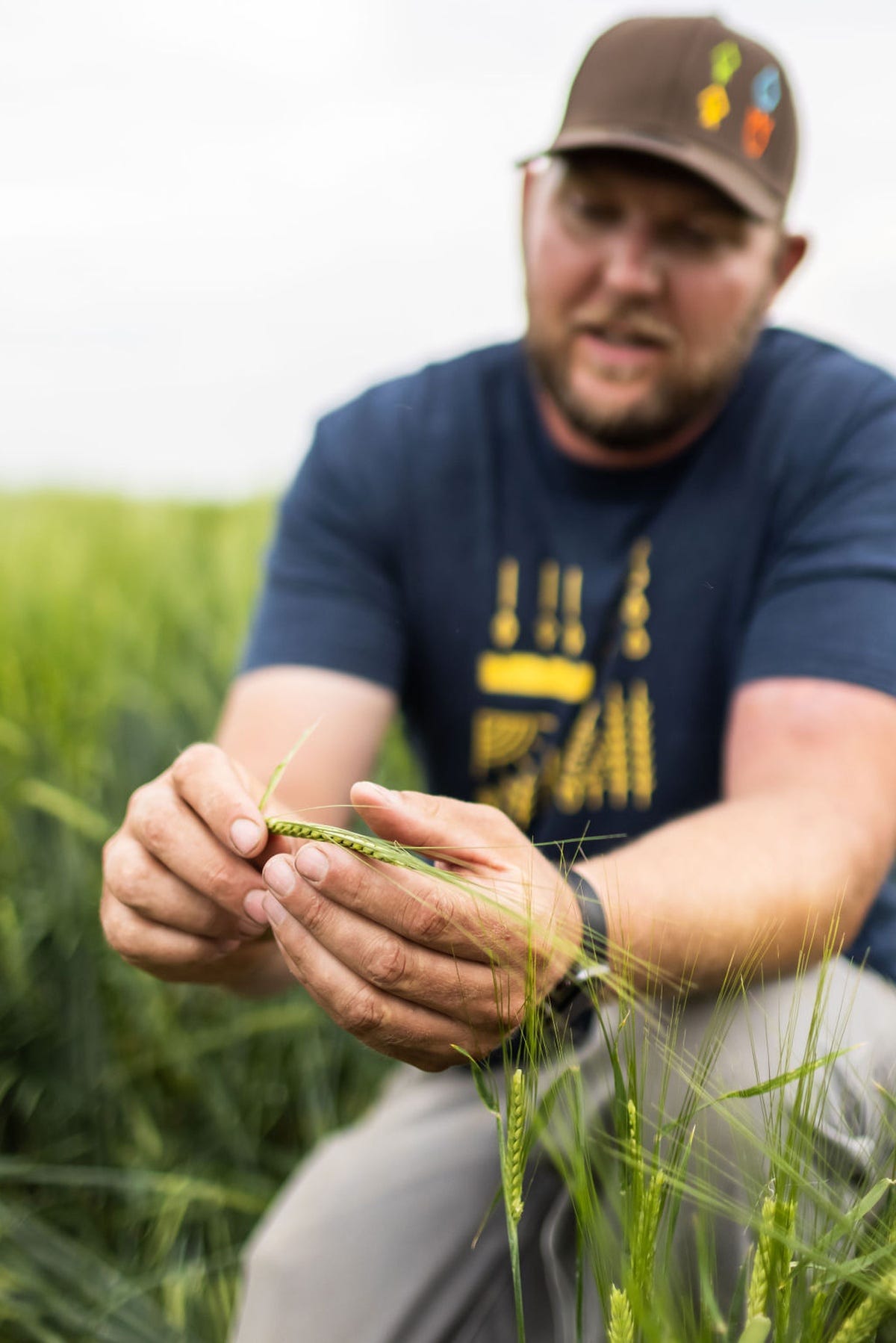
One of the interesting things about researching our farm’s history was seeing how closely crops and livestock were integrated for much of the past century. My ancestors raised cattle and pigs alongside their grain crops. They fed beet pulp from local sugar factories to their livestock and used crops grown on the farm to produce feed. There was a practical reason to make use of everything they had. We’re finding ourselves coming back to some of those ideas. My dad still raises Wagyu-Angus cross cattle, and we feed them rootlets removed from the barley during the malting process. Those rootlets are a nutritious byproduct of Root Shoot Malting, and we have a use for them right here on the farm. We’re also incorporating more rotational grazing into our cropping system. After harvesting winter barley, we can establish a cover crop and graze cattle on that acreage later in the season. That creates another productive use for the ground while returning nutrients to the soil. We’ve been experimenting with perennial grains, reduced tillage, biological soil amendments, and ways to reuse water from our malting process. We’ve also earned Regenified certification, which helps document our farming practices for Root Shoot customers. There’s potential for additional income through livestock, regenerative grain premiums, conservation incentives, and emerging environmental markets. Reducing our dependence on purchased inputs could also have a significant impact on profitability. I’d like to see more food and beverage companies make long-term purchasing commitments to farmers implementing these practices. Having a dependable market for regeneratively grown grain would give farmers more confidence to invest in the changes necessary to produce it.
In what ways can farmers and agricultural workers leverage their expertise and experience to offer value-added products or services, such as agritourism, farm-to-table events, or educational workshops?
We’ve found that people are genuinely interested in visiting a working farm. Things that seem fairly ordinary to us can be completely new to someone who has spent their life living in a city. Most summers, we host a Field Day at Root Shoot. We bring in breweries and distilleries that use our malt, offer tours of the malthouse, have people pick sweet corn, and spend the day sharing what we do with our community. This year’s event was particularly meaningful because we celebrated the farm’s centennial and Root Shoot Malting’s tenth anniversary. We incorporated a historical walking tour around the property, which gave people an opportunity to learn about the families, buildings, crops, and livestock that were here long before the malthouse. We also host brewers throughout the year. Some have worked with malt their entire careers and have never stood in a barley field or seen how their malt is produced. Those visits are valuable for us because we get to know our customers and learn more about their businesses.
How do you foresee the role of urban farming and vertical farming in the future of agriculture, and what opportunities might these present for farmers and agricultural workers to diversify their income streams?
Some days, I joke that we’re practically urban farmers ourselves. Northern Colorado has grown tremendously, and we’ve watched subdivisions pop up around fields we’ve farmed for decades. Farming alongside a growing population comes with its challenges, particularly when it comes to land prices, water availability, and moving equipment down increasingly busy roads. There are advantages to being this close to urban communities, though. Much of Root Shoot’s success can be attributed to our proximity to Colorado’s craft breweries, distilleries, and consumers. Having that market nearby has allowed us to diversify in ways that might be more difficult in a rural area. I can see urban and vertical farming playing a greater role in producing fresh food close to consumers, particularly higher-value crops that require less space. The economics would be considerably different for the cereal grains we grow. I’m also interested in how traditional agriculture and urban farming might complement one another as our communities continue to grow. There are opportunities for sharing resources, agricultural expertise, and developing local markets. I just hope that as we explore new ways to grow food within our cities, we also recognize the importance of preserving the productive farmland that surrounds them.
Based on your experience and research, can you please share your “5 Ways Farmers And Agricultural Workers Diversify Their Income Streams”? If you can, please share a story or example for each.
1. See where your crop takes you.
We grew barley for the big guys for decades before deciding to make our own malt. That led to Root Shoot Malting, which eventually led to Root Shoot Spirits. I have yet to figure out how to diversify into something that requires less work. But seriously, there’s a lot of value in processing your own crops if you can find a market for them.
2. Utilize your equipment.
I bought my first combine in high school with the help of my grandmother. Who needs a cool car when you can have a 1983 New Holland? Custom harvesting was a source of income for our family for over 40 years. Equipment is expensive, so you might as well find ways to make money with it.
3. Put everything to work.
Our cattle eat the rootlets produced during malting and graze cover crops between growing seasons. Integrating livestock gives us another source of income, helps reduce waste, and contributes to soil fertility.
4. Have a beer with your customers.
Some of our best product ideas have come from conversations with brewers over a beer. Brewers are an experimental bunch, which keeps things interesting for a farmer. Get to know your customers, find out what they’re struggling to source, and see if you can grow it. Ideally, have that conversation before planting season.
5. Open the farm gates.
During the growing season, we somehow convince hundreds of people to spend their day touring a malthouse, looking at farm equipment, and picking sweet corn. Our annual Root Shoot Field Day has been a great way to connect with customers and build support for our products. Farmers tend to forget how interesting their everyday lives are to everyone else.
Is there a person in the world, or in the US with whom you would love to have a private breakfast or lunch with, and why? He or she might just see this, especially if we tag them. :-)
I’d have to go with Joel Gratz, the founder and meteorologist of OpenSnow. As a Colorado farmer who also loves to ski, I spend an unhealthy amount of time checking the weather. In the winter, I’m rooting for snow for two reasons: powder days and next season’s irrigation water. I’d love to pick his brain about Colorado’s weather patterns, forecasting, and the future of our snowpack. I’d happily trade breakfast for a beer made with our barley. After all, we both have a vested interest in a good snow year.
How can our readers further follow your work online?
Most people know our family farm through Root Shoot Malting and Root Shoot Spirits. We share quite a bit about what’s happening on the farm, the crops we’re growing, our soil health projects, and the beer and whiskey being made from our grain. You can find us online at: Root Shoot Malting: www.rootshootmalting.com Root Shoot Spirits: www.rootshootspirits.com We’re also active on Instagram and Facebook under both Root Shoot Malting and Root Shoot Spirits. For anyone particularly interested in agriculture, we share regular #ToddTalkTuesday updates where I talk about what we’re doing in the fields, what we’re experimenting with, and some of the challenges we’re working through.
This was very meaningful, thank you so much, and we wish you only continued success.
Thank you for taking an interest in our family and what we’re doing here in Colorado! We appreciate any opportunity to get people talking about agriculture and the future of family farms.
About The Interviewer: Martita Mestey is a thought leader in the sustainable agriculture and AgTech space, dedicated to revolutionizing the industry and creating a more equitable and sustainable food system. As the founder of FarmdOut, Martita is passionate about utilizing advanced technology and time-tested research to address the ecological challenges facing farmers today. With a focus on mapping all the farms in the US and Puerto Rico using satellite imagery, computer vision, sensor tech, and GIS, FarmdOut provides comprehensive information for farmers to make data-driven decisions about their crops, optimize land use, and improve sustainability. Martita is also a champion for farmer well-being, working to address burnout and promote resilience in the industry. She is dedicated to preparing the next generation of farmers for success, emphasizing the importance of diversity, innovation, and sustainable practices. Martita’s mission is to share her knowledge and expertise through the interview series, inspiring and encouraging others to join the movement towards a healthier and more sustainable food system.