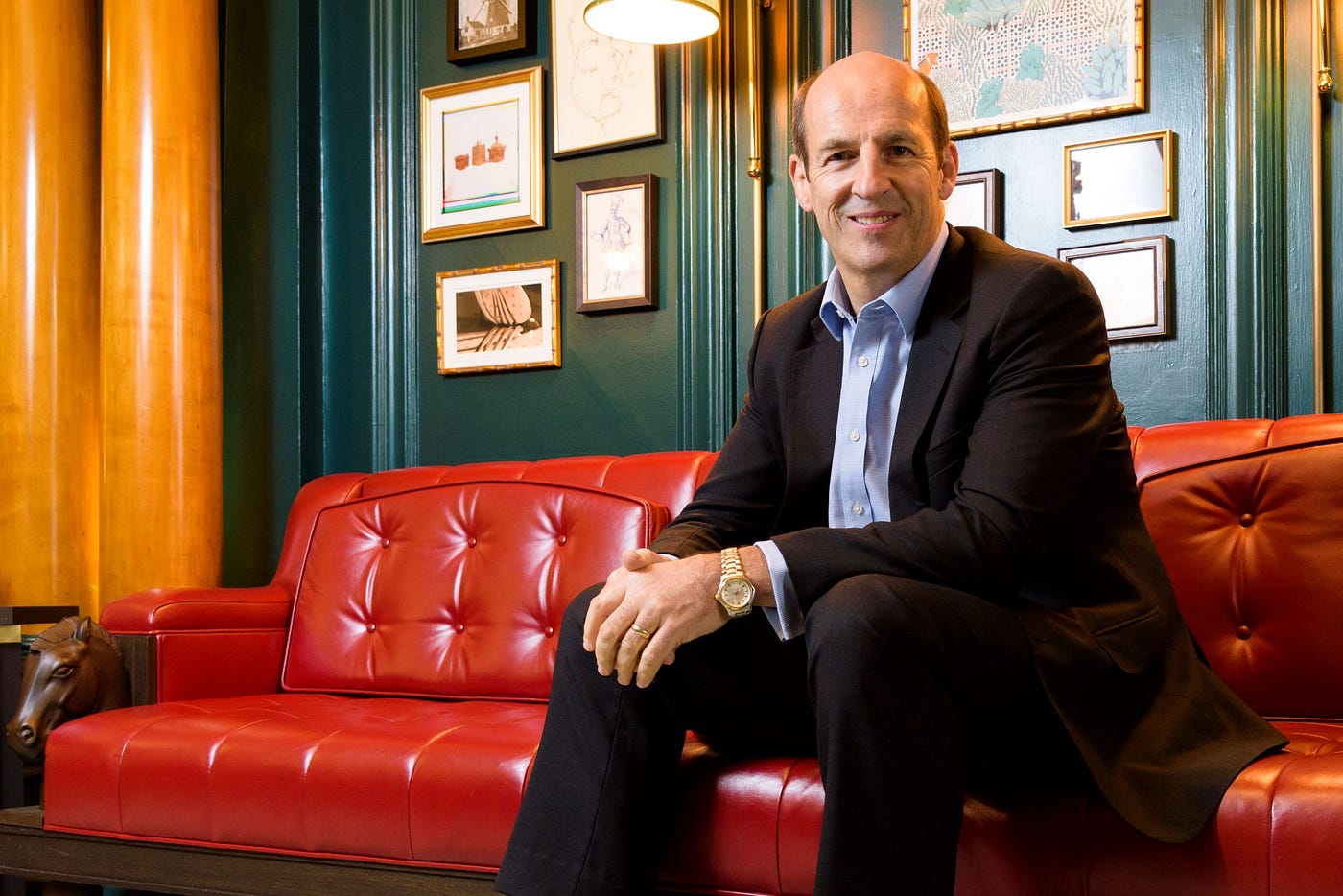
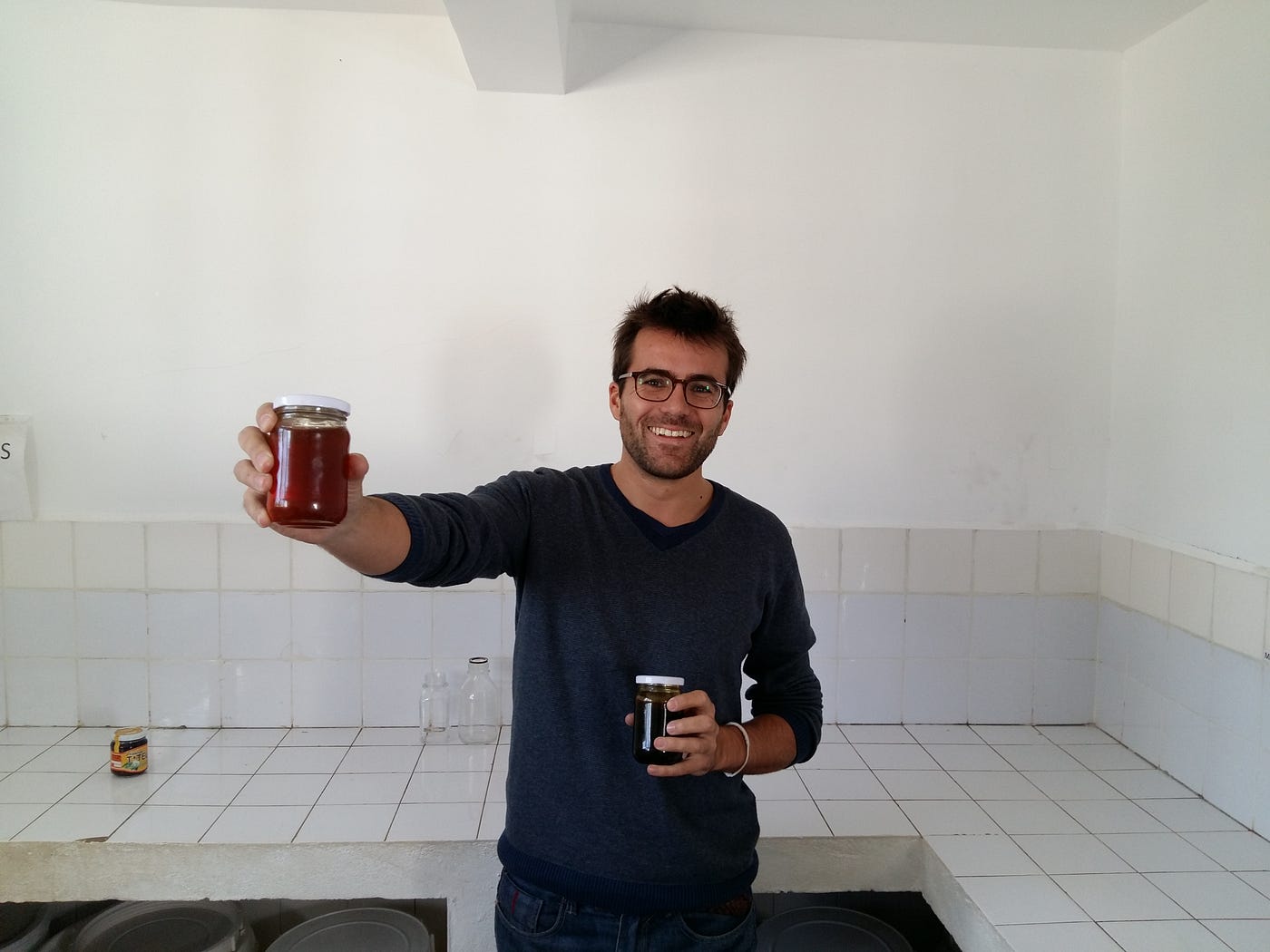
Thibaut Lugagne Delpon trains local beekeepers to become entrepreneurs whilst respecting the fascinating biodiversity of Madagascar which allows him to produce exotic, unusual and, crucially, sustainable honeys. He graduated from NEOMA business school in 2012 with a Masters in Strategy and Entrepreneurship and went on to co-found Compagnie du Miel in 2017.
Social Impact
Thibaut Lugagne Delpon: How Training Local Farmers in Madagascar to Become Beekeepers Transforms Biodiversity and Eliminates Poverty
The co-founder of Compagnie du Miel explains how reconciling profit with generosity can empower rural farmers while protecting the unique biodiversity of Madagascar.
Thank you so much for doing this with us! Can you share with us the story of how you decided to pursue this career path?
First of all, Compagnie du Miel is a social business. It is more than just a company making honey. We train local farmers in Madagascar to become beekeepers by giving them financial and technical support. I discovered the country six years ago, after an aborted entrepreneurial experience in Singapore. Within a few hours, I flew from one of the richest places on earth to one of the poorest. Upon my arrival in Madagascar, my job was to create a new type of low-cost convenience store, for people who didn’t have enough money to shop at historical supermarkets. I created 30 stores and discovered the power of combining social development with sustainable profitability.
From then on I decided to promote that way of building business. A few people in France call it “l’économie bienveillante” (kindness economy): reconciling profit and generosity, finance and business, profitability and social cohesion. I am here to prove that it is not only possible, but it is the future and the world our children will live in.
What makes Madagascar the perfect home for La Compagnie du Miel?
Madagascar is one of the most preserved countries on earth, and the fourth biggest island. The country has been standing apart from the rest of the world for such a long time that its biodiversity is unique. 80% of flowering plants cannot be found elsewhere on Earth.
Being a developing country and a remote island, it has been preserved from intensive farming and pesticides. Only 3% of cultivated lands are affected. According to a study made by researchers from the University of Neuchâtel in 2017, 25% of honey produced worldwide is preserved from neonicotinoids (the most widely used class of insecticides globally). Madagascar is one of those preserved regions. Moreover, the climate is ideal for bees to gather nectar at different periods during the year. In a way, it is a paradise for bees!
Why does a country’s biodiversity improve its honey?
A bee can gather pollen from four billion flowers, in a radius of 3km around the beehive. It is equivalent to a surface of 28km² (1/4 of Paris!). The quality of the biodiversity is essential!
After a harvest, we analyse the concentration of pollen from each flower. In Europe, the pollen analysis is rarely more than 50% of the same variety of flower. In Madagascar, the area is so wide that we can have honey with a concentration of the same pollen of 80% or 90%! This is totally unique!
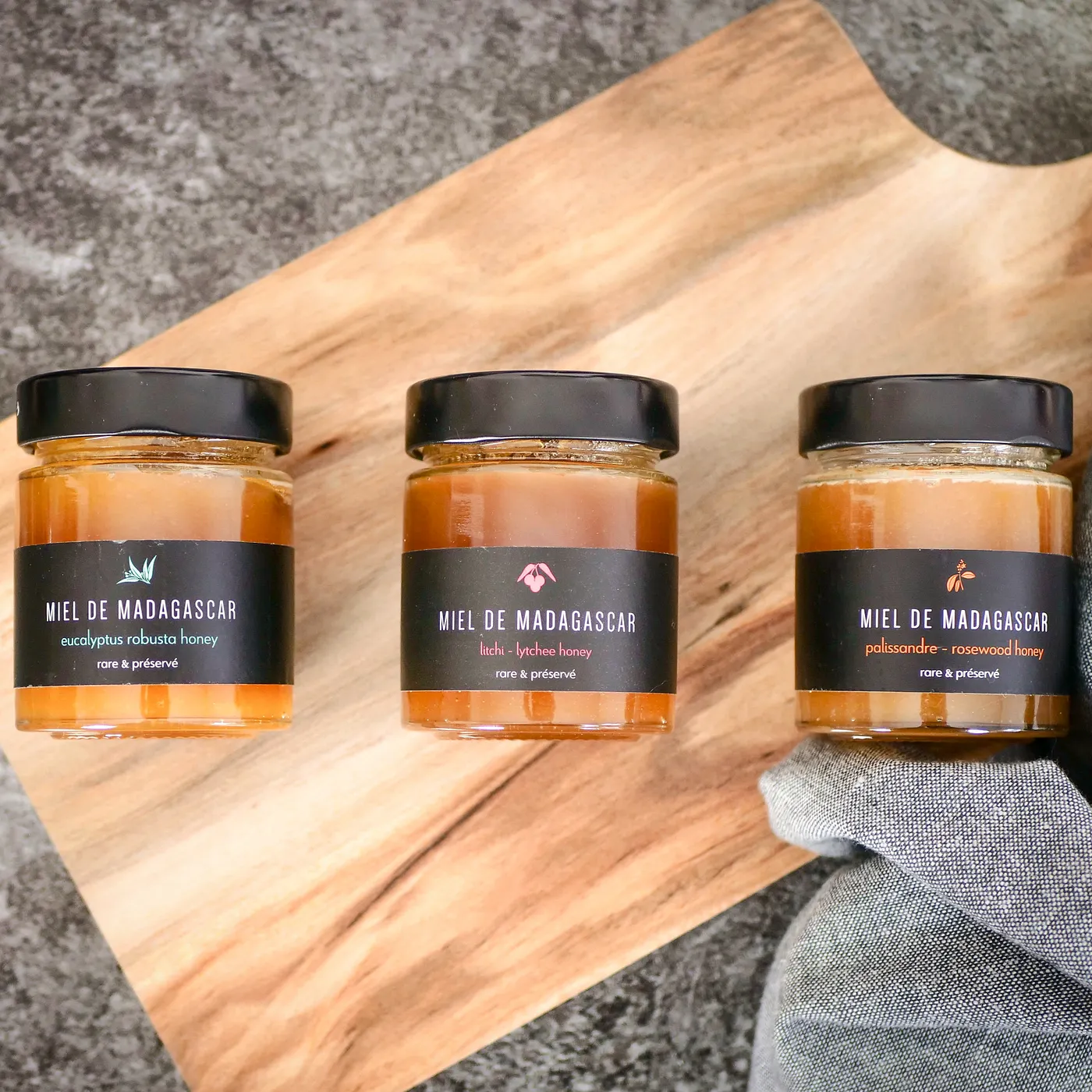
This amazing biodiversity helps us to produce exotic honeys, not found in occidental countries: lychee, mangrove, rosewood or jujube honey. These honeys are especially appreciated by chefs or fine food connoisseurs.
Our beekeepers live in remote areas with limited access to the traditional economy. They used to practice beekeeping in addition to rice or cassava cultivation, which is hard work and often a low source of income.
You are truly committed to the environment, what is the importance of sustainability?
Madagascar is very poor and more than 80% of the country’s original forest has been lost in the last few decades. The first role of a bee is to pollinate. The presence of a colony leads to an improvement of plant fertilisation from 20% to 25%. By promoting beekeeping, we contribute to a sustainable and enriched biodiversity. We also raise awareness among local farmers and beekeepers of the importance of preserving their soil and the environment. Slash-and-burn agriculture is a very popular practise in Madagascar and cannot be pursued. Finally, we are working on a project of making “reforestation” honey. This multi-flower honey will take its source in reforesting projects that we are establishing with local associations.
Tell us about your beekeepers.
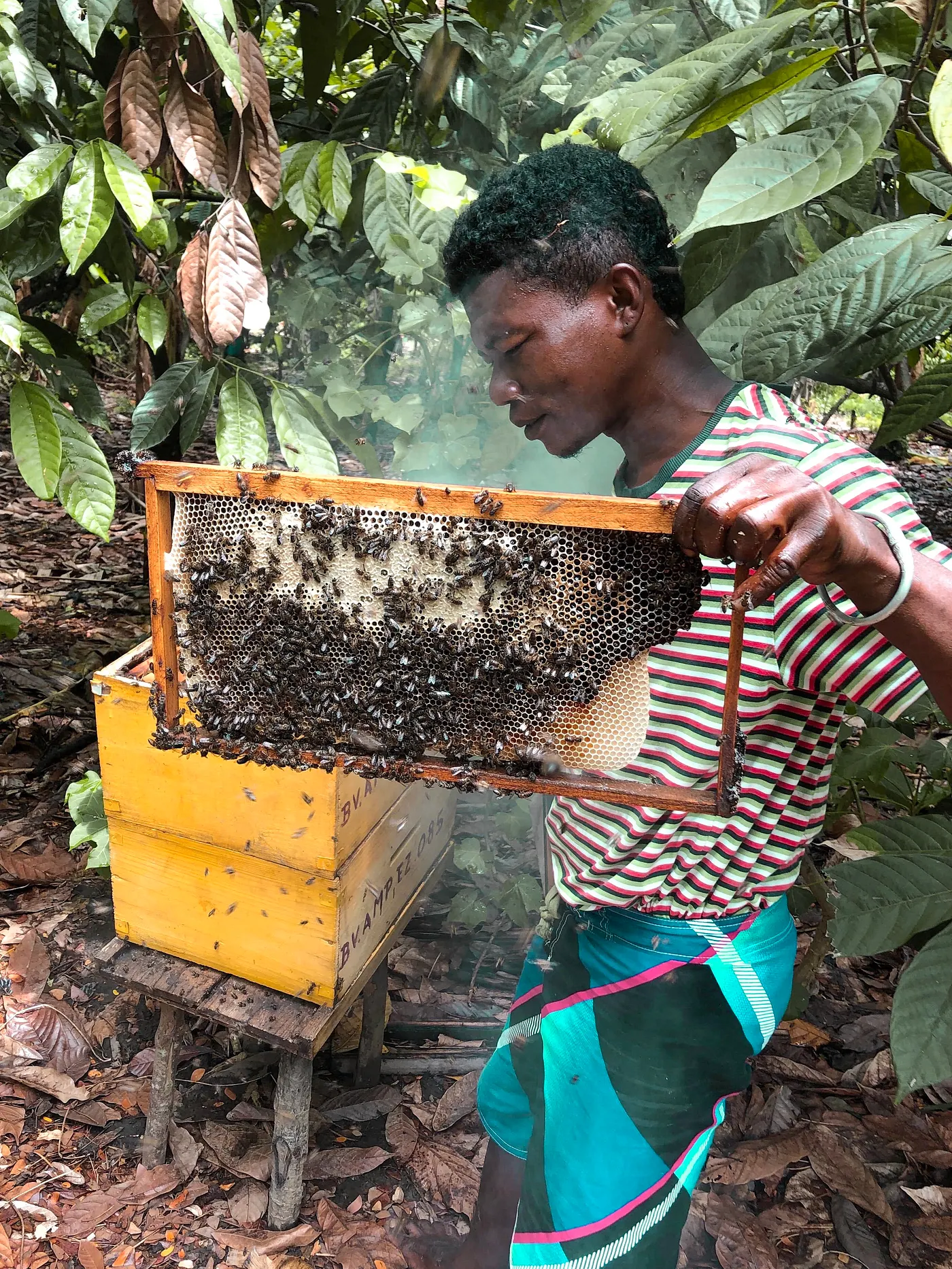
Our beekeepers live in remote areas with limited access to the traditional economy. They used to practice beekeeping in addition to rice or cassava cultivation, which is hard work and often a low source of income. Our social model is to train these farmers or small beekeepers and provide them with the knowledge, expertise, and skills to become entrepreneurs. With 20 beehives, a beekeeper can live above the poverty line. With 50 beehives, they reach the middle class.
We help them build strong and sustainable honey farms, hire people and reduce buyer dependence. In some way, we act like business accelerators in early and middle stages!
Do you face any challenges?
Our main challenge is accessing the beekeeping farms often located in very remote areas, in mountains or in the middle of primary forests. This increases costs and challenges our ability to coach all of our beekeepers. Tarred roads are rare and where they exist they are poorly maintained. During the rainy season, it can take more than ten hours to drive 100km!
Can you tell us about your collaboration with NGOs?
We work very closely with local and international NGOs and our partnerships are very important to our project. They support us in our development through funding and human expertise. Professional beekeepers from all over the world visited us to share their own knowledge and their vision of beekeeping. We are trying to adapt that vision to suit our production given our exotic environment.
We hear that bees are increasingly in danger of dying out, what does this mean for the future?
The honey supply is decreasing, the demand is rising, and bees are essential to pollination. The timing is critical, and we need to act to limit the colony collapse disorder. As of today, the main causes are under control in Madagascar, but we stay alert. Our production offers an alternative to the current crisis, but we are big supporters of beekeeping in the rest of the world, as far as they respect the environment and the artisanal technics. Pure honey is becoming rare and expensive and we can see a huge rise of illicit production channels, with false and mixed honeys. Beekeeping is an art and it has to stay like this.
Thanks so much!

Published inAuthority MagazineTop Lessons, Top Authorities · 42K Followers
Exclusive, curated interviews with the leaders and changemakers shaping tomorrow. Leadership lessons, industry deep dives, and executive profiles.