Our team is made up of seasoned practitioners who come from both the agency side and client side; we’re strategists, entrepreneurs, subject matter experts and creatives.
As a part of my series called ‘5 Ways To Leverage Media Coverage To Dramatically Grow Your Business’
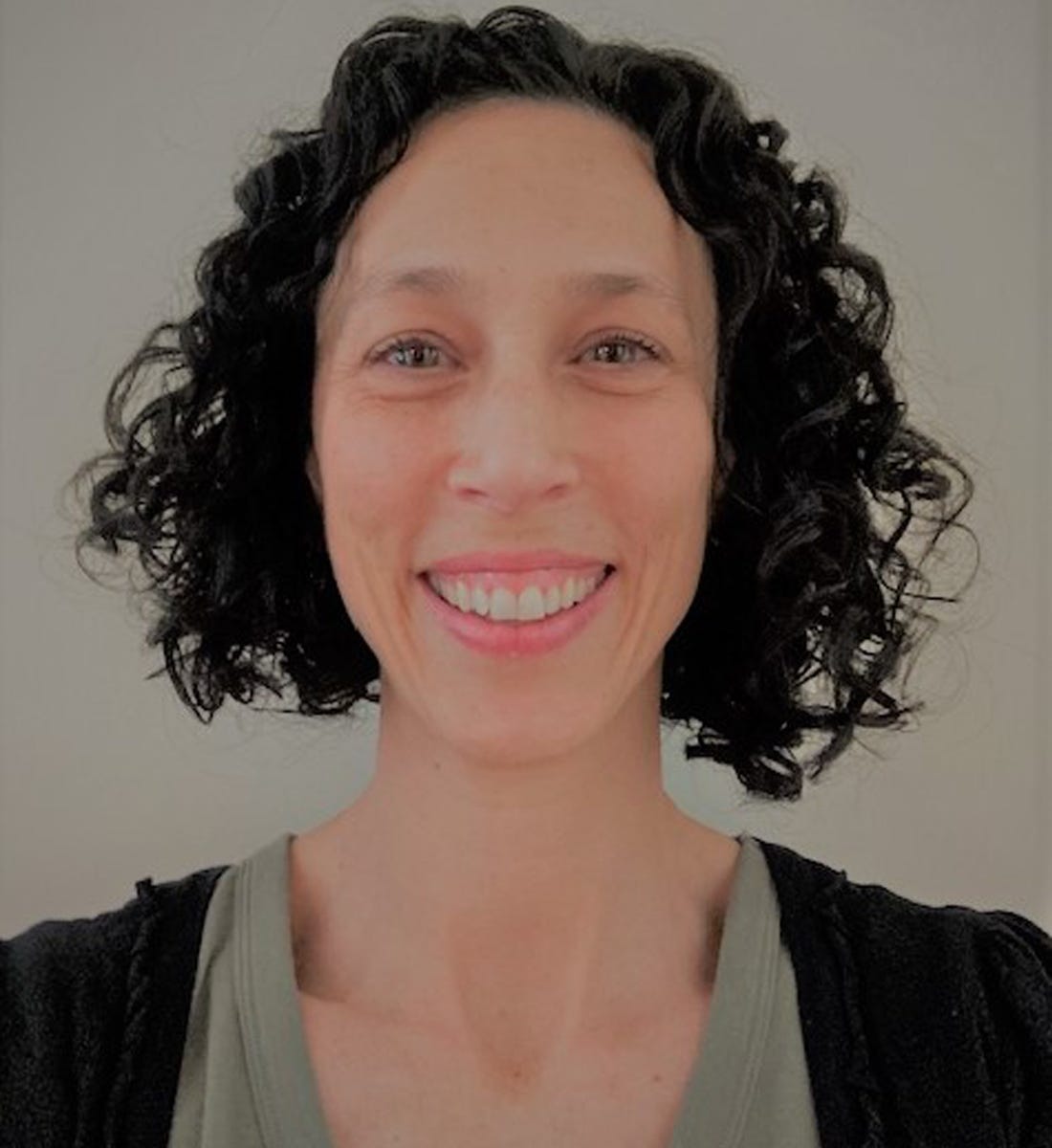
I had the pleasure of interviewing Tara Baumgarten, Head of Public Relations and Strategic Communications at //NKST.
Creativity is at the heart of everything we do. For Tara Baumgarten, creativity is a motto to live by; central to her communications approach that makes an impact and propels our clients to success.
As Head of Public Relations and Strategic Communications at //NKST, a growth acceleration agency, Tara leads the agency’s public relations and strategic communications competency. With a special emphasis on conference and media relations, she leverages powerful relationships with the most influential conference and media platforms; helping her clients reach new audiences and make valuable face-to-face connections. Tara’s clients have appeared on stage at the World Economic Forum, SXSW, the Aspen Ideas Festival and TED as well as in The Wall Street Journal, The New York Times and Forbes, to name a few. Relied upon for her strategic thinking and effective tactical implementation of programs, Tara is a creative thinker who works with corporate executives in myriad industries to help shape messages, drive perception, brings concepts to life and boost executive visibility to positively impact a company’s success.
Thank you so much for joining us in this interview series! Before we dive in, our readers would love to “get to know you” a bit better. Can you tell us a bit about your ‘backstory’ and how you got started?
I was a PR career switcher and found my way into the profession after stints in other adjacent industries. Prior to PR I’d been working in hands-on creative fields, newspaper, and TV, having worked at NBC/30 Rock. When I was pregnant with my first child, I knew an NYC commute was no longer for me and I looked for new opportunities closer to home, which is how I fell into PR. I literally started at the bottom, so low in fact they had to create a new job title for me that was more junior to account coordinator. That said, all of my prior experiences and all my transferable skills proved to be great schooling for a life in PR.
In your opinion, what separates your agency from others in the space?
What differentiates us from other agencies and consultancies are our people and our model. Our team is made up of seasoned practitioners who come from both the agency side and client side; we’re strategists, entrepreneurs, subject matter experts and creatives. Collectively, our experience is deep and diverse, and because we’re a highly skilled and seasoned team, our work is collaborative and connected, not siloed.
Unlike other agencies that tend to focus on a specific set of capabilities and solutions, often pushing the same approach regardless of the client’s specific needs or situation (after all, when you’re a hammer, everything looks like a nail), we’re solutions agnostic, meaning we’re not predisposed to what the solution should be. In that regard, I like to think of //NKST as the Swiss Army knife of agencies.
Lastly, we never bait-and switch. We don’t bring our leadership team to initial meetings only to pass our clients off to an entirely junior team after you decide to partner with us. We are true partners to our clients, with them every step of the way.
You are a successful business leader. Which three character traits do you think were most instrumental to your success? Can you please share a story or example for each?
A beginner’s mindset/curiosity
Stumbling into this field mid-career was humbling, to say the least. But being an “experienced newbie” worked to my advantage. My thinking was not constrained by things I’d just learned in school or a PR internship, and because of that I was able to question conventional thinking like why “it’s always been done this way” and challenge long-held PR beliefs, approaches and mindsets. My constant curiosity and exploration into PR strategies and tactics helped me uncover new approaches which, in turn, resulted in the creation of new products and services our clients find extremely valuable and that go above and beyond what you’d typically expert from an agency, like speaking and conference services, CX initiatives, graphic facilitation, strategy workshops, Salons, animated video production, etc.
An experimental – try things, fail fast, learn, iterate, improve – approach
The fields of PR, marketing and communications are constantly changing thanks to new technologies, new consumer behaviors, new ways of consuming information, etc. so we can’t rely on what’s worked in the past because that’s likely not what’s going to work in the future. At the same time, most agencies don’t have the time or bandwidth to carry out long drawn-out product and service experiments, so rapid prototyping is the way to go.
I love taking chances, trying different approaches, tinkering with new platforms and exploring new partnerships, and I find this recipe for experimentation to be what drives innovation and growth, both for our clients and our agency.
Thick skin
PR is not for the faint of heart. It’s a fast-paced, news-driven and “always-on” industry. It requires knocking on a lot of doors and hearing a lot of “nos” or, even worse, radio silence. Rejection comes with the job but it’s important to take that rejection, learn from it and adjust your approach moving forward.
Rejection from the media might also result in frustration from the client. The individual thought leaders and the companies you work with are emotionally invested in the success of the programs. When things don’t go according to plan, it’s our job to be empathetic listeners and strategic partners; guiding the client to the next solution to achieve the desired outcome.
Ok wonderful. Let’s now jump into the main part of our interview. If you had a local business, what 3 media strategies would you use to grow your customer base and why? (Please share a story or example for each.)
Local businesses have a local connection to the market in ways that “big businesses” don’t. So, any media strategy needs to be specific to the region and needs to reach regional stakeholders and community members -- those who might benefit from the product or service. In other words, know our audience and know your market.
For example, a few years ago I worked with a Philadelphia-based charter school that focused equally on STEM education and the arts. They had an opportunity to expand into the Jersey City market as part of plan to make Jersey City a technology innovation Hub that would be anchored by several large organizations and the Liberty Science Center. To demonstrate to the Town Council the regional interest in the school and their programs, and therefore potential enrollment, they needed to connect with the community in a variety of ways. To help them accomplish this, we did a few things:
We pursued local media to secure interviews with the school Principal who educated the community about the school, their philosophy and their goals for expansion in the region.
We then created letters from the Principal to regional boys and girls clubs, after school programs, STEM academies, Chamber of Commerce, local businesses, etc. introducing the Principal, the school and what they were hoping to accomplish.
From there, we set up a small event near the Science Center that served as a meet-and-greet, making school officers available for discussion and sharing fact sheets about the school.
Lastly, we walked the streets of Jersey City armed with a parent petition and information about the school. We gathered more than 100 signatures from interested parents/families demonstrating interest in the school and reach within the community.
How about a national brand? What 3 media strategies are typically most effective in generating more business for a national brand?
It really all depends on the type of business and their goals, but generically speaking, the “media” strategies I would recommend are a blend of owned, earned and shared media. It all starts with thought leadership and executive visibility strategies, creating a platform for the executive leaders and positioning them as the subject matter experts in their fields. This might be accomplished through a traditional media placement, but it might also be a keynote or panel speaking opportunity or even a Reddit AMA. Then taking that opportunity and merchandizing it through a variety of marketing and social media channels to maximize reach and exposure while creating valuable backlinks
Would your PR strategy change much if a client is selling a physical product or has a service-based solution? B2C versus B2B? If so, please share an example or two that might demonstrate any differences.
Though I’ve worked on both B2B and B2C programs, my focus is primarily B2B. With a foot in both worlds though, I can confidently say there are commonalities and differences in approach, such as:
Audience – Whether B2B or B2C, defining and prioritizing audience segments is table stakes, as is understanding the buyer journey and any pain points along the way.
Messaging – No matter the client, every program starts with messaging. Defining broad umbrella messaging as well as audience, industry or even regionally specific messaging is key to a successful campaign.
Tone of voice – While B2B companies have been experimenting with a more casual tone, it doesn’t translate as well as it does in the B2C realm. Going back to point #1, you need to know your audience intimately and how to speak their language.
Channel – This is where the biggest difference comes in. While the mechanics of media relations remain the same, the targets and intended outcomes are different as is the type of information that journalists require. For B2B, what matters most is the credibility of the company, the spokesperson and their expertise. Whereas, with B2C, it’s more about product features, price and customer sentiment.
If a business is already investing monthly in PR, what other marketing strategies would you recommend they invest in that best compliments that work to bring in the most amount of business?
Great question and my answer again is: It depends. As a PR practitioner I firmly believe in the power of PR, but a media placement is just the beginning. How you leverage that opportunity in the long-term is where the magic happens. As I mentioned earlier, we’re solutions agnostic so there are no pre-set marketing strategies that we recommend, because each company is unique and has its own set of opportunities, challenges and goals. And since there are so many variables that would dictate the strategy, I would first start with questions so we can develop the right strategy. For example:
What’s the specific vision for the business for the next 3–5-year time period? From a growth, revenue and profitability perspective?
What line of sight do they have with customer/consumer/client experiences with the business and perceptions of the brand?
Are there specific products or services they want to emphasize or particular markets that are primed for growth?
Who are the primary customers? How do they consume information? In what format? On what platforms?
What are the key messages those audiences need to hear?
Super. Thank you for that. Here is the main question of our interview. If someone has already been covered in the media, what are the best next steps after that? What are your “5 Ways To Leverage that Media Coverage To Dramatically Grow Your Business”? Please share a story or an example for each.
Beyond the basics of social media, the most effective ways to maximize media coverage are to:
Repurpose. Repurpose. Repurpose.
Once an article posts, there are numerous ways you can repurpose that content, and not just in the near term. To start, a post on LinkedIn with a nod to the journalist and a link back to their site. From there, the major themes of the article can be turned into a short video, either talking head or animated highlighting key points and messages, and cross-posted onto a company blog (with proper attribution to the original publication along with a back link and shout out to the journalist). And don’t forget partner channels too.
Speaking/Webinar/LinkedIn Live/Trade Shows - using the contents of the article as the basis for a discussion
Content and themes from the article can be converted into a speech topic for national, regional, virtual, social and local events. Article reprints can also be used as event giveaways or leave-behinds.
Don’t forget about your most important audience: your employees!
Launch an internal communications campaign that shares the latest executive thinking and thought leadership with company staff. This helps keep employees informed about organizational goals, priority products and services and key messages. This also provides a social media springboard as engaged employees tend to be vocal, external champions of the leadership and overall brand. I worked on a campaign with a major defense company that was trying to rally its employees around a new acquisition and product rollout. The resulting media coverage was used as part of an employee townhall and then repurposed for the company’s internal social media intranet.
Article reprints for a physical mailing
This one might seem old school, but sometimes what’s old is new again. Given the digital nature of the world we live in, getting something in the mail is novel and memorable – and something that can’t be replicated in the digital realm. After acquiring article reprint rights, you can reproduce the article as part of a creative direct marketing campaign that reaches your target audience. We’re doing this now with a client whose goal is to expand their market reach in specific geographics locations.
Yell it from the rooftop
Meaning take advantage of every owned channel at your disposal from your company blog to your social media channels, to the company newsletter, to the “news” section of your website to your podcast. Take full advantage of these “free” opportunities to promote any and all media coverage.
Like I said earlier, getting a media placement is just the first step in a long line of marketing opportunities. Do not underestimate the power of third-party credibility for your business and brand. Ensuring you have a robust process in place to repurpose media expose, and doing so quickly, will help maintain the momentum, excitement, awareness and lift that a brand or executive gets from a media placement.
You are a person of great influence. If you could start a movement that would bring the most amount of good to the most amount of people, what would that be? You never know what your idea can trigger. :-)
Honestly, I’d love to start a movement that shows everyone it’s OK to disagree. Different perspectives, approaches, mindsets, and belief systems are what makes the world go round and what pushes us to expand our thinking. It’s how innovation happens. It’s how creative ideas get even better. It’s how corporate and government policies are improved upon.
It’s possible to respect someone you disagree with. It’s possible to have a discussion where, at the end, you still don’t see eye-to-eye and yet it doesn’t erupt into a full-blown social media war or, even worse, an actual one.
We all want the same things in life – to be heard, loved, respected and to live freely and peacefully. We just all have different ideas on how to get there. Open and honest dialog, where both sides are truly listening to each other, is how we’ll get there.
I’ll get off my soap box now!
How can our readers further follow you online?
Twitter: @Big_Perm
LinkedIn: https://www.linkedin.com/in/tarazbaumgarten/
Thank you for sharing so many valuable insights with all of us today.
About the interviewer: Kage Spatz is a Forbes-featured 3x Entrepreneur -- most notably Spacetwin. Connect with Kage on Twitter & Linkedin to increase your influence and strengthen your network, anytime.