One of the most interesting things is that my design firm, Susan Strauss Design, was awarded an opportunity to design a portfolio of healthcare facilities which led me to starting my healthcare business, Venza Care.
Business
Susan Strauss of Susan Strauss Design: How Adapting Beyond Tile and Scaling a Global Firm Transformed Commercial and Residential Design
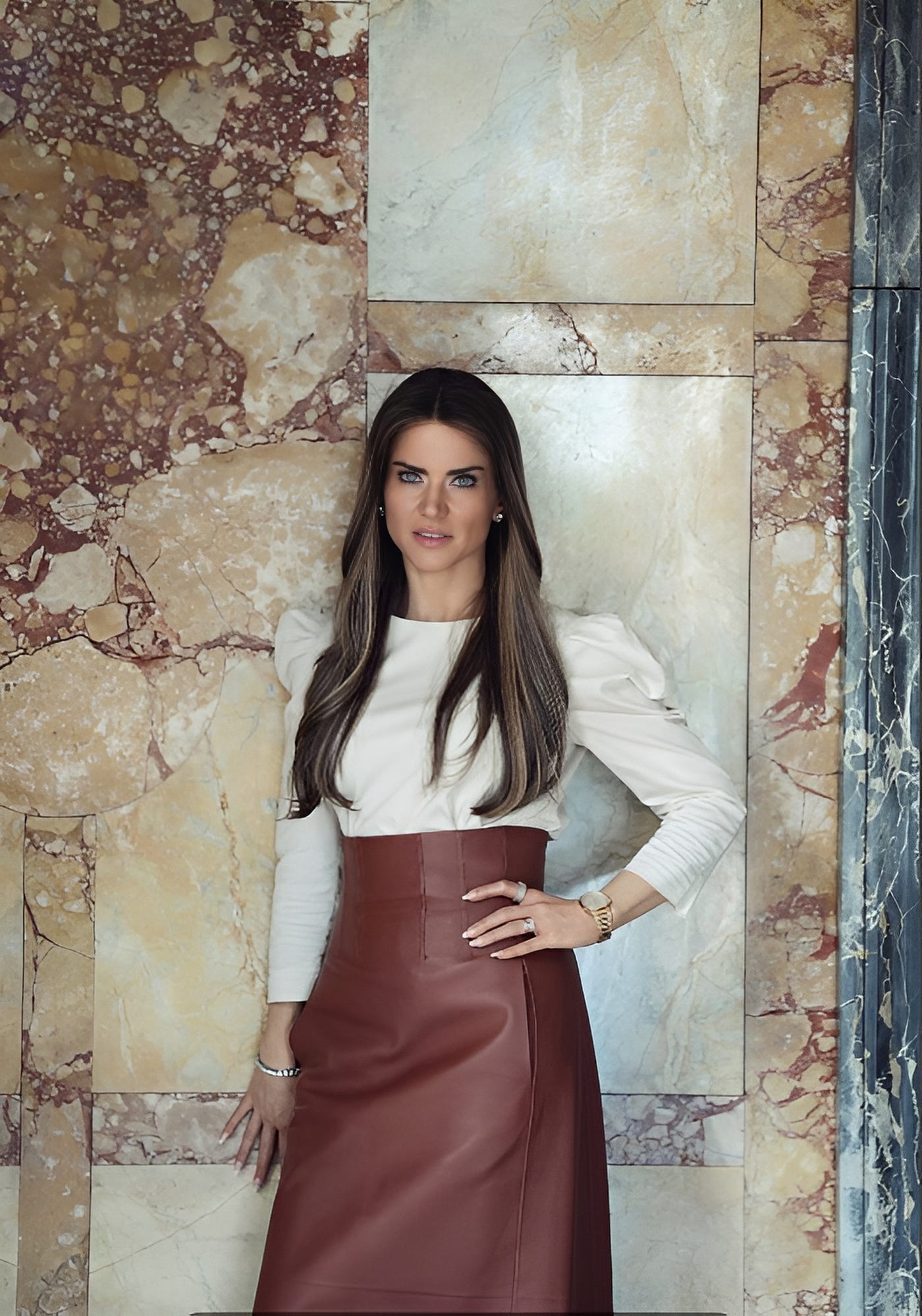
As a part of our series about Women Founders, we had the pleasure of interviewing Susan Strauss.
Susan Strauss is the Founder of Susan Strauss Design, a global residential and commercial interior design company renowned for its ability to combine elegance, functionality and personal expression. With an extensive portfolio spanning both residential and commercial projects, Susan’s work has been celebrated for its timeless elegance, innovative use of materials, and meticulous craftsmanship.
Susan Strauss Design has offices in New Jersey, New York, Long Island, Florida, and Israel.
Thank you so much for doing this with us! Before we dig in, our readers would like to get to know you a bit more. Can you tell us a bit about your “backstory”? What led you to this particular career path?
When I came to the US, I accepted the first job that came my way, which was at a tile store. I immediately fell in love with the work — getting to spend time amongst the beautiful tile and helping clients bring their visions to life. The owner of the shop noticed my enthusiasm and eventually offered me a partnership, recognizing both my design and business capabilities. As I worked with clients and developed relationships with them, many began asking me for my opinion on other projects that didn’t even include tile, so I started to take on side jobs during evenings and weekends, which allowed me to pursue my passion for design. Those side projects gradually expanded into larger opportunities, and eventually, they grew to the point where I was able to establish Susan Strauss Design.
Can you share the most interesting story that happened to you since you began leading your company?
One of the most interesting things is that my design firm, Susan Strauss Design, was awarded an opportunity to design a portfolio of healthcare facilities which led me to starting my healthcare business, Venza Care. I saw firsthand how the importance of design has an impact on the wellbeing of patients and their health. Two worlds that would be so different but have quite a lot of similarities in the importance of your environment, it’s interesting in how the personal relationships of healthcare and design have similarities.
Can you share a story about the funniest mistake you made when you were first starting? Can you tell us what lesson you learned from that?
One of the funniest stories I’ve experienced is that I had a sofa that wouldn’t fit up the staircase of a client’s New York home. I had to hire a crane company to come in and bring up the sofa through the balcony by taking off the door to get it into the home. It was a logistical nightmare, but in the end the client was happy, and it taught me the importance of adaptability and creative problem solving in the most unexpected situations.
None of us are able to achieve success without some help along the way. Is there a particular person who you are grateful towards who helped get you to where you are? Can you share a story about that?
My dad, he was by far the biggest cheerleader I had, he sadly passed away a year ago. He would always share my work with anyone and everyone that he would talk to.
Ok, thank you for that. Let’s now jump to the primary focus of our interview. According to this EY report, only about 20 percent of funded companies have women founders. This reflects great historical progress, but it also shows that more work still has to be done to empower women to create companies. In your opinion and experience what is currently holding back women from founding companies?
I think there are several factors that still hold women back from starting companies, despite the progress we’ve made. One major issue is access to funding remains a significant barrier. Many female entrepreneurs struggle to secure the necessary capital to start and scale their businesses, often due to a lack of representation among investors who understand and support their visions. When women don’t see others like themselves in positions of power, it can create a perception that such paths seem less accessible. The need for mentorship and support networks tailored to women entrepreneurs is critical, it provides the opportunity for female entrepreneurs to come together and share their insights, experiences and amplify female representation in leadership to create a more supportive community.
Can you help articulate a few things that can be done as individuals, as a society, or by the government, to help overcome those obstacles?
I would say, we [as a collective] can start by mentoring and supporting women who aspire to be entrepreneurs, taking the time to connect with future entrepreneurs by being able to support, share my experiences, learnings and challenges. I pride myself on creating an inclusive working environment where women are encouraged to innovate and take leadership of their initiatives. From a governmental perspective, policies that provide great access to funding for women-led businesses is crucial, including grants, low-interest business loans, or tax incentives specifically targeted for female entrepreneurs.
This might be intuitive to you as a woman founder but I think it will be helpful to spell this out. Can you share a few reasons why more women should become founders?
There are several reasons for why more women should become founders, I think women, inherently, are very good jugglers, we can manage multiple schedules in both our personal and professional lives. I think it allows for there to be a diversity of perspectives that in turn will bring new ideas and opportunities. Women bring their own unique experiences and perspectives to the table, which are needed for driving innovation.
What are the “myths” that you would like to dispel about being a founder? Can you explain what you mean?
A myth is that being a founder is all on one person, but that’s the furthest thing from the truth. Building a business is a team effort, I’ve had great success by surrounding myself with a smart, strong and supportive team. Being able to collaborate with people who are passionate and share in the vision. I think sometimes founders, especially female founders get a misconceive reputation, that we’re tough, and rigid. I pride myself on being a nice and kind person, relationships building, and I always try to approach things from a place of kindness.
Is everyone cut out to be a founder? In your opinion, which specific traits increase the likelihood that a person will be a successful founder and what type of person should perhaps seek a “regular job” as an employee? Can you explain what you mean?
Being a founder is not for everyone, I think being a very strong person who can thrive under stress and pressure, is the most important.
Ok super. Here is the main question of our interview. What are your “5 Things I Wish Someone Told Me Before I Started” and why? (Please share a story or example for each.)
1 . Looking back, I wish I didn’t stress about how to manage it all; the juggle and balance of work and mom life. I realized that being present in my work life is my work life and being fully present in my home life is my home life, and that I will figure out how to balance both.
2. Understanding the value of prioritizing your relationships with people is essential.
3. Building a business is such a team effort. Every person involved makes an impact.
4. Always paying it forward and coming from a place of kindness.
5. Not to sweat the small stuff, everything will always work itself out.
How have you used your success to make the world a better place?
I would say, success is most meaningful when it’s shared, so I’ve made it a priority to actively mentor aspiring designers and entrepreneurs to help them navigate the industry by sharing my experiences and offering guidance. I’m deeply committed to giving back to my community, whether it’s through donating design services to local charities, supporting initiatives that promote arts and culture, or participating in community development projects I believe in using my resources to make a difference in the lives of others.
You are a person of great influence. If you could inspire a movement that would bring the most amount of good for the greatest number of people, what would that be? You never know what your idea can trigger.
I think engaging and providing advice to the next generation of young women is important. Having a mentor that believes in [you] helps to instill courage and confidence to achieve their goals.
We are very blessed that some very prominent names in Business, VC funding, Sports, and Entertainment read this column. Is there a person in the world, or in the US with whom you would love to have a private breakfast or lunch with, and why? He or she might just see this if we tag them. .
I would love to have the opportunity to meet with Kendra Scott, the founder of Kendra Scott Jewelry. Her journey is inspiring from starting her line in her home and building a wildly successful brand is incredibly inspiring. Kendra Scott inspires me because, similarly I started Susan Strauss Design in my basement, and it would be fascinating to discuss her experiences and challenges she’s overcome and her insights on business growth.
Thank you for these fantastic insights. We greatly appreciate the time you spent on this.
About the Interviewer: Dina Aletras boasts over 20 years of expertise in the corporate media industry. She possesses an in-depth understanding of growth, strategy, and leadership, having held significant roles at some of the UK’s largest media organizations. At Reach PLC, the UK’s largest tabloid publisher, she served in various director capacities. Additionally, she held leadership roles at The Independent Magazine Group and DMGT. Her extensive knowledge spans editorial, digital, revenue, sales, and advertising.
Upon relocating to Switzerland, Dina took on the responsibility of managing and promoting the international section of Corriere del Ticino — CdT.ch pioneering the English page “onthespot.” She also was the Co-Editor of Southern Switzerland’s first official Italian and English bilingual magazine.
DA
Written by
Dina Aletras
Executive Contributor · Authority MagazineDina Aletras is an executive interviewer and contributor covering leadership, culture, and business for Authority Magazine.

Published inAuthority MagazineTop Lessons, Top Authorities · 42K Followers
Exclusive, curated interviews with the leaders and changemakers shaping tomorrow. Leadership lessons, industry deep dives, and executive profiles.