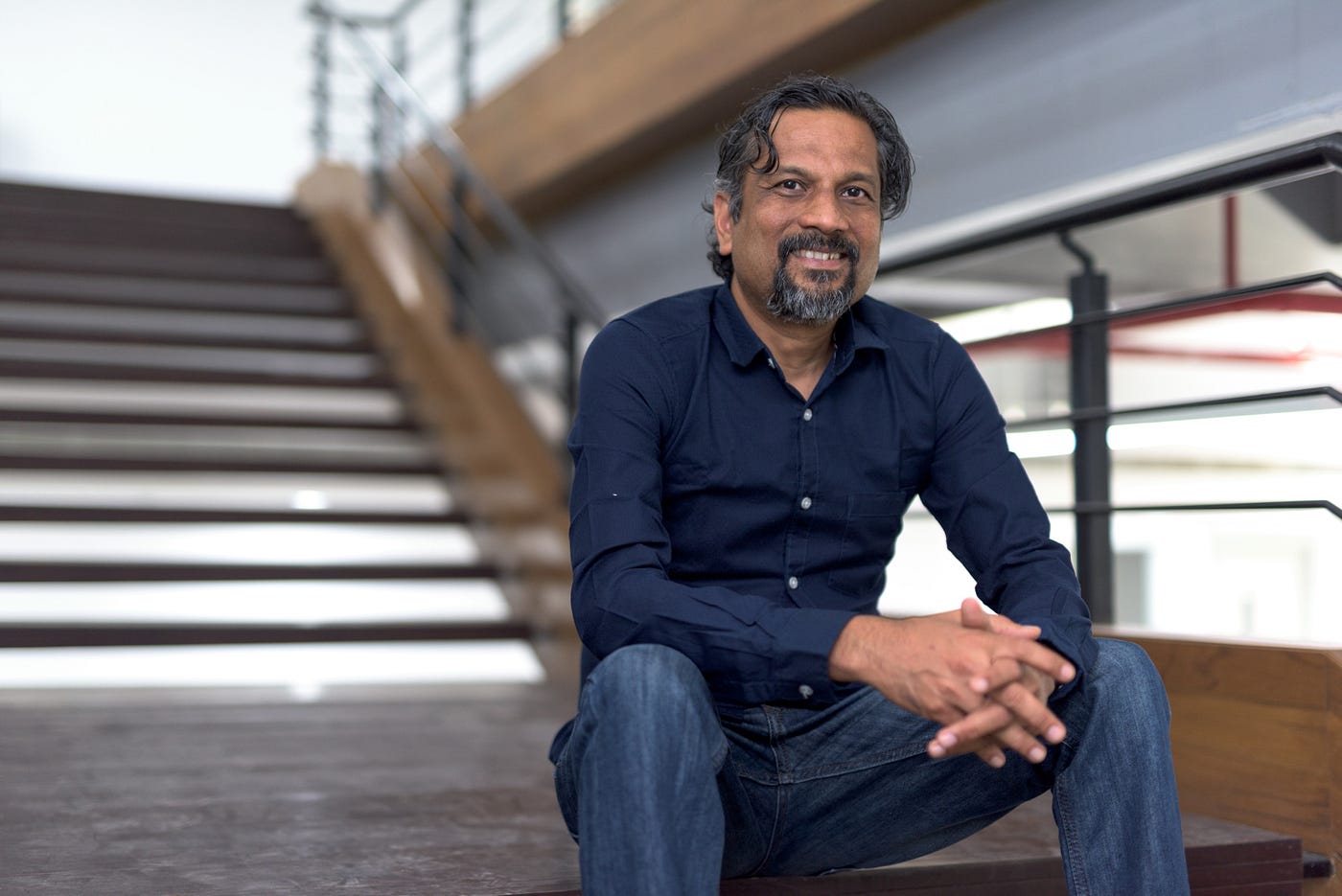
With knowledge from a broad range of experience, a generalist can find solutions that a specialist might not be able to see. Having versatility in your resume will mean that you have more experiences to share.
Business
Stella Tran: Why Being a Generalist Beats Being a Specialist in Modern Leadership
The HighRadius HR leader shares how moving across industries, embracing vulnerability, and dropping aggressive management styles shaped her success.

As part of our series called “5 Things, I Wish Someone Told Me Before I Began Leading My Company,” I had the pleasure of interviewing Stella Tran.
Stella Tran powers all things “people,” ensuring that HighRadius’ people and culture continue to thrive during periods of rapid growth. She leads the human resources team with a “people-first” mentality with the goal of hiring, retaining, and developing the best talent around. Before joining HighRadius, Stella started her career in consumer finance sales for HSBC, then spent nearly a decade at Charming Charlie, finishing her tenure there as Director of HR.
Thank you for joining us in this interview series. Can you share with us the backstory about what brought you to your specific career path?
I was a Comms / Biz Major in college and knew I wanted a sales job for my first role where I could determine my success. The influence came from my older brother, an Engineering Major that made his way into tech sales and never looked back. He told me, “Sales is the only job where you can give yourself a raise every year.” I started my career in consumer finance sales for HSBC, then was promoted to my first leadership role as an AVP Branch Manager at 24. After a few years and the big recession in 2009, I pivoted my career to recruiting to work at Charming Charlie, a startup fast-fashion retailer where I loved to shop.
I started as the first Recruiter and ended my time there as the Director of HR, and the company grew to almost 5,000 employees at its peak. When the HighRadius opportunity came up to build an HR team in a fast-growing tech business, I knew it was time to hop on a new roller coaster, which has been more like a rocketship!
Can you share the most interesting story that happened to you since you started your career?
Hands down, having the opportunity to travel to Hyderabad, India, for our annual UMIXO (U-MIX with-Others) employee event at HighRadius. When the US and EMEA teams arrived, we were greeted with floral necklaces and headpieces.
As is the HighRadius custom, they also went out of their way to prank us by having a fellow HighRadian act like a doctor who needed to see proof of vaccination records, or else we had to immediately hop back on the 20+ hour return flight to the US (funny now, not then). This week-long tradition fosters collaboration and healthy competition through culture, performance, and creativity. All of our 25+ teams participate in a sports event, spend countless hours transforming and decorating their departments, and top it all off. There is a vast production where 1000+ employees performed with their teams on stage for the entire company. Our leadership team did a surprise Bhangra dance on stage, and the crowd’s energy was electrifying. I was blown away by the talent and dedication of our teams. Upon meeting everyone for the first time, I was immediately pulled into rehearsals for a department skit and cultural dance with our India People & Culture team. I can’t wait to go back.
This is just a sneak peek of how the week started: https://www.linkedin.com/feed/update/urn:li:activity:6474150078662737920
Can you please give us your favorite “Life Lesson Quote”? Do you have a story about how that was relevant in your life?
“Be yourself. Because everyone else is already taken.”
As a 1st generation Asian American, I struggled a lot with my own identity growing up and trying to find where exactly I fit in. I would try to blend in without standing out and I did this by either suppressing or amplifying my Asian roots to fit the situation or people. I never really spoke up unless I thought the majority would agree. It wasn’t until I invested the time to forge the right relationships, build confidence in the things I was good at, and discover my self-worth in my early twenties that I saw the change within myself for the better.
Is there a particular book that made a significant impact on your leadership style? Can you share a story or an example of that?
Daring Greatly by Dr. Brené Brown.
I had the honor of seeing Dr. Brown deliver a keynote speech years ago. She blew me away with how she brought the power of vulnerability to the forefront of leadership. She inspired me to have the courage to experience emotions at work, develop empathy, admit failures and invite others to do and share the same.
What do you think makes your company stand out? Can you share a story?
At HighRadius, we believe that Culture is our #1 enabler for growth.
That’s why we’ve centered our last few CEO town halls around the topic of culture because we want to foster an environment where everyone can find a connection within our core values — no matter where you are working from in the world. It is a singular framework to promote the One Company, One Culture mentality to build connections across any boundaries and forge strong working relationships.
We think of culture as the sum total behavior of everyone in the company and try to embed the core values at every stage of the employee journey from the candidate/interview experience to how we announce promotions, hold ourselves accountable to dotONE (1 in 1000, 0.1%) performance, recognize top performers and how we go to great lengths to plan events with our core values in mind.
The road to success is hard and requires tremendous dedication. This question is obviously a big one, but what advice would you give to a young person who aspires to follow in your footsteps and emulate your success?
Being a generalist is better than a specialist.
I was recently introduced to the concept of Range Thinking through our VP of Sales. With knowledge from a broad range of experience, a generalist can find solutions that a specialist might not be able to see. Having versatility in your resume will mean that you have more experiences to share. This can be from studying abroad to different part-time jobs and volunteering activities. There is a difference between someone being fickle about their career path or interests and someone who is intentional about the experiences they want to gain and how it will apply to their future success. Generalists can leverage examples from past experiences to bring new solutions, innovate and infuse creativity in various situations. I’ve worked in three distinctly different industries from finance to retail and now technology and can reflect on the key learnings I had in each role and apply them accordingly.
Often leaders are asked to share the best advice they received. But let’s reverse the question. Can you share a story about advice you’ve received that you now wish you never followed?
When I was promoted into my first management role, I was told to watch Boiler Room and adopt a similar style of aggressive leadership. I was 24 — young, impressionable, and leading my first sales team. Because I was promoted amongst my peers, I assumed that they would try to test boundaries, not respect me, and I felt that I had to be aggressive to gain control as I was younger than most on my team. I couldn’t keep the act up for very long and soon learned that having the courage to be myself was much more rewarding!
You are a successful business leader. Which three character traits do you think were most instrumental to your success? Can you please share a story or example for each?
1. Work Smarter…and harder!
The idea of working smart, not hard, implies that you can find innovative hacks to success. To stand out, I believe that grit is the multiplier of success as long as you channel your energy on the most critical priorities. I have never had a 9 to 5 job. I have a ‘do what it takes’ job and have adapted to the different working environments to maximize my output. We had to work some Saturdays at the bank and adjust a few late nights per week to make extra calls during our sales blitz hours. In retail, peak seasons are during the end-of-year holidays when other industries may be taking it easy. In a global tech business, I start my days with India and Europe’s teams then spend the afternoons with the North America team. The moment you try to dictate that you want a “9 to 5” typical role, you’re limiting yourself to opportunities and growth.
2. Hire people different from you.
“If two of us are alike, one of us isn’t necessary.” I love hiring people on my team that have different experiences to bring to the table. I look for a way to balance deficiencies through the strengths of another and where differences can complement each other. Then, once you can unlock each person’s potential, their strengths amplify the team’s success. I challenge my next-level leaders to consider hiring candidates that can ‘wow’ us or that have been disruptive in their path to success. Michael McFadden and I have been working together for over six years in two different industries, and I’ve said that he’s the left brain I never had but always wanted.
3. Choose to Challenge
Learn how to give effective feedback early on, and don’t shy away from a difficult conversation. If you want to influence behavior, treat others how they want to be treated, not just how you want to be treated. Walking around with bottled-up emotions all day could cause an explosion somewhere else — on to your partner, kids, or friends. Prioritize your most critical discussions, then work your way down. You can practice this in your personal life first. Then adjust your message accordingly to fit your working style.
Ok, thank you for that. Let’s now jump to the primary focus of our interview. Most of our readers — in fact, most people — think they have a pretty good idea of what a C-Suite executive does. But in just a few words, can you explain what a C-Level executive does that is different from the responsibilities of other leaders?
A Win-Win-Win Mindset.
The visibility and the stakes are higher than other leadership levels. Between this small handful of leaders, their wingspan covers the entire company. Leaders at the executive level have to build trust with all organization levels — across, up, down, and all around. Since most strategic decisions are left up to this level, we have to ensure that we’re making balanced decisions that are a win for the employees, company, and investors. At HighRadius, we call it putting the company and team before your own interests.
What are the “myths” that you would like to dispel about being a CEO or executive? Can you explain what you mean?
Just because we carry the title, we don’t have all the answers.
While decision making is essential, it is also critical to enable and empower your team to be solution-oriented so that you don’t become the ‘firefighter’ to all vital issues all day. The best leaders steadily develop their teams and next-level leaders to ensure that they are not involved in every single execution decision and action. You will know that you’re in a good place as a leader when you can leave for vacation and nothing falls apart in your absence.
What are the most common leadership mistakes you have seen C-Suite leaders make when they start leading a new team? What can be done to avoid those errors?
Having a ‘hero’ mentality instead of being curious enough to learn an organization first. All great leaders need humility. If you show up on day one ready to ‘save everyone’ by copy-pasting exactly what you’ve done from your last role (presumably because it was a great success) — you’re missing out on the opportunity to listen, learn and understand.
Yes, you can build some initial credibility with some quick wins (significant impact, low effort). Still, you should demonstrate that you’re in it for the right reasons by learning how an organization works, making the right peer connections, and building influence through your results.
In your experience, which aspect of running a company tends to be most underestimated? Can you explain or give an example?
An organization’s culture is the foundation of a company. This makes it all the more important for HR to act as a conduit between the CEO’s vision and employee’s expectations. CEOs can also include HR earlier on in decisions because there is always an impact on people when the business makes changes. If we make people a priority, HR will always have a seat at the table.
As more CEOs buy into the idea that Culture is the key enabler for growth and differentiation, it’s more important than ever for CEOs + HR teams to be aligned on driving the same culture initiatives. CEOs and HR leaders both need to be the #1 culture champions for the company.
CEOs need HR teams that can be agile to keep up with the evolution of a business, and there also needs to be a healthy amount of discourse to get to the best outcomes that are a win for the employees, leaders, and the company.
Ok super. Here is the main question of our interview. What are your “5 Things I Wish Someone Told Me Before I Began Leading From the C-Suite”? Please share a story or an example for each.
Embrace failure early on. Failure can be fuel for future success.
That’s why at HighRadius, one of the pillars for company culture is to Hop on the Roller Coaster — and our mantra is to “Fail-fast, learn-fast, fix-fast.”
In a fast growth software business, change is the only constant, so you have to be ready to pivot at any moment and manage through the ups and downs. When I was first hired to start up the HR department, I made the mistake of trying to boil the ocean. I was trying to initiate many great ideas without enough time or resources to do all of them. I attempted to author a handbook, upgrade benefits, hire many people, create employee events and be everyone’s confidant. I couldn’t be everything to everyone, no matter how much I tried. I took the hard feedback from my leader to focus on the top priorities that align with the overall organizational goals. Now that I’ve built a team, we have celebrated success, embraced failures as learning moments, fixed fast, and kept moving forward!
Recognition. You can delegate a lot of things, but telling your team that you appreciate them is not one of them.
Show your employees that you see and appreciate their efforts. Take out time to illustrate how much impact that they’re creating for the team and the business. One of the top drivers of employee engagement is believing that their work impacts the bigger picture, so personalize it as much as possible. Engaged employees sound like “I get to do this!” vs. “I have to do this,” and your extension of genuine appreciation will empower them to go the extra mile.
The higher up you go, the less feedback you receive.
I’m not going to wait around for my CEO’s performance review to find out how I’m doing. It’s just as essential to building peer connections with people who support you as it is to have other leaders that aren’t afraid to tell you like it is. Leaders should also be humble enough to accept feedback from their teams and peers and be flexible enough to adapt continually.
Have a growth mindset.
Don’t become the stagnant, obsolete executive who is soaring in strategy meetings so high that they have no idea what’s going on at the ground level. Understand how to fly at 10 feet and 100,000 feet and how much time you need to spend in both to be successful.
Finally, don’t be afraid to use lifelines.
We don’t have to pretend that we know it all. You can’t wing it at this level, and you should build your network of contacts that you can leverage for answers, a sounding board, strategy discussions, or disruptive ideas. I add new LinkedIn contacts, keep in touch with past co-workers, former leaders, and schedule roundtable discussions with industry peers to discuss hot topics.
In your opinion, what are a few ways that executives can help to create a fantastic work culture? Can you share a story or an example?
1. Be the #1 culture champion.
As a leader of your department, the culture starts and ends with you.
Take a look at your core values and lead from the front. Others will then look to you to lead the way and take cues from your behavior.
2. Care about the whole person.
I got some tough feedback early on in my management career that my team was too scared to vent because they believed I would see it as a sign of weakness. I was missing the bigger picture when I only put “work talk” on my one-on-one agendas.
If you want to bring out the best in someone, you need to build trust by taking time to understand their motivations, how they like to be recognized and how to give constructive feedback in a way that influences outcomes effectively.
3. Leaders — never be too busy for a smile or small talk.
Don’t just offer to mentor the high potential employees, instead approach someone that appears to be flying just under the HiPo radar that may need the extra advice, encouragement, or knowledge to achieve the next level of success.
Leaders have to model the right behavior. It’s part of the gig. There is a heightened sense of visibility when you are a leader, and people will pay attention to your reactions, interactions, and how you carry yourself. Introduce yourself to someone new. Humanize yourself by making a personal connection with others outside the borders of your team.
You are a person of great influence. If you could start a movement that would bring the most amount of good to the most amount of people, what would that be? You never know what your idea can trigger. :-)
Leadership is a lifestyle, not a job.
To encourage leaders to expand their influence beyond the boundaries of their team and the company they work for. Think about different organizations you can support, panel or board opportunities, mentoring future leaders, and investing your time in knowledge sharing with those that need it most. I recently accepted an opportunity to be on an Advisory Panel for the Women in Leadership Program at the University of Houston, Bauer College of Business that I’m super excited about. This allows me to contribute to a broader network of up-and-coming young women that aspire to be in leadership. I’ll bring these learnings back to HighRadius to improve our efforts for supporting women and equality. So it’s a win-win-win decision for the students, HighRadius, and it will fulfill my passion for developing this next generation of talent.
How can our readers further follow you online?
Connect with me on LinkedIn @Stella Tran
(I try to share all relevant content there!)
PP
Written by
Parveen Panwar
Mr. Activated · Authority Magazine ColumnistAuthority Magazine Columnist & Contributor

Published inAuthority MagazineTop Lessons, Top Authorities · 42K Followers
Exclusive, curated interviews with the leaders and changemakers shaping tomorrow. Leadership lessons, industry deep dives, and executive profiles.