I want to empower people to control their money –not be controlled by it! No get-rich-quick schemes, no sleight-of-hand tricks to make it look easier than it is, just real explanations of financial concepts and authentic advice.
Self Made Women: Dr. Stacy Mastrolia, Ph.D. On How She Started With Nothing and Created A Million Dollar Business
(If you are unable to download it, please click File-Download, or simply copy and paste this doc to a word doc.)
Please answer the questions, and leave the questions formatted as they are in the document. We may schedule a follow-up call or skype to round things out.
INTERVIEW QUESTIONS:
Some people were born with the proverbial silver spoon in their mouth. Even then, becoming a millionaire is still quite an accomplishment. But people who start from nothing, and especially women who start from nothing, who make it to the top to become millionaires, despite the pay inequalities based on gender, the confidence gap, with nothing but grit, hustle, resilience, and "stick-to-itness", are on a whole new level. We want to share those stories and inspire other women. In this interview series, we're talking to “Self-Made" women leaders who started with nothing (i.e. started without investors or trust fund or capital or even people believing in them) and went on to create a million dollar business.
As a part of our series, I had the pleasure of interviewing Dr. Stacy Mastrolia.
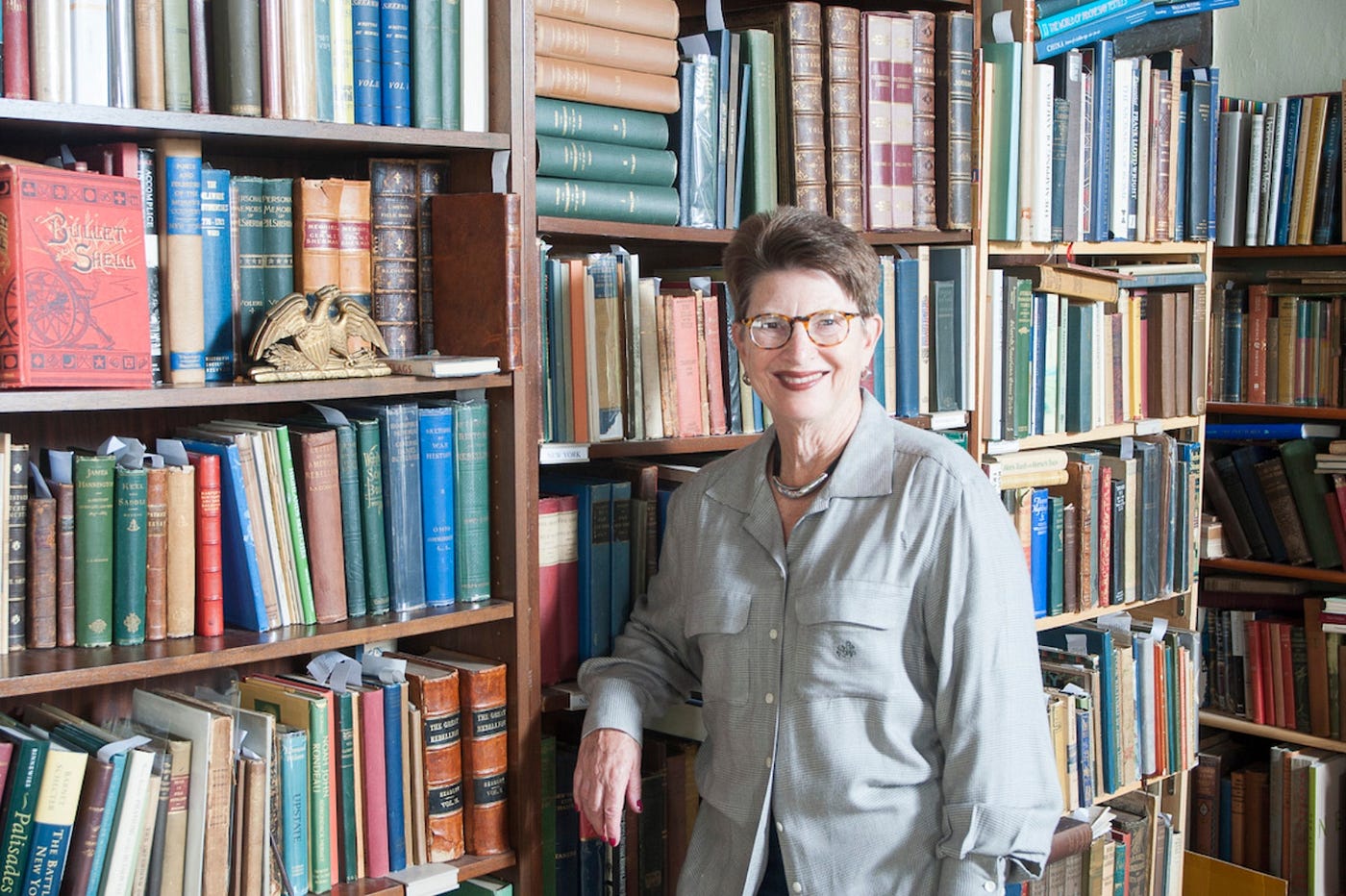
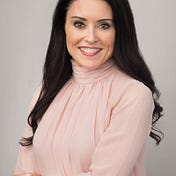
Dr. Mastrolia, or Stacy as she prefers to be called, is an Associate Professor of Accounting at the Freeman College of Management at Bucknell University where she teaches upper-level accounting, financial planning, and financial literacy courses. But Stacy did not start her career as a college professor, before her current role in the classroom, she was an accountant, auditor, accounting manager, and controller. She is also a “money teacher” and you can find out more about her current work at ProfStacyTheMoneyTeacher.com.
Thank you so much for doing this with us! Before we dig in, our readers would like to get to know you a bit more. Can you tell us a bit about your “backstory” and how you grew up?
Sure. I was born and raised in a happy, middle-class family in central NJ; I am the second of four children – three girls and an adored “baby brother”. From my earliest memories, I worked to earn money. As a pre-teen, each week I would efficiently work our household chore list and earn more weekly allowance than my siblings. When I was a teenager, I worked as a babysitter, newspaper delivery girl, and waitress. I was the first person in my family to attend and graduate from a four-year college. Immediately after college, I earned my CPA and began my career as an accountant. Twelve years into my career, I had worked my way up to being the Director of Worldwide Accounting for a large publicly-held company. While in that role, I decided to enter an MBA program. Three years later, while I was the Controller for another large company, my experience from my MBA program inspired me to return to school full-time to earn a Ph.D. At the age of 42, I graduated from the University of Tennessee with a Ph.D. in Accounting and began my second career as a Professor of Accounting.
Growing up, what were your early experiences and perspectives about money? Or we could say, what was the “money consciousness” in which you were raised? Can you please give an example of what you mean?
I don’t remember a lot of money messages - either positive or negative from when I was growing up. However, my aunt has always told a funny story about how, when I was ten years old, she found me sleeping with my purse under my pillow and she says she knew right then that I was going to do something involving money. What she didn’t realize is that I slept with my purse under my pillow because my sister would regularly “help herself” to my allowance and I was no push-over!
I don’t remember any regular arguments about money in my house but, in hindsight, I can see that my family was very “middle-class”; we always had food on the table – although it was often pasta – and we had a choice of clothes which often included hand-me-downs. We took an occasional vacation, but mostly enjoyed the company of family and friends. Because I had a happy childhood and because most of our friends had similar lifestyles, I never gave our family’s resources much thought.
That said, I knew from when I was a young teenager that I wanted more. I wanted to travel the world. Have an exciting job. Have extraordinary experiences. And I knew I would have to make that happen for myself. Starting in high school, I knew that achieving my dreams would depend on my education, my career choice, and hard work.
Awesome! Let’s now jump to the primary focus of our interview. Let's talk about what you are doing now, and how you achieved the success that you currently enjoy. Can you tell our readers about the business you've created?
I love the life I have built - my job, my family, my everyday life – and, although I could not see it at the time, in hindsight, I can see how each job, each major challenge, each life-pivoting decision has led me to this place. It took me almost thirty years but right now, both my day job and my new passion project are right at the heart of my calling: I am a teacher. My particular area of expertise is accounting and my passion is making financial literacy accessible to everyone from every background and at every age.
For several years I have taught financial planning and financial literacy at Bucknell and that experience has led me to start my new endeavor as “Prof Stacy The Money Teacher”. In this space, I will make a genuine and honest financial education accessible for everyone. I truly believe that if a person understands their money, they can improve their financial health. I want to empower people to control their money –not be controlled by it! No get-rich-quick schemes, no sleight-of-hand tricks to make it look easier than it is, just real explanations of financial concepts and authentic advice. Like I tell my students, each person has to put in the work, but their reward will be their increased confidence with all things money and, hopefully, a growing savings account balance.
What was your vision when you started this business? What’s the WHY behind the work that you do? (Please share a story about this if you can.)
Many people, but especially women, struggle to feel confident when facing money decisions. A recent survey by CNBC indicated that 61% of Americans live paycheck to paycheck, including 42% of Americans who make more than six figures. In a separate CNBC survey, Americans reported that they needed to make $122,000 to feel financially healthy and how people feel about their financial health is primarily a function of their income, debt, and savings. Additionally, according to the U.S. Bureau of Labor Statistics, year-over-year inflation has been outpacing wage growth since the second quarter of 2021.
It is obvious to me that these statistics indicate that people – even people making above the median household income of $68,000 - are experiencing a great deal of money-related stress. I want to use the Prof Stacy The Money Teacher platform to provide accessible and unbiased “money education” to help people learn the money skills that can help them to reduce their stress and teach people how to control their money rather than allowing their money to control them.
Can you share the most interesting story that happened to you since you began leading your company?
I think the most interesting thing that has happened to me since I saved a million dollars is the amount of peace I feel. I always envisioned that achieving financial security would make me feel more … secure, but it is more than that. I have real feelings of peace; I no longer perceive stress around routine financial matters. Now, when a financial “emergency” occurs, I just pay for it and move on. Financial concerns no longer occupy my daily thoughts and, as a result, I can now see how much latent energy I expended in the past thinking about and worrying about financial matters: paying for my daughter’s college education, paying for a trip, being generous when someone is in need, etc. It is only in the absence of money stress that I can finally see how much it affected my life in the past.
This is what drives me today: helping people learn how to handle their money and giving them the hope that they can.
Can you share a story about the funniest mistake you made when you were first starting? Can you tell us what lesson you learned from that?
In my first job out of college, I was an auditor for a large public accounting firm. We performed most of our work at the client’s location and, during the busy season, we often worked 14 to 16 hours a day. I remember a few weeks into the busy season, working at a client who was located in the center of a city where on-site parking was very limited. Because the audit team usually arrived first and left last, our cars were usually parked front end facing the property’s fence. Other cars would park behind us, blocking us in, but it wasn’t a problem because everyone else left the parking lot before we did. One night, a couple of weeks into the assignment, I left the client’s office around 10:00 pm only to find that another car was parked with its front fender to my back fender and the front of my car was against the property fence. I was blocked in.
In a flash of poor judgment – likely influenced by exhaustion – I decided it was wiser to try to “scoot” my car out rather than go back upstairs to the audit room and have someone move the car blocking mine. You can see where this is going … in my car-gyrations, I “bumped” the front fender of the other car scratching it. While I was blankly staring at the scratch and trying to figure out what to do, my senior manager walked out of the building. Of course, it was his car I “bumped”. He was astounded (and furious) at my lack of good judgment – or at least that’s what he shouted at me.
At the time it was horribly embarrassing; in hindsight, I made an error in judgment while I was in extraordinarily stressful circumstances. But because of this experience and my vivid recollection of the humiliation of being yelled at, I am always very intentional about responding kindly (and maturely) when faced with a team member’s error in judgment (and I don’t do car-gyrations anymore either).
We’d love to explore the traits that help you achieve your success. What were the mindset obstacles that you had to overcome in order to reach the place of earning a million dollars? Can you tell us what you did to overcome them?
As the first person in my family to attend a four-year university I had no role models to show me how to build a successful business career. I knew I had only a slightly above-average IQ, but I also knew that there was no “quit” in me. I may not have been the smartest person in the room, but I never gave up. When faced with roadblocks, I would always try to find another way to approach the problem; another path to achieve the goal.
Early in my career, I suffered from frequent bouts of imposter syndrome. At the office, I was typically the youngest person in the meeting and the only woman. I often believed that everyone else was smarter than me. In hindsight, I can see that my peers were usually more experienced than I was but maybe not always smarter. I wish I had some secret method to overcome imposter syndrome that I could share, but I don’t. I just worked harder. I read more, learned more, and took more calculated risks. I sought out advice when I could, but mostly I just kept moving forward toward my career goals.
What were the external obstacles that you had to overcome in reaching these milestones? And how specifically did you overcome them? (Please share a story or example.)
To become a millionaire, I had to overcome the fact that I had no role models and I didn’t see a clear path to that goal. But I also didn’t perceive any roadblocks to achieving that milestone; no one told me that I couldn’t do it. I believed from my earliest memories that if I worked hard, saved consistently, and invested wisely, I could become a millionaire. I don’t believe that I ever shared that goal directly with anyone. As a result, there wasn’t anyone to tell me that I couldn’t do it. From an early age, I knew I probably wouldn’t marry so if I wanted to build wealth, I knew I would have to build it myself.
I will say that today’s anti-wealth movement is concerning to me. Today’s young women actually have people telling them that they should not aspire to be a millionaire, as if working your whole life and retiring broke is nobler than working, saving and investing, and retiring wealthy. I don’t understand it but I am sure this rhetoric will misdirect some young women and, frankly, that’s why I wanted to participate in this series for Authority Magazine: to tell young women that not only can they become millionaires but that they should. To achieve that level of financial security, they will probably have to work hard, take chances, and believe in themselves more than other people believe in them but the goal is a worthy one!
Was there ever a point where you wanted to give up on your journey to creating a million dollar business? How did you work through that panic point? Please share a story.
I never gave up on my goal of becoming a millionaire although I did pivot several times to match my evolving skills and interests as my seasons of life changed. I worked for several companies in several different accounting and management roles as I aggressively pursued my corporate career, but my biggest pivot point and where I experienced the most panic, was when I decided to return to school to earn my Ph.D. in accounting and change careers to become a college professor.
Leaving the 15-year corporate career I had built - with its generous six-figure salary, annual bonus, and stock options - to return to school full-time for four years (where I earned $20,000 per year as a teaching and research assistant) was a panic-inducing pivot. But, after much prayer, I knew it was the right move for me. However, the deep knowledge that I was on the right path in my life did not stop the old imposter syndrome from returning. Again, I battled those fears to forge forward, earn my Ph.D., and begin my new career as a college professor. Now I can see that my 15 years of corporate experience and 18 years of teaching experience have prepared me for this next venture of using the Prof Stacy The Money Teacher platform to help make financial literacy accessible to everyone. I would not be equipped for this new role if I had not made the bold pivot to academia 18 years ago.
None of us are able to achieve success without some help along the way. Is there a particular person who you are grateful towards who helped get you to where you are? Can you share a story about that?
Two people immediately come to mind with this question: John Generelli and an anonymous co-worker VP. First, John Generelli was a co-worker turned friend and advisor. John and I worked together for approximately five years and stayed friends for many years after that. John was the first person who openly talked to me about office politics and dynamics. He taught me how to survive and even thrive when challenged. He helped me develop a tough skin, to defend myself, and to seek out opportunities I was interested in. Because of John’s mentorship example, today I encourage young people to find a good mentor – someone you can be honest with and who will be honest with you.
On the other hand, towards the end of my corporate career, a new VP – I’ll call him “Peter” - was hired into a role that was parallel to mine in another department. This individual created utter havoc between our teams due to confusion, miscommunication, and outright lying. I quickly found out that he could not be trusted with small things or large things. I ended up leaving that company but later found out that “Peter” had lied on his resume about his education and experience. That story always reminds me that it is important to trust your instincts; when something at work doesn’t feel right, there is probably a reason.
What were the most important resources, tools, affirmations, mindset strategies or practices that you used to build your business to where it is today?
Frankly, I think my corporate career “superpower” was my ignorance … I didn’t know when the deck was stacked against me. I approached each assignment, each challenge, and each project with the confidence that I could successfully complete it. John often told me that I was too stupid to know I was likely to fail. So, my success was due, at least in part, to my ignorance of my likelihood to fail.
It is worth saying here that it is not that I didn’t fail – it’s just that I redirected failure into succeeding in something else. For me, the task didn’t end when it couldn’t be completed as originally envisioned; instead, it was transformed into something different that had the possibility of success.
What do you think is the greatest challenge for women and creating wealth/abundance? What advice would you have for someone that is feeling blocked by that obstacle?
I love this question! It was my experience, 35 years ago, that women who wanted to create wealth had limited access to role models and proven paths to that goal. Today, women have access to role models from many different professions, skills, and personality styles. Women can take advantage of a variety of courses and seminars to learn how to start a business, market their skills, and invest successfully. I think this is the best time in history for anyone, but especially women, to build real wealth.
However, currently, there is an anti-wealth movement that seeks to shame people for achieving financial success. The very idea of wealth redistribution threatens the ability of an individual to maintain the financial resources they have saved. It suggests that people who spend all they have are “better” than people who have foregone current spending in favor of future benefits. Today’s young women need to be careful of the 24x7 access to uncurated social media that can put harmful ideas in their feeds.
My advice to women today is simple: don’t listen to them. Don’t listen to people who try to tell you that you can’t or shouldn’t build wealth. Instead seek out smart, successful, generous, and happy people and surround yourself with them. “Iron sharpens iron” and you get to choose what ideas you allow to feed your mind so choose wisely.
Great! Here is the main question of our interview. What are your “5 Things I Wish Someone Told Me Before I Started” and why? (Please share a story or example for each.)
Five things I wished someone told me before I started building wealth are:
First: Save systematically, invest consistently, and use a dollar-cost averaging strategy (don't try to time the market). Make a monthly budget that prioritizes saving and then investing 15% of your income each month in a diversified portfolio. Following this strategy and using the power of the time value of money, you’ll be a millionaire before you know it.
Second: Find your passion, or your sweet spot, and find a way to make a living at it. Do what you're good at, then do it again and again and again. Do it in different environments. Do it in different ways. Allow your skills to grow, develop, and change over time. Allow your skills to be redirected and refocused to satisfy your evolving goals for your life. You’ll never be happy with money if you wouldn’t have been happy without money.
Third: Do things professionally and personally that are outside your comfort zone. Do things that make your heart beat a little bit faster, things that you're not entirely sure that you can do. Reach and grow by doing things that are just a little bit beyond your reach. Money will never satisfy your internal need to learn and grow as a person.
Fourth: Don’t be afraid. Everyone else is NOT smarter than you, better prepared than you, or worthier than you. Start your own business when you are ready. Build a network of people who can help you and whom you can help. For most people, it's the independence of having your own business that really rockets your potential to build wealth – and to build a career that serves your life, not the other way around.
Fifth – but by no means last: Be generous. Be crazy generous. Be generous in secret. Be generous in public. Being generous is one of the most fun things you will ever do with money! Sure, everyone should have a giving plan as part of their budget, but spontaneous giving – now that’s something else! Help a single mom buy a car. Help someone adopt a child. Help someone start their own business. Part of generosity is giving your time and talent, but as your resources allow, giving money to someone or something when money is the only reason that good isn’t happening, that’s the unique privilege of people who have built wealth. I have never regretted being generous. And I doubt you will either.
We are sure that you are not done. What comes next? What's your next big goal and why? What plan have you put in place to achieve it? Why is it a stretch for you? What will achieving it represent for you and for others?
My next big goal is to grow my ability to provide financial literacy education both in my classroom and with my Prof Stacy The Money Teacher platform. We live in one of the richest countries in the world yet the majority of people live paycheck to paycheck and experience daily financial stress. I believe that real and honest financial literacy education should be accessible, understandable, and free to all families. In the coming months, I want to further develop my Money Teacher platform to provide advice, workshops, and one-on-one money teaching and coaching to families so that they can learn to be confident in managing their money to achieve their financial goals.
How can our readers further follow your work online?
My academic work is highlighted on my Freeman College of Management at Bucknell website.
My public teaching is through my website, Prof Stacy The Money Teacher, and my related social media accounts.
Thank you so much for taking the time to share with us and our readers. We know that it will make a tremendous difference and impact thousands of lives. We are excited to connect further and we wish you so much joy in your next success.
About the interviewer: Sara Connell is a bestselling author and the founder of Thought Leader Academy where she helps coaches, writers and entrepreneurs become best selling authors, TEDx and paid speakers. She has been featured on The Oprah Winfrey Show, Good Morning America, The View, FOX Chicago, NPR, Katie Couric and TEDx. Her writing has appeared in: The New York Times, Forbes, and many publications. Access her free masterclass: How to Write A Bestselling Book That Changes Lives (in less than 3 months) HERE