I started singing when I was four years old and began writing songs soon after that. I asked my dad for a guitar, but I don’t know what happened to it.
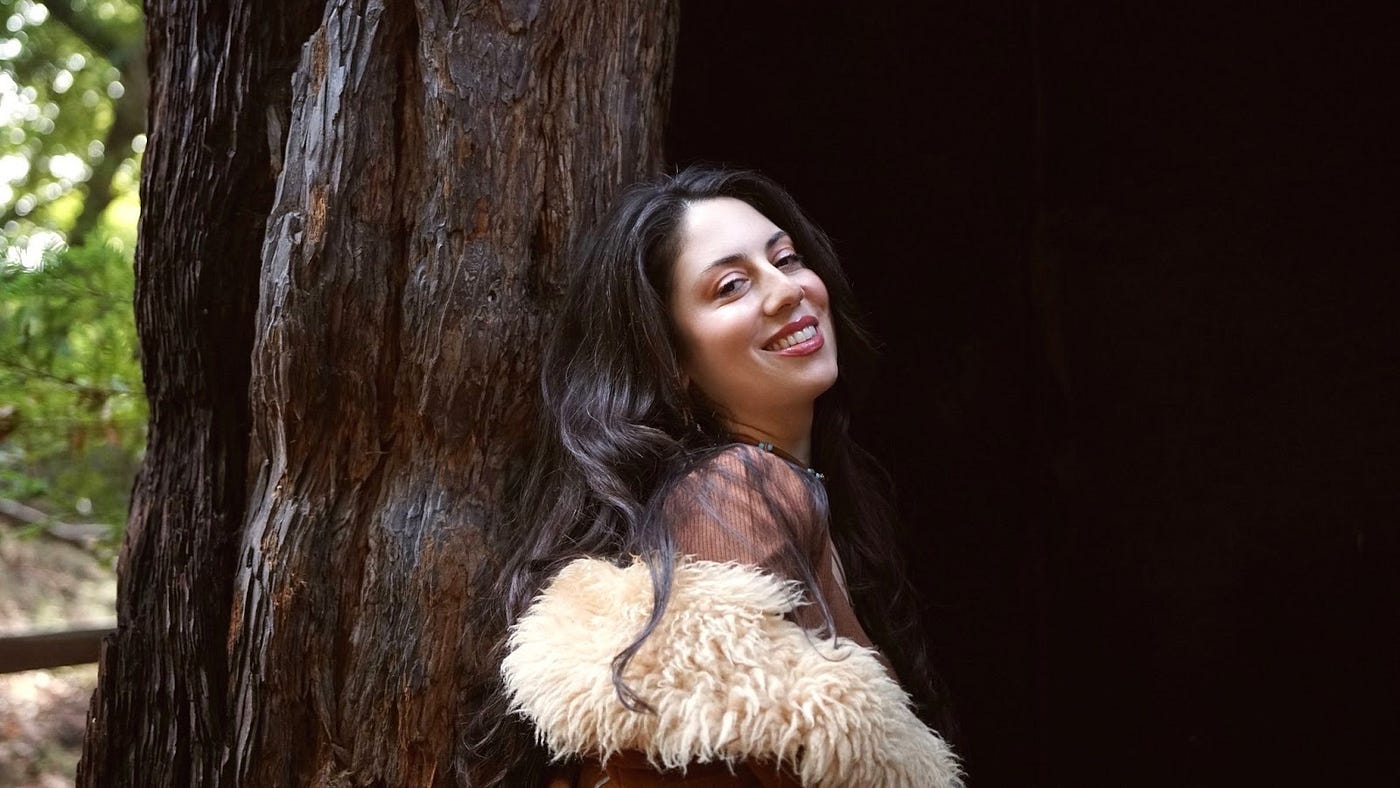
I had the pleasure to talk with Sheva Elliot. Sheva, a blues, soul, and rock n’ roll singer-songwriter, is set to release her new single, “Lost & Found,” on Friday, May 19th. Born out of her deeply personal experiences, Sheva’s music is a captivating blend of influences, combining the talents of legendary artists such as Janis Joplin, Aretha Franklin, Elton John, and Patti Smith.
A proud member of the LGBTQ community, Sheva’s journey in recovery has been a driving force behind her powerful music. “Lost & Found” was written during a difficult period in her life when she tried to help two loved ones battling addiction, ultimately realizing that she could only help those who were willing to accept it. The song is a testament to surrendering to the things beyond our control and the transformative power of love and support.
Sheva describes “Lost & Found” as a love letter not to romantic love, but to the deep mentorship and friendships that have helped her navigate life’s challenges. It’s a tribute to the people who have carried her through rough waters and loved her until she learned to love herself.
As Sheva Elliot continues to create music that resonates with her audience, her captivating blend of genres and soul-stirring lyrics stand as a testament to her resilience, talent, and ability to connect with others through the power of song.
Yitzi: Thank you so much for doing this with us! Our readers would love to get to know you a bit better. Can you tell us your “Origin Story”? Can you tell us the story of how you grew up?
Sheva: Oh, well, my childhood was colorful. You know, a big Jewish family — I think you can imagine. There was never a dull moment.
A really life-changing experience for me in my youth was when my dad swooped me up one day and said, “We’re going to take a drive down PCH, and you’re not getting out of this car until we listen to The Doors, Elton John, and Cat Stevens.” It changed my life.
In my teenage years, I was getting into some trouble, definitely straying from anything religious, anything with boundaries or rules. I did a lot of partying.
I went to NYU for film school, which was amazing. In 2015, I came back to California, did some more partying, then started to clean up in 2017. As I’ve gained more clarity over the last several years, I’ve acquired a new appreciation for the beauty & mysticism of my religious roots. Of course, there are a lot of patriarchal elements about organized religion I don’t like, but I take what works and leave the rest.
Yitzi: What specifically brought you to the music industry? What was the path that led you to this place in terms of your music stardom?
Sheva: Ha! As my mother would say, “From your mouth to God’s ears.” So, I honestly say that music found me. I started singing when I was four years old and began writing songs soon after that. I asked my dad for a guitar, but I don’t know what happened to it. I don’t think my mother wanted me to play guitar for some reason. Instead, they sent me to piano lessons. As I told you, I was very rebellious. I never practiced, and my strict Russian piano teacher eventually gave up on me.
Music felt like my second language. Although I loved writing dialogue, directing, and acting, I feel that music is an ancient expression of the soul. Even though I was against the idea of a powerful, male deity called Hashem, uniforms, and many Orthodox ideas of Judaism, what always struck me when I was in synagogue was the ancient music of our people. That was my favorite part of the day, hearing that choir, you know.
So, the path started at a very young age, and then I went into theater and film. But when I was in film school, I always found myself at shows in New York, hanging out in Brooklyn with my rock and roll buddies. I always felt this longing and kind of jealousy, like I was maybe in the wrong place. Then, I moved back to California in 2015 and met someone. We got into a relationship, and I started to show him my writing. I came back to the piano and took whatever I could remember from the teacher who gave up on me, or whom I gave up on.
Yitzi: It has been said that our mistakes can be our greatest teachers. Can you share a story about the funniest mistake you made when you were first starting? Can you tell us what lesson you learned from that?
Sheva: Oh, you’re asking if I made a mistake? Oh my God, yes, definitely, I’ve made mistakes. I’ll say something funny about that. I was talking to a friend of mine who produced one of my songs in the past. I was so nervous the day before going into a studio session, and he said to me, “I really hope you mess up. I really hope you do because that’s your greatest teacher.” I was so afraid of making a mistake. I’ve totally made mistakes, like mixing romance with business. I hope to never do that again — it was a very expensive and painful lesson.
In such a collaborative field, there’s a lot of learning because human relationships are complicated. My greatest fumbles would probably be in the interpersonal arena. It’s hard for me to say in terms of music because I feel like that’s just an endless learning process. I try not to say there are too many mistakes in art; it’s always just development. No mistakes.
Yitzi: Is there a person who made a profound impact on your life? And if yes, can you share a story about that person?
Sheva: I feel like I’m lucky that there have been quite a few, so I’m going to think about that for a second. Obviously, my therapist — thank God for her.
A person who had a profound impact on me… I would say I have a few spiritual teachers I’ve never met but who have really changed my life. Tara Brach, Ram Dass, Alan Watts, Jack Kornfield. The teachings of the Buddha saved my life. I would also mention that very same producer who said to me, “I hope you mess up.” That sentence was so valuable; it helped me honestly pray to make mistakes. I started to pray, like, “God, help me be imperfect and help me go with it.”
Yitzi: Okay, let’s talk about your work. You have so much impressive work. Can you share with our readers some exciting projects that you’re working on now and what you hope to be working on in the near future?
Sheva: Yeah, I’m working on releasing my first full-length debut album. I’m really excited about that. I’ve released two singles from it so far, and my third one is coming out on May 19th. The music video will be following on the 26th. Then, actually, next week, I will be back in the studio, shooting a live set of some of my songs! I’m really excited about that too. I think what’s expected is my upcoming album and everything related to its release, but I’m already thinking about the next one, you know. People can look forward to some more visual content, a full album in the summer, and hopefully a tour soon!
Yitzi: When I first explored doing this interview, someone said that you’re like the next Amy Winehouse. How do you think you’re similar or different from her?
Sheva: Well, thank you. I think that’s a blessing and a curse. I understand her darkness. I think her and I both have, or she had it — unfortunately, she’s no longer with us. What makes us different is that I survived 27, by miracles. In terms of music, I think we both have a soulful vibe. We both have a lot of the same inspirations, like Motown/Soul. I know she was a big fan of Etta. She covered a Donny Hathaway song that I really want to cover. What makes us different is our personal style, the way we sing, and the way we dress. I don’t plan to get my arms covered in tattoos either (it would kill my Grandmother). Back to the music — I would say we’re both similar in our soulfulness, but I think I’m a little more psychedelic than Amy was.
Yitzi: This is our signature question that we ask in nearly all of our interviews. What are your “5 things you need to shine in the music industry?”
Sheva: Oh my God. Well, again, I think it’s amazing you think I’ve made it, but I guess making it is subjective, right? Five things you need to shine:
- Don’t be afraid to make mistakes. Like that producer and friend told me, “I hope you do make mistakes and you understand their blessings.”
- Don’t let envy distract you. Be grateful for every moment and for where you are now. Don’t forget that at one point, you weren’t even chasing this. Give yourself credit for having the bravery to chase the dream.
- Advocate for yourself, and if that’s difficult for you, find people who make you feel safe. There’s definitely a lot of shadiness, but I think that’s the case in any industry. It’s important to find people who you can be yourself with and feel safe with and kind of be your allies.
- Don’t get distracted with what you think people want you to be. It would be impossible to be everything to everyone.
- Finally, really do whatever the f*** you want to do because we’re going to die one day. So you might as well do what makes you happy and feel the most authentic.
Yitzi: Sheva, because of the platform you’ve created and your great work, you are a person of enormous influence. If you could spread an idea or inspire a movement that will bring the most amount of good to the most amount of people, what would that be? Because you never know what your idea can inspire.
Sheva: Wow, talk about Tikkun Olam now. I’m definitely really passionate about making the world a place of less suffering, and I wish I had the power to change it.
I’m really passionate about women’s rights, but I think first, I wish we could change the collective psychology around our environment. Because if we destroy the planet, women’s rights don’t matter. There won’t be women, there won’t be anybody. So yeah, I would love to change that.
I think corporations have gotten us as far as we need to go, and they need to take a step back and start molding to the times. If it was up to me, it would be to try to convince the people who have the most power, quite literally, in our soil, with the food industry and the fossil fuels, to start becoming more conscious of how it affects us. Because this is our home. It’s like throwing a match into our own bed, right?
Yitzi: This is what we call our matchmaker question, and sometimes it works. Is there a person in the world or in the US with whom you would like to have a power lunch, collaborate with, or share a beer or coffee? Because we could tag them and maybe we could connect you.
Sheva: Oh, I love this. Okay, let me think. There are so many people.
For a power lunch, Bonnie Raitt is coming to mind. She’s just such a badass, a soulful rock and roll woman. I think she’s also sober and an activist.
Either her or Melissa Etheridge, honestly.
I’m also in the LGBT community, so I would love to sit down with either of those women.
How can our readers best continue to follow your work online?
They can go to my website at sheva-elliot.com. You can also follow me on instagram @sheva.elliot
Thank you, Sheva, for this amazing conversation!