With photography, it’s very easy to get stuck in a rut where you’re shooting the same things again and again because you know how to shoot them. You’re comfortable, and you know you’ll come away with some good images. To keep thriving and not burn out, you have to step outside those topics and types of pictures and try new things you’ve never tried before.
(insertname): 5 Things Anyone Can Do To Take Stunning Photos
(If you are unable to download it, please click File-Download)
Please answer the questions, and leave the questions formatted as they are in the document. We may schedule a follow-up call or skype to round things out.
Samples Here
INTERVIEW QUESTIONS:
As a part of our series about “5 Things Anyone Can Do To Take Stunning Photos” I had the pleasure
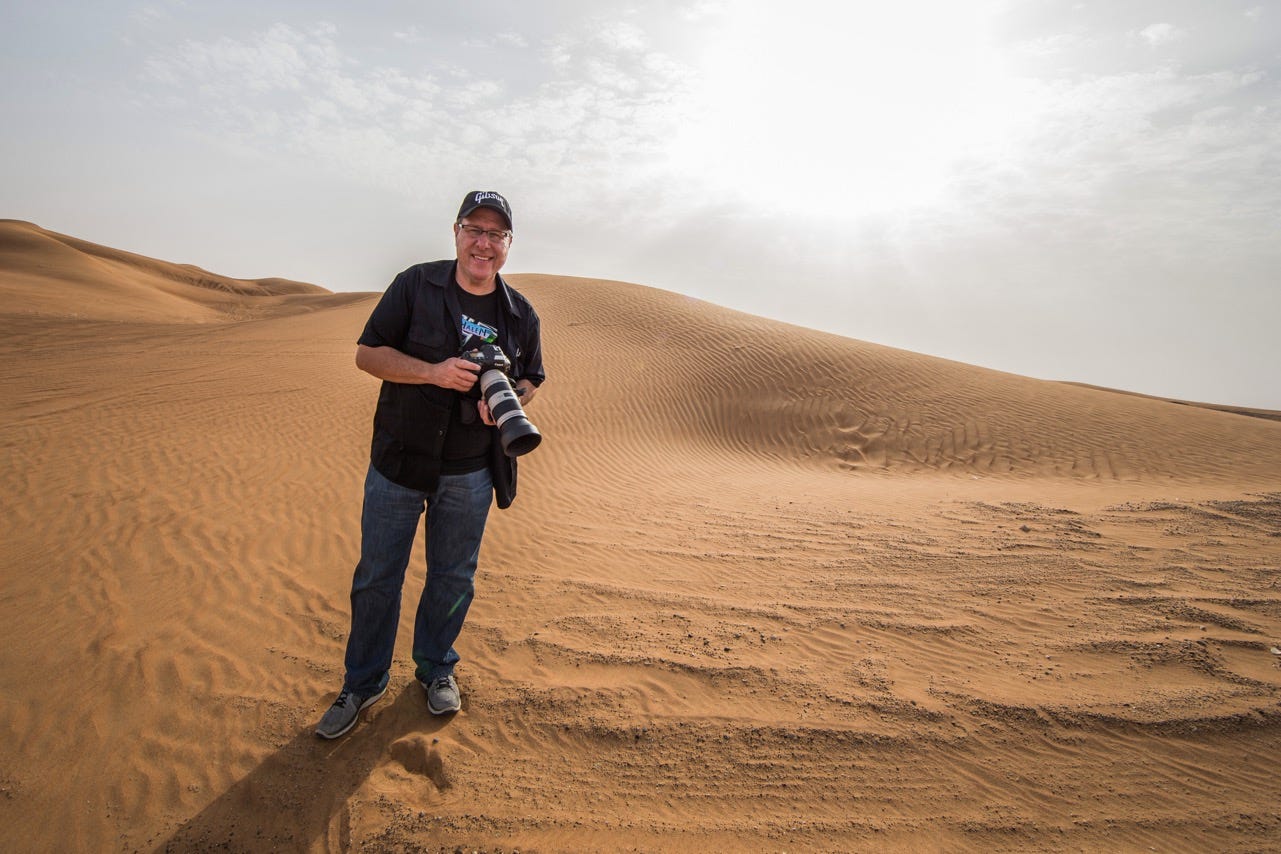
of interviewing (Scott Kelby)
(Kindly insert your three-sentence bio with your name, company and accomplishments here.)
BIO: Award-winning photographer; author; host of the weekly photography show, The Grid; Photoshop Guy, Editor of Photoshop User magazine; Lightroom Lover; CEO of the KelbyOne online educational community for photographers; struggling guitarist.
Thank you so much for joining us! Can you tell us a story about what brought you to this specific career path?
Many years ago, when Photoshop was fairly new, I wound up using it in my job as a full-time graphic designer. I fell in love with it and wound up doing live seminars back in the early 1990s teaching Photoshop. That had me switching gears from designer and photographer to full-time educator. I wound up founding a worldwide association for Photoshop users and launched Photoshop User magazine, which we still publish monthly.
Can you share the most interesting story that happened to you since you started your career?
One day the phone rang and it was a call on behalf of the Crown Prince of Dubai, informing me that I had been chosen to receive an award for my contributions to the art and education of photography. The award would be presented at a ceremony held in Dubai, which included a beautiful trophy, along with a shockingly handsome cash award. They flew me first-class on Emirates to and from Dubai, and the awards ceremony itself was on the scale of the Oscars. That was a few years back, but the whole thing is still so surreal to me—it was an incredible honor and an amazing trip from start to finish.
Can you share a story about the funniest mistake you made when you were first starting? Can you tell us what lesson you learned from that?
I did a photoshoot on-location with a production team, a professional model, a hair/makeup artist, etc. When I finished the first round of images, I went to download the photos onto my laptop and realized I had forgotten to put a memory card in the camera. When cameras ship from the factory, they are set up so camera stores can demo them, and so that people can take photos in the store and see the photos they took on the back of the camera, but those photos are not actually saved to the memory card, or anywhere for that matter. So what I learned is how to turn that stupid feature off immediately on every camera I’ve bought from that day forward, so the camera cannot take a photo without a memory card already in the camera.
What do you think makes your company stand out? Can you share a story?
We produce online educational courses for photographers (as well as write books, publish a magazine, produce webinars, live seminars, and an annual convention), with over 900 full-length courses in photography, lighting, Photoshop, and more. But what sets us apart is the scale and production quality. When we teach a course on how to photograph on safari, we literally fly the instructor and a video production team to Africa to create the course, so you’re right there with the instructor seeing everything as though you’re standing right beside them. If we’re teaching travel photography, we’re on the streets of Paris or Venice. If we’re teaching wedding photographers, we’re there at a real live wedding as it’s happening with the photographer teaching as he’s shooting the pre-wedding, the ceremony, and the reception. We do courses at that level, and it really makes a huge difference. It engages the student and creates a seriously real-world type of learning online.
Which tips would you recommend to your colleagues in your industry to help them to thrive and not "burn out"?
With photography, it’s very easy to get stuck in a rut where you’re shooting the same things again and again because you know how to shoot them. You’re comfortable, and you know you’ll come away with some good images. To keep thriving and not burn out, you have to step outside those topics and types of pictures and try new things you’ve never tried before, even if you fail miserably at first. If you’re a portrait photographer, try shooting automotive or aviation photography. If you’re a wildlife photographer, try to shoot sports or product photography. You’ll learn things from shooting these other genres that you’ll bring back to what you normally do, so it will infuse what you’re already doing with new life and new ideas.
None of us are able to achieve success without some help along the way. Is there a particular person who you are grateful towards who helped get you to where you are? Can you share a story?
We wife. Every step, every bit, every moment throughout my entire career, and my entire life. She’s a brilliant business person for sure, but she’s also a driving force—moving us to try new things and expand when the time was right. She’s always saying things like, “If we don’t do it, somebody else will,” and she was right. Plus, she gives the greatest advice of anyone I’ve ever known, and having access to that has been my secret weapon. We make an incredible team, both in business and life in general (and we have for 32+ years going strong!).
Are you working on any exciting projects now?
I'm always writing another book, and the next book is always exciting to me. I just finished one I’ve always wanted to do on travel photography, and I’m so tickled with how it came out and the reception it’s getting from photographers. That’s such a thrill for an author. You write books because you want to share something you’ve learned with other people, and my angle is to take things I learned the hard way and make them super-easy and accessible to everyone. I want people to get immediate results and see the difference in their photography right away. When you hear from readers who have that success, and they’re so excited and enthusiastic, it’s just the most incredible feeling in the world.
How have you used your success to bring goodness to the world?
A number of years ago, a woman we have known for years sold her house and her car, quit her job, and moved her family to Nakuru, Kenya to try and take an empty plot of land and build a small orphanage from scratch. We really felt like this was something so important, so tangible that, along with the folks who read my daily blog and those who join in my annual Worldwide Photo Walk, we bought the land, helped build the orphanage from the ground up, and today it houses, feeds, educates, and provides medical care and love for more than 50 awesome kids. We still support the orphanage each year, and we have multiple projects, books, raffles, and all sorts of fundraisers throughout the year to make sure they have what they need. Can you imagine what it takes to feed 50 people plus staff every day? It keeps us motivated and full of joy to know we’re helping these kids, and I’m so grateful to the folks who join us each year to make it all possible. I have a lot of really great folks that follow me on social, and they step up every year to help. I could not be more grateful.
Can you share "5 Things Anyone Can Do To Take Stunning Photos". Please share an example for each.
1. Change your perspective. The average person takes every photo standing up at eye level. If you want your photos to look “average,” do the same thing. But, if you want to add real visual interest, shoot from way down low or get up somewhere high—even up just a flight of stairs can make a huge difference. Most people won’t make an effort to do either, which is why when you do, your photos stand out.
2. Seek out great light. It happens every day, right around dawn and right around dusk, when the sun is low in the sky, and the shadows it casts are soft, and the color is gorgeous, and it makes everything look that much better. Whether it’s landscapes or travel shots or portraits, those two times of day are magical, and if you can get up early or go to dinner a little later, you’ll come back with stunning photos. It’s all about the light!
3. Don’t put your subject in the center. Your average person centers their subject in the frame. A pro doesn’t. It creates a much more dynamic photo when your subject, whether it’s a person or a soaring cathedral, isn’t centered but off to the side a bit (maybe over on the left or right 1/3 of the frame). Dead center is dead boring—put things off to the side a bit and watch how much more professional your images look.
4. For better photos of people, shoot them from a little higher than their eyes, aiming down. Holding your camera up a little higher like that (instead of at eye level) creates a much more flattering portrait—it strengthens the jawline when your subject looks up, pulls the skin back, and makes a difference. Watch anyone who’s a pro at taking selfies, and you’ll see them holding their camera up high, tilted back out in front of them. Why? Because it makes them look better. This is an easy trick to make your portrait subjects look their best.
5. Turn your flash off. Always. If your camera has a built-in flash, turn it off and keep it off. Those built-in flashes are “ugly makers” for portraits and should only be used to document car damage insurance claims for traffic accidents at night. Instead, just use whatever available light is there (especially if you’re shooting something like a concert or ballet or theater production), and your images will come out looking so much better.
You are a person of great influence. If you could start a movement that would bring the most amount of good to the most amount of people, what would that be? You never know what your idea can trigger. :-)
My movement would be based on this: You know how certain cities have rules they live by? It’s just part of their town’s culture? For example, some towns might be really strict about litter. If a townsperson sees some litter on the ground, they just pick it up. They don’t think about it, they don’t complain about it, they just fix it right there on the spot. The town motto could be “Nobody litters in this town!” Or speeding. Some towns are fanatical about stopping speeding in their town. “Nobody speeds in my town!” Well, what if we took that same idea, but our town’s motto became “Nobody goes hungry in this town!” or “Nobody is homeless in this town!” because if you saw somebody hungry or homeless, the townspeople would literally rush to their aid. It wouldn’t matter why they’re hungry or why they’re homeless—we don’t complain, we don’t question it, we just fix it. We’re not going to help all the people in our entire country at once, just these folks in our community. Nobody goes hungry or homeless in this town! Now, imagine this happening in every community, across the country, all at once. One person at a time, in one community at a time, and watch as it ripples throughout the entire country. If you’re driving past someone in your town and you see they’re hungry or homeless, you wouldn’t need to think, ”Should I stop and help them?” because when you have a movement like this, there would be a handful of people from your local community there already, standing on the side of the road, making sure that person is taken care of. That’s because this movement is committed to the ideal and a life where “Nobody goes hungry or homeless. Not in this town!”
How can our readers follow you on social media?
I'm @scottkelby on Instagram, Twitter, and LinkedIn, and skelby on Facebook.
This was very inspiring. Thank you so much for joining us!