That experience has never left me. It showed me how much I wanted it, but it also showed me how difficult access can be for people from working-class or non-affluent backgrounds.
Please write your answers below, leaving the questions in the document. We might schedule a follow-up call or skype to round things out.
Rising Star (Sam Bell) On The Five Things You Need To Shine In The Entertainment Industry
As a part of our series about pop culture’s rising stars, we had the distinct pleasure of interviewing Sam Bell.
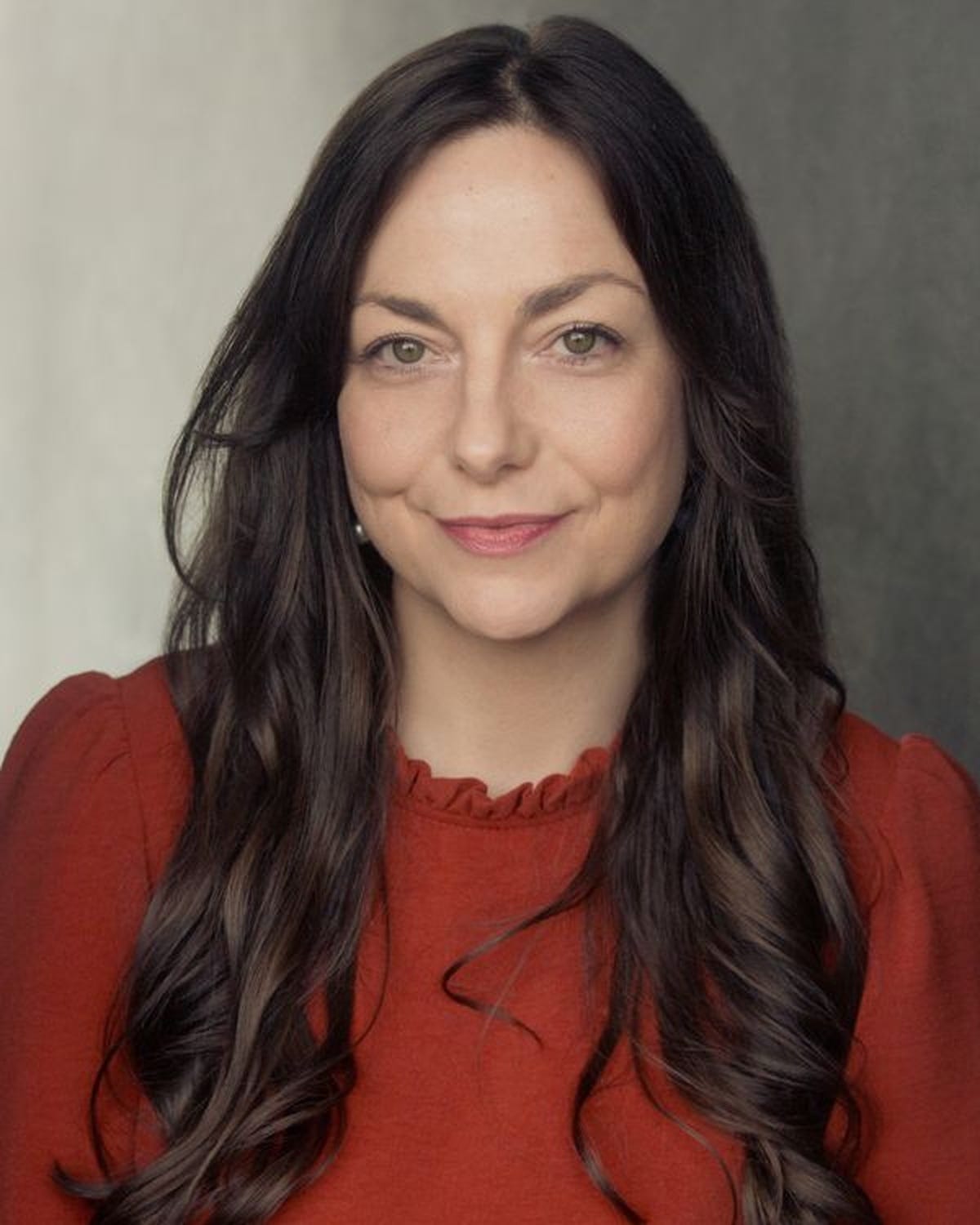
Sam Bell is a North East actor and writer whose career spans theatre, film and television. A proud Geordie and passionate advocate for working-class representation, her screen credits include the International Emmy-winning Fallen for AMC+ and ITVX, Robin Hood for MGM, The Librarians: The Next Chapter for TNT, and Death by Lightning for Netflix. Alongside acting, Sam is also writing and developing her own work, including the mini TV series The Dark Side of the Geordie Dream and the short film Sam Stands Up, with other ideas in the pipeline.
Thank you so much for joining us in this interview series! Can you tell us the story of how you grew up?
I was born in North Shields and grew up there. My mam was the warden of a residential home, so my brother and I grew up surrounded by older people. These days, you’d probably call her the manager rather than the warden.
The residents would have entertainment evenings, tea and coffee mornings, day trips, and we always got to be a part of it. They were so lovely to us, treating us almost like we were their grandchildren. They’d give us sweets and little bits of pocket money, and we thought it was absolutely class!
My dad worked away on the ships as a chef, so unfortunately he had to be away from home for long periods of time. I remember being told that when I was little, my mam would show me a photograph of my dad so that I wouldn’t forget him. She’d point at it and say, “That’s your dad.”
Then one day he came home from sea. He walked through the door and apparently I screamed because I didn’t recognise him. He was saying, “I’m your dad,” and apparently I shook my head, ran off, grabbed the photograph, pointed at it and said, “That’s my dad.” I thought the actual photograph was my dad rather than the person in it.
My mam and dad were together until I was about seven, and then they got divorced. Me, my mam and my brother moved into a bed and breakfast for a while until the council found us a house.
My brother and I had bunk beds in the same room as my mam, and I loved being in there with her. It meant we got to chat for that little bit longer into the night, and if she was watching television, we got to watch it too. It was almost like we were cheating bedtime. And to top it all off, someone cooked me a massive breakfast every morning. What’s not to love?
We still spent a lot of time with my dad too. When my mam and dad divorced, they made it very clear that they both loved us very much, and that going to my dad’s at weekends was going to be like a little holiday. That was the idea, and honestly, that was the reality too. We were really lucky that they both made sure we felt loved and protected from the more difficult parts of the separation as much as they could. I feel very lucky for that.
I also lived with my dad for a chunk of time when I was a bit older, from around 14 to 17. It came at a time when I was definitely going a little bit off the rails, and he was exactly what I needed then. He put some firm boundaries in place, gave me a bit of a wake-up call, and helped steer me back in the right direction. I probably wouldn’t have passed my exams without him, and I’ll always be grateful for that time.
No matter what stage of life I’ve been in, creativity has always been a constant thread. I used to make my family sit down and watch plays I’d written and created. I’d drag my brother and sister into them too. I’d write, direct and act in the shows. I took it very seriously.
When I was about 14, I was very lucky to find Live Theatre’s youth theatre in Newcastle. Finally, I’d found an outlet for my creativity — and subsequently my siblings were released from their acting duties.
Live Theatre’s youth theatre completely changed my life. It was an incredible training ground and gave me the confidence to believe that acting could be something I pursued seriously. Another huge moment for me was being accepted into East 15 Acting School. Where I’m from, getting into a London drama school felt like the absolute pinnacle, and I was completely over the moon.
The only problem was, I had no idea how I was going to pay for it. At the time, one year of tuition alone was around £14,000, and the student loan I could get didn’t even cover the full fee, never mind living costs in London. But I couldn’t let the opportunity pass me by. I sold everything I owned, right down to the smallest bits and bobs, doing car boot sales and selling things online just to pull together as much as I could. I even drove myself to London in my little car, which I’d bought for about £450, and sold it when I arrived for £500. Profit, baby.
That got me there for the first term, but I still had no idea how I was going to make the rest of the year work. I wrote to people I admired in the industry, explaining that I had been accepted and was doing everything I could to stay there. Dame Judi Dench sent me a cheque to contribute, which was completely surreal and incredibly kind. My family and friends also rallied around me in ways I’ll never forget. My mam even cashed in part of a pension early to help me stay at drama school.
That experience has never left me. It showed me how much I wanted it, but it also showed me how difficult access can be for people from working-class or non-affluent backgrounds. Talent and passion are one thing, but opportunity often comes with a cost, and not everyone starts with the same safety net. I still carry that with me, along with huge gratitude for everyone who helped me get there.
Can you share a story with us about what brought you to this specific career path?
I’ve always wanted to be an actor. I can’t comprehend how people don’t know what they want to do, because I’ve always known.
I remember watching Mermaids with Cher, Winona Ryder and Christina Ricci when I was around five years old. Christina Ricci was about the same age as me, and I was completely in awe of her and wildly fascinated by the world of film. I watched that film so many times and decided that whatever it was she was doing, I wanted to be doing the same!
Through being involved in youth theatre, I got to audition for all kinds of projects, which eventually led to my first professional paid acting job when I was 15. It was a short film, and I was one of three young actors who played the Stairwell Gang. We didn’t even speak, but we had a little premiere at the Tyneside Cinema, and seeing myself on the big screen was incredible.
I remember genuinely thinking, “This is it. I’ve made it. I’m on my way to fame.”
One of the lead actors had recently been in Gangs of New York with Leonardo DiCaprio, who I was completely in love with at the time. So, in my head, that was it: next stop, Hollywood. Leo D and Sam B starring in a feature film, sorted.
It makes me laugh now because it was actually a very long time before the next opportunity came along and I’m still patiently waiting for my leading-lady moment opposite Leo.
Can you tell us the most interesting story that happened to you since you began your career?
It’s hard to think of just one because there have been so many incredible moments throughout my career already where I’ve thought, “Wow, this is actually my life.”
One of the standout moments has to be ending up in New York at the International Emmy Awards with the Fallen team last November.
The whole experience was incredible — the lead-up events, walking the red carpet, getting dressed up, fine dining, and meeting talented creatives from all over the world. I’d been practising my gracious loser face, just in case. Absolute waste of time. We won!
Next thing I knew, we were all on our feet and heading to the stage, joining our director, Matt Hastings, as he collected the award and gave a heartfelt speech. It all happened so quickly. Afterwards, we were whisked backstage, through corridors and into press rooms, where we were suddenly doing photographs, interviews and answering all kinds of questions.
It was this amazing whirlwind of excitement - to see a show I’d been part of recognised with such a prestigious award was incredibly special. I also remember how surreal it felt to actually hold the Emmy in my hands afterwards. It was heavier than you might think!
It has been said that mistakes can be our greatest teachers. Can you share a story about the funniest mistake you made when you were first starting? Can you tell us what lesson you learned from that?
One that still makes me laugh happened during rehearsals for Cyrano de Bergerac. Our version was set in an old-school gymnasium, so it was a very physical production. We worked alongside professional dancers and movement artists from Ballet Lorent, creating movement sequences and trying things that many of us would never normally attempt.
Personally, I have absolutely no background in movement. None.
Actually, that’s a lie. I once won a dance competition at Sandy Bay Caravan Park by doing the running man.
But apart from that, nothing.
However, during one rehearsal, for some bizarre reason, I decided this was the perfect moment to enter my breakdancing era.
I thought it would be an inspired idea to run full pelt towards a wall, take a few gliding steps up it, flip off it, and land smoothly back on my feet.
That was the theory, anyway.
In reality, I made it about two steps up the wall before the whole vision fell apart. There was no elegant flip, no smooth landing — just me crashing down in one big heap, going straight over on my ankle, and ending up in hospital.
It turned out that not only had I badly bruised my ego, I’d also badly sprained my ankle, which took me out of action for a little while. But the show must go on, so I completed the tour like a true trouper, swollen ankle and all.
I suppose the lesson is to know what you’re capable of. It’s great to challenge yourself, but don’t bring “horse riding on the CV” confidence to a wall-flip situation.
What are some of the most interesting or exciting projects you are working on now?
I’m really excited to have two very contrasting projects coming out in close succession.
This month, on 23 September, my character Luna Anderson is introduced in The Ark on Syfy. I can’t say too much without giving anything away, but it was an incredible set to be part of. My scenes were filmed mostly in a studio, and stepping into that world felt completely different from anything I’d done before.
Then in October, my character Isabelle Juenet will be introduced in season two of Maigret. That was a completely different world again — darker, more serious, and a real shift in tone from Luna.
I’m also writing and developing some of my own projects, which I’m hoping to act in too. They’re still in the very early stages, but one of them is The Dark Side of the Geordie Dream, a comedy mini-series set in my home city of Newcastle. It follows Es and Frank as they try to turn their dreams into reality while life, bad timing and a complicated relationship keep getting in the way.
I’m also working on Sam Stands Up, a short comedy-drama set entirely in a small comedy club, where the audience slowly becomes the inside of Sam’s head. I wrote this one while I was in the middle of a full-blown love affair with Charlie Kaufman movies, which probably explains the blurred lines between reality, memory and imagination.
As a rising star, you've likely faced challenges along the way. How do you stay motivated and overcome obstacles in your career?
What helps me stay motivated is remembering that this career doesn’t have a neat, obvious trajectory. One minute someone can be in a huge film, then not work for a while. Someone else can feel completely unknown, and then suddenly a role changes everything. There isn’t one set timeline or one correct route through it.
I love hearing stories about actors whose careers have taken off at different stages of their lives, because it reminds me that success doesn’t have an age limit. Some people have their breakout moment very young, some find it later, and some build brilliant careers slowly over years and years of work.
So when things feel quiet, or when I’m facing an obstacle, I try to remind myself that a quieter period doesn’t mean nothing is happening. Sometimes it’s where the next thing is forming. I try to stay open to possibilities and remember that unpredictability can be part of the journey.
We are very interested in diversity in the entertainment industry. Can you share three reasons with our readers about why you think it's important to have diversity represented in film and television? How can that potentially affect our culture?
I think diversity in film and television is important because real life is diverse. Every part of our day-to-day lives is shaped by people from different places, backgrounds, cultures and experiences, so it only makes sense that the stories we tell should reflect that. If film and television are meant to hold a mirror up to life, then that mirror needs to show more than one type of person.
It also matters because everyone deserves to feel seen. Seeing someone on screen who sounds like you, looks like you, comes from where you come from, or has lived something close to your experience can be incredibly powerful. It can make people feel like they belong, like their story matters, and like there is space for them too.
But diversity can’t just stop at who is on camera. It has to be behind the scenes as well — in writers’ rooms, casting rooms, crews, directors, producers and decision-makers. That’s where stories are shaped. The more varied the voices are behind the work, the richer, more truthful and more interesting the work becomes.
I think that can have a real effect on culture because what we see repeatedly helps shape what we understand, accept and value. If we keep seeing a broader range of people represented with depth and dignity, it can challenge assumptions, build empathy and make the world feel a little less narrow.
What are your "5 things I wish someone told me when I first started" and why? Please share a story or example for each.
Sam Bell - 5 things I wish someone had told me when I first started the acting industry
https://youtu.be/F8lRFIU_bM8
1. Sometimes your scene partner is a piece of tape.
2. Rehearsal on set is not the same as rehearsal in theatre.
3. The red carpet has a queue.
4. Insecurity doesn’t disappear just because you gain more experience.
5. Don’t hide your accent, or any part of what makes you authentic.
Which tips would you recommend to your colleagues in your industry to help them to thrive and not “burn out”?
If I’m being completely honest, I don’t think I’ve mastered this myself yet. As a working-class actress, I’ve always had to have a full-time job when I’m not acting, and outside of that I’m auditioning, writing, pitching, looking for opportunities, going to the gym, and spending time with friends and family.
So I wouldn’t want to pretend I have the perfect balance, because I don’t.
But one thing I am learning is that you have to take breaks when you can, even when it feels difficult. As a freelancer, there can be this fear that if you stop for a second you’ll somehow miss something, but you can’t keep running on empty. Recently I booked a solo four-day trip to the gorgeous Scottish island of Bute, thinking it would just be about relaxing and doing very little. Instead, I gave myself the time and space to follow whatever felt right in the moment. Some days that meant eating in lovely places, having a prosecco and sea swimming. Other days it meant doing a parkrun, visiting a stately home and driving the entire perimeter of the island and stopping at every beach that caught my eye. It became less about forcing myself to rest in one specific way and more about listening to what I actually needed. Sometimes giving yourself that space is what allows you to come back with more energy.
I also think it’s really important to surround yourself with people who understand the pressures of the industry. It can be very up and down, very intense, and sometimes you might be away for long periods of time or trying to juggle a lot at once. Having friends, family and people around you who understand that, support you and help keep you grounded makes a huge difference.
And finally, I think you have to keep remembering why you started. Passion doesn’t make you immune to tiredness, but it can remind you why the effort matters.
But like I said, I’m still learning how to balance it all, so if anyone has any tips for me, I’ll happily take them.
You are a person of enormous influence. If you could inspire a movement that would bring the most amount of good to the most amount of people, what would that be? You never know what your idea can trigger. :-)
I think I’d want to inspire a movement that makes creative spaces feel less exclusive and more accessible, especially for working-class people and people from regional backgrounds. I’d love more young people to feel that their accent, their background and their life experience are not barriers, but strengths.
Free spaces like Live Theatre’s youth theatre changed my life, and I’d love more young people to have access to opportunities like that without money, accent or postcode making them feel like they don’t belong. If I could inspire anything, it would be that: more people believing that their voice belongs in the room exactly as it is.
None of us are able to achieve success without some help along the way. Is there a particular person who you are grateful towards who helped get you to where you are? Can you share a story about that?
A person I’m incredibly grateful to is Jonathan English — writer, director and producer extraordinaire. I lived in Belgrade for a while, and when I first moved there it took me a little time to find my community. For me, that has always been the creative community.
I’d heard about Jonathan and the work he was doing, so I reached out and asked if we could meet. He invited me to his offices, we had coffee and these gorgeous little cakes, and we talked about acting, writing, previous projects and the kind of work I hoped to do next.
What I’m most grateful for is that he opened the door and welcomed me in. Sometimes the hardest part is simply getting in the room, especially when you’re in a new place and trying to find where you fit. Jonathan was incredibly generous with his time, advice and guidance, and through meeting him my circle expanded. I met new people, made new connections, and those connections led to some really special opportunities.
He opened a door, and through that door came people, projects, friendships and opportunities that meant a huge amount to me. I’ll always be grateful for that.
Can you please give us your favorite "Life Lesson Quote"? Can you share how that was relevant to you in your life?
My favourite life lesson quote is actually less of a quote and more a piece of advice that was given directly to me by Sarah Niles while we were working on Fallen. She said, “Sit in your power.”
It felt so poignant at the time because it came from someone I really admired, and still do. Sarah is not only an incredibly talented actress, she is also humble, down to earth, generous, and just an all-round lovely person. We spoke a lot on set and outside of work about life, careers, hopes and dreams, and she made me feel like the things I wanted were really possible.
Not everyone you meet in this industry will necessarily make you feel that way, so when someone does, you remember it. For me, “sit in your power” means knowing who you are, trusting what you bring, and not feeling like you have to shrink yourself to fit into someone else’s idea of what you should be. Everyone’s power is different, and I hope somewhere down the line I can make someone else feel as encouraged and as inspired as Sarah made me feel.
Is there a person in the world, or in the US whom you would love to have a private breakfast or lunch with, and why? He or she might just see this, especially if we tag them. :-)
No brainer — Olivia Colman. I love her in absolutely everything I’ve seen her in. I first loved her in Peep Show, and then in films like The Favourite, The Lost Daughter, Wicked Little Letters and The Lobster. She has this incredible ability to be completely truthful, funny, heartbreaking and surprising, sometimes all at once.
A couple of years ago, I actually auditioned for a film where Olivia Colman was listed as one of the leads, and I was absolutely ecstatic to be considered. I put everything into that audition, got shortlisted, and then the shortlist process went on for quite some time. So naturally, I let my mind wander into dangerous territory: “This is happening. This role is mine. Me and Olivia. Co-workers. Scene partners. Maybe even best friends?”
Only it wasn’t happening, coz I didn’t get the role.
I also love watching her in interviews. She seems so grounded and down to earth, and when people ask her about her process, she is often very matter-of-fact about it, which I really admire. I’d love to sit with her, pick her brain, hear about her career, get every bit of advice she was willing to give, and honestly just be around her because she seems hilarious.
How can our readers follow you online?
Readers can follow me on Instagram at @SamMarieBell, where I share updates on my projects, little videos, and bits of what I’m working on.
This was very meaningful, thank you so much! We wish you continued success!
About The Interviewer: Tavares Beverly is the Founder and CEO of Beverly Boy Productions, a national video production company that has helped organizations tell their stories through video for more than two decades. Over the course of his career, he has worked with everyone from Fortune 500 executives and healthcare professionals to politicians, nonprofit leaders, educators, and artists, gaining a unique perspective on the role communication plays in leadership, business, and human connection.
A frequent contributor on topics including communication, entrepreneurship, leadership, and personal development, Tavares believes that the ability to communicate effectively is one of the most valuable skills a person can develop. His work is driven by a passion for helping organizations connect with their audiences and helping individuals unlock their potential through mentorship, perseverance, and meaningful relationships.
To learn more, connect with Tavares on LinkedIn or visit BeverlyBoy.com. If you're interested in using the power of storytelling and communication to grow your organization, strengthen your brand, or inspire your audience, he welcomes the opportunity to connect.