It’s better to shoot and miss than to let time run out and wonder what if.
Tech
Ryan Brinkhurst on Constant Curiosity, Calculated Risk, and Simplifying Consumer Finance
Serial entrepreneur Ryan Brinkhurst discusses his journey from management consulting to launching innovative tech platforms that simplify complex industries.
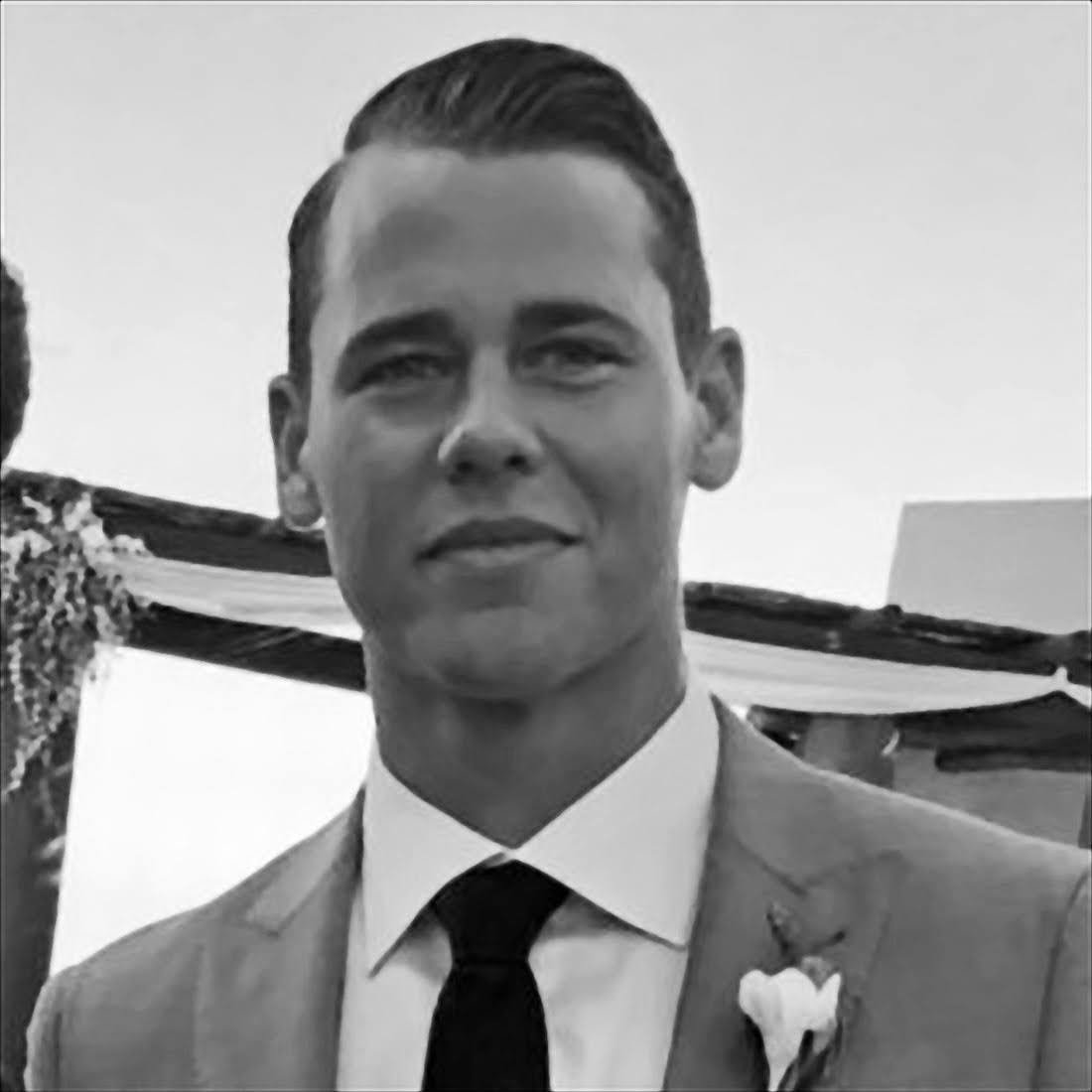
In recent years, Big Tech has gotten a bad rep. But of course many tech companies are doing important work making monumental positive changes to society, health, and the environment. To highlight these, we started a new interview series about “Technology Making An Important Positive Social Impact”. We are interviewing leaders of tech companies who are creating or have created a tech product that is helping to make a positive change in people’s lives or the environment. As a part of this series, I had the pleasure of interviewing Ryan Brinkhurst.
Ryan was born and raised in Vancouver and graduated from UBC’s Sauder School of Business with honours in 2014, obtaining a Bachelor of Commerce specializing in Finance. Ryan worked as a Management Consultant for 3 years but is now branded as a “Serial Entrepreneur” having successfully launched 4 businesses in the last 3 years which currently employ over 30 staff. Ryan holds his Chartered Financial Analyst (CFA) designation and is an active investor and advisor to young entrepreneurs.
Thank you so much for joining us in this interview series. Before we dive in, our readers would love to learn a bit more about you. Can you tell us a bit about your childhood backstory and how you grew up?
Thank you for having me. I grew up about 45-minutes east of Vancouver, BC in a town called Anmore. I had a fortunate childhood and spent most of my time playing sports, hanging out with friends, travelling with family, and of course school. I’m the middle-child between two sisters, one a year older and the other 2-years younger. I always did well in school, but I wouldn’t say I was necessarily a “good student.” From a young age I was never satisfied with being told “this is how this works” or “you need to do this” without being given strong evidence or a good reason as to why — always questioning. This naturally led to conflict with teachers — but I got the grades!
Fast-forward to 2022 and I am still asking “why” every single day. Rather than leading to trouble in the classroom, my curiosity has been a big factor in my success as an adult. It’s this curiosity and scrutiny of the way things are done that led to the ideation and launch of the Beautifi platform.
Can you share the most interesting story that happened to you since you began your career?
Starting off with a tough one! I would have to say the most interesting thing that has happened to me was last year when the CRA proposed regulations on an industry I operate in that would have killed my business. This is pre-Beautifi, which impacted a company I still own and lead today called Swift Disability Services. Swift helps Canadians through the arduous process of applying for and gaining approval for the Disability Tax Credit. This program is not well-known, and therefore many Canadians who meet the criteria and should receive the annual tax benefit don’t even know it exists. Swift changed that — we actively advertise across Canada to generate awareness of the program, and we help Canadians collect the credit on a contingency-based fee structure where we only get paid if we’re successful. Since its inception in early 2019, Swift has helped Canadians collect more than $30,000,000 in tax refunds, we have a 98% success rate, and we currently employ over 20 people in our Port Moody, BC office.
The CRA regulatory overhang forced us to operate in an environment with no certainty, which made motivating staff and planning for the future very difficult. Thankfully, we were able to fight against and overcome the proposed Revenue Canada regulations that would have stopped us from helping Canadians. Getting through 2021 was a grind, but we did it and have come out stronger than ever with a rapidly growing and re-energized team. We received overwhelmingly positive support from our customers, which was a testament to the values we live by. With Beautifi, we are building on those same core values — Transparency, Community, and giving it 100% every single day for our clients. Helping Canadians is at the core of what drives us, and that’s what makes what we’re doing with Beautifi so exciting and rewarding.
None of us are able to achieve success without some help along the way. Is there a particular person who you are grateful towards who helped get you to where you are? Can you share a story about that?
Maybe a cliché, but it has to be my dad. I’ve wanted to be an “entrepreneur” since before I knew what that word meant. I was exposed to entrepreneurship when my dad started his business in 1997, and I was five years old at the time. I learned a lot, without knowing it at the time, by watching him build his business from the sidelines. He worked a lot while I was growing up, and he taught me at a young age the importance of hard work, that nothing comes easy, and making a difference. He also taught me that your business should not define you and that you need your own identity. I’ve built and continue to build businesses with this in mind. His support and guidance led me to start my first businesses, and I am forever grateful.
Can you please give us your favorite “Life Lesson Quote”? Can you share how that was relevant to you in your life?
I wouldn’t say I have many quotes to pull from, but a quote that I think about every time I have a new idea is “it’s better to shoot and miss than to let time run out and wonder what if.” It’s a Michael Jordan quote, and this speaks to me as I so often hear and see people not taking the leap as they bury themselves in the “what if” outcomes. Getting stuck playing the “what if” game is a guaranteed way of never leaving your comfort zone. Coming up with an idea is easy; making it a reality is what changes the world.
You are a successful business leader. Which three-character traits do you think were most instrumental to your success? Can you please share a story or example for each?
Self-Starter — I have never been one to shy away from risk. Being able to stomach the risk and make an unemotional decision to move forward with a business idea has been crucial to my success, but the work begins once that decision is made. There is no one to push you, no boss, no deadline, just you — being a self-starter and forcing myself to put the hours in is probably the biggest contributing factor to my success so far.
Work Ethic — Starting a business is hard. I wouldn’t say it’s as hard as most people make it out to be in terms of the type of work that has to be done, but the amount of time and energy required to make it work is no joke. I wouldn’t say I have ever been the smartest in the room or at the table, but I will put in the hours to make it work. I frequently have worked 80+ hour weeks for the last four years. I don’t enjoy all those hours, but it’s this work that allows my ventures to succeed. I think if anyone puts enough time into anything, there is a good chance it won’t fail.
Eagerness to Learn — New businesses often have one employee to start. This has been true in my case, and as a result, I have needed to learn how to perform virtually all operating and strategic functions within my businesses. Being eager to learn the “why” and how things work has been instrumental in giving me a deep understanding of my businesses and also in enabling them to get off the ground in the early stages.
Ok super. Let’s now shift to the main part of our discussion about the tech tools that you are helping to create that can make a positive impact on our wellness. To begin, which particular problems are you aiming to solve?
I’m hoping to simplify the confusing and intimidating industries of plastic surgery and consumer finance. People should have access to feel their best, and Beautifi will help to enable that. Consumer lending has been around since the start of civilization, and cosmetic procedures are well known — We are bridging the two in a way that makes these industries approachable for everyone. There is a general misunderstanding and lack of understanding around loans and what they can be used for. Many people think that loans are just for houses, down payments, cars, and things like that. When in fact, loans can be used for a plethora of things, including plastic and cosmetic procedures. I wanted to help increase the visibility of a service like this so that it is readily available to more people; the increased awareness provided by Beautifi will not just impact how people look but also how they feel. We’re aiming to help treat ongoing mental health issues suffered by many, removing barriers to support self-confidence and empowering Canadians to be their true selves.
How do you think your technology can address this?
Technology allows us to provide a service without meeting or speaking with our users face-to-face. This allows us to scale rapidly and address the entire Canadian market immediately. Removing barriers and streamlining previously difficult and/or slow processes leads people to do things they otherwise never would have done, strictly because now the same outcome can be achieved with way less effort.
Can you tell us the backstory about what inspired you to originally feel passionate about this cause?
Lack of innovation and misconception. Words like loans, finance, and principal repayment scare people, and individuals feel like they need to go to extremes to afford a procedure or that it’s not on the table at all due to the cost. There is a huge gap in the market, and the idea that fixing personal insecurity through plastic surgery was reserved for the wealthy, and the wealthy only needs to be addressed. It’s not so different from financing a car, cars used to be seen as luxury items only for the 1%, which of course, is no longer the case. Loans are simple, and that’s how we will communicate them.
How do you think this might change the world?
I think this could alter how the public views accessibility to plastic surgery, and hopefully, it won’t be just reserved for the wealthier 1%. Both men and women will have more access to discretionary procedures, and poor customer service from clinics, credit unions, or other financing companies can be avoided and give higher self-confidence to its users.
When people feel their best, they are their best — That’s how we will help change the world.
Keeping “Black Mirror” and the “Law of Unintended Consequences” in mind, can you see any potential drawbacks about this technology that people should think more deeply about?
Absolutely. A drawback would be people moving forward with a procedure and/or loan they later regret. I am a huge proponent of freedom of choice, and what I love most about what we’re doing is enabling people to make that choice. When making any major life choices, we encourage people to think hard before making the decision to take on a loan and/or move ahead with a procedure. All Beautifi users must be 18 or 19+ (depending on the province), so we take comfort in that the drawbacks of our solutions will not impact children.
Here is the main question for our discussion. Based on your experience and success, can you please share “Five things you need to know to successfully create technology that can make a positive social impact”? (Please share a story or an example, for each.)
- How much will it cost? It’s pretty difficult to do anything without knowing how much it will cost. Step 1 before trying to create technology that will make a positive social impact is how much it will cost. Once you have this, you can run a cost-benefit analysis to determine if the sum of the social and financial impacts outweigh the costs.
- How will I fund it? I have had many ideas in the past, especially in my late teens and early 20s, when I dropped the idea of this question. An unfortunate reality is that things cost money, and we need a way to pay for them. For younger entrepreneurs who typically have a younger network and less available capital, this can be a tough one to get past. I would say that if you have a good idea and are passionate about it, you would be surprised how many investors out there will provide capital if for nothing else than to support a budding entrepreneur. I spent $25,000 building out a mobile app when I was 22 that would work to increase engagement and data collection of patrons by giving them the ability to bid for control of the music and vote for genres and songs. Once I got through the discovery stage, I was quoted $700,000 to get the app to a point where the functionality was sufficient and another $500k in required cash flow for operations. I could have found this out without spending 25k, which at the time was most of my money.
- How will I scale it? Having a roll-out plan and strategy is a need-to-know item for sure. Prior to launching a product, I work with my team to create a very detailed plan that lays out how each business function will evolve as the business grows.
- How will I sustain it? Once it’s live, how will it operate? Knowing what to do and how you will do it once the product is launched is important. I have businesses that were cash flow positive from month 2 or 3; this question is an easy answer in those cases (i.e., many service-based businesses such as consulting). However, I have others (like Beautifi) requiring substantial investment, and the delay in realized revenue makes this question a key one.
- Why will people use it? An obvious answer. I would recommend at least having a very good idea that people will actually use/want what you’re planning to roll out!
If you could tell other young people one thing about why they should consider making a positive impact on our environment or society, like you, what would you tell them?
Start small and stay focused but keep an open mind. There are so many ways to make a positive impact; it doesn’t need to be a global initiative. Start by making a difference in your own community and take things one step at a time. Keep your mind open to new opportunities as your idea or initiative grows, as the path you take may not be what you had initially planned or expected.
Is there a person in the world, or in the US with whom you would like to have a private breakfast or lunch, and why? He or she might just see this, especially if we tag them. :-)
Elon Musk — His ability to move ahead despite constant public criticism and to have the impact his work has had on our evolution makes him, in my mind, the most influential and impressive person on the planet. I would love an opportunity to have a conversation with him, but I won’t hold you to it.
How can our readers further follow your work online?
Join our mailing list by going to Beautifi.com, or follow us on Instagram, Twitter, and LinkedIn. We send out content on a weekly basis to our subscribers and are quite active on all our social platforms.
Thank you so much for joining us. This was very inspirational, and we wish you continued success in your important work.
Thanks again for having me!
LK
Written by
Luke Kervin, Co-Founder of Tebra
Columnist & ContributorAuthority Magazine Columnist & Contributor

Published inAuthority MagazineTop Lessons, Top Authorities · 42K Followers
Exclusive, curated interviews with the leaders and changemakers shaping tomorrow. Leadership lessons, industry deep dives, and executive profiles.