I was in the principal’s office being notified that I would be representing the school at an upcoming specialized event, and then another moment in the principal’s office being written up on a discipline referral.
Rodney C Burris of Pinnacle Advisory Group LLC : Emotional Intelligence; What It Is, Why It Is So Essential, And How We Can Increase It
INTERVIEW QUESTIONS.
(If you are unable to download it, please click File-Download)
Please answer the questions, and leave the questions formatted as they are in the document. We may schedule a follow-up call or skype to round things out.
As a part of our series about “Emotional Intelligence, I had the pleasure of interviewing (Rodney C Burris).
Rodney C. Burris: A Remarkable Catalyst for Emotional Intelligence Training and Empowerment:
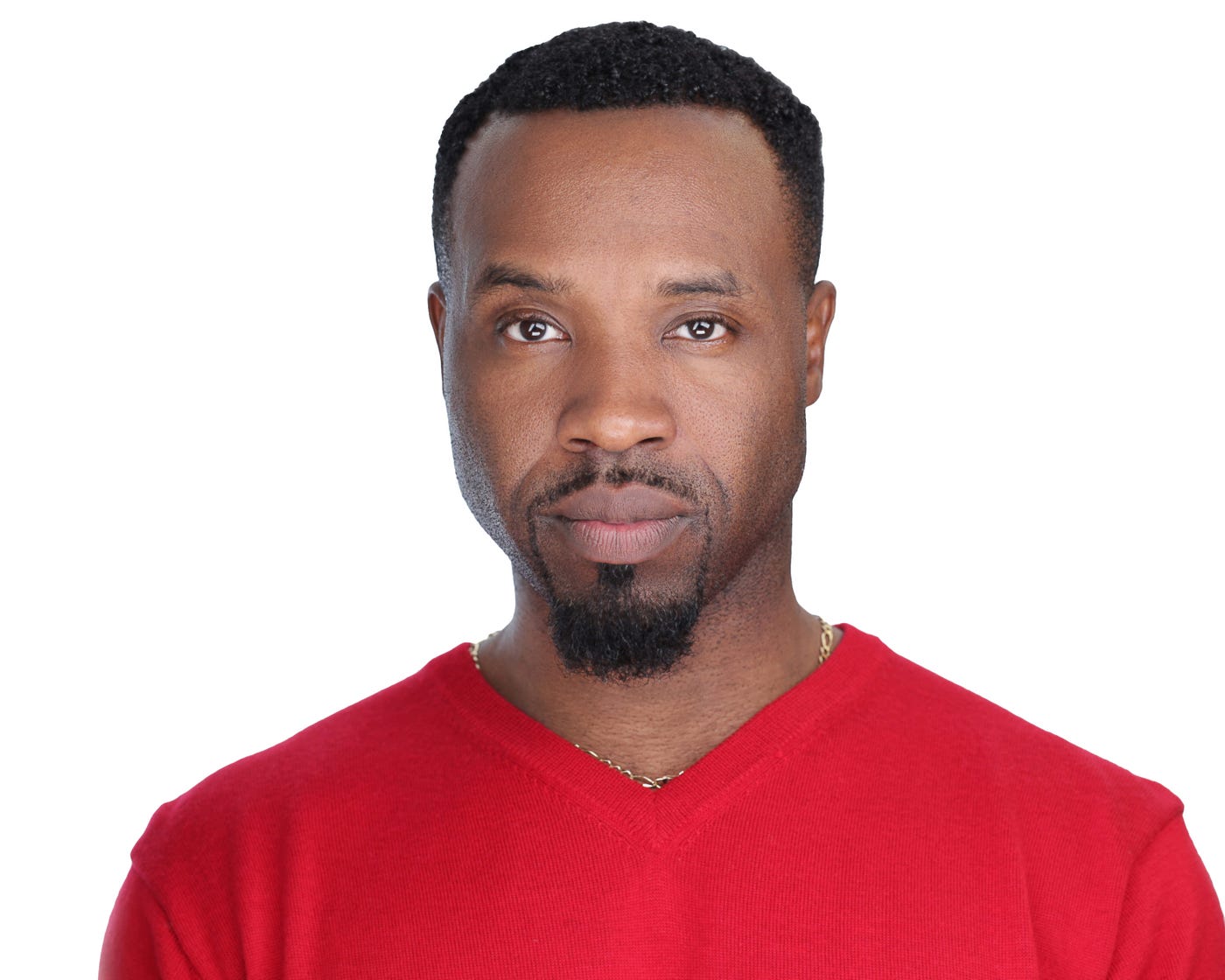
From the tough neighborhoods of Baltimore and Jacksonville to becoming one of America's premier Emotional Intelligence Trainers, Rodney C. Burris's journey is one of resilience and triumph. Raised single-handedly by a resilient mother amidst challenges such as substance abuse, homelessness, poverty, and domestic abuse, Rodney's story is one of remarkable perseverance.
Undeterred by the hardships, Rodney successfully pursued his education, earning a bachelor's degree in Psychology from the prestigious Johns Hopkins University and a master's in Nonprofit Management from Capella University.
His incredible journey and dedication to overcoming adversity have fueled his passion to help others. He uses his expertise to support numerous organizations with their team-building initiatives, communication enhancement, data analysis, and program development. His engaging workshops and seminars have gained wide acclaim, not only across the United States, but globally.
His extensive portfolio of satisfied clients includes powerhouses like Fiat-Chrysler Corporation, the Federal Department of Education, and the Washington DC Business District. In addition to his hands-on training, Rodney has authored a best-selling book on emotional intelligence, topping Amazon's charts in three categories.
Always enthusiastic, Rodney's mantra is, "LET ME HELP YOUR TEAM OVER ACHIEVE!" His commitment to helping others reach their full potential is as unwavering as his own journey towards success.
Find out more about Rodney and his work at www.RodneyCBurris.com and follow him @RodneyCBurris on all platforms (including TikTok) for regular updates. #rodneycburris
Thank you so much for joining us in this interview series! Before we dive into the main focus of our interview, our readers would love to “get to know you” a bit better. Can you tell us a bit about your childhood backstory?
Growing up, my story was a little bit like a tale of two different boys, all wrapped up into one person. I had very different, dichotomous experiences happening at the same time. On the one hand, I was the son of a single parent home, father in and out of our lives, domestic abuse here and there within the home (growing up), a homeless shelter, transient home life after then ( nine different residences before high school graduation), multiple schools (11 total between kindergarten and 12th grade) fights, suspensions -- I even almost got expelled from school! It makes me laugh and shake my head a bit, because that story by itself sounds so crazy.
On the other hand, I was always in the top 10% of my schools academically. I had years that I earned straight As all year, every quarter, for the entire year. I was in gifted, honor roll and advanced classes. I was frequently top 90th percentile in standardized tests. I was a youth minister (my mom allllways had us in church), I earned several scholarships and awards, was accepted into a top tier university on the first try (I only applied to one college, the Johns Hopkins University and got in --- and made the Dean’s List). I was the responsible older brother (only boy) and the dependable son.
I was too conscientious to let my self run completely wild, but I was too adventurous to not TRY. I found myself in some crazy places one moment, and then at the head of the class the next. I was in the principal’s office being notified that I would be representing the school at an upcoming specialized event, and then another moment in the principal’s office being written up on a discipline referral (a bad official record of conduct).
What or who inspired you to pursue your career? We’d love to hear the story.
There was a pivotal moment that changed my life, and allowed me to see, to KNOW that I had a real gift, and that I was making real impact, and that I should not take any of that for granted.
This was about a decade ago. I was early into my career, and I found myself in a high school in Delaware, in one of the infamous Cafetorium multipurpose rooms. After my presentation, a line of students started to form of those who wanted to talk to me after the session. Towards the end of this line was a young lady, a young hispanic student. When she began to speak I immediately noticed two things: one, it was evident that English was most likely her second language; and two, whatever she was trying to communicate to me in that moment was being choked off by emotion & tears. As she was finding her words, she communicated something along the lines of, “Before… this…, I… did not think… this… was… for me.” Now, to this day I do not know what the “this” meant for her (was it my presentation? or being at the school? or coming to America? …or was it going to college (which was the topic of my talk)?...I don’t know). What I do know is that she was doing her best to control her crying. Meanwhile I was a bit stunned and didn’t know what to do; humanity warranted that such a soul should receive a hug in the moment, but REALITY made sure I kept beyond arm’s length. I struggled to find an administrator/teacher/adult, yet the room just seemed full of high schoolers. Immediately I began to hope that I was not appearing to her as uninterested, in that my attention was darting around the room looking for ANY responsible school attendant to see the situation and come over to us.
Before long, one came over.
I do not remember exactly how that conversation was buttoned up. What I did realize and have always retained from that moment is that my words were not simply funny nor a set of positive catchphrases; I instead had an ability to deliver a message that touched the soul. And I was BLOWN AWAY by the truth and priceless honor of that.
That was the moment I realized that I was here to be a LIFE CHANGER on this planet, not just a presenter. Not just an “assembly guest speaker”. No. Instead I am here to TRANSFORM LIVES.
…and an 11th grader in a cafetorium was the guru to usher me into that understanding.
None of us can achieve success without some help along the way. Was there a particular person who you feel gave you the most help or encouragement to be who you are today? Can you share a story about that?
Earlier in my career, my wife and I were expecting two little bundles of joy -- Aaliyah and Anthony. I was working a nonprofit job and needed some additional money. I had a coworker who was like a mentor/big brother to me. He took me under his wing, sat me down, and did a comprehensive job search with me.
We found an opportunity that was looking for funny, engaging, positive and magnetic individuals who could capture the hearts & minds of an audience -- particularly a high school audience. The goal was to equip these students (and their families) with the tools, information and products to help them make the most out of the next several years post high school graduation.
All I needed to do was send in a video of me talking for about 5 minutes or so on any topic of my choosing. -- Now, back then, lol there was no uploading. Instead, a physical hardcopy had to be made, put on some cassette or disc, and sent in. My mentor was soooooo happy for me. He said that this opportunity was going to revolutionize my life, and that I was on my way Straight to the Top! He marched me around to all the managers of our company, and told them, "Guys, get to know Rodney Now, He won't be with us long, he found this opportunity tailor-made for him, and he's gonna be taking off like a rocket soon..." He was so proud of me. All I had to do was do a video.
But I was scared.
Actually, I just had debilitating insecurity that was masked by an extroverted personality. On the outside, I seemed bright, chipper, happy, well-pleased, intentional, focused. On the inside however, my infrastructure was wafer-thin, the result of a lifetime (childhood) of instability, let-downs, protective bubbles, transient fatherhood experience, frequent house moves/relocations, etc. I just didn't have the substance of a person with a good foundation. So although outwardly I seemed cool, calm and collected, on the inside, I was miserable. --- But since I knew how to put on a show, people always seemed to gravitate towards the extroversion, while overlooking the empty depression beneath. So when my mentor sent me home that Friday to go make the video (and start this journey), I knew as I was leaving that I had no intention of recording that video.
I had all kinds of excuses:
“I needed a haircut..”
“I didn't have time…”
“The weekend was extremely busy…”
BUT my ace in the hole was going to be this little nugget right here:
“I didn't have a recording device…”
And it was true. I didn't.
The problem is that James had one that I could’ve used, but I talked myself out of asking for it (“perhaps it would be inappropriate...etc”)
Needless to say, when I returned to work on Monday and James met me at the door, I should’ve not been shocked to hear him ask me how my video submission went.
And to tell the truth I wasn't shocked...by that.
But I was completely taken aback by his Response, once I told him I hadn't done it.
He. Became. Incensed.
At first he tried to wrap his mind around the lame excuses I was offering. When we both realized that those were empty at best, we then both came to accept that I simply didn't do it out of fear and self doubt.
James was livid.
He was so proud of me, and so happy for me earlier; all of that passion turned into a sort of righteous disappointment. He told me “Don't you Ever let someone be more happy about your future than you are for yourself.” And with that, he walked me back around to each manager, saying that he “Apologized” on my behalf, that I actually didn't believe in myself enough to put forth the effort, and that I would in fact be going Nowhere.
OUCH. … I was crushed.
But I didn't realize that tough treatment actually boosted within me an inner grit to reevaluate and do better. That week, I got a haircut, found a recording device and talked to an imaginary group in my room about the fatherhood project I was passionate about.
And I sent it in…
I don't know if James was a psychic or if he just had a lot of good faith and good will for me as his little honorary bro, because he was Exactly Right. My experience with that company was the first in a healthy succession of companies that had me driving all over the city, traveling up and down the state, and flying all around the world. I have been to 4 of our seven continents, multiple countries, and almost every single State in the Union.
He gave me permission to pursue My Dream.
And now, I just want to do the same for others.
Can you share the funniest or most interesting mistake that occurred to you in the course of your career? What lesson or take away did you learn from that?
Well, yes. But I can only say it’s funny & interesting, NOW, in retrospect. Here goes:
I have a superpower.
I don’t need an alarm clock. I can get up on a dime. At almost any time of day or night. I could sleep for 4 hours and wake up at 4am.
I can fall into a deep REM and yet wake up right in the window I intended before I rested.
How? -- I honestly have no idea HOW it works.
But I know EXACTLY when that gear was activated.
I had a presentation to do about two hours away. As always, I wanted to arrive about an hour before the presentation was scheduled to begin. So the night before, I set my alarm and looked forward to a power packed day of transformation. I woke up before the alarm went off with pleasant expectations about what the day was to unfold. As I lay there, I had this dull internal nudging that I needed to go ahead and get up. It was pretty dark, and I had no other clock in my room besides my alarm, which was turned away from me, towards the wall. I calmed my mind and reassured myself that I could be patient and wait for the alarm. I was happy about the opportunities, I envisioned the impact happening. I envisioned the shared nuggets being dropped, The growth that I inevitably always gain from them, and the growth that I hope to engender within them.
My Internal alarm was blaring.
Yet I ignored it. Trusting myself, trusting the technology.
Finally, after an exorbitant amount of time, I decided to glance at the clock to see how long I had to lay there before I finally allowed myself to get up with the alarm. -- It turns out, I was SIGNIFICANTLY past the time I had hoped to get up!
Searching the settings, I saw that I had mistyped one part of it, and that the alarm was set to ring at some far-off time.
Internally, I KNEW This. My body knew it. My subconscious knew it. My spirit knew it.
As I realized that I would be arriving to the location an entire hour AFTER it was scheduled to end, I realized that I should never rely on technology again, when wonderfully designed human body was more than accurate, more than functional, more than reliable.
I simply had to trust it.
I have a superpower. -- I now TRUST in that.
The road to success is hard and requires tremendous dedication. This question is obviously a big one, but what advice would you give to a young person who aspires to follow in your footsteps and emulate your success?
One of my favorite quotes comes from billionaire Shawn Corey Carter. “Mimic the process, not the outcome.” This quote speaks to me, because it embodies what I have learned to be true for myself. Figuring out how to get from “here to there” seemed to be almost impossible. And that’s because any outcome is relatively unattainable without taking the steps to get there. To me, that’s like being at the bottom of a stairwell and trying to jump up the entire flight all the way to the top. It’s the taking of the steps, literally, that I believe gains us access to the success we each envision.
Is there a particular book, film, or podcast that made a significant impact on you? Can you share a story or explain why it resonated with you so much?
OUTLIERS, by Malcolm Gladwell. In it he talks about all of the other components that lead to success beyond one’s personal effort. Oftentimes it also is a combination of opportunities, mentors, system changes, etc that contribute to what we view as “personal success.” -- In fact, the entire theme of that book can be summed up for me by a quote from I. Houghton, “Opportunities of a lifetime MUST BE seized within the LIFETIME of that Opportunity.”
THIS, in my estimation, is a major contributor to success.
Can you share your favorite “Life Lesson Quote”? Why does that resonate with you so much?
Wow, okay. Yes. Well I know I’ve already shared a few favorite quotes already in this interview. Here’s another.
Einstein says, “If you can’t explain it simply, you don’t really understand it well yourself.”
-- Albert Einstein, the genius who came up with the Theory of Relativity (E = MC2), which is basically a formula on how everything in our physical world relates to almost everything else in our physical world. To me, that’s just mind blowing to me. His theory literally is a handful of characters that almost perfectly describes LIFE relates to ITSELF. It is so simple, yet so profound.
And to me, that is an axiom for life. My personal goal is to understand the simplicities of our situations, and then share my understanding with others in ways we can (each) understand.
This is the secret to my success in my work…
And it’s a principle that I learned from a genius who I have never met, yet who taught me so much.
What are some of the most interesting or exciting projects you are working on now? How do you think that might help people?
My largest contract is with the Federal Department of Education. That cabinet level agency has over 4,000 employees. My contract is to train the senior executive leadership on what we now call, “Power Skills” (power skills used to be known as “soft skills”; that term is being transitioned into POWER SKILLS, as a way to reflect our current views on how vitally valuable these skills are to management, leadership, workplace morale, productivity and work-life balance.
OK, thank you for all of that. Let’s now shift to the core focus of our interview. Can you briefly tell our readers a bit about why you are an authority about Emotional Intelligence?
I remember the conversation vividly.
My dad sat there in the truck, looked at me and said, “you are strong enough to be weak.” I was like, “what?”. He said it again:
“You are strong enough to be weak.”
Although I didn't understand at the time, the conversation between us that followed was about to become one of the most impactful lessons on emotional intelligence that I would ever encounter in my life.
You see, my dad was trying to tell me this one thing: that for all of his life he had learned to be stern. Hard. Tough. Rigid. Unbending. And it served him well throughout his life as a boxer and as construction worker-turned-company-owner. And yet, this trait was also the main reason why he found himself in several street fights, in and out of prisons, and with a string of not-so-happy relationships.
His strengths were also his greatest weakness.
In his own words, he “was strong enough to be strong, but not strong enough to allow himself to be weak.” And somehow, he was trying to -- in the best way he knew how -- convey to me that he was Proud of me…for being like him, yet being different from him.
He was saying that at a young age (I was in my 20s at the time), I seemed to understand enough about life, myself, and my-sense-of-self to feel confident enough to feel feelings, and express emotions, and most importantly, that I made others around me comfortable enough to do the same. He said, “you are strong enough to even appear weak.”
In that moment he used the imagery of the Palm tree and the Oak tree.
Both of these trees found themselves in the midst of a great storm doing their best to weather it. Every time the gales blew and switched directions the Palm found itself bowed to the ground, giving in to the gusts and whipping rain. Meanwhile, the mighty Oak, robust and strong, withstood it all, unflinchingly throughout the night. In the morning, the green fronds of the Palm, shiny from the powerful rinsing rain, adorned the body of the palm in the sunlight. The mighty, sturdy, unbendable body of that grand Oak lay prone on the ground beside it.
Both had the strength to withstand that storm.
But only one of them also had the emotional intelligence…
… to be weak enough to actually weather it.
This wasn’t the only lesson from my Dad. In fact, he taught me how to look for these lessons all over. Through him -- albeit sometimes unintentionally-- he taught me that the world was my learning place, and that almost any person, any place, any Thing, could be the source of my next lesson.
So it should have come as no surprise to me that one of my biggest lessons on emotional intelligence came from one of the most unlikely duos of them all.
And sharing the foundations of this lesson has propelled around the world, into some of the largest board rooms, and in front of some of the most influential persons of our generation.
For the benefit of our readers, can you help to define what Emotional Intelligence is?
Yes. Simply put, it is the ability to bring out the best in oneself & others.
The term Emotional Intelligence was actually introduced in the 1990s, it is the measure of four components: one's ability to know what they are feeling; one’s ability to adjust personal-behavior based on those feelings; one’s ability to understand what others may be feeling in a particular moment; one’s ability to adjust how they interact with those others, based on this understanding. -- One’s capability to merge all of these seamlessly is what defines one’s level of emotional intelligence.
How is Emotional Intelligence different from what we normally refer to as intelligence?
Intelligence as we commonly know it, is a measure of “how smart someone is”. That knowledge doesn't have to necessarily affect anyone else, positively or negatively. By comparison, inherit to the definition of Emotional Intelligence is the understanding that is largely about outcomes within self and others. High EQ individuals are able to make the adjustments --sometimes on the spot-- that land themselves and their team in positions where they are not only productive, but also that they FEEL GOOD about their productivity & future prospects. Emotional Intelligence changes the focus from “I” to “WE”.
And in that regard, when we change the “i” to “we”, even “illness” becomes “WELLNESS”..
Can you help explain a few reasons why Emotional Intelligence is such an important characteristic? Can you share a story or give some examples?
Well, did you know that Emotional Intelligence scores go down as we move up the corporate ladder?
Yeah, it sure seems that way. In fact, according to a chart provided by Forbes.com shows a very interesting dynamic:
That as we go up the corporate ladder, our Emotional Intelligence scores (EQ) go down!
This is because we have learned to promote one another on our capability to produce -- and not necessarily on our ability to relate.
The dynamic then becomes apparent: the best of us at *doing* the job are not necessarily the best at *connecting* with people.
--- Yet Leadership is nothing if not at its essence a measure of our ability to effectively influence.
This is why Emotional Intelligence Training is Key.
Would you feel comfortable sharing a story or anecdote about how Emotional Intelligence has helped you in your life? We would love to hear about it.
Okay this one is a little embarrassing. But what immediately comes to mind is what a cat (and a goldfish) taught me about Emotional Intelligence.
Sound crazy? Lol Let me explain:
In 2003, an instant cult-classic hit the movie scene. It was Mike Myers’, “The Cat in the Hat”, and it was a non-stop guilty pleasure of punch-lines, innuendos, and witticism. And I am embarrassed to say that I enjoyed EVERY moment of it.
One of the lines that stood out for me was the way The Cat -- a six foot tall, talking, sarcastic (magical?), other-worldly, human-like feline -- consistently dismissed the most responsible figure in the whole film: a Talking Goldfish (I did say that I was embarrassed to have Loved every single moment of this film, correct?)
Well, in one of their many exchanges, the Goldfish had just finished one of his many rants about all the proper and appropriate Do’s & Don'ts, when The Cat looked at the two gullible, impressionable, innocent children and said to them of the fish, “Sure he’s talking…but is he really SAYING anything…”
And herein lies one of the most profound references to Emotional Intelligence ever laced within an oscar-worthy feature film (okay maybe not oscar-worthy but the EQ reference is still profound nonetheless).
You see, there is a fundamental difference between hearing our person talk to us…
…and us actually LISTENING to them as they speak.
And if you think about it, the same letters that make up the word L-I-S-T-E-N…
…are in fact the same letters that make up the word, S-I-L-E-N-T.
Coincidence?
Perhaps. But let’s just assume for a second there is a deep wisdom hidden in this anagram:
“In order to truly understand our person when they talk to us, we must quiet the internal chatter and really tune into the heart of their words”
Now, this is easier said than done -- especially when they ARE WRONG (...I kid..partly).
So how do we actually improve our EQ and tune into what they are saying?
Simple repetition.
That’s it.
-- You see, by taking the time to repeat the message back to them a couple times, once utilizing their words (exactly) and then again using our own rephrasing, we get to show them that we not only heard them vocalize their position, but we in fact were actually listening.
And an easy way to do this in the moment is by training ourselves to start our responses back to them by saying,
“So What I Am Hearing You Say is…”
And * voila! *
Emotional Intelligence increased, in that moment.
Just because we took the time to actually L-I-S-T-E-N ..
And this was the profound lesson on emotional intelligence -- which can prove valuable to all leaders;
and it was one that I gleaned from a dutiful goldfish
and his hilariously irresponsible cat.
As leaders and professionals, it may be hard sometimes to see value in looking for lessons from such sources. Yet, herein lies the wisdom. You see, we are not looking for lessons…
We are actually looking for our selves…
Can you share some specific examples of how Emotional Intelligence can help a person become more successful in the business world?
Imagine this:
You are having a conversation with someone -- a good friend of yours, a person who never likes to be wrong. You make a good point within the conversation. So good, in fact, that it basically ends the discussion; debate over, argument won, on to a new topic.
Yet, instead of your friend saying, “wow man, that was a good point and I agree with it so much that we can move on now to a new topic”, you hear this instead:
“I do not disagree.”
Wait, what? Can you repeat that? -- Are you saying that we are on the same page, or that you like my bigger point? Or are you saying you don’t like me?
“I don’t disagree”, is the only response.
And therein lay one of the biggest challenges of our friendship time together.
This guy was determined not to concede ground, not to appear weak, not to have to be quoted as saying that he co-signed that he would later regret -- he was so against having to go back and play clean up (and so against losing a bit of egoic standing) that he would rather double down on the position that he did not disagree, instead restating that in the affirmative: “I agree.”
Now to many folks, the differences between those two statements are so far apart that a semi-truck could be driven through the middle of them. However, the reality is that those of us that view those two statements as vastly different, make up a much smaller percentage of the population than those who actually view them as synonymous.
And for those people, we might as well being saying to them,
“I completely disagree with you!”
You see, the very presence of the (negative) qualifiers, “not” and “disagree” speak louder than the rest of the words in that sentence. And thus, to these people, the sentence comes across as,
“I DON’T like you and I COMPLETELY Disagree with you!”
Seems harsh, doesn't it?
Well, it is the truth. -- And if you have been told like so many of us that you in fact come across as
The party of “no”
“negative nancy”
“doubting thomas”
super “skeptical”
“debbie downer”
etc
Then it's a good chance that you could benefit from this simple, powerful tool that instantaneously levels one’s EQ in the moment, and increases relationship-quality and relatability.
That simple phrase is “YES, AND”
The power of the “Yes, And” is unbeatable and unmatched.
It immediately sets your listener at ease, as the first thing they hear is the Affirming quality.
It empowers us as the speaker to build a bridge, while also simultaneously positioning us within the right to add conditional caveats to our agreement.
This, my friends, is called a win-win-win; and it is the basis for the best working relationships -- as well as romantic.
The win-win-win can only be found when the leader sits in multiple roles across the table, simultaneously. And this can only be facilitated by understanding how to wield the power skill, known as Emotional Intelligence.
Can you share a few examples of how Emotional Intelligence can help people have better relationships?
Yes. Well, based on my over a decade experience in the field, one thing seems to ring true:
Emotional Intelligence turns the World into a Mirror
“If it were Me, I would hope that…”
That phrase, that simple, eight (8) word phrase, can emphatically improve our EQ scores in the moment. You see, unlike conventional understandings of IQ (intelligence quotients), which we once believed to be fixed and immovable, EQ scores can actually improve for the intentional leader who wants to bring out the most within themselves and the people in their care.
And it doesnt need 4 year degree…
And it doesnt need a six-month intensive study…
And it doesnt need 2 day boot camp…
All of these are GREAT and can offer a leader wonderful value, yet it should also be remembered that emotional intelligence can be raised in the moment, with the use of a simple mental tool that pivots inside the shoes of another person, while maintaining residence in our own.
You see, emotional inteligence isn't a selfless act of altruistic thinking. Instead, it is the realization that more than likely, “...they are responding exactly how I would respond, if I had their same background, their same experiences, their same (limited/influenced/targeted) point of view…”
Why is this truth so powerful?
Because it equips us to recognize -- in the moment -- that our truth is actually the result of a limited point of view, influenced by our own experiences, and targeted from our own background.
In other words, THEY ARE US. We ARE THEM.
Seeing ourselves in them, as us, in the moment, is a powerful tool and is the hallmark of great leaders.
So instead of drawing a line in the sand, pointing out the ways we from our leadership perch are different and better than the others around us. Let’s instead look for ways to be radically inclusive.
Can you share a few examples of how Emotional Intelligence can help people have more optimal mental health?
According to the World Health Organization (WHO, June 2022), mental wellness is of four major components, as follows:
realizing one’s own abilities,
cope well with life
learn others,
and contribute to the community.
And if you have been following our conversation up to this point, these track very neatly to the four components of Emotional Intelligence, which are as follows:
Understanding One’s Own Emotions (WHO’s realizing one’s own abilities),
Adjusting One’s Own Behavior in light of their Emotions (WHO’s cope well with life)
Perceiving What Others may be Feeling (WHO’s learn others),
Modifying One’s Own Behavior based on this Empathy (WHO’s contribute to the community).
What does this tell us?
Quite simply, this shows us that optimal mental health is directly tied to how well we improve our emotional intelligence. It’s almost a one-to-one game.
As we improve our ability to understand our own feelings, we become healthier.
As we learn how to modify what we do to ourselves, for ourselves (and in spite of ourselves) based on our comprehension of how we are feeling …we become healthier.
And as our relationships improve, it gives us a better experience of life, thereby making us move into greater health.
In sum, our mental wellness is intrinsically tied to our grasp of our own feelings in relation to others.
This is emotional intelligence in practice.
Ok. Wonderful. Here is the main question of our interview. Can you recommend five things that anyone can do to develop a greater degree of Emotional Intelligence? Please share a story or example for each.
Because of the radically inclusive nature of what it takes to increase Emotional Intelligence, one of the best approaches I have found in my experience involves the five tenets of “Better people, better People”.
What does that mean?
Well, if it can be true that, “hurt people hurt people…”, then it must also be true that people who are improving can also help the others around them improve; or in other words, “Better people, better People”
Those five components are as follows:
i) Counseling / therapy: “Untangling my past to help me in my present”
We know how to cope with the entanglements from our past. Perhaps now it’s time to improve and heal -- facilitated by a professional who is as skilled in their field as we are in ours. Clearing latent, mental / emotional obstacles will help us better see the road ahead. --And seeing the road ahead is ultimately what leadership is all about.
ii) Life Coach / Mentor: Mapping my present to help move towards my future” In the world of sports, coaches are not the fastest, strongest nor most athletic. Instead, these individuals have an uncanny ability to relate insight and know-how in a way that brings out the best in their players. It is the wise player who seeks outs, receives, and then implements this instruction. In this sense, leaders are the athletes striving for bettering themselves via coaching.
iii) Physical-self goals: “Improving my body and maintaining my health” People like to follow a winner. When we as leaders are working on improving ourselves -- our sleep habits, our eating, our physical health -- we appear in the eyes of the people around us as someone who is on the move. That surging energy is attractive, and it engenders within our people their own intrinsic desire to follow us. When we look good, we feel good; when we feel good, we think good. When we think good, we act good. When we act good, we create a good atmosphere around us. …And people like to be associated with that.
iv) Books, audiovisually. “Gaining the knowledge necessary to apply wisdom” Whether we do it with audio books / video clips / or traditional paper books, expanding our mind is a phenomenal way to develop ourselves. The secrets to leadership-success are hidden right before our noses written in black-and-white and audible for the ear to receive. Engage in the process. Read. -- All great leaders have this trait in common.
v) USE YOUR OWN VACATION TIME: ”Rejuvenating all parts of you, so that we get the best version of your rested self” According to reported surveys, almost half of all Americans do not use their total vacation time. When we are not rested we are less productive. We negatively impact the economy and we are less happy in our work-life balance. As leaders we do more for our organization when we not only embrace our vacation time but also create a culture conducive to our colleagues using their paid time off as well. Encourage each other to achieve work-life balance.
In other words, Better people better people.
Do you think our educational system can do a better job at cultivating Emotional Intelligence? What specific recommendations would you make for schools to help students cultivate Emotional Intelligence?
Yes,
Our current educational system focuses on math and literacy skills -- at the expense of emotional/social learning, at the expense of the arts and sciences, and often at the expense of basic skills like money management & life after graduation.
Although it is impossible to do it all in a singular school year, over the course of 13 years (K-12) there can be intentional segments grafted into the educational experience that achieves more emotionally intelligent outcomes. Our schools often penalize behavior that is reflective of a lower EQ score, yet students are not always equipped with the lessons to increase their scores. -- Imagine if this dynamic was true of mathematics or literature; students being penalized for lower understanding of these concepts yet the concepts in question were never fully covered in school.
Academically, this dichotomy speaks for itself. Emotionally, however, we do not always seem to display the capacity to grasp this dynamic.
I believe a bird’s eye view approach (K-12) on engrafting these ideals into the school place, by a team of educators, emotional intelligence experts, pedagogists, and policy makers could in fact produce a school place environment in which these outcomes are achieved while adhering the broader goals of education .
Ok, we are nearly done. You are a person of great influence. If you could inspire a movement that would bring the most amount of good for the greatest number of people, what would that be? You never know what your idea can trigger.
Mindfulness training integrated as an elective in elementary schools nationwide (just like Art, Music, Drama, PE).
The first component of Emotional Intelligence is awareness of self (i.e., mindfulness).
If we start when they are six years old, they will have a decade of relating, understanding, and being intelligent (emotionally) by the time they are 16.
We are very blessed that some of the biggest names in Business, VC funding, Sports, and Entertainment read this column. Is there a person in the world, or in the US, whom you would love to have a private breakfast or lunch with, and why? He or she might just see this, especially if we both tag them :-)
Sean Combs.
Sean has been embodying the ideals of LOVE. -- Love in Action. LOVE in Deeds. Love in Speech.
I have already envisioned the day where I am training his people to solve problems with the power of L.O.V.E
THIS WAY, they can retain the wealth that he introduces them to, because they are becoming different and better through emotional intelligence training …
…or in other words, through the power of LOVE.
How can our readers further follow your work online?
I am very easy to find. @RodneyCBurris across all major platforms. My website is www.RodneyCBurris.com, and my email is info@RodneyCBurris.com
Thank you for these really excellent insights, and we greatly appreciate the time you spent with this. We wish you continued success.