I discovered I was a natural writer in the sixth grade, when my homeroom and English teacher, Mrs. Lee, had me elected as Program Chairman in class elections. I became the class playwright and short story writer.
INTERVIEW QUESTIONS:
Science Fiction and Fantasy are hugely popular genres. What does it take for a writer today, to write compelling and successful Science Fiction and Fantasy stories? Authority Magazine started a new series called “How To Write Compelling Science Fiction and Fantasy Stories”. In this series, we are talking to anyone who is a Science Fiction or Fantasy author, or an authority or expert on how to write compelling Science Fiction and Fantasy .
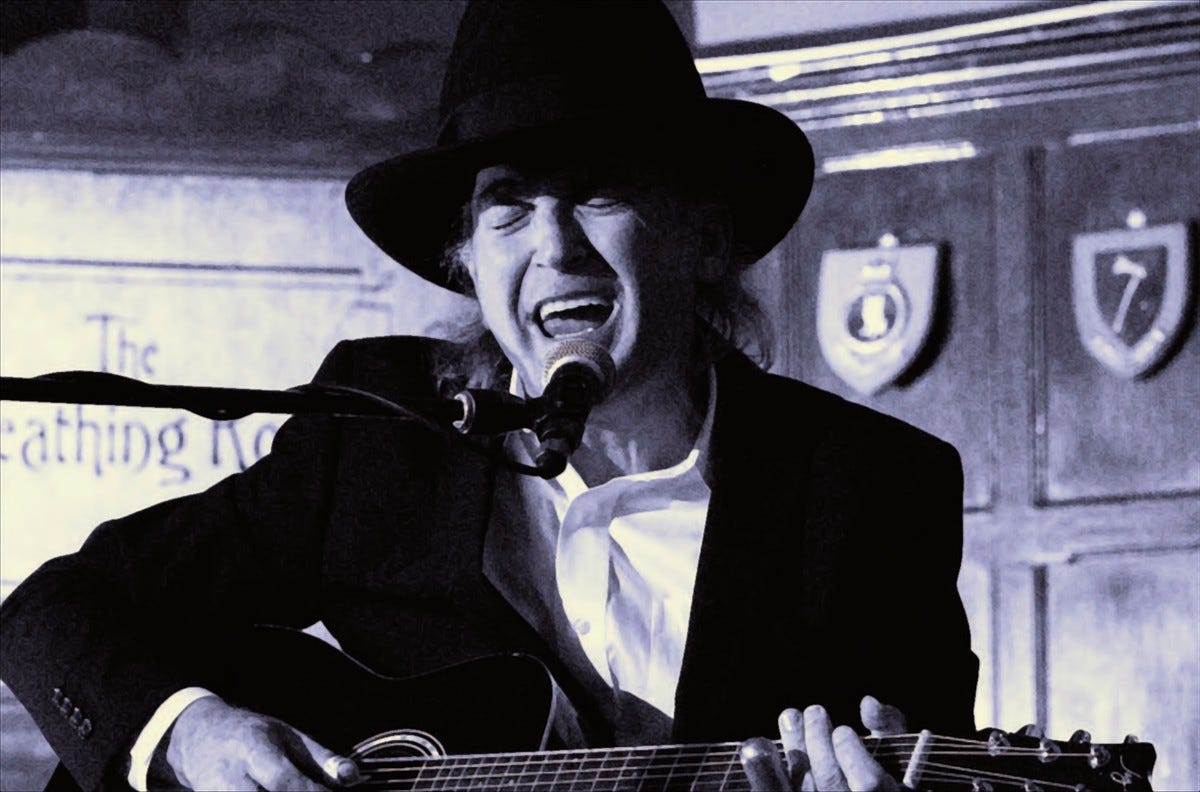
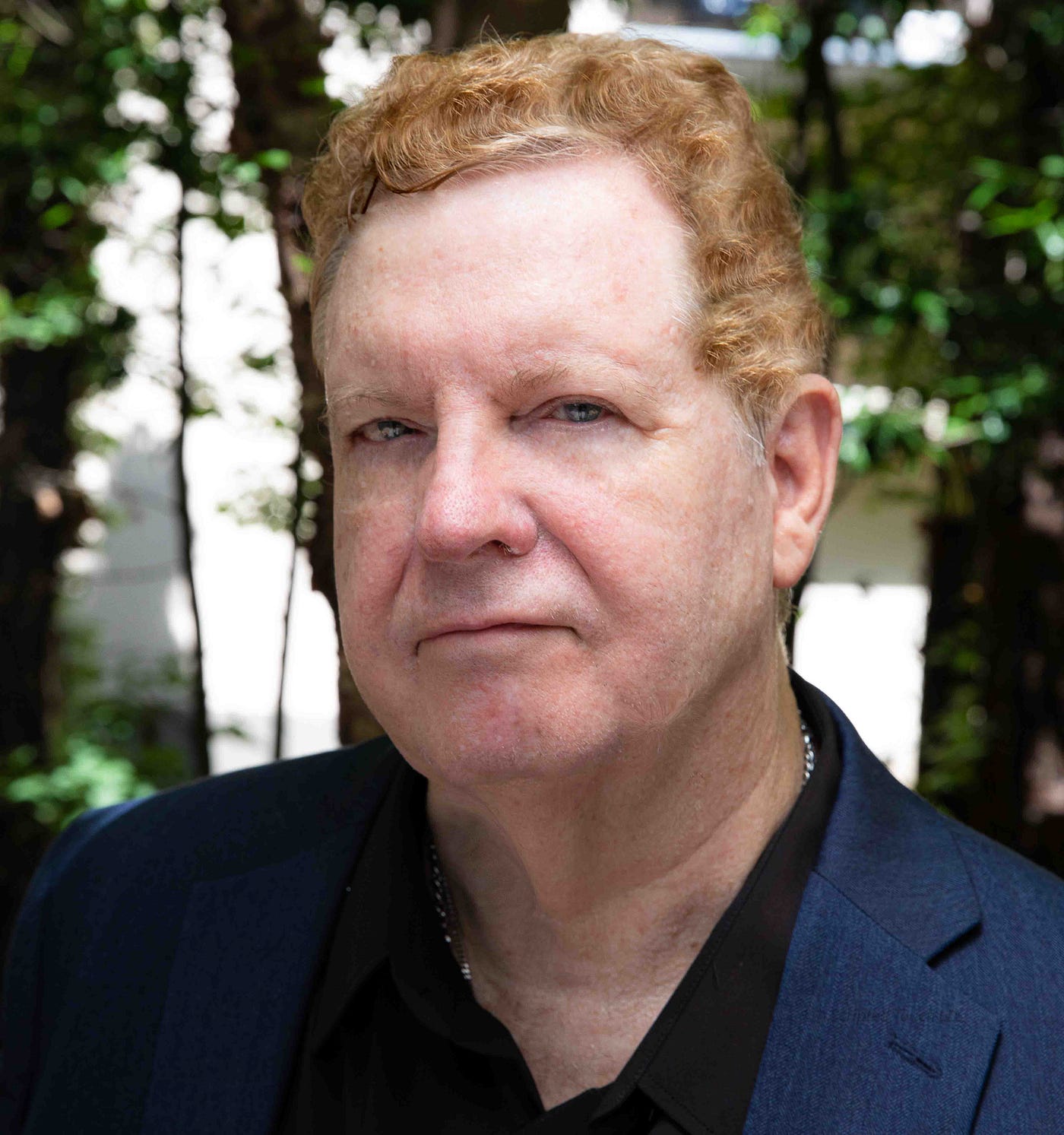
As a part of this series, I had the pleasure of interviewing Robert Rivenbark.
Robert Rivenbark earned a master’s degree in Creative Writing from Antioch University, after winning a full academic scholarship to study for two years in Oxford and London, England, based on his winning short story collection. He returned to the U.S. for a career in journalism and advertising, and worked as a senior copywriter and video producer for some of America’s most prestigious advertising agencies and Fortune 500 companies. His novel The Cloud won First Place in the science fiction category in the San Antonio Writers Guild 27th Annual Writing Contest in February 2019. He subsequently secured exclusive representation from Hollywood literary manager/producer Ken Atchity of The Story Merchant. Robert will expand The Cloud into a novel trilogy, also suitable for screen adaptation; and Atchity is developing novel one as a TV series.
Thank you so much for joining us in this interview series! Before we dive into the main focus of our interview, our readers would love to “get to know you” a bit better. Can you share a story about what first drew you to writing over other forms of storytelling?
I discovered I was a natural writer in the sixth grade, when my homeroom and English teacher, Mrs. Lee, had me elected as Program Chairman in class elections. I became the class playwright and short story writer. I read my stories to my classmates, and wrote and directed plays inspired by my favorite sci-fi and horror movies and books.
You are a successful author. Which three character traits do you think were most instrumental to your success? Can you please share a story or example for each?
Character trait 1: Unbounded imagination. I’ve always had a vivid and intense waking and dream life, so thinking up stories comes as naturally as breathing. I’ve also always listened to Beethoven, whose music captures what it feels like to be in my head.
Character trait 2: Intense dissatisfaction with the world as it is. I grew up as an asthmatic in the American deep South and never accepted the culture’s racist, provincial mindset. I also got beaten up by bigger boys as a child, so it was natural for me to escape into science fiction novels and films.
Character trait 3: A relentless work ethic. Since I took writing seriously, I’ve adopted a “Failure is not an option” attitude. The harder the world tried to convince me I couldn’t succeed as a writer, the harder I pushed back. I learned to grit my teeth and accept failures, mistakes, and setbacks as inevitable on the road to mastery. I read all literary genres of voraciously, and took writing-related jobs: journalism, technical writing, advertising copywriting, and commercial scripting. I used my false starts as rocket fuel to refine my craft.
Can you tell us a bit about the interesting or exciting projects you are working on or wish to create? What are your goals for these projects?
At the behest of my literary manager and mentor Dr. Kenneth Atchity, I’m expanding The Cloud into a novel trilogy. I’ve written a detailed outline with fleshed-out storylines and character arcs for novels two and three, expanding and making more explicit themes implicit in novel one. My goal is to make The Cloud trilogy a mythological epic, further exploring in novels two and three a possible future for an earth threatened by global warming, horrific wars, global pandemics, and political oppression. Against this possibly fatal reality, I’m fashioning a story fueled by the passion, courage, relentlessness, and vision of three powerful protagonists and wounded healers—one male and two female. I’ve also written a pilot script for the TV series adaptation of novel one—which Kenneth Atchity is developing—and plan to work as a staff writer/producer on the series.
Wonderful. Let’s now shift to the main focus of our interview. Let’s begin with a basic definition so that all of us are on the same page. How do you define sci-fi or fantasy? How is it different from speculative fiction?
Writers, journalists, and scholars have argued for decades about how to define science fiction, fantasy, and speculative fiction. These terms have evolved over time, and many literary works fall into all three categories. The controversy stems from the fact that in the US, the classic science fiction of the 1930s, ‘40s, and ‘50s gave way to more experimental and literarily ambitious works in the 1960s—a trend that continues in the 21st century, when scholars and critics have come to recognize science fiction, fantasy, and speculative fiction as mainstream literary genres.
I take a middle path between all these hotly contested viewpoints and perspectives.
For me, science fiction falls into two schools united by a common element: science. Hard science fiction—e.g., Andy Weir’s brilliant The Martian or Isaac Asimov’s classic The Foundation Trilogy—draws heavily from known scientific fact and extrapolates from that to dramatize fantasy scenarios that could result from the science, stressing the human impact as with all good drama. Soft science fiction—e.g. Ursula LeGuin’s The Left Hand of Darkness or Neil Gaimon’s American Gods—uses much stronger fantasy elements and touches much more lightly on science (some argue that Gaimon’s work is fantasy, not science fiction).
Fantasy fiction—e.g., George R.R. Martin’s A Song of Ice and Fire or Tolkien’s Lord of the Rings—plunges into entirely fictional alternative worlds with magical creatures, supernatural elements, and mythical events dredged up from the collective unconscious; but the stories are influenced by the authors’ take on actual history. Martin’s epic fantasy, for example, is loosely based on the English War of the Roses; Tolkien’s is based on his experiences during World Wars I & II.
Speculative fiction, on the other hand, explores ideas and possibilities implicit in the day and age the book is written. Margaret Atwood’s The Handmaid’s Tale and her stunning 2020 sequel, The Testaments, are perfect speculative fiction examples. The dramatized events are conceivable, even possible, to readers, even when the story is set in a specified—or unspecified—future. However, speculative fiction also draws on science and technology, as in hard and soft science fiction, and there can be fantasy elements, too; so the distinction between speculative, science fiction, and fantasy can merge. In the case of my novel, The Cloud, all the science and technology I dramatize is either already in use or under development: VR technology, mind control, psychic powers, 24/7 surveillance, disease reversal tech, cryogenics, nanobots, and a recrudescence of patriarchal political oppression. That’s why I specify my novel as speculative fiction, and a spiritual descendant of Atwood, Orwell’s 1984, and Huxley’s Brave New World.
It seems that despite countless changes in media and communication technologies, novels and written fiction always survive, and as the rate of change increases with technology, written sci-fi becomes more popular. Why do you think that is?
Science fiction is a crucially important literary genre these days because humanity has considerable uncertainty and fear concerning the future. Many of us are asking questions that science fiction attempts to answer: “Do we have a future?” “Will global warming destroy us?” “Are we being replaced by AI?” Science fiction also offers the chance to enjoy new myths in an era when many older myths have lost their relevance. The appeal on both fronts is obvious.
In your opinion, what are the benefits to reading sci-fi, and how do they compare to watching sci-fi on film and television?
Reading science fiction has the advantage of allowing readers to drill down into complex mythological themes that films and television have difficulty plumbing, except In rare cases. What plays as a few fleeting scenes in a film or series can be expanded into longer passages or even whole chapters in a novel.
What authors and artists, dead or alive, inspired you to write?
So many authors and artists have inspired me. I’ll touch on a few. The writer who influenced me most is Fyodor Dostoyevsky; the composer who influenced me most is Ludwig van Beethoven. They both have the incandescent passion I identify with. I was also influenced by Gustave Flaubert, Tennessee Williams, Anton Chekhov, Leo Tolstoy, John Steinbeck, William Styron, Flannery O’Conner, and William Faulkner. Specific to science fiction/fantasy/speculative fiction, influences include George Orwell, Ray Bradbury, Margaret Atwood, Isaac Asimov, Philip K. Dick, George R.R. Martin, J.R.R. Tolkien, Neil Gaiman, and Ursula K. LeGuin. Film directors who influenced me include Alfred Hitchcock, Stanley Kubrick, Kathryn Bigelow, Ridley Scott, and James Cameron. I’m also inspired by alternative rock bands. The philosophy of Pierre Teilhard de Chardin is also a huge influence.
If you could ask your favorite Science Fiction and Fantasy author a question, what would it be?
I’d ask George R.R. Martin, “How on earth did you come up with A Song of Ice and Fire after spending a decade knocking around as a Hollywood scriptwriter and sci-fi author?
We’d like to learn more about your writing. How would you describe yourself as an author? Can you please share a specific passage that you think exemplifies your style?
From chapter 1 of The Cloud:
Neurofeed played relentlessly in his head like a schizophrenic monologue. You could try to ignore it; you could lower the volume or even switch it off for short periods. But it was life’s inescapable soundtrack and sightscape, and the Cloud Monitor considered any lapse of attention outside working hours unpatriotic and punishable by death. From a bank of Hong Kong AI servers, a female voice with the reassuring cadences of the North Am Midwest delivered propaganda and holographic imagery to all Class II through IV professionals 24/7. “Cloud life is full life, Cloud life is full light,” was her signature sign-on for exuberant reports about the ever-rising standard of living, the latest victories against the Caliphate, and sultry intros to titillating VR series. Blaise ground his teeth at the Monitor’s saccharine cadences. He had written her monologues before his promotion to Class II games planner, and he knew she was bleating pure fiction. But he had to listen and pretend to believe just the same.
The Monitor couldn’t read thoughts, per se, but its AI servers had encoded a vast library of traitorous brainwave patterns. Any departure from a quietly optimistic state of mind could bring instant termination. Like everyone else, Blaise had learned how to control his emotions, thoughts, and physiology to keep his EEGs within acceptable ranges as the Monitor crowed about how the Cloud oligarchy had created a corporate utopia, free from the corrupt national governments that had plagued the past. The relentless repetition worked so well it placed people in cities as diverse as Shanghai, Sydney, and San Francisco on an identical footing of mental compliance.
Based on your own experience and success, what are the “Five Things You Need To Write Compelling Science Fiction and Fantasy Stories?” If you can, please share a story or example for each.
Insatiable curiosity about the world—e.g., history, politics, social and technological trends, human psychology, religion and philosophy. I conceived The Cloud from three primary sources: my 8 ½ years living in L.A. during the Great Recession of 2007-2015; a failed romantic relationship with a lovely Asian lady I met in L.A.; and rage against the corporate machine from my three years doing advertising for a Fortune 500 commercial real estate company that’s building “cities of the future” for the top 1% in 75 countries.
An uncanny sixth sense about human character. Great stories are about great characters—not the SFX, but the characters affected by all those gizmos and tech.
A relentless work ethic. I wrote The Cloud while working full-time in advertising at a couple Fortune 500 companies.
A willingness to fail many times on the way to mastery. It’s crucial to make false starts, screw up, have to start from scratch. Keep telling yourself, “Failure is not an option.”
Voracious reading, filmgoing and series binging, listening to music in all genres, and experiencing art in all its forms. Great stories comes from “accidents of the mind”—and passion for art helps to generate those intuitive leaps that combine unexpected elements in fresh ways.
We are very blessed that some of the biggest names in Entertainment, Business, VC funding, and Sports read this column. Is there a person in the world, or in the US, with whom you would love to have a private breakfast or lunch, and why? He or she might just see this, especially if we both tag them :-)
I’d love to have breakfast or lunch with Margaret Atwood, to learn directly from her how she has managed to write so brilliantly in so many literary genres—including poetry.
How can our readers further follow your work online?
Visit www.thecloudnovel.com. There’s a link there to the amazon page where readers can buy The Cloud and write their amazon reviews. Also, follow my social media sites: Facebook, Instagram, Twitter, and other social media; these are either up or going online soon. As of this writing, you can visit https://www.facebook.com/TheCloudNovel and Robert Luther Rivenbark (personal Facebook page). I always respond and enjoy interacting with and learning from readers.