Signing with an agent or a publisher is like entering a marriage, and you have to tell yourself that 'the one' is out there, even if it takes time to locate.
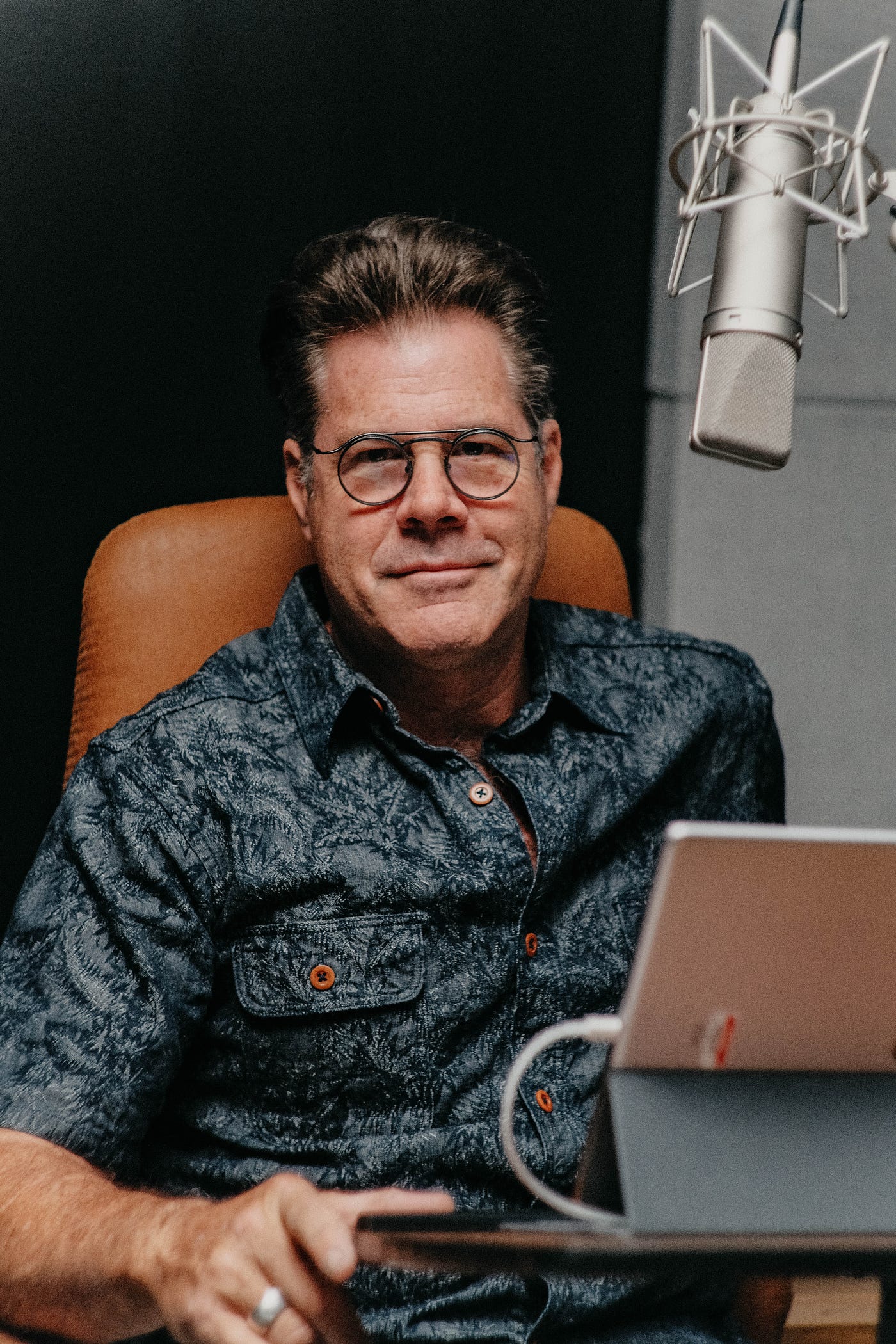
As part of my interview series on the five things you need to know to become a great author, I had the pleasure of interviewing author Robert Brighton.
Robert Brighton is the author of five novels, including The Phantom of Forest Lawn, The Buffalo Butcher, and the Avenging Angel Detective Agency™ Mysteries—all of which are in within what he calls the ‘immersive historical fiction’ genre. Prior to becoming a full-time author, he has been a mule wrangler, vintage automobile restorer, and has traveled to fifty-six countries around the world. He currently lives in Virginia with his wife and two British Shorthair cats.
Thank you so much for joining us! Can you share a story about what brought you to this particular career path?
Thank you for inviting me! If I had to tease out a single moment or episode that convinced me to be a writer, I would suppose it would be something that happened one morning quite a few years ago. At that time I had what people used to call a ‘high-powered job’, working for some of the chief executives of DuPont Company in Wilmington, Delaware. My office was on one of the upper floors of the DuPont Building downtown, and every day I would take the stairs as an exercise thing (and to wake myself up in the morning, if I’m honest).
The DuPont Building is a lovely old Italian Renaissance building, and even the fire stairs were all made of polished marble. Well, this one morning I was trudging up the stairs and noticed that each tread had a broad divot worn in it by the passage of countless feet over, I don’t know, some seventy-five years. And it struck me with the force of an epiphany that I was spending my life merely wearing away my little daily grain of marble, and unless I did something radically different with it, that’s all it would amount to.
When I got to my office, I turned in my notice. I sold what little stuff I had and went traveling (by foot, bus, and train) around the world. And it was during this extended period of travel that I started to think about a different direction . . . namely writing for a living. Can’t say I’ve ever regretted my decision—or at least not so seriously that I have returned to corporate life.
Can you share the most interesting story that occurred to you in the course of your career?
I don’t know how interesting it is, but last year I spent some time in northwest Mississippi (‘Delta Country’) to do some research for a forthcoming book called The Devil’s Business. Well, I had never been to Mississippi, and I didn’t know what to expect—why, I couldn’t even picture what Mississippi looked like. When I arrived, though—wow! I discovered that it’s beautiful country with wonderfully warm and hospitable people who were simply fascinated that I was an author in town to research their little corner of the world.
Maybe what’s interesting is that writers do get to visit interesting places and talk with interesting people who can be very enthusiastic about helping out or at least offering an encouraging word. That’s one of the nicest things about my job, in fact.
What was the biggest challenge you faced in your journey to becoming an author? How did you overcome it? Can you share a story about that that other aspiring writers can learn from?
I think the most difficult thing was finding the right publisher—meaning not just a publisher (that’s hard enough), but the right one. I went about it the ‘traditional’ way for quite some time: firing more or less randomly into the void a barrage of summaries, synopses, and sample chapters. It was mainly fruitless, and when I finally did get a couple bites, I was dismayed to learn that for all their reach, scope, and supposedly deep pockets—in general, publishers won’t do much for a fledgling author. There are too many fledgling authors, and small authors are not where big publishers make their money unless one of them hits it lucky (which most do not)—so their strategy is to sign a lot of them as a kind of diversification strategy. At that, I changed direction and resolved to find a publisher that would be more supportive. That process was more about networking than it was about blindly sending out sample materials, and as a result I regained a sense of more control in making my pitch. Ultimately I landed with a new and growing press that was at the time a startup founded by a couple of book-lovers who wanted to make the publishing world a little friendlier to unknown authors.
So I would say to any aspiring writers out there who are struggling with the publication process: keep the faith and don’t ‘settle’. Signing with an agent or a publisher is like entering a marriage, and you have to tell yourself that ‘the one’ is out there, even if it takes time to locate. When you do, you’ll be happy you held out. Your work is worth it.
Can you share a story about the funniest mistake you made when you were first starting? Can you tell us what lesson you learned from that?
When I started out, I didn’t know a thing about writing books—other than that I wanted to write them. Moreover, I hadn’t any idea about what I would write a book about, though several people over the years had advised me to ‘write what you know about!’. So in the evenings after work, I started tapping away at the keys to see what would happen. After a year or more of that, I had completed a hundred-thousand-word manuscript!
On Cloud Nine about having written ‘my first book’, I asked a friend of mine—who knows literature—to read it. She came back after a while, told me over lunch that she’d completed it—and that my writing reminded her of Theodore Dreiser. Theodore Dreiser? I thought, gobsmacked. I really am that good!
When I stopped blushing, I was about to thank her when she added: “There’s only one problem with that. I hate Theodore Dreiser.”
Well, you could have picked me up off the floor after that one, but when I got my feet under me again she explained that whatever style I thought I had was less brilliant than it was derivative and dated. My setting setting was vague, my plot meandering, the characters only semi-believable, and the dialogue stilted and cheesy. “Now mind you,” she said in an attempt to console me, “there are at least twenty really good sentences in there.”
Twenty good sentences in a hundred-thousand-word manuscript? Really? I can tell you that was tough to hear, and for a while I was miffed at her. But now, after the passage of some time, I find her comments truly funny—and true. What’s more, she had given me the greatest gift an author can receive: honesty. So many people will tell you that you’re the next whoever-it-is, but it’s not until you find someone who will tell you who you actually are, right now, that you’ll be getting someplace.
Anyhow, I was pretty discouraged for a while after that, but then (being something of an optimist, or at least not easily kept down forever) I kept thinking of her words: ‘Mind you, there are at least twenty good sentences in there.’ And so I decided to go through my manuscript and locate those twenty good sentences, which was a fantastic exercise in trying to see my work through the eyes of a reader and not an author.
I don’t know if I found all twenty—or even if there were twenty—but the ones I did find stood out so clearly from the rest of the dreck that now at least I had a few Pole Stars to guide my way. And it was then that I stopped thinking about writing a great book and started thinking about writing great sentences. Then great paragraphs. Then great chapters . . .
You know how long that took me? Twenty years. Now that’s a long time, and I’m not trying to discourage anyone—but so what if it was twenty years? That’s what it took for me to gain command over this devious craft and—even more difficult—over myself. I learned how to take myself out of the writing . . . if that doesn’t make any sense to an aspiring writer just now, I’d say just keep this is mind and in due course it will: Write great sentences and keep yourself out of them. And it may not take you as long as it did me; we all go at our own pace.
(And I am pleased to report that I no longer sound like Theodore Dreiser.)
What are some of the most interesting or exciting projects you are working on now?
I’m always excited about the next book, which will be Winter in the High Sierra, and it’s just about done—only one more read-through before sending it off for layout and proofreading. Also I’ve been working on a number of short stories that my publisher wants to issue one at a time over a period of a year or more. That’s been a lot of fun, because writing short stories is both easier and more difficult than writing novels. For a novelist accustomed to juggling multiple plots and a dozen characters across a hundred thousand words, writing a 7,000-word short story is a much easier lift. On the other hand, while a short story’s plot is simpler and there’s a smaller cast of characters, there’s a real challenge to achieve brevity, power, and style in such a limited space.
Oh, and soon my publisher will debut a YouTube series of short videos by yours truly called Reading & Writing with Robert Brighton, in which I plan to share everything I’ve learned about the writer’s craft over the years.
Can you share the most interesting story that you shared in your book?
The Phantom of Forest Lawn has any number of (what I think are) intriguing plots and subplots—ranging from love to grave-robbery. It’s difficult to pick one, but let’s say that at least a fair part of the action swirls around young Mary Carkriff, who comes to Buffalo from small-town Canada, seeking opportunity in the big city. She soon falls in with a group of international smugglers, who immediately recognize Mary’s intelligence and potential usefulness—and her special aptitude for ciphers.
At the same time, a gang of grave-robbers set up shop in Forest Lawn Cemetery, where they exhume the recently interred for sale to the city’s medical and anatomical schools. (You may know that in 1867, when my book is set, there was a tremendous shortage of cadavers for teaching purposes—which put a steep bounty on the head of every ‘fresh’ new corpse.)
What is the main empowering lesson you want your readers to take away after finishing your book?
Hmm. I think perhaps it’s not to let your doubts get in the way of your dreams. Or, if they do get in the way, find a way around them.
Based on your experience, what are the “5 Things You Need to Know to Become a Great Author”? Please share a story or example for each.
Know Yourself. Writing (like skydiving, swimming, or playing the piano) isn’t for everyone, and you ought to know whether it’s for you. It’s not nearly so romantic as it seems (if it does): It’s a lot of hard work for very little money. While everyone is different, I would say become a writer if you simply can’t bear not to write. Otherwise, I think it would be a pretty frustrating job. Now, if after a some soul-searching and experience, you find—as I have—that writing is the thing you simply must do with your life, wonderful! I predict you’ll find it, as I do, an incredibly rewarding profession without any end to what you can discover and learn, and always with a new challenge limited only by your own imagination.
Go Your Own Way. If you begin with good self-knowledge—what you are good at and what you are not—you can more easily choose what type of writing you will do. Non-fiction, fiction, poetry, journalism: All are worthy writing careers, but the personality type and skills required differ widely. (For example, I am a poor poet. I could spend a lifetime kidding myself about that, but why? I’m a good novelist.) You may even consider something contiguous to the writer’s job, e.g., publishing, editing, proofreading, or working to promote a writer’s work. (By the way, the dirty little secret about the writing business is that publishers, agents, bookstores (and yes, the indie ones too), designers, editors, and proofreaders make far more money—for less work—than authors do.)
This principle expands even to your literary inspirations. I’m asked a lot—‘what authors do you read?’ ‘what do you think of (fill in name of other modern author)?’, and I expect that this is a question that most authors get. Readers generally don’t have much contact with writers, so I can understand their curiosity about a writer’s view on other writers. A funny thing about me (and which speaks to my ‘go your own way’ advice) is that I very consciously avoid reading any and all fiction published after about 1930. There’s probably a lot of good modern fiction out there, but a) I don’t have time to read other authors’ books and b) I don’t want (even subconsciously) to be influenced in any way by someone else’s style, word selection, plots, or settings. I have always believed that whatever ‘mistakes’ I make ought to be my own and not my gloss on someone else’s. Thus when I’m asked that question I have to reply with my non-fiction favorites and classical authors!
Learn “Situational Patience”. Now, I am not in general a very patient person. Quite the opposite! Though I find that when I am writing or editing, I can be very patient, almost painstaking. I call this ‘situational patience’, since I can be patient with some things and not so much with others. Patience is also important in dealing with the ‘business of writing’—working with editors, proofreaders, your agent and/or publisher, artists and designers, and of course readers. It’s crucial to be able to slip into ‘Zen Mode’ sometimes, because things in the book business take a long time, and you’ll only end up frustrated if you try to push too hard.
New writers also have to be patient about getting paid. Usually it’s a good six months after your first publication before you receive your first check—and that will likely be small. As I mentioned earlier, authors get paid last and least of everyone who has a finger in the publishing pie. Here’s who will get paid before you see a cent:
Editors, designers, artists, and proofreaders—to get your MS ready for the press
Printers, storage facilities, and distributors—to produce and prepare your MS for delivery to retailers and readers (e-books of course are exempt from this)
Retailers (whether the big online ones or your local indie bookstore, you’re looking at 40-50% of full retail price here)
Your publisher, publicist, and literary agent
Then, the author.
This is not intended to be discouraging, but rather a simple statement of how the game is played. It’s better to find out now than to be surprised later.
Develop a Thick Skin. Not everyone is going to like your work. Your genre or story may not be everyone’s cup of tea. As a result, you must be prepared for the occasional unfavorable review, particularly on GoodReads, which is known by authors as a place with unusually tart reviews. I won’t claim that this doesn’t sting! . . . a writer’s work is the most personal thing there is, and to have it trashed is very hard to hear. But you have to soldier on and keep believing in yourself. Having said that, it’s also well to listen to selected criticism—because many readers do read a lot of books, and have a very broad experience with them. Now if you see a trend or pattern—let’s say a bunch of unrelated people comment that your book is too long or that your dialogue comes off as phony—then you probably ought to prick up your ears. You may not like it, but constructive criticism is the best way to improve your writing, once you get past a certain level of experience.
Edit, edit, edit. Writing a book is only the tip of the publishing iceberg. I won’t bore you will all the steps and stages, but I would say that the most important one of all of it is arguably not the writing, but the editing. Now, bad writing can’t be fixed by good editing, but good writing can be transformed into great writing with the right editorial effort. So: Start with your best writing, of course—but then resolve to make it better . . . better even than you think it can be! And after that, when you think you’re all done, and your story or book or what-have-you is ready to go to the publisher—stop. Stop and read it again. Edit it again. Rewrite it again. (A useful tip, by the way: You’ll catch more errors and instances of stilted language if you read your final manuscript aloud. Whether to someone else or to yourself, there is no substitute for reading your book or story at least once out loud!)
In a very crowded writer’s market, good writing isn’t going to be good enough to cut through the clutter. You have to turn in a great effort—your very best effort—every single time. The key to that is not to rely upon genius, inspiration, or ‘the Muse’—but rather to devote an outsized amount of time and effort to careful, dogged, repeated editing.
What is the one habit you believe contributed the most to you becoming a great writer? (i.e. perseverance, discipline, play, craft study). Can you share a story or example?
Without any doubt, the habit of observing—observing the world and the people around me. As an example, let’s say I’m outdoors, and the sun is shining down through the trees and casting shadows on the ground. How would I describe those shadows? What makes them interesting or different? What do they resemble that’s not a shadow at all but something else entirely? This has turned into a little mental game I play about what I see, hear, or experience. Over time, it develops the facility to describe things and to see at least a glimpse beneath the surface of apparent reality. (Kids do this naturally in looking at clouds, and yet as we grow up we lose that childlike sense.)
Which literature do you draw inspiration from? Why?
As I mentioned, I haven’t read any fiction published after about 1930, so both now and in my past I tend to read what used to be called ‘the classics’. I like Herman Melville, the Brontë sisters, Jane Austen, on and on. The beauty and power of Shakespeare, Marlowe, and the King James Bible can make me weep. I love Emily Dickinson’s poetry.
You are a person of enormous influence. If you could start a movement that would bring the most amount of good to the most amount of people, what would that be? You never know what your idea can trigger. :-)
I would agree that the written word can have enormous influence. As to my words, all I can attest is that I do hear from time to time from readers who contact me to say that something in my books affected them a very deep and meaningful way.
These specific instances don’t imply that I have broad influence, but rather that authors (as a collective) do—one person at a time. I have to laugh at myself sometimes—how silly and shortsighted I can be. Because for years I was so focused on writing books that I never took thought to what influence they might have on readers. For a long time it seemed so unlikely that anyone would ever actually read my stuff that it simply wasn’t my concern.
But then, about six months after the publication of my first novel, the letters started to arrive. Letters from my readers have a theme: that in some way or another my words helped someone to see or understand someone else better—perhaps even himself or herself—and even to forgive. I can tell you I never expected that kind of thing!
My point is simply that authors do have influence, even if they don’t always know it. I found out by accident that a good story will take people someplace they want to go—but a great story can take people places they didn’t expect. If you can do that for someone—surprise them with insight or understanding while spinning a good yarn—I think you can safely say you’ve done your job.
As time goes by, what I find more and more amazing—and humbling—about being an author is that literally thousands people you do not know, and will likely never meet, are sitting in their beds at night, opening their souls to your words, however briefly. This is a level of emotional vulnerability that many people can’t muster up (or at least easily) with even a spouse or parent. What a tremendous honor—and heavy responsibility.
How can our readers follow you on social media?
RobertBrightonAuthor on Instagram, FaceBook, and YouTube. People can sign up for my (free) newsletter and blog at RobertBrightonAuthor.com/blog. It’s worth doing.
Thank you so much for this. This was very inspiring!
Well, that’s awfully nice of you to say! I’m genuinely grateful for your interest in my work, and I wish every success to every aspiring author out there.