I wrote Chase the Bears to change peoples’ lives just like that gift book from Dad changed mine.
As part of my series about “authors who are making an important social impact”, I had the pleasure of interviewing Ric Keller.
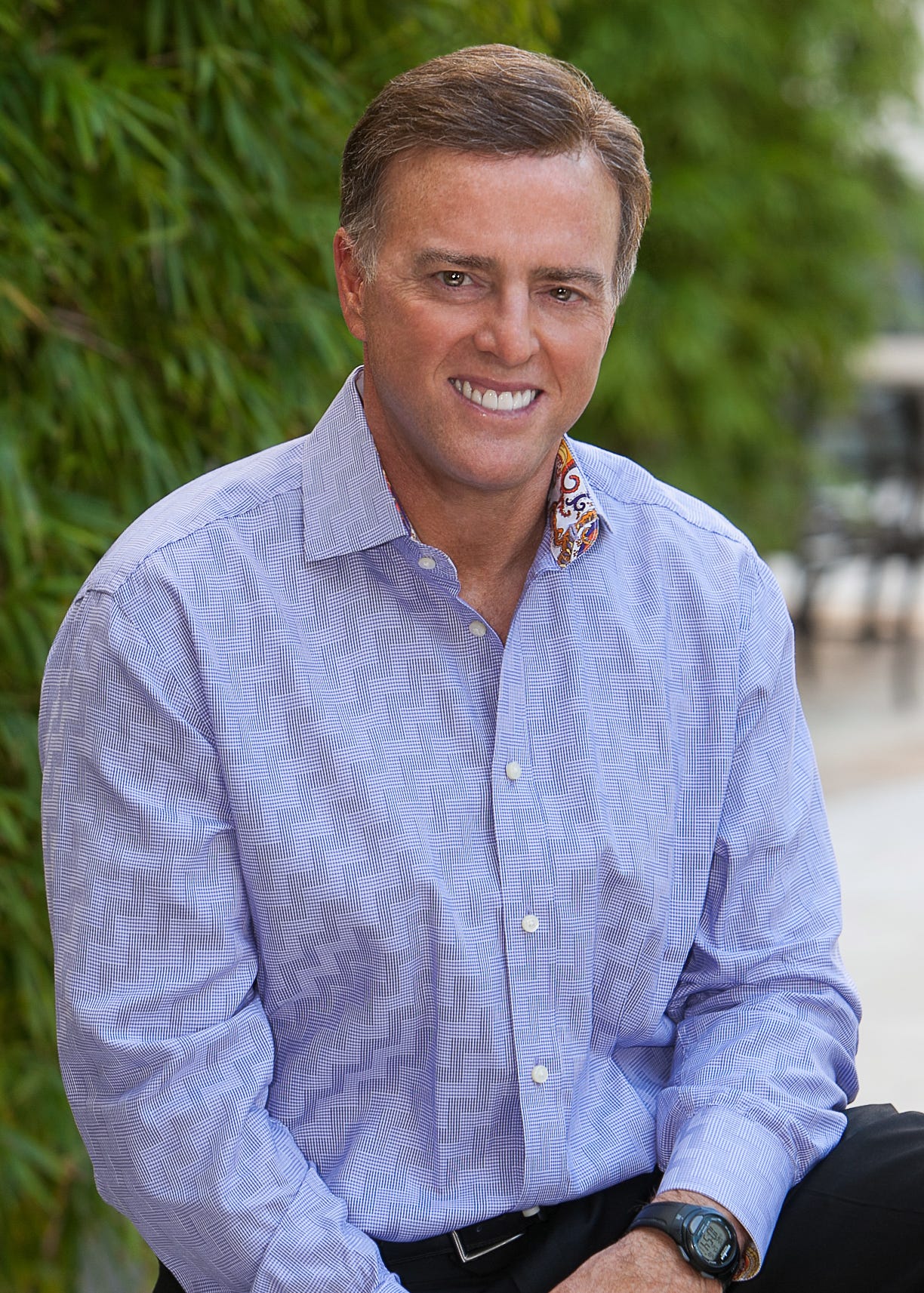
Ric Keller is the author of Chase the Bears: Little Things to Achieve Big Dreams. He is an attorney, TEDx speaker, contributing author to the Chicken Soup for the Soul series, and a former U.S. Congressman. Ric lives in Winter Park, Florida with his wife, Lori, and their blended family. His website is www.rickeller.net.
Thank you so much for joining us in this interview series! Before we dive into the main focus of our interview, our readers would love to “get to know you” a bit better. Can you tell us a bit about your childhood backstory?
Iwas born in Johnson City, Tennessee, and moved to Orlando, Florida when I was a small child. I grew up in humble circumstances. My mom was a single parent who raised three kids on the modest salary of a secretary. At one point, we all lived together in a one-bedroom home with my grandmother.
After graduating from Orlando’s Boone High School, I received a bachelor’s degree from East Tennessee State University and law degree Vanderbilt. After law school, I practiced law in Orlando for a few years.
At thirty-four, I became an underdog candidate for the U.S. Congress. I didn’t have any rich friends or political connections. It was a rough start. After about six months, I was behind in the polls by 27 percent, outraised four-to-one, and the leader of my own party asked me to quit.
And then something happened. I was invited to Washington to give a five-minute speech. It was like American Idol for politicians. A newly formed group of CEOs and business leaders were considering putting some big money into a handful of congressional races. They searched the country and narrowed it down to sixteen finalists.
I flew up to Washington as one of the sixteen. I was the last one to speak. My opening line was, “I’ve been waiting for a couple of hours. I feel like Elizabeth Taylor’s seventh husband on his wedding night. Technically, I know what I’m supposed to do — but at this point I don’t know how to make it interesting.”
That one icebreaker changed my whole life.
The group ranked me #1 in the country. They spent $400,000 to support me. And a few months later, against all odds, I won a seat in the United States Congress. I served eight years. I was Chairman of the Higher Education subcommittee and my main focus was increasing college financial aid (called Pell Grants) to help kids from low-income families go to college.
When you were younger, was there a book that you read that inspired you to take action or changed your life? Can you share a story about that?
Absolutely. I didn’t meet my father until I was fourteen years old. At our first meeting, he handed me a paperback copy of his favorite book called Think and Grow Rich by Napoleon Hill. Unbeknownst to him, I would read it six times before graduating from high school. It would take me another three years until I was ready to call him “Dad” and to finally put the book’s goal setting formula to a practical test.
I was going off to college, and as an experiment, I set a goal to graduate first in my class with a 4.0 GPA, despite being an average student in high school. It happened. The second experiment was setting a goal to get elected to Congress. That happened, too. I wrote Chase the Bears to change peoples’ lives just like that gift book from Dad changed mine.
It has been said that our mistakes can be our greatest teachers. Can you share a story about the funniest mistake you made when you were first starting? Can you tell us what lesson you learned from that?
I was fired from Wendy’s when I was in high school. The manager said, “You don’t have what it takes to make it in fast food.” Apparently, I was too slow in flipping the burgers. After getting fired, I quickly landed a new a job as a dishwasher at an Orlando restaurant called Wag’s. The cooks made more money than dishwashers. I had my mom buy dozens of eggs so I could practice cracking eggs with one hand and flip them in the air and, luckily, I got promoted to cook.
I learned three valuable life lessons from my “failure” of getting fired by Wendy’s. The first lesson is that setbacks are only temporary. I made more money (and had more fun) at Wag’s and was able to save enough to buy a car. The second lesson is don’t hold grudges. I stayed positive about my feelings toward Wendy’s. Many years later, the Wendy’s PAC ended up being one of the most generous donors to my congressional campaigns. The third lesson was to always bring my “A” game to the job. I never wanted to get fired again.
Can you describe how you aim to make a significant social impact with your book?
I wrote the book to help people pursue their dreams and find happiness. For each of us, a huge part of that equation is deciding what YOU really want (not what your parents, spouse, friends, or coworkers want), and then — once you are aligned with your purpose — use your gifts, trust your intuition, and take risks to achieve one baby-step goal at a time. The book tells you what to do, where to turn, and how to do it. It is not about politics. It’s about the success principles that are equally applicable to people who pursue careers in business, sports, or entertainment.
Can you share with us the most interesting story that you shared in your book?
I was seventeen years old and didn’t have enough money to go to college. My mom was a secretary for Mr. R.T. Overstreet. He was eighty-one years old and president of the Overstreet Investment Company. Over the years, Mr. Overstreet had often asked my mom to type up checks for various charitable contributions. Seeing this, Mom suggested that I meet with Mr. Overstreet and ask if his company would consider making a charitable contribution to help me pay for my college.
I was nervous when I walked into his large office. I told Mr. Overstreet that I wanted a college education so badly, and I promised him that I would graduate number one in my class, if his company would only take a chance on me and help with college.
He told me that he would have to run my request by the board of directors. He asked me to come back next Tuesday. I couldn’t sleep the night before the big day. I went to his office and awaited the decision. Mr. Overstreet informed me that his corporation would not be able to pay my college tuition. He said if the corporation paid for my education, they would have to do it for all the employees.
I thanked Mr. Overstreet for at least trying. And then, uncontrollably, tears started to run down my face. It hit me at that moment that my dream of getting a college education would never come true. Mr. Overstreet then leaned toward me and said, “Son, you can wipe the tears away. I said the company couldn’t pay for your college; I didn’t say that I couldn’t.” With that, Mr. Overstreet cut a check and sent me to college.
Four years later, I stood onstage and graduated top in my class at ETSU. Mr. Overstreet lived just long enough to see me graduate from Vanderbilt Law School. When I was elected to Congress, I used my victory speech to thank him. I hoped he was looking down from heaven.
What was the “aha moment” or series of events that made you decide to bring your message to the greater world? Can you share a story about that?
One sunny Florida morning, my wife, Lori, and I were sitting at our kitchen table, sipping coffee and reading the newspaper. All of a sudden, a big mama bear and three cute little cubs scampered across our front yard just outside the kitchen window. It had never happened before.
Without saying a word, we looked at each other, jumped up, and quickly ran outside to chase the bears. It might not have been our smartest idea. Florida black bears can run up to 35 mph. In comparison, Olympic sprinters run only 28 mph. Black bears typically mind their own business and won’t charge after you — unless you’re foolish enough to chase them. And, of course, we were.
But it was an “educated risk.” If the mama bear decided to turn around and charge after us, I knew the front door to our home was nearby. Plus, I was pretty sure I could outrun Lori.
We never caught up with the bears. Afterwards, it occurred to me that “chasing the bears” is a metaphor in life for chasing your dreams. Most people are content to stay inside, play it safe, and look out their windows as life passes them by. Eventually, the clock runs out. On the other hand, a few people take a risk and chase their dreams. They “chase the bears.” I wanted to help people pursue their dreams and be happy, so I wrote the book and called it Chase the Bears.
Without sharing specific names, can you tell us a story about a particular individual who was impacted or helped by your cause?
I was the speaker at a luncheon for the Central Florida Association for Women Lawyers. Afterward, one of the attorneys, Liz McCausland, told me that her mom, Cuc Foshee, had been locked up in a Vietnamese prison for a year, and they needed my help to set her free. She had traveled from Orlando to Vietnam to attend a nephew’s wedding. Her “crime” was that she gave a radio interview (in America) calling for elections in Vietnam.
I promised to help and told Liz, “We’ll have your mom home by Thanksgiving.” My instinct told me to tell her that. Luckily, we had some leverage. There was a trade bill pending in Congress that was worth over $10 billion to Vietnam called Permanent Normalized Trade Relations (PNTR) status.
I got the personal cell phone of Vietnam’s ambassador and bluntly explained that Vietnam would not get PNTR status unless my constituent were set free because I would block the vote in the House and Senator Mel Martinez, my colleague from Florida, would block the vote in the Senate. Senator Martinez also spoke directly with President George W. Bush and Secretary of State Condoleezza Rice about the situation while flying on Air Force One.
Not too long after the senator and I got involved, a jail guard appeared at Cuc Foshee’s cell and said, “Yot look sick.” She said, “I’m not sick.” He said, “Yes, we think you look sick. We’re sending you home to America.” The nightmare was over. We met with Liz and her mom at an emotional homecoming party in Orlando. It was three days before Thanksgiving.
Every year on the anniversary of the day her mom was released I wake up to the sound of a “ding” on my cell phone. It’s always a text from Liz. It says: “Thank you. This is the day you saved my mom’s life.”
Liz saved her mom’s life. She wouldn’t quit. I write about her story in my book.
Are there three things the community/society/politicians can do to help you address the root of the problem you are trying to solve?
I think the biggest root problem in America today is the erosion of civility. Divisive politicians. Shouting TV pundits. Mean-spirited social media trolls. Nine out of ten Americans think lack of civility is a serious problem. Who is to blame? According to a civility study, seventy-five percent of Americans blame politicians, 69% fault the Internet/social media, and 59% say it’s the news media. Even though it feels like America is being ripped apart, I’m optimistic that it’s not too late to turn things around.
We all need to do three things. First, listen with an open mind to people with differing views. Second, you don’t have to agree on everything (or anything), but at least act respectfully. Speak your truth but do so in a way that maintains the other person’s self-esteem. The phrases “I’m just being honest” and “with all due respect” are weak excuses for rude comments.
Third, realize it’s not too late for civility to heal a fractured relationship. For example,
John Adams and Thomas Jefferson started out as friends. Then were enemies. Then were friends again. After a dozen years of not speaking, they began writing letters to each other. They became friends again and remained pen pals for the rest of their lives. They both passed away on the same day. It was July 4, 1826, the 50th anniversary of the Declaration of Independence.
How do you define “Leadership”? Can you explain what you mean or give an example?
For readers who aspire to leadership, I share lessons in Chase the Bears that I learned from my dealings with CEOs, generals, Supreme Court justices, government leaders, and a legendary college football coach about the common denominators of great leaders, including boldness, authenticity, and civility.
If you want to be a leader in politics, sports, or business, I can’t think of a better person to emulate than Tom Osborne, the former coach of the Nebraska Cornhuskers football team who won three national championships. Osborne and I were elected to Congress in 2000 and sat next to each other on the House Education Committee for six years.
Osborne led by example in terms of civility. His players loved. Here’s why. First, he treated the freshmen walk-ons with the same respect as the All-Americans.. Second, he would say, “Now, fellas, after you knock your man down, make sure you pick him up.” Third, he never yelled at them or embarrassed them in front of their teammates. If he needed to address an issue, he’d do it behind closed doors. Fourth, Osborne spread the credit for the team’s successes and took the blame for the team’s failures.
What are your “5 things I wish someone told me when I first started” and why. Please share a story or example for each.
There are the 5 things I wish someone told me before I graduated college.
First: Use your gifts. When someone says, “You can do anything you want in life,” it’s partially BS. The reality is you can achieve anything you want in life, but only if you stay in your lane and use your gifts. Your gifts are the things you do the best with the least amount of effort. Albert Einstein won a Nobel prize in physics, but if he had tried to be a professional bull rider, he would have landed E = MC square on his butt in less than eight seconds!
Second: Trust your intuition. Your intuition is your internal GPS system. I trust my intuition no matter how unconventional or unpopular it seems. Successful people trust their intuition. “Every right decision I’ve ever made has come from my gut. And every wrong decision I’ve made was a result of me not listening to the greater voice of myself,” said Oprah Winfrey. You should trust your intuition, too
Third: Take a chance. You can get fired from a job you hate, so you might as well take a chance on doing something you love. What holds many of us back from taking risks is fear. Taking chances can be scary, but I’m not talking about strapping yourself into a rocket motorcycle, Evel Knievel-style, and jumping the Snake River Canyon. I’m talking about taking educated, baby-step risks that are aligned with your purpose.
Fourth: You can fail and win anyway. I was fired from Wendy’s and still became a Congressman. Let me tell you about some other “failures:”
- Walt Disney was fired at age 22 for not being creative enough.
- Martin Luther King Jr’s teacher have him a “C” in public speaking.
- Michael Jordan was cut from his high school basketball team.
- Oprah Winfrey was told that she was “unfit for television news.”
- The Beatles were told by a record company that they didn’t have what it takes to make it in the music business.
Fifth: Don’t take yourself too seriously. When Abraham Lincoln was running for office, one of his opponents called him “two-faced” during a debate. Lincoln replied, “If I had two faces, do you think I’d be wearing this one?” Learn from Lincoln: If you can laugh at yourself and at life you will be unstoppable.
Can you please give us your favorite “Life Lesson Quote”? Can you share how that was relevant to you in your life?
“Have the courage to follow your heart and intuition.They somehow already know what you truly want to become,” said Steve Jobs. Trusting my intuition has made all the difference in my life. My intuition told me to become a lawyer/politician instead of a doctor, to run for Congress as an underdog, and to stay in the race when a party leader asked me to quit.
Is there a person in the world, or in the US with whom you would like to have a private breakfast or lunch with, and why? He or she might just see this, especially if we tag them. :-)
I’d love to have lunch with Jim Carrey. He used the success techniques described in my book, especially affirmations and visualization, as well as anyone. His story is so inspiring. After his father got let go from a “safe” job as an accountant, Carrey said he learned a valuable lesson. “You can fail at what you don’t want, so you might as well take a chance on doing what you love.” He wrote himself a check for $10 million for “acting services rendered” and dated it Thanksgiving 1995. Before that date, he got $10 million for his movie roles, including Dumb and Dumber. Carrey slipped the check into his father’s casket as a final tribute to the man who inspired his success.
How can our readers further follow your work online?
I’m on LinkedIn, Facebook, and Twitter. I’d love to hear your readers’ success stories!
This was very meaningful, thank you so much. We wish you only continued success on your great work!