When you listen and understand what’s important to people you can meet their needs with your product or service. Without this skill, you are attempting to provide a product or service that they are unlikely to need or want.
It’s hard to be a good listener. We are programmed to want to talk and share. It takes effort to stop and to listen. But anyone who has achieved great success will tell you that listening is such an important quality to have. What are some ways that influential people have learned to listen, to succeed both personally and professionally? As a part of this series, I had the pleasure of interviewing Rebecca Bonnington
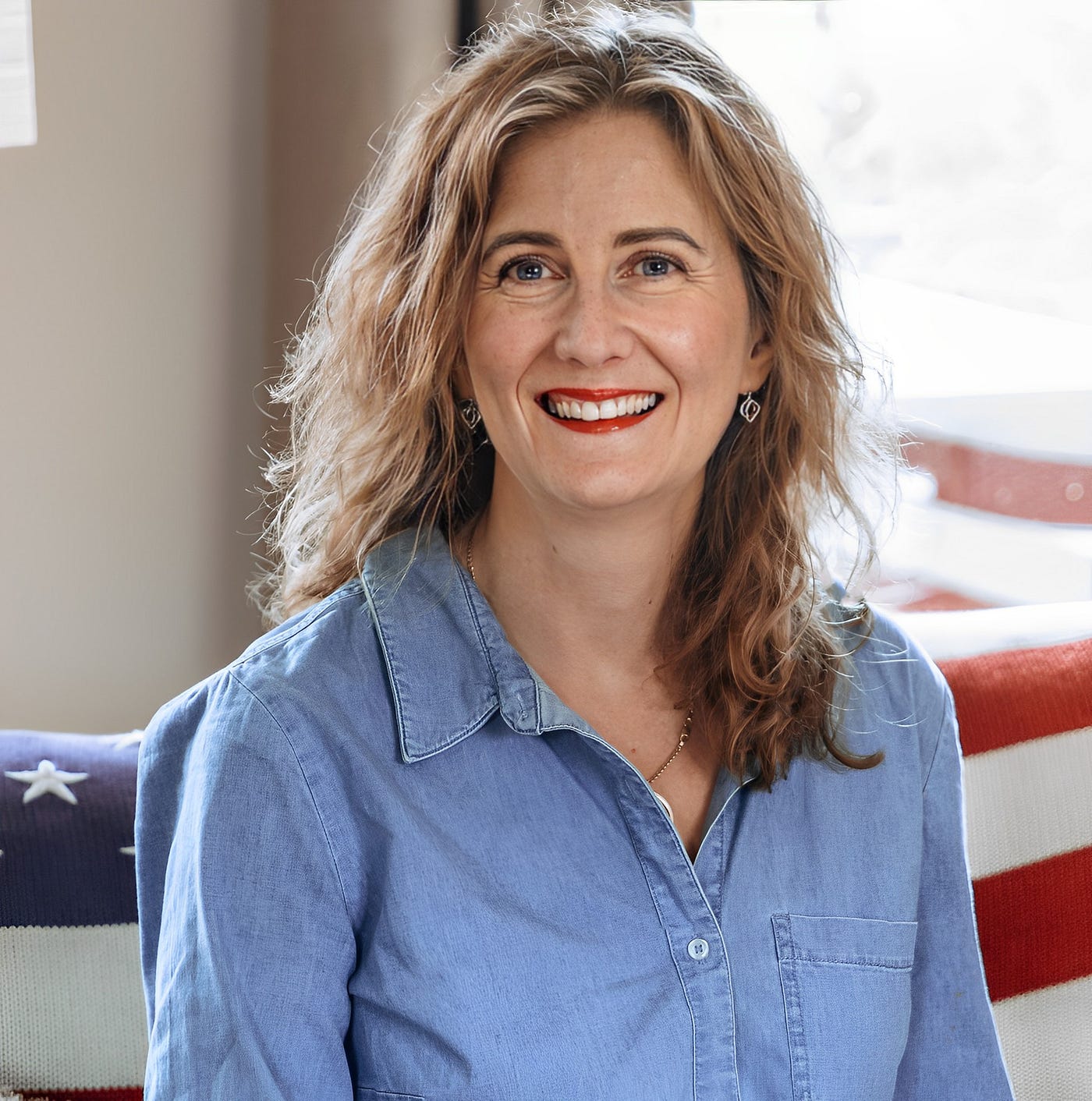
Rebecca Bonnington founded Tricres in 2018 because her driving purpose is to make it happen for every ambitious business on the planet.
She built a toolkit for business coaches and consultants to create kick-ass cultures in businesses so they grow sustainably and create wealth for all.
Her online Kick Ass Culture Coach/Consultant Programme has learners from all over the world, doing great work for ambitious businesses everywhere.
Thank you so much for doing this with us! Before we start, our readers would love to “get to know you” a bit better. Can you tell us a bit about your childhood backstory?
I was brought up in a single-parent household. Me, my older brother and my mum. Mum studied full-time so she could qualify as a teacher. We were not wealthy. She finally qualified and things got easier, but my brother and I both learned that you had to work really hard to get what you want.
My brother works in the business together, so we’ve remained close.
Neither of us has been given anything, we’ve worked for everything we’ve got.
I started my first business in 1999 at the age of 28. I had one young child at the time and was married. Sadly, this marriage broke down as my husband was an abusive alcoholic. I had two young children by then (6 and 3) and left him. I was running my recruitment business whilst being a single parent so things were not easy.
My life began to turn around when I started learning NLP (neurolinguistic programming) and I now coach, consult with businesses, train other coaches/consultants and teach people NLP.
Can you please give us your favorite "Life Lesson Quote"? Can you share how that was relevant to you in your life?
You create the life you think about and focus on.
I’ve always focused on what I want. I’ve never focused on what I don’t have or what I don’t want.
When I was at school, I aimed to get to university. When I was at university, I aimed to get my first job, then my first promotion etc. I’ve always aimed for the things I actively want and then simply gone about and got them.
I’m good at visualising, writing down my vision and then getting on and doing stuff!
Is there a particular book, podcast, or film that made a significant impact on you? Can you share a story or explain why it resonated with you so much?
My favourite film is Star Wars (the first one, which came out in the 1970s). It blew my mind, I was six when I saw it and I’d never seen anything like it. I modelled myself on Princess Leia for years - kick-ass, no-nonsense, hardcore, don’t take any sh**, get things done type of person.
I love listening, reading and watching people who know more than me about subjects I have never studied. Dr Richard Bandler taught me NLP and that’s had a huge influence on my life. In fact, if it wasn’t for him I wouldn’t be a coach or consultant with the business I have.
I listen to Joe Rogan regularly, BBC Sounds - science podcasts, psychology, true crime and my guilty secret; supernatural podcasts!
I read widely, my favourite author is Hilary Mantel and my favourite book is her novel, “Wolf Hall” It’s set in a period of history that intrigues me. Henry VIII was an unpleasant character, but he changed the course of England forever. He also had a daughter who left a legacy that lives with us today.
I’m fascinated by Elizabeth I and her reign and have read a great deal about her. She survived many assassination attempts, ruled during a period in history when women were thought of as weak and stupid and created the Golden Age in England which until Elizabeth II had not been replicated. She was an incredibly intelligent, well-educated woman who fought for what she believed in, was a skilled stateswoman and played a system which was stacked against her to her advantage.
Let’s now shift to the main part of our discussion. Let’s begin with a definition of terms so that each of us and our readers is on the same page. What exactly does being a good listener mean?
Ok, being a good listener is about clearing your own mind so you pay full attention to the person or people in front of you.
It’s about listening like a rock with ears. You are engaged with what you’re hearing, feeling and seeing whilst you’re listening. It’s a whole-body activity, not just an activity you do with your ears!
You are not thinking about what you’re going to say next. You are simply absorbing what’s being said or done by the people you are engaging with.
You are in ‘intake’ mode and you have nothing on your mind. I enter all client sessions with nothing on my mind, no agenda, and no outcome that relates to me, I simply focus on their outcomes and their agendas.
Why is effective listening such an important quality? Can you give a story or example to explain what you mean?
In business and in all kinds of relationships, the single most important skill is listening to understand. When I’m working with clients, particularly when I’m getting to know them in the early days, I’m listening out for the themes that are important to them.
People repeat the things that are most important to them. If you’re not listening, you miss these themes and you don’t know what to ask next. You’d simply ask whatever you think is important, but that’s not how you build relationships.
When you listen and understand what’s important to people you can meet their needs with your product or service. Without this skill, you are attempting to provide a product or service that they are unlikely to need or want.
Exactly the same principles apply to personal relationships. I hear conversations being conducted where two people are saying totally different things to each other and because neither of them is listening, they think they want the same things. This leads to conflict and unhappiness.
Our world is based on human relationships working through effective communication. Listening properly is the first step in effective communication.
Asking great questions is the next step. When you’ve listened properly, you know exactly what to ask or comment upon. Without the first step, you are not communicating effectively. You are speaking inside your own room.
Otto Sharman describes it beautifully.
Listening for what you know is like listening inside a closed room with no doors or windows - the room is your own head
Listening for what you don’t know is like listening inside a room with a window and door - you’re still comparing what you hear with your own stuff
Stepping outside of your room and standing next to the person whilst listening is listening with empathy. You’re attempting to listen whilst in the other person’s shoes
Listening for potential is listening for what is ‘not’ said. It’s listening out for the potential in people that they don’t know they have. This is where great leaders, coaches etc listen.
From your experience or perspective, what are some of the common barriers that hold someone back from being a good listener?
Being stuck in your own head and thinking about your agenda is the most important one. This is the key barrier to good listening.
My premise is this: it’s not about me, it’s about them. Whoever you’re speaking with is the most important person in the room - the same goes for groups of people. They’re the most important people in the room, not me.
Most people think they’re the most important person in the room or at least it’s their own thoughts they’re paying the most attention to and that’s why they don’t listen well.
Can you please share a few practical techniques that have helped you become a more effective listener?
First of all, I teach people how to listen whilst using peripheral vision. I encourage people to extend their vision to the left and right, above and below whilst sitting still and keeping their eyes still. They focus on a spot in the distance and extend their vision further than they usually do. People who do martial arts, yoga or meditate get this quite quickly. It’s also taught in the UK on the advanced driving skills test.
If you wear glasses, this is easy, you simply extend your range of vision beyond the edges of your glasses!
Once you’ve ‘zoned’ out your vision, you can move around normally and still look people in the eye when you’re chatting. This process relaxes you and stops your own thoughts from intruding on your conversation. It takes practice and is well worth working on as it makes you an outstanding listener.
I do all my coaching, training and consulting whilst in peripheral vision.
The opposite is foveal vision, which is exactly the state we’re in when we’re in fight or flight and stressed. This literally shuts down our neural pathways and means we can’t listen as well.
You’ve got to relax to listen!
Another technique is to place your tongue just below the roof of your mouth, behind your top teeth. Holding your tongue in place is hard for your brain so it stops creating thoughts. You can listen more easily when you’re holding your tongue still.
These things take practice. When you practice enough, they become second nature.
Finally, be curious. My primary attitude is curiosity. I genuinely want to know what people think and want to hear what they have to say. You can only be a good listener if you’re genuinely curious.
Here is the central question of our discussion. What are five ways that listening effectively can help someone succeed personally and professionally? If you can, please share a story or an example for each.
1 . You’ll be happier because your personal interactions will be more fulfilling and rewarding. I meet really interesting people and decided to share my interactions with the world in a podcast. We’re now on episode 140 and I love sharing people’s stories. Here’s the link to The Entrepreneurial Journey
People tell me they love being on the podcast, even if they’ve been nervous to begin with and I think it’s because I genuinely listen to them.
2 . People will be drawn to you because you are a good listener which means better relationships, more business and better friendships. Since honing my listening skills, I’ve found myself surrounded by great friends. My relationship with my kids is fantastic and I’ve been able to guide them through some pretty tough times.
3 . You’ll probably get more sex! Being a great listener in a close personal relationship is a fantastic aphrodisiac. My husband and I have been together for sixteen years and are still happy! I think that says a lot.
4 . You win more clients. I train people in NLP, I train other business coaches and consultants and I work with small to medium-sized businesses and their leaders to help them grow. I’m one of the few people in this field who can honestly say I bill over six figures. I work with clients over long periods of time and end up being a part of their businesses. I think this is down to great listening skills
5 . More relaxed. People notice how calm I usually am (not always!) and I think it’s because I’m not in my own head. I notice when people spend way too much time in their own heads, not noticing what’s going on around them they get stressed. I look outwards and notice the world around me, which includes listening and I believe I’m more relaxed as a result. It’s not about me, it’s about everyone else. Finally, taxi drivers tell me their life stories! My husband jokes that I can spend less than five minutes with someone and know their entire life history, I think it’s because I listen and it’s a rare skill. As soon as you listen, people open up to you.
You are a person of great influence. If you could inspire a movement that would bring the most amount of good to the most amount of people, what would that be?
My purpose is to inspire people to build great places to work. Small businesses are the backbone of our communities across the world. Where there are small businesses, there are people training people in their communities, giving people a chance to thrive and giving them skills and an income. Small to medium-sized businesses tend to be run by people who give back to their communities either through charity work, sponsorship or liaison with schools etc.
Small to medium-sized businesses are also the backbone of most economies. They pay taxes, employ people and provide essential products and services to their communities and beyond.
I’m hugely passionate about creating fantastic cultures in the workplace so everyone thrives, creates wealth and gives back.
I am a hippy capitalist and that’s the movement I’m currently working on. We’ve got to balance the commercial and the cultural in business. You can’t have all one, it’s not healthy. Balancing the two aspects of business is hard, but it’s possible with care, thought, energy and attention and above all listening!
Is there a person in the world whom you would love to have lunch with, and why? Maybe we can tag them and see what happens!
Yes, please. Elon Musk. He’s really interesting. He has an unusual vision and perspective on the world, I’d love to hear what he’s up to and what he thinks about small to medium-sized businesses. Plus, I’d like to find out whether he’s a good listener!
How can our readers continue to follow your work online?
Readers can find me on Linked In here
https://www.linkedin.com/in/rebeccabonnington/
My company website is here
https://tricres.com/
My podcast is here
https://open.spotify.com/show/5wHYznCBbonON5qB8otPnl
https://twitter.com/TricresLtd
YouTube
https://www.youtube.com/channel/UCX0EUHMC2CckN6amdXL2F3Q
Thank you so much for sharing these important insights. We wish you continued success and good health!
About the Interviewer: Douglas E. Noll, JD, MA was born nearly blind, crippled with club feet, partially deaf, and left-handed. He overcame all of these obstacles to become a successful civil trial lawyer. In 2000, he abandoned his law practice to become a peacemaker. His calling is to serve humanity, and he executes his calling at many levels. He is an award-winning author, teacher, and trainer. He is a highly experienced mediator. Doug’s work carries him from international work to helping people resolve deep interpersonal and ideological conflicts. Doug teaches his innovative de-escalation skill that calms any angry person in 90 seconds or less. With Laurel Kaufer, Doug founded Prison of Peace in 2009. The Prison of Peace project trains life and long terms incarcerated people to be powerful peacemakers and mediators. He has been deeply moved by inmates who have learned and applied deep, empathic listening skills, leadership skills, and problem-solving skills to reduce violence in their prison communities. Their dedication to learning, improving, and serving their communities motivates him to expand the principles of Prison of Peace so that every human wanting to learn the skills of peace may do so. Doug’s awards include California Lawyer Magazine Lawyer of the Year, Best Lawyers in America Lawyer of the Year, Purpose Prize Fellow, International Academy of Mediators Syd Leezak Award of Excellence, and National Academy of Distinguished Neutrals Neutral of the Year. His four books have won a number of awards and commendations. Doug’s podcast, Listen With Leaders, is now accepting guests. Click on this link to learn more and apply.