People equate the Blue Cross Blue Shield logo with good insurance, but what good is insurance if you can’t afford to use it? Bold leaders like Rob McKinney are the ones transforming healthcare.
Health Tech: Ray Kober, Founder of Benefixa & Host of the Broken Healthcare Podcast on How They’re Using Technology To Impact Our Wellbeing
(If you are unable to download it, please click File-Download)
Please answer the questions, and leave the questions formatted as they are in the document. We may schedule a follow-up call or skype to round things out.
INTERVIEW QUESTIONS:
In recent years, Big Tech has gotten a bad rep. But technology itself remains a powerful force for good, enabling transformational change in healthcare, business, and society. To highlight these advancements, we started a new interview series about “Innovators Using Technology to Drive Positive Social Impact.”
Rather than just looking at companies building tech products, we are also interviewing leaders who are leveraging technology in groundbreaking ways to challenge broken systems, improve access to essential services, and create lasting change.
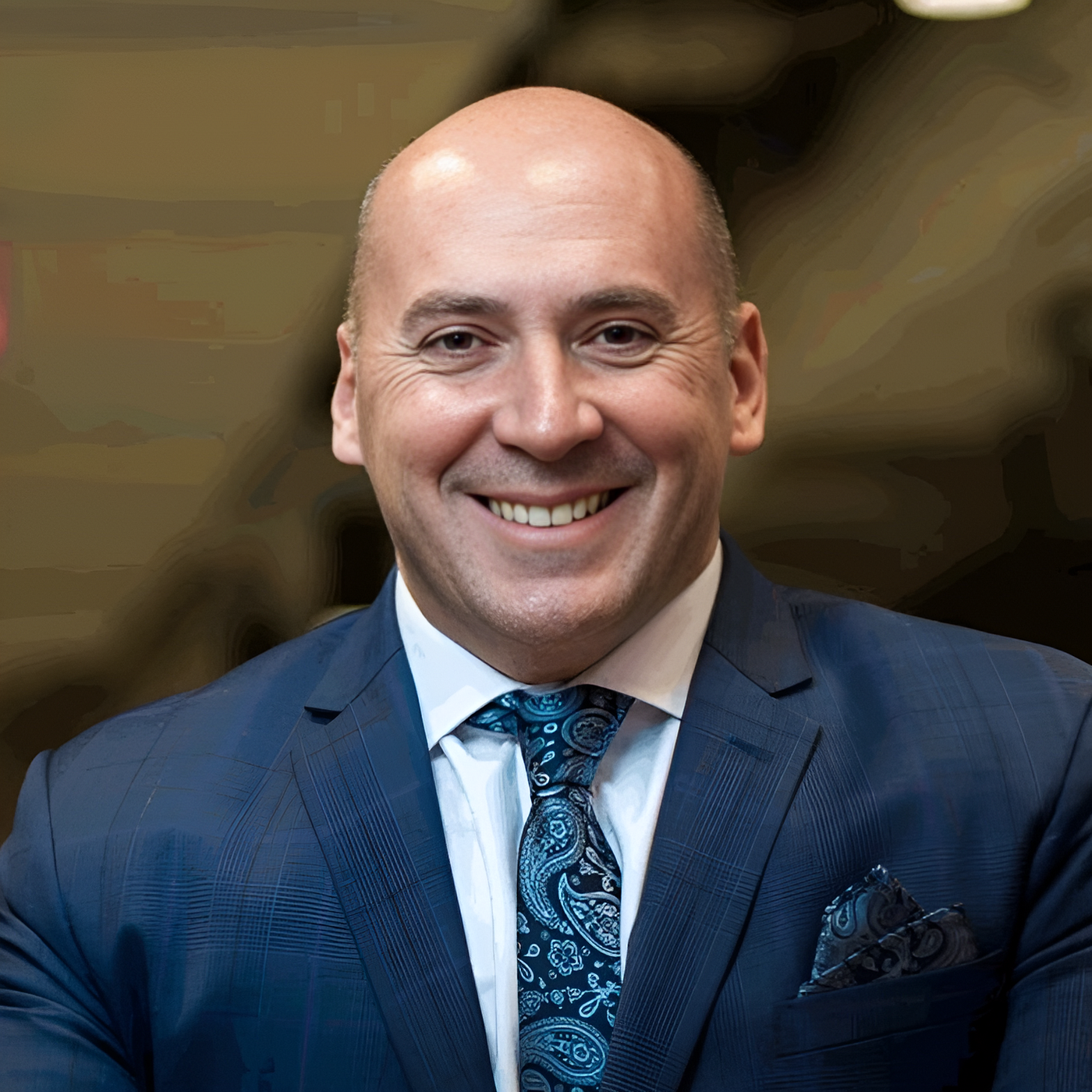
As part of this series, I had the pleasure of interviewing Ray Kober, founder of Benefixa and host of the Broken Healthcare Podcast, who is on a mission to help employers take back control from the entrenched power of insurance carriers, PBMs, and large brokerage firms. Through data-driven strategies and innovative technology partners, he helps companies dramatically lower healthcare costs while improving benefits for employees.
(please insert your three-sentence bio, written in third person here:)
Ray Kober is the founder and CEO of Benefixa, a health insurance consulting agency dedicated to helping mid-to-large market businesses take control of their healthcare costs while improving employee benefits. He is also the host of the Broken Healthcare Podcast, where he shines a light on industry inefficiencies and interviews experts on how to pay less while accessing higher-quality care. With a passion for championing the underdog, Ray is committed to disrupting the traditional healthcare system by equipping employers with bold, data-driven solutions that reduce costs and improve benefits.
Thank you so much for joining us in this interview series. Before we dive in, our readers would love to learn a bit more about you. Can you tell us a bit about your childhood backstory and how you grew up?
Shortly after my second birthday, my dad lost his battle with lung cancer. He was an oil burner mechanic who met my mom at work at Globe Fuel Oil in Astoria, Queens, New York City. That left my mom a two-time widow, having lost her first husband to a heart condition shortly after his return from WWII. So, she was left to raise me, the baby of the family, and my two older brothers single-handedly.
We grew up in a blue-collar neighborhood on a mixed residential-industrial block with homes and factories. We always had food on the table and family surrounding us. I’m Italian, German, and Irish but was raised on my mom’s Italian side of the family. Sunday was pasta day, and we’d get together with my mom’s siblings and cousins in a great weekly ritual that, unfortunately, faded with my mom’s generation.
Summer seemed to last forever, and I spent my days playing in the street—stickball, hide and seek, ringalario, and moonies. If you could “roof a rock” onto the tallest building on our block, the Superior building, it was a rite of passage.
I went to a private Catholic school, where I quickly learned that I hated wearing my uniform and wasn’t a fan of authority. When we moved to Jackson Heights, I resisted going to an all-boys Catholic high school (McClancy) but ultimately found it gave me a solid foundation for life.
Some of my fondest memories were summers at my Aunt Ida’s bar-restaurant, Ida’s Folley, in Oyster Bay, Long Island. That place was full of characters, and I spent summers there with my cousins, soaking it all in. That’s probably where I developed my interest in people and their stories. It was an amazing time in my life.
Can you share the most interesting story that happened to you since you began your career?
My first experience with a level-funded health plan began with a cold outreach email to the CEO of Ravn Alaska, Rob McKinney. While I had invested heavily in learning about self-funding and felt like a subject matter expert, I knew that real expertise comes from experience—learning by doing.
To land a 500+ employee account like Ravn, I partnered with an expert in self-funded plans. Together, we educated Rob, who had two essential qualities that made this transition possible:
1. He recognized that in the airline industry—where margins are notoriously slim—saving on healthcare costs could drop straight to the bottom line.
2. He was willing to listen and take a leap of faith.
Rob later told me that switching from Premera Blue Cross Blue Shield to a custom-built plan managed by independent consultants was one of the scariest decisions he ever made because getting healthcare wrong impacts people’s lives.
But the results were spectacular.
✔ $1.3M in savings in Year One—a 50% reduction vs. their proposed renewal.
✔ Another $1M in savings in Year Two.
✔ Employees received better benefits, with lower out-of-pocket costs.
The best moment came during our first renewal meeting when an employee, with tears in her eyes, told us that our plan had saved her thousands of dollars that she would have otherwise paid under the old plan.
People equate the Blue Cross Blue Shield logo with good insurance, but what good is insurance if you can’t afford to use it?
Bold leaders like Rob McKinney are the ones transforming healthcare. I’ll forever be grateful for him taking a chance on us—and I’d like to think we rewarded his trust in spades.
None of us are able to achieve success without some help along the way. Is there a particular person who you are grateful towards who helped get you to where you are? Can you share a story about that?
No one grows up saying they want to be an insurance agent. I was no different. My childhood best friend, Stephen White introduced me to Aflac in 2001. Like anyone with a brain in their head, I said no thanks, but then I met a bunch of guys he worked with, and my preconceptions about insurance melted away. I saw a bunch of guys who were having fun and making money.
The kicker for me was that not only could I have fun and make money, but I could help people in the process. The idea was that health insurance pays doctors, but everyday bills like rent need to get paid even if you are sick or hurt. For the change you empty out of your pockets at the end of the day, you could protect your lifestyle with Aflac.
The thing that put me over the top was their flagship cancer product. Having lost my Dad to cancer and then my Mom to Melanoma, I was passionate about helping people safeguard themselves from the financial devastation from the out-of-pocket expenses associated with treating cancer. My buddy Steve became my manager and through Steve, I inherited a broker who was passed to him from Ken Meier, our manager, and that broker was Shelly Schiff. Shelly is a great guy. He is now retired, but I owe him a tremendous debt of gratitude for helping me learn the ropes, trusting me with his clients and being a people person. We all need help getting our start, and without them it would have been a very tough road. I am incredibly grateful for their support.
Can you please give us your favorite "Life Lesson Quote"? Can you share how that was relevant to you in your life?
More than a quote, Man in the Arena, Teddy Roosevelt’s address at the Sorbonne in Paris. It is, in my opinion, a calling to the entrepreneurial spirit. Being an entrepreneur is difficult. You will be criticized, you will be ridiculed, you will get knocked down again and again. But doing the act, taking risks and understanding that failure is part of the process epitomizes the entrepreneurial journey. For me, as someone growing Benefixa and disrupting how companies approach healthcare, it resonates because it reinforces that I am in the arena, fighting for a better way while others sit on the sidelines. Every challenge I face proves that I’m doing the work that truly matters.
You are a successful business leader. Which three character traits do you think were most instrumental to your success? Can you please share a story or example for each?
Vision: As a leader, I believe it’s crucial to have a clear vision for where the ship is going. Once that vision is set, I have to chart a course, communicate it effectively, and make sure my team understands why we do what we do and how their role matters. When I managed a large team at Aflac, I made it a priority to paint a picture that helped each person see how vital their contribution was. That clarity and purpose propelled us to become one of the most successful sales organizations in the entire company.
Caring: One of the most valuable leadership lessons I ever learned came from Tom Giddens, one of Aflac’s greatest sales leaders. He told me something so simple, yet so powerful: “You gotta love ’em.” That stuck with me because I’ve seen firsthand that if you want to motivate people, you have to show them that you genuinely care. People don’t follow a title; they follow a leader who invests in them, supports them, and wants to see them succeed. I’ve always strived to be that kind of leader.
Work Ethic: There is no substitute for putting in the work. I’ve always believed that success belongs to those who show up every single day and give it their all. In any organization, if you look at the best of the best, they all share one thing in common—they work their asses off. If you study any leaderboard over time, you’ll see the same names at the top. That’s not luck. That’s effort. I’ve built my career on that principle, and I surround myself with people who do the same.
Ok super. Let’s now shift to the main part of our discussion about the technology or medical devices that you use to make a positive impact on our wellness. To begin, which particular problems are you aiming to solve?
The U.S. healthcare system is rigged against employers and employees. Insurance carriers, PBMs, and large brokerage firms act as “the house” in a game where businesses are set up to lose—overpaying for healthcare while employees face skyrocketing out-of-pocket costs. The result? Companies are draining resources, and workers are forced to delay care due to high deductibles and surprise bills.
I’m on a mission to change that. At Benefixa, we help mid-to-large market employers break free from this broken system, regain control over their healthcare spend, and deliver 100% coverage with $0 out-of-pocket for employees—without increasing costs. We do this by exposing hidden pricing tactics, eliminating waste, and leveraging fiduciary healthcare solutions that put employers and employees first.
How do you think technology can address this?
Technology is a game-changer in exposing and fixing the rigged healthcare system. The problem isn’t just high costs—it’s the deliberate lack of transparency that keeps employers and employees in the dark. Here’s how technology helps level the playing field:
1. Data Analytics & Claims Intelligence – Employers are often charged inflated, opaque prices for healthcare services. Advanced AI-driven claims analysis exposes where the money is really going and identifies areas to cut costs without compromising care.
2. Fiduciary PBMs & Transparent Drug Pricing – Pharmacy Benefit Managers (PBMs) traditionally make money by manipulating drug pricing and rebates in a way that benefits them, not employers or employees. Tech-powered fiduciary PBMs, and part of our expertise is being able to identify these organizations, bring full transparency to prescription drug costs, ensuring lower prices and better access to medications without middlemen taking an undisclosed cut.
3. Direct Contracts & AI-Driven Provider Selection – Instead of relying on overpriced insurance networks, employers can use tech-enabled direct contracting with high-quality, cost-efficient providers. AI and data analytics help steer patients toward top-performing, lower-cost providers, ensuring better outcomes at a fraction of the cost.
4. Member Navigation & Cost Transparency Tools – Employees shouldn’t have to guess what their healthcare will cost. Smart navigation tools and AI-driven concierge services guide them to the highest-quality, most cost-effective care while eliminating surprise billing.
By leveraging these tech-driven strategies, employers can cut healthcare costs by 20-60%, while employees get better benefits with no financial barriers to care. The healthcare system is rigged—but technology is giving us the tools to unrig it. However, technology alone isn’t enough. We need employers to get involved and learn what drives their costs. A small time investment is warranted for an expense that is typically a top five operating expense after payroll, and once they’ve done the work, they’ll probably ask what took them so long to dive in. That said, technology is a tremendous aid in helping them find the smoking gun!
Can you tell us the backstory about what inspired you to originally feel passionate about this cause?
I’ve always rooted for the underdog. One of my all-time favorite movies is Rocky. A nobody from Philly, with no shot in hell, steps into the ring against the World Heavyweight Champion—and goes the distance. He doesn’t win the fight, but that’s not the point. The point is that he refused to accept the odds. That kind of grit, that willingness to take on a fight you’re not “supposed” to win, has always stuck with me.
That’s exactly how I see healthcare.
The game is rigged. On one side, you’ve got the house—insurance carriers, the PBMs they own, and the massive brokerage firms that all profit from the system staying exactly the way it is. On the other side? Employers and their employees—the marks—sucked in by the flashing lights, the slick marketing, and the idea that this system is somehow built to work for them. It’s not.
The house runs on fear. It convinces employers that rising costs are inevitable, that high-deductible plans are the only option, and that fighting back is too risky. But here’s the truth: insurance is just insurance. It doesn’t provide healthcare—it just manages risk. And the way you structure that risk determines whether you win or lose.
That’s where I come in.
I love pulling back the curtain and exposing this system for what it really is. I love showing employers that the great and powerful Oz is just a construct—nothing more than a carefully designed illusion. The real game isn’t about which insurance carrier you pick. It’s about how you play. Who sets the rules. Who controls the costs. And when you understand that, you realize you don’t have to accept the hand you’ve been dealt. You can change the game entirely.
For me, this fight is personal.
I grew up in a lower-middle-class household, raised by my mom, who worked her tail off to provide for me and my two brothers. I think about women like her all the time—how every single dollar mattered, how hard she worked, and how unfair it is that people like her get crushed under the weight of high-deductible plans they can’t afford to use. That’s why I fight so hard not just to lower costs for employers, but to eliminate out-of-pocket costs for employees.
Because at the end of the day, this isn’t just about business. It’s about fairness. It’s about leveling the playing field. It’s about helping businesses and their employees take back control of their healthcare—not by playing the house’s game, but by rewriting the rules altogether.
That’s a fight worth showing up for every single day.
How do you think this might change the world?
Right now, healthcare is a rigged game, and the people paying the bills—employers and employees—are the ones getting played. But what happens when we flip the script? What happens when we pull back the curtain, expose the system for what it really is, and give businesses the tools to take back control?
We change everything.
For decades, employers have been told they have no choice but to accept skyrocketing costs, high-deductible plans, and carrier-controlled networks that put profits over people. But that’s a lie. When businesses stop playing by the house’s rules and start designing their own, healthcare stops being a financial black hole.
Here’s what happens when we get this right:
• Businesses keep more of their money. Instead of forking over millions to insurance carriers and PBMs, they reinvest in their people, their growth, and their future.
• Employees get the care they need—without going broke. No more skipping doctor visits because of outrageous deductibles. No more medical debt ruining lives. Just real, high-quality care at a price that makes sense.
• The supply chain of healthcare gets disrupted. When employers demand transparency, price gouging stops. When employees can see cost and quality upfront, bad providers get squeezed out. The free market starts working the way it’s supposed to.
• 100 million Americans no longer have to live under the crushing weight of medical debt. That’s the reality today—100 million people burdened by bills from a system that was never designed to be affordable. When we fix this, families stop having to choose between paying rent and paying hospital bills. That alone changes lives.
• A new standard is set. The companies that take control of their healthcare costs become more competitive. They attract and retain top talent. They prove that it doesn’t have to be this way. And once the model is out there, others will follow.
This isn’t a small fix. It’s a revolution.
Healthcare is one of the biggest financial burdens on American businesses and families. If we change how it works, we don’t just cut costs—we improve lives. We give people back their paychecks. We take away the fear of going to the doctor. We let businesses thrive instead of being bled dry by a system designed to keep them in the dark.
I truly believe we’re on the front end of something massive. The employers who get on board now aren’t just saving money—they’re leading the charge toward a better, fairer, and more sustainable healthcare system. And when enough people make that shift, the house loses its grip.
That’s how we change the world. One business, one employee, and one smarter decision at a time.
Keeping “Black Mirror” and the “Law of Unintended Consequences” in mind, can you see any potential drawbacks about this technology that people should think more deeply about?
Technology, when used ethically and morally, has the power to shift control back to those procuring healthcare—employers and employees—by providing transparency, smarter decision-making, and cost savings. AI and data analytics can help uncover waste, direct people to the highest-quality, lowest-cost care, and ensure employers finally have control over their healthcare spend.
That said, any technology can be manipulated if placed in the wrong hands. If AI is used to prioritize profits over people, deny care, or exploit data unfairly, it could create new problems rather than solving old ones. The key is ensuring that these tools remain in service of employers and employees, not the entrenched players looking to maintain the status quo.
I remain optimistic that we are at the beginning of a revolution—one where technology helps fix what’s broken in healthcare, empowers businesses to take back control, and ultimately delivers better outcomes for the people who need it most.
Here is the main question for our discussion. Based on your experience and success, can you please share “Five ways an employer benefits when their healthcare advisor successfully uses technology to make a positive cultural and financial impact for all stakeholders”? (Please share a story or an example, for each.)
From my experience disrupting the broken healthcare system, technology alone isn’t the solution—it’s how you apply it that makes a difference. Here are five key lessons I’ve learned:
1. Technology Must Expose the Truth—Not Just Automate the Status Quo
We worked with a mid-sized manufacturing firm spending millions on healthcare. AI-driven claims analysis exposed massive overcharges—a medication that should have cost $48,000 was being billed at over $400,000 due to a PBM’s pricing scheme. Switching to a fiduciary PBM and direct contracting cut costs by over 30% without reducing benefits.
Take Away: Tech should reveal hidden waste and empower better decisions, not just digitize broken systems.
2. Data Is Power—But Only If You Own and Control It
A construction company we worked with was denied access to its own claims data. After switching to a level-funded plan with transparent reporting, they gained full visibility into cost trends and cut pharmacy costs by 60%.
Take Away: If you don’t control your own data, you’re still playing by the industry’s rigged rules.
3. Tech Should Eliminate Middlemen, Not Add More Layers
We analyzed a digital health vendor that promised cost control but added hidden fees and complexity. After switching to direct contracts and a fiduciary PBM, they saved $7M over five years.
Take Away: If tech requires multiple layers of intermediaries, it’s likely adding costs rather than reducing them.
4. The Best Tech Solutions Align Incentives With Impact
We introduced a fiduciary PBM bolt-on where the provider was paid based on savings—not hidden rebates. Prescription drug costs dropped by 35%, while employees got better medications at lower costs.
Take Away: Misaligned incentives kill innovation. Tech should serve the people using it—not the institutions profiting from them.
5. Tech Is a Tool—It’s the Strategy That Makes It Transformational
A CFO once told me, “We’ve tried everything, but nothing moves the needle.” That’s because they were layering tech onto a broken system. After redesigning their entire healthcare strategy with AI-driven navigation, direct contracts, and fiduciary PBMs, they cut costs by 28% while eliminating deductibles and copays.
Take Away: Technology isn’t the answer by itself—it’s how you apply it strategically.
If you could tell other young people one thing about why they should consider making a positive impact on our environment or society, like you, what would you tell them?
If I could tell young people one thing about making a positive impact, it would be this: Be kind to people.
One of the greatest speeches I ever witnessed was from former President George H.W. Bush, and his message was incredibly simple: Be kind. It wasn’t flashy, it wasn’t tied to politics, and it had nothing to do with business or technology. But it was powerful.
That message stuck with me because at the end of the day, kindness is what truly changes the world. It might sound hokey or overly simplistic, but I’ve seen firsthand that the people who lead with kindness—the ones who genuinely care about others—are the ones who create the most meaningful impact.
It’s easy to get caught up in ambition, competition, and chasing success. But if we go through life treating people with respect, lifting others up, and doing the right thing even when no one’s watching, that’s what makes a lasting difference.
You don’t have to build groundbreaking technology or launch a massive movement to make the world better. Just be kind. That alone will leave a mark far greater than you can imagine.
Is there a person in the world, or in the US with whom you would like to have a private breakfast or lunch, and why? He or she might just see this, especially if we tag them. :-)
Mel Brooks! Sitting down with him would be an unforgettable experience. I mean, “Young Frankenstein”, “Blazing Saddles”! Does it get any better than that? His ability to blend sharp wit, satire, and pure absurdity has made him one of the funniest people on the planet. He’s The GOAT!
Beyond the laughs, what makes Mel Brooks truly special is his fearlessness—he’s never been afraid to push boundaries, challenge norms, and take risks with his storytelling. As someone who champions the underdog and isn’t afraid to disrupt the status quo, I think we’d have one hell of a conversation.
So, Mel, if you ever see this—breakfast, lunch, or a pastrami on rye—your call!
There are many people I’d love to meet and interview. Two others high on my list would be Sylvester (Sly) Stallone and Arnold Schwarzenegger. They are two of my childhood heros!
How can our readers further follow your work online?
Readers can follow my work and stay connected in a few ways:
• Broken Healthcare Podcast – I interview industry leaders, solution providers, and medical practitioners who are pulling back the curtain on our healthcare system. Subscribe to our YouTube channel here or listen on Apple Podcasts, Spotify, or wherever you get your podcasts.
• Benefixa Website – Learn more about how we help businesses take back control of their healthcare at Benefixa.com.
• LinkedIn – I regularly share insights, strategies, and industry disruptors in healthcare. Connect with me here.
• Email – If you’re an employer looking to explore better healthcare options, reach out to me directly at hannah.palmer@benefixa.com (my executive assistant, Hannah, helps coordinate my schedule).
I regularly interview business leaders who are change agents. I’m also open to conversations with physicians, healthcare workers who have a story to tell, and everyday people who have had a run-in—whether physical, mental, or financial—with the healthcare system. If that’s you, let’s talk.
Let’s connect and start changing healthcare together!
Thank you so much for joining us. This was very inspirational, and we wish you continued success in your important work.
About The Interviewer: David Leichner is a veteran of the Israeli high-tech industry with significant experience in the areas of cyber and security, enterprise software and communications. At Cybellum, a leading provider of Product Security Lifecycle Management, David is responsible for creating and executing the marketing strategy and managing the global marketing team that forms the foundation for Cybellum’s product and market penetration. Prior to Cybellum, David was CMO at SQream and VP Sales and Marketing at endpoint protection vendor, Cynet. David is a member of the Board of Trustees of the Jerusalem Technology College. He holds a BA in Information Systems Management and an MBA in International Business from the City University of New York.