My learning was to be in a company for a far longer duration and contribute to the value-creation of the company. Thus, I implemented my learnings by being with my next company for 17 years and in my current company I have completed 4 years and going strong for a lot more.
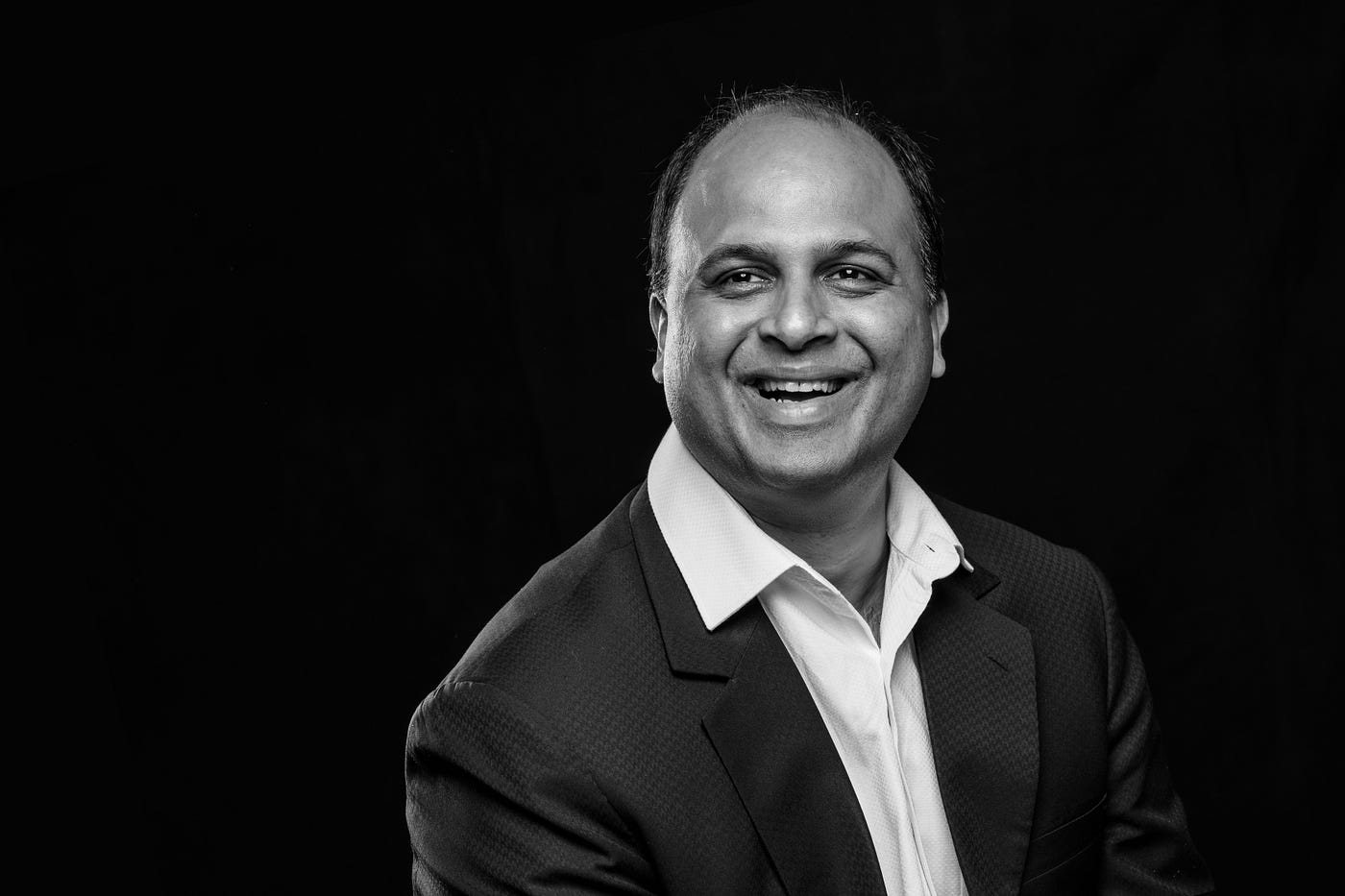
Ravi Teja Bommireddipalli, MD & CEO Of Robosoft Technologies On How To Use Digital Transformation To Take Your Company To The Next Level
Ravi took charge as CEO of Robosoft Technologies in late 2017. Since then, he has been a change agent at Robosoft, leading our transition to a full-service digital transformation company. He has expanded the service offerings and set up systems and talent in place to deliver end-to-end digital solutions for enterprise customers. He believes in forging relationships with customers and being a true partner in solving their business problems through digital solutions.
Ravi Teja is a student of Ontology (the Science of Being), Business and Engineering and believes that the power of empathy, human understanding and technology can solve a large number of societal and business problems. An Electronics Engineer from NIT, Allahabad, an MBA in Technology Management from IIT Bombay, Ravi has 25+ years of experience in technology consulting and implementing digital transformation. His previous stints included Nihilent Technologies, TCS and Rolta. Ravi was the Chairman of the Institute of Management Consultants of India (IMCI), Pune chapter and is an active member of the India CEO forum of IMA.
His previous stints included Nihilent Technologies, TCS and Rolta. Ravi was the Chairman of Institute of Management Consultants of India (IMCI), Pune chapter and is an active member of the India CEO forum of IMA and the prestigious Forbes Technology Council - an ‘invitation-only community for world-class CIOs, CTOs, and technology executives’.
Thank you so much for joining us in this interview series. Before we dive in, our readers would love to “get to know you” a bit better. Can you tell us a bit about your ‘backstory’ and how you got started?
My parents migrated from a small village in the south of India to Mumbai. My father got a job in the Accounting department of “The Shipping Corporation of India”. Born in December 1970, I grew up in a cosmopolitan surrounding, went to a catholic school in Mumbai and graduated as an Electronics Engineer in 1992 from NIT Allahabad; which is one of the top universities in India.
I worked in an international CAD/CAM/GIS company as a salesman for 3 years and chose to pursue my MBA in Technology Management from IIT Bombay. I got recruited by Tata Consultancy Services (TCS) in their management consulting division in 1997 and it also turned out to be the right time to get married to my wife Sunita Singh.
I left TCS in 2000 to join my mentor LC Singh who created a start-up called Nihilent. It was also the year Ayushi (my daughter) was born. I headed the Enterprise & Digital Transformation group at Nihilent. I spent 17 years transforming companies globally especially in the USA and Africa. I had my second child (Siddhant) in 2005.
After an amazing 17-year stint there, I got head-hunted to lead Robosoft Technologies in 2017. In 4 years, we were able to grow our top-line by 4x and Operating margin by 8x and re-positioned it from a mobile app development company to a global digital transformation company. Robosoft got acquired by TechnoPro Japan, a Tokyo-stock exchange-listed company in September 2021 and I got promoted to be the MD & CEO to lead our global expansion.
Can you share a story about the funniest mistake you made when you were first starting? Can you tell us what lessons or ‘take aways’ you learned from that?
I remember resigning from TCS in the year 2000 within 3 years of joining. Though it was a leader in IT services, it was not a publicly listed company. My boss was N Chandra who went on to become the MD & CEO of TCS and currently Chairman of Tata Sons which is a USD 100 billion conglomerate.
Today, TCS is publicly listed with an amazing brand and economic value. I don’t consider this as a mistake or a regret; but it was still a funny moment in my life, since my friends make fun of my decision to leave a great boss.
My learning was to be in a company for a far longer duration and contribute to the value-creation of the company. Thus, I implemented my learnings by being with my next company for 17 years and in my current company I have completed 4 years and going strong for a lot more. I also achieved a lot more by joining a start-up in 2000 and by being the CEO of Robosoft and transforming it into a global profitable digital company.
None of us are able to achieve success without some help along the way. Is there a particular person who you are grateful towards who helped get you to where you are? Can you share a story?
Not just a person, I am grateful to a bunch of people who have had a positive influence on me.
When I joined IIT Bombay, I met Kingsley Gonsalvez who is now my best friend. He introduced me to the Landmark Education program and it transformed my personal, academic and professional life completely. That 7-day “Curriculum for Living” program created a new way of looking at life and relationships through the science of ONTOLOGY (the science of human existence). After that program, I removed two words (RIGHT and WRONG) from my dictionary.
When I joined TCS after my MBA program at IIT Bombay, I met with Subbu Iyer who was my boss who introduced me to the world of management consulting. Thereafter, I implemented every project with the goal of achieving business results and not just technology implementation.
My current guru LC Singh with whom I worked at Nihilent taught me holistic thinking, un-learning, human empathy and spiritual awareness. My ability and confidence to lead people and organizations are due to these special skills that I picked up from him.
My wife Sunita Singh who sacrificed her own career growth and looked after our two beautiful children to allow me to pursue my career aspirations and my extensive work travel. My father’s liberal values and my mother’s simple lifestyle have kept me humble and given me an attitude of “doing more with less”.
Is there a particular book, podcast, or film that made a significant impact on you? Can you share a story or explain why it resonated with you so much?
The book that changed my professional career is “The Strategy Maps” by Kaplan and Norton. I learnt that intangibles such as human capital, information capital, culture, teamwork, knowledge sharing, leadership, internal processes and brand equity are the foundation to achieve tangible results of top-line growth, bottom-line results and shareholder value. And, all these are in a cause-and-effect linkage.
Another book that changed my life is “The Knowledge-Creating Company” by Nonaka and Takeuchi. It introduced me to the concept of ‘tacit knowledge’ that is so difficult to share and document and which largely remains in people’s heads. In our Hindu culture, the Guru-Disciple relationship is all about the transfer of tacit knowledge from the guru to the disciple.
Extensive research suggests that “purpose driven businesses” are more successful in many areas. When your company started, what was its vision, what was its purpose?
I am motivated by Simon Sinek’s book called “Start With Why”; which talks about being purpose-driven. My leadership team and I listen to his TED video many times. We got together in 2017 when I joined Robosoft and discussed why we wake up every day and what impact do we make. We knew we were making digital apps and our differentiation was we used an empathy-driven, design thinking approach. But, “why we do what we do” was our big question. We said we impact so many lives through the apps we build in the media, entertainment, banking, retail, healthcare and many other industry verticals. We make it simple and easy for users and citizens to do so many things online such as buying, banking, getting entertained, payments, getting insured, etc. It was obvious for us to conclude that our purpose is “Simplifying Lives”.
Are you working on any new, exciting projects now? How do you think that might help people?
The future of the internet is Web 3.0 or Semantic Web. We have a number of customers asking us to implement projects and proofs-of-concept in this area. Web 3.0 brings us open, trust-less and permissionless networks. Machine learning, Artificial intelligence, 3D graphics, 5G hyperconnectivity, Natural Language Processing, Virtual reality, IoT, and Blockchain. The benefits for everyone will be:
More personal experience
Better search
Better apps
No central point of control
A use case here could be, “you can ask your virtual assistant while you are driving ‘I would like to watch a thriller movie and have Italian food’. The search engine embedded in the car assistant provides you with a personalized recommendation that takes into account your live location, suggesting the closest theatre that matches your request and a good Italian restaurant by automatically reviewing the social media posts. Then it will even present a 3D menu from the restaurant in the display.”
Thank you for all that. Let’s now turn to the main focus of our discussion about Digital Transformation. For the benefit of our readers, can you help explain what exactly Digital Transformation means? On a practical level what does it look like to engage in a Digital Transformation?
The best way to explain DX is through the question “Who accelerated DX in companies in the last 2 years? And the options are 1. CEO, 2. CIO, 3. COVID. Strangely, the answer is COVID and the reason is that everything in the digital world is touch-less, contact-less, anywhere, anyhow and anytime.
To transform digitally means to create a totally new way of conducting business and earning revenue. Digital start-ups are disrupting older ways of doing things and Enterprise/Legacy incumbents are trying to react and transform. An easy example of digital transformation chronology in financial payments: we used to pay cash peer-to-peer, walk into a branch to deposit cash, issue a cheque, use internet banking, make payments through mobile and now through wallets. Payments today take a few seconds as compared to taking hours and days a few years back. This is true DX. We can have similar examples in retail (stores v/s eCommerce), media (payTV v/s OTT), healthcare (personal consulting v/s tele-medicine), automotive (ford v/s tesla), travel (taxis v/s Uber).
Thus, the usage of new digital technologies such as mobile, social media, cloud, analytics, blockchain, AI, IoT, 5G that results in disrupting business models and creates new ways of earning revenue is called DX.
Which companies can most benefit from a Digital Transformation?
All Enterprise/Incumbent/Legacy companies have to digitally transform or they will perish. The next-generation start-ups are coming up with new digital platforms that will disrupt the market. No industry has been spared from digital disruption. Thus, all have to transform. No one is spared.
We’d love to hear about your experiences helping others with Digital Transformation. In your experience, how has Digital Transformation helped improve operations, processes and customer experiences? We’d love to hear some stories if possible.
We at Robosoft are in the business of providing Digital Transformation (DX) services to our clients globally in Media & Entertainment, Retail & eCommerce, Banking and Fintech, Manufacturing & Automotive, Food Delivery and Healthcare. We have designed and developed 2000+ digital platforms using technologies from companies like Apple, Google, Microsoft, Amazon, Salesforce, SAP, Adobe and many more. The digital platforms that we developed are being used by more than a billion users/citizens globally. Some of the key platforms include Paytm, McDonald's India, ESPN, Discovery Networks, NDTV, PayPay, British Standards Institute (BSI), Hewlett Packard among others.
A classic example would be McDonald’s India. Robosoft partnered with them to redesign the entire McDelivery Experience. McDonald's India wanted to craft a fresh, new design and enhance the user experience across their digital platforms. The objective of the redesigned app and website was to offer a delightful experience to the customers through an intuitive design, hassle-free user journeys, outcome-based delivery and seamless performance of all applications across platforms. Designed as a mobile-first approach and driven by superior performance, we were able to deliver an “I’m lovin’ It" digital experience to the customers. We improved the user funnel to aid items to cart and then checkout. We improved the overall navigation and performance of the site and app. The redesigned app helped in better discovery of offers, quick & easy checkout, better recommendations and personalization.
Has integrating Digital Transformation been a challenging process for some companies? What are the challenges? How do you help resolve them?
Yes, integrating Digital Transformation could prove to be a challenging process for some companies. I have attempted to answer the challenges companies could face and the ways they can tackle the challenges to achieve DX in the next question.
Ok. Thank you. Here is the primary question of our discussion. Based on your experience and success, what are “Five Ways a Company Can Use Digital Transformation To Take It To The Next Level”? Please share a story or an example for each.
Five ways and challenges to achieve DX to go to the next level or integrate DX in companies are:
Hire a DX leader and get separate P&L targets on user acquisition, revenue, profits; so that DX is not just an extension of current traditional business (One of our clients in the media and entertainment industry in the USA, hired a DX leader from Amazon to run the OTT business)
Not having a Direct-to-Consumer (DTC) mindset is required for DX. Companies think that using the digital technologies in some way is DX, but what is more important is the DTC mindset that creates disruptive value to the end-consumer (the media company created a DTC mindset by the fail-fast and fail-forward culture by adopting agile and DevOps methodologies that would enable release of features into production every day rather than every year)
Empathising with the end consumer is extremely important since no solutions can be created in DX by sitting in the air-conditioning offices. We call it the GOOB culture (Get-Out-Of the-Building) and live the life of the end-user. This is called the Design Thinking approach. (the media company did extensive user research on what users want, their pain points, their user journeys, their emotional needs, what they think, feel, say and do; which helped them in creating a platform that is human-centric)
DX initially cannibalizes the existing traditional business and thus the organization’s ability to take the risk if disruption is very important for DX’s success. (the traditional pay-tv business is a profit-making business for this media company; and the OTT roll-out will definitely cannibalize the traditional business. But their leadership could see the future of OTT business and thus invest pro-actively today to be prepared for the future. Their theory is “its better to cannibalize your own traditional business than getting cannibalized by the market”.
Enabling back-end IT applications to be micro-services enabled and making them as re-usable components is key to providing functional services on any front-end device (mobile, web, kiosk, F2F, wearable) through a multi-modal engagement (touch, text, voice, gesture, call)
In your opinion, how can companies best create a “culture of innovation” in order to create new competitive advantages?
The pre-requisite for innovation in any company is the culture of learning. And learning requires an ability to un-learn. We need to be a team of SEEKERS and not BELIEVERS. Because SEEKERS have the guts to say “I DON’T KNOW” and BELIEVERS are stuck on what they believe and are unable to accept a different point of view. Thus, un-learning creates space for new knowledge to be accepted or created. With new knowledge, there are multiple ways of doing things differently leading to a boost in innovation in organizations. Innovation needs to be only a breakthrough, but it can also mean something different that we have not done before in our company.
If there is an extreme INTENT created in companies to LEARN; the universe will conspire and find ways and means to make the experts appear and share. The challenge for a LEARNER is to lower his/her ego and say “I don’t know”; and then the magic of knowledge creation happens.
What is important in learning is the tacit knowledge of the expert which is more difficult to document and to share. There are multiple ways of tacit knowledge transfer such as role-playing, teach-back, guru-disciple bonding, etc.
A LEARNING company is an INNOVATING company.
Can you please give us your favorite “Life Lesson Quote”? Can you share how that was relevant to you in your life?
‘OVERNIGHT SUCCESS TAKES A HELL A LOT OF TIME’. It takes a lot of blood, sweat and tears to create the groundwork for future success. The small and incremental efforts add up over a period of time and then the system flips and crosses the chasm; which creates the momentum for success. And everyone thinks that the success we achieved was fast and overnight.
How can our readers further follow your work?
I write extensively on LinkedIn and Twitter on various subjects related to DX, Design Thinking, Ontology (the science of being); the psychology of online sales and engagement; emotional design and the future of technology.
Linkedin https://www.linkedin.com/in/ravi-teja-bommireddipalli-95a1583/
Twitter https://twitter.com/rteja0812
Email rteja0812@gmail.com
Thank you so much for sharing these important insights. We wish you continued success and good health!