In 1997 while working on the printing press, my hand got stuck in the big, huge steel rollers of the press while the press was still running. My right hand got crushed within the rollers and came out with major injury and severe pain.
Business
Raj Sardana of Innova Solutions on Surviving Corporate Displacement, Overcoming Severe Injury, and Building a Multi-Billion-Dollar IT Enterprise
The founder and CEO of Innova Solutions shares how immigration hardships, unexpected career displacement, and sheer resilience shaped his entrepreneurial journey to a three-billion-dollar business.
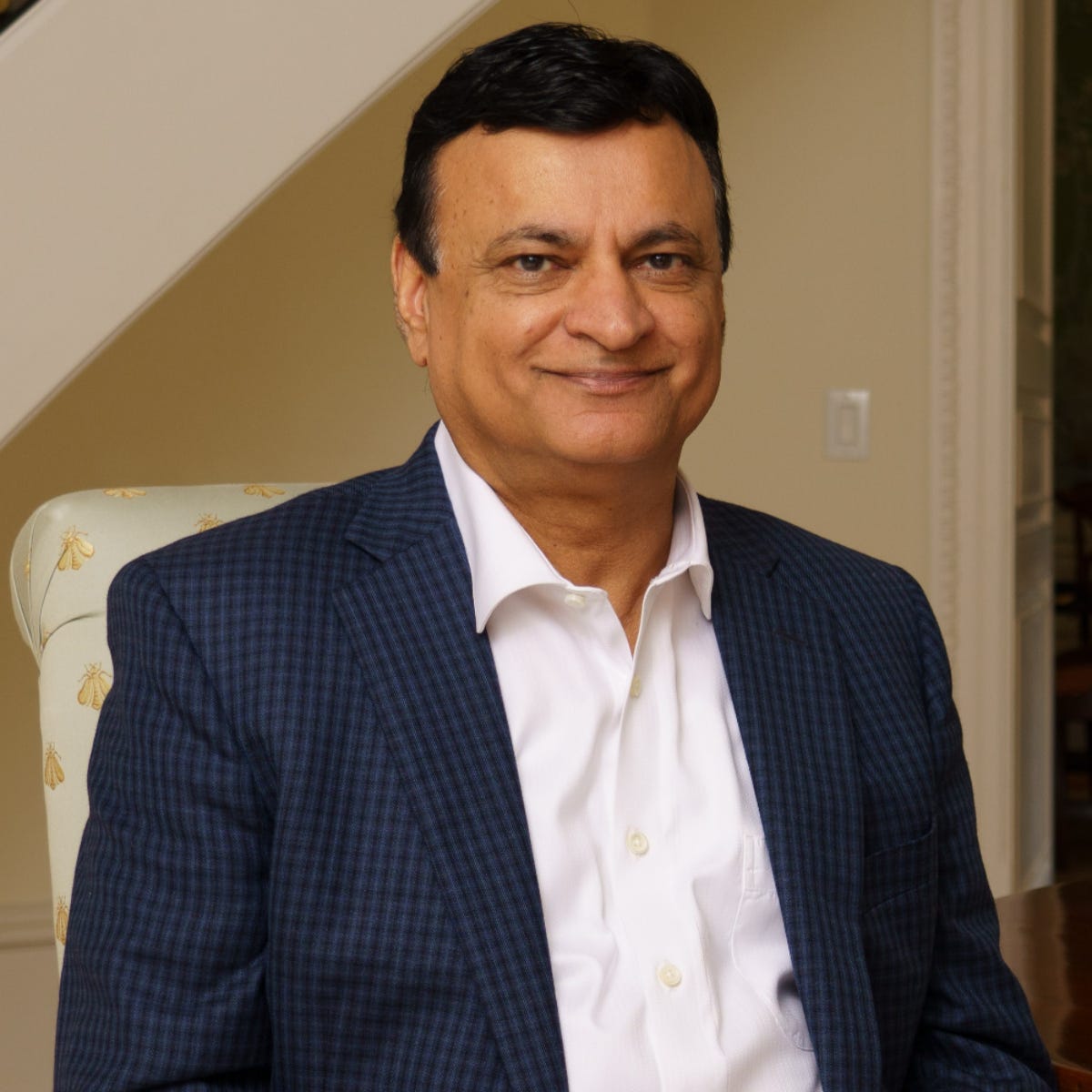
As part of our interview series called “5 Things I Wish Someone Told Me Before I Became A Founder”, I had the pleasure of interviewing Raj Sardana.
Raj Sardana is the founder & CEO of Innova Solutions (founded 1998). Raj co-founded the Innova Foundation in 2013 with wife, Nita, and daughters, Sonia & Shivani; partners include the YWCA of Greater Atlanta’s TGITech program, Women in Technology (WIT), Dress for Success Atlanta, and the Earth Saviours Foundation (Delhi, India). Raj holds a BE in Mechanical Engineering from the Delhi College of Engineering; a master’s degree in Mechanical Engineering from Georgia Tech; and an Advanced Management Program (AMP) certification from the Wharton School of Business.
Thank you so much for joining us in this interview series! Can you tell us a story about what brought you to this specific career path?
In 1987, I was working in a great engineering position at Teledyne CAE that made engines for Tomahawk Missiles. In 1990, when the cold war ended, America and Russia decided to end the production of any new missiles, and this division of the company closed. I lost my job as a result.
I clearly remember the day I had to pack my office belongings in a small cardboard box and walk out of the building for the last time. I had just bought a house with a mortgage, had a six-month-old daughter, and my parents were also living with me. At that moment, I had no income to support my family. Somehow, I gathered enough courage to decide I would not work for corporate America anymore. With the $25K that I had saved over the last 5 years, I was able to buy a small retail print shop in Stone Mountain, GA, and that’s how my entrepreneurial journey started in August of 1990 with one employee, eventually leading to Innova (ACS) almost a decade later.
Can you tell us a story about the hard times that you faced when you first started your journey?
In 1997 while working on the printing press, my hand got stuck in the big, huge steel rollers of the press while the press was still running. My right hand got crushed within the rollers and came out with major injury and severe pain. I was able to find a hand surgeon associated with Dekalb
Medical Center that gave me hope for hand reconstruction. After three extensive surgeries in the next six months and a year of physiotherapy and occupational therapy, I was able to regain function in my hand. While I was still struggling with pain in my injured hand, I had the time to start working on my next venture in technology, which eventually led to my company today.
Where did you get the drive to continue even though things were so hard?
My parents, both from Punjab, India, were forced to relocate to the country’s capital in the bloody aftermath of the 1947 partition of British India. My brother and I, along with our parents, lived for 20 years in dilapidated government housing in New Delhi with no heating or air conditioning, no refrigerator, no phone, no TV, and no automobile. My parents rebuilt their lives and provided for us through countless hardships. Despite our humble beginnings, my parents instilled the values of relentless hard work and found a way to provide quality education to me and my brother.
So, how are things going today? How did grit and resilience lead to your eventual success?
Over the past several years, my company Innova has joined the ranks of the U.S.’s top IT services firms, has more than 1,100 large and mid-sized clients, and reports an annual revenue approaching $3 billion. We’re continuously learning from mistakes and successes and innovating, just as I have done throughout my career.
Can you share a story about the funniest mistake you made when you were first starting? Can you tell us what lesson you learned from that?
When I was looking to branch out from retail back into the technology space (late 1990s), I decided to return to my alma mater, Georgia Tech, for a master’s course in robotics. I have a degree in mechanical engineering, so this felt like a good way to combine those skills with emerging tech. At the very end of the course, we were assigned a research project. I turned the project in, certain that I was going to get high marks. After all, I was a successful entrepreneur with mechanical engineering skills. How hard could it be? Well, in short, it turns out that the academic side of my brain had been overtaken by a business mindset. The professor told me that my “research” looked more like a brochure. Ha! Luckily, my brother (and Innova’s COO), Sanjeev, has a degree in computer science, so I’ve been able to leverage his expertise as we built out our technology business. So, all in all, I’d say the lesson I learned from that is to stick to what you’re good at and delegate the rest to people you can trust!
What do you think makes your company stand out? Can you share a story?
I attribute the success of our company to the intelligent, innovative, and hard-working team that we have built over the years, that goes above and beyond the call of duty to make us successful. Innovation has always been the key to our continued success and that is how we can stay relevant, compete with, and win against the large and established competitors in the industry.
Which tips would you recommend to your colleagues in your industry to help them to thrive and not “burn out”?
In my entrepreneurial journey, I encountered countless rejections and failures. But I quickly learned that failure is not the end; it is merely a steppingstone to growth and improvement. With
each setback, I analyzed, learned, and adapted.
I did not have a formal degree in business, but everything I learnt was using common sense and instinct. I did not have a mentor or a blueprint of how to do it. I made my share of mistakes, trusted some wrong people, and lost money — but I learnt from each experience, picked myself up, and became a little wiser the next time. Being a business owner means 24/7 work, and it took me many years to learn how to manage people, handle vendors, and turn a profit. Stay focused on your passion and take one obstacle at a time.
None of us are able to achieve success without some help along the way. Is there a particular person who you are grateful towards who helped get you to where you are? Can you share a story?
With big dreams and $100 dollars in my pocket, I came to America as a young man to pursue my master’s at Georgia Tech. When I landed, I did not know a single person in America, but a kind student let me sleep on the floor in his apartment for a few days. He helped me find a job in the school’s cafeteria washing dishes and mopping floors to pay the first quarter tuition. I did not have money to pay the second quarter tuition, and I shared this with one of my professors, Dr. William Black. He saw my grades and my situation and was kind enough to offer me a “research assistantship” in his Heat Transfer Lab. That was a huge relief for me since that qualified me to pay a domestic student tuition fee rather than a high tuition fee of an international student. That lifeline saved me from dropping out of the college and returning to India — something I’m grateful for to this day.
How have you used your success to bring goodness to the world?
After we built the foundation of the company and began to feel more comfortable with the business, we decided it was time to give back and get involved with the community, leading to the creation of the Innova Foundation. Innova supports over 175 charitable organizations around the globe. Most of our focus is on women’s education and empowerment, elderly care, supporting children from underprivileged families across the globe, and supporting environmental causes.
In 2006, we adopted a program called Teen Girls in Technology (TGI Tech) run by the YWCA of Greater Atlanta. In this program, we have supported the teen girls through mentorship, tutoring, and scholarship for college tuition and piqued their interest in adopting STEAM as a major. Several thousand girls have gone through this program over the years, and the success is that 100% of these girls have chosen to go to college to achieve not just bachelor’s degree, but in many cases master’s and PhD degrees. The majority of these girls were the first ones in their entire family to go to college.
What are your “5 things I wish someone told me before I started leading my company” and why. Please share a story or example for each.
1 . Embrace Your Unique Background
Working towards the American dream as a first-generation immigrant is a unique experience. It requires embracing your own roots and the culture of your new home. Diversity and multiculturalism are the cornerstones of innovation and progress. By embracing unique backgrounds, perspectives and working towards a noble passion, you enrich the fabric of our society and contribute to the collective success of our communities.
2 . It’s never too late to begin.
I embarked on this journey with a vision and a dream to create something meaningful at the midpoint of my career. It is never too late to get started working on your dreams.
After eight years of successfully running small retail businesses, with all their difficulties and challenges, I was itching to get back to building technology business being an engineer by trade. The technology business needs millions of dollars of investment which I did not have when I started my entrepreneurial journey. But now, I had some cash to invest. I was 38 years old and going through a mid-life crisis to have to start over again in my career. With a curious mindset and willingness to learn about anything that seemed like a good business, I immersed myself in the field and learnt anything there was to learn about information technology and business.
3 . DO NOT chase after Money.
Money and success will follow you if you excel in something that is meaningful and is of good value to society. You will face many challenges and adverse situations as you follow your dreams, but your passion will make you stronger in face of these difficulties. Every adversity in life makes you stronger. With perseverance, determination, and grit — dreams do come true!
4 . Surround yourself with the right people.
Every success I have achieved in life, be it professional or personal, is a testament to the people around me who I have learnt so much from — they have been instrumental in shaping the person I am today. For example, my first employee from my printing business is still with me at Innova today over 32 years later.
5 . Stick with it.
In 1998, my brother Sanjeev and I founded a company called American CyberSystems (ACS) and started bringing software engineers from India to fulfill the needs of corporate clients in the US. Although we felt in 1999 that we were too late to this Y2K game, we were betting on the fact that there will be so many computer crashes as the date turns to 2000 and we will be busy for quite some time. Well, none of that happened. The computers did not crash, the flights did not come crashing down to ground.
Soon thereafter the Tech Bubble burst and the Tech economy was crashing down to the ground very fast. Thousands of technology companies were going out of business, and we did not know if we would survive any longer. I decided to stick with ACS and make things work. We were going through the typical challenges of a start-up where for many years we didn’t know if we would survive the next year or not. Survival was the key mantra in those days. We stuck with it, and we’re now a multi-billion-dollar business.
Can you share a few ideas or stories from your experience about how to successfully ride the emotional highs & lows of being a founder”?
Navigating the emotional highs and lows of being a founder requires resilience and strategic thinking. Embracing adaptability is crucial, as the business landscape is ever-changing. For instance, our decision to rebrand ACS to Innova Solutions in 2023 was a response to the evolving needs of digital transformation and helped us better represent our organization’s passion for innovation. Building a strong support network of mentors and peers is also essential; their insights and encouragement can be invaluable during tough times. Finally, focusing on the long-term vision keeps you grounded and motivated, allowing you to navigate daily challenges without losing sight of your ultimate goals.
You are a person of great influence. If you could start a movement that would bring the most amount of good to the most amount of people, what would that be? You never know what your idea can trigger. :-)
Some of my best ideas have come to me after a yoga or meditation session, and I think the world would be a better place if we committed ourselves to practicing mindfulness each day. Imagine all the life-changing ideas that are waiting just below the surface!
How can our readers further follow your work online?
You can find me on LinkedIn: https://www.linkedin.com/in/raj-sardana-61b12515/ and learn more about Innova Solutions here: https://www.innovasolutions.com/.
This was very inspiring. Thank you so much for joining us!
About the Interviewer: Douglas E. Noll, JD, MA was born nearly blind, crippled with club feet, partially deaf, and left-handed. He overcame all of these obstacles to become a successful civil trial lawyer. In 2000, he abandoned his law practice to become a peacemaker. His calling is to serve humanity, and he executes his calling at many levels. He is an award-winning author, teacher, and trainer. He is a highly experienced mediator. Doug’s work carries him from international work to helping people resolve deep interpersonal and ideological conflicts. Doug teaches his innovative de-escalation skill that calms any angry person in 90 seconds or less. With Laurel Kaufer, Doug founded Prison of Peace in 2009. The Prison of Peace project trains life and long terms incarcerated people to be powerful peacemakers and mediators. He has been deeply moved by inmates who have learned and applied deep, empathic listening skills, leadership skills, and problem-solving skills to reduce violence in their prison communities. Their dedication to learning, improving, and serving their communities motivates him to expand the principles of Prison of Peace so that every human wanting to learn the skills of peace may do so. Doug’s awards include California Lawyer Magazine Lawyer of the Year, Best Lawyers in America Lawyer of the Year, Purpose Prize Fellow, International Academy of Mediators Syd Leezak Award of Excellence, National Academy of Distinguished Neutrals Neutral of the Year. His four books have won a number of awards and commendations. Doug’s podcast, Listen With Leaders, is now accepting guests. Click on this link to learn more and apply.

Published inAuthority MagazineTop Lessons, Top Authorities · 42K Followers
Exclusive, curated interviews with the leaders and changemakers shaping tomorrow. Leadership lessons, industry deep dives, and executive profiles.