When someone knows what it feels like to be scared, unheard, or unable to afford care, helping another person can become deeply personal.
As a part of our series about “individuals and organizations making an important social impact”, we had the pleasure to interview Nicole Notar.
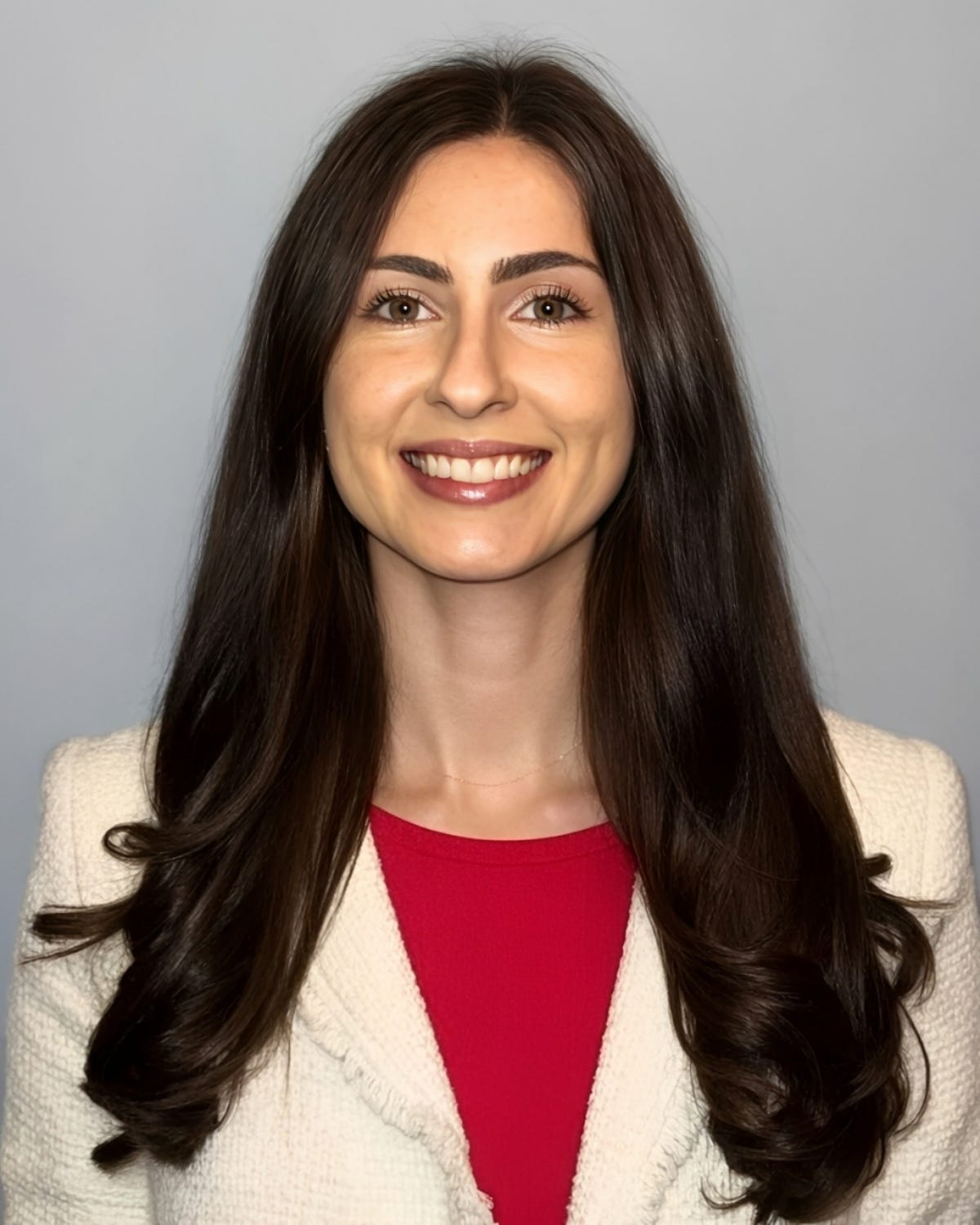
Nicole Notar is the Founder and Executive Director of Endo Excision for All, a volunteer-run nonprofit that helps patients afford endometriosis excision surgery. She is also the Founder and CEO of Vindicara, a health technology company developing clinical decision support software to help clinicians recognize possible endometriosis and related conditions earlier. Drawing on her experience as a patient who has undergone two extensive excision surgeries, she works to improve access to care, support patients, and bring their voices into policy and product development.
Thank you so much for joining us in this interview series! Can you tell us a story about what brought you to this specific career path?
I came to this work as a patient. I know what it feels like to have pain affect your life while you are still trying to get answers. I also know that finding a doctor is only one part of the challenge. You then have to figure out insurance, costs, recovery, and how to keep everything else in your life going.
In my first excision surgery in 2023, 73 lesions were removed. I had a second surgery in August 2026, when 32 more lesions were removed and my rectum was found to be stuck to my cervix. Those experiences made this work very personal.
I founded Endo Excision for All, 501(c)(3) to help people afford excision surgery. Through that work, I kept seeing how much patients had already been through before they reached us. Vindicara grew from wanting to address an earlier part of that journey: helping clinicians recognize patterns that could point to endometriosis and deserve further evaluation.
One organization helps with access to treatment. The other is being built to support earlier recognition. Both come from the same question I keep asking myself: what would have made this path easier for the person reaching out to me today?
Can you share the most interesting story that happened to you since you began leading your company or organization?
One thing that has surprised me most is how often the people reaching out for help are also asking how they can help someone else.
Recently, a patient contacted us after an incredibly difficult surgical experience. She had gone into septic shock, needed several more surgeries and an ostomy, and spent two months in the hospital. She was still looking for support with her own recovery, yet she also wanted to share her story so other patients would feel less alone.
Another patient, preparing for her own surgery, thanked us and said she hoped to donate in the future. She was facing so much herself and was already thinking about the next person.
Those messages stay with me. When someone knows what it feels like to be scared, unheard, or unable to afford care, helping another person can become deeply personal.
I recognize that feeling because it’s what led me to build EEFA and Vindicara. But seeing it come back through the people who reach out to us has been one of the most meaningful parts of this work. They remind me that you don’t have to have everything figured out in your own life to care about making someone else’s path easier.
It has been said that our mistakes can be our greatest teachers. Can you share a story about the funniest mistake you made when you were first starting? Can you tell us what lesson you learned from that?
I learned pretty quickly that caring deeply about a cause does not automatically make you an event planner, especially an out-of-state event planner! With EEFA, I wanted to do as much as possible, but I underestimated how much goes into an event when you aren’t nearby to handle things yourself. Woof, that gets stressful.
The lesson was to start smaller, learn what works, and grow from there. An event doesn’t have to be huge to help people. It also needs to be something our volunteer team can realistically manage.
With Vindicara, the funny part has been realizing how many jobs come with the title “founder.” One minute I’m learning the technology, then I’m handling admin, then marketing. There are days when I’m both the person having a tech problem and the person expected to solve it!
Starting a company in a new field means accepting that you’re going to make mistakes. I’m learning to ask questions sooner, get help, and give myself room to learn. Being willing to say “I don’t know how to do this yet” has been much more useful than pretending I have every answer.
Can you describe how you or your organization is making a significant social impact?
Through Endo Excision for All, we help patients afford endometriosis excision surgery. We have raised more than $200,000, helped fund surgery for 45 patients, and assisted more than 400 people through education, resources, and support. We pay providers directly. Every dollar donated goes toward surgery, and I personally cover our operating and fundraising expenses.
We are volunteer-run, and many of us are patients ourselves. We also help people understand their next steps, prepare questions, and make sense of medical bills. Our funding is limited, so being honest about what we can and cannot provide is part of the work.
With Vindicara, I am focused on an earlier point in care. We are developing rules-based clinical decision support software that uses coded health information and chart features to flag patterns that may suggest endometriosis (and related conditions). It is designed to support a clinician’s evaluation, rather than provide a diagnosis on its own.
EEFA has directly helped fund care, and Vindicara is being developed with the goal of helping clinicians recognize possible disease earlier.
Can you tell us a story about a particular individual who was impacted or helped by your cause?
One story that stays with me is Natalie’s. She was a college student and teacher aide who had found a surgeon and booked her excision surgery. Then, just a month before the procedure, the hospital told her it would not accept her insurance and required payment upfront. She was already relying on family and friends to help cover the surgeon’s fee. The added hospital cost meant she had to cancel.
We spent months on calls together with the hospital and her insurance company, asking questions, exploring coverage options, and working through each new barrier. Her surgery finally happened in May 2026.
What matters to me is that our help went beyond fundraising. Natalie shared that we helped her learn how to fight for herself when she felt stuck.
That is a huge part of why I do this work. Patients are already dealing with pain, school, jobs, and everyday life. Getting care can become another exhausting job. Sometimes making a difference means staying on the phone, asking another question, and helping someone take the next step when they don’t know where to turn.
Are there three things the community/society/politicians can do to help you address the root of the problem you are trying to solve?
First, take symptoms seriously. People need to be able to say that pain is disrupting school, work, relationships, or daily life and have that concern heard. Communities can help by making it easier to talk about these experiences and by sharing reliable information.
Second, make skilled care more accessible. Recognizing a problem does not help enough if the next appointment or treatment is financially out of reach. We need practical conversations about coverage, access to experienced providers, and the costs patients are asked to carry.
Third, invest in research and carefully evaluate new tools. Through Vindicara, I am working on one approach to supporting recognition. Through EEFA, I see why we need many approaches, along with funding and education. Policymakers, researchers, clinicians, and patients each bring information the others need. Patients should be included while solutions are being designed.
How do you define “Leadership”? Can you explain what you mean or give an example?
Leadership means being willing to take responsibility while being honest about your limits. People should not have to guess what you can deliver.
At EEFA, that can mean telling someone that I want to help but cannot promise funding. I would rather give an honest answer and keep their application on our waitlist than make a promise we may not be able to keep.
At Vindicara, it means knowing when a decision needs a technical, clinical, or security expert. My experience as a patient is valuable, but it does not make me an expert in every part of building a health technology company. I need to ask questions, listen, and make sure the right people are involved. To me, that is part of taking the mission seriously.
What are your “5 things I wish someone told me when I first started” and why?
1. Wanting to help does not create an unlimited budget: I can care deeply about an applicant and still not have the funds to help them that day. We keep applications on our waitlist because donations can come in at any time. I have learned to explain that clearly without creating a promise.
2. Small questions can take a lot of time: Helping a patient may include several emails just to understand their insurance, surgery date, and cost estimate. Those details matter. They also take time, which is easy to overlook when planning a volunteer-run organization.
3. You do not have to build every kind of support yourself: I have found myself helping patients with medical bills while also running the foundation. I am now exploring outside resources that could help with that work. Asking who already does something well can be more useful than adding another task to your own list.
4. Build security into the work early: At Vindicara, I have personally been involved in introducing a team password manager and rolling out multifactor authentication and access controls. Those tasks require attention while we are also developing the product. They belong in the plan from the beginning.
5. Your health needs a place in the schedule: I had my second excision surgery while building these organizations. I have also had to move calls and turn down opportunities when recovery or family care needed my attention. The work matters to me, but so does being realistic about what I can carry. I am still learning this one!
Can you please give us your favorite “Life Lesson Quote”? Can you share how that was relevant to you in your life?
“You don’t have to have it all figured out to start.” That idea means a lot to me. If I had waited until I knew everything about running a nonprofit or building a health technology company, I would still be waiting.
With EEFA, I’ve learned how to raise money, plan events, and support patients while building the organization. With Vindicara, I’ve had to learn a whole new field and wear more hats than I ever expected.
You start with what you know, ask for help, and learn as you go. Sometimes something doesn’t work, and you have to change direction. That doesn’t mean the whole idea was wrong. It means you’ve learned something that can make it better.
I’m still figuring things out every day. I think that’s part of creating something special: caring enough about what you’re building to keep learning and let it grow beyond what you first imagined.
Is there a person in the world, or in the US with whom you would like to have a private breakfast or lunch with, and why?
I would love to have lunch with MacKenzie Scott. I admire people who have the means to help others and choose to make that a meaningful part of their lives. Her approach through Yield Giving, including sharing resources and giving up control, really speaks to me.
There is only so much any one person needs. If you’re in a position to ease someone else’s struggle, why wouldn’t you want to? Running EEFA has shown me how much a donation can mean to someone who is trying to get care.
I’m especially drawn to making an impact without needing to be the center of attention. Some of the most meaningful work happens quietly, behind the scenes, but changes someone’s whole life.
I’d love to ask her how she decides where she can help most and what she has learned from the people and organizations she supports. That mindset of using what you have to make life better for others is something I deeply admire.
You are a person of enormous influence. If you could inspire a movement that would bring the most amount of good to the most amount of people, what would that be?
I would want people to feel able to speak up about their health and know that someone will listen. That starts early, with children learning that they can describe pain, ask questions, and tell a trusted adult when they do not feel heard. Parents and/or legal guardians need support in listening and advocating alongside them, too.
But speaking up cannot be the patient’s whole job. The healthcare system also has to respond. That means clinicians having time and support to investigate symptoms, patients being able to access care, and new ideas being tested honestly.
EEFA and Vindicara are the two ways I am working toward that today. I hope more people will see a place for themselves in this work, whether they can donate, improve a process in their practice, volunteer their skills, or simply take someone’s concern seriously.
How can our readers further follow your work online?
You can learn more about Endo Excision for All at https://endoexcisionforall.org/ and follow us on Instagram at @endoexcisionforall. You can learn more about Vindicara at https://vindicara.com/ and follow us on Instagram at @vindicara_ and find me on LinkedIn at linkedin.com/in/nicolenotar/.
If you can give, donations to EEFA go directly toward helping patients afford excision surgery. If you are interested in Vindicara, I would love for you to follow our progress and share our work with your doctors. We also welcome conversations with clinicians and organizations interested in learning more.
This was very meaningful, thank you so much. We wish you only continued success in your great work!