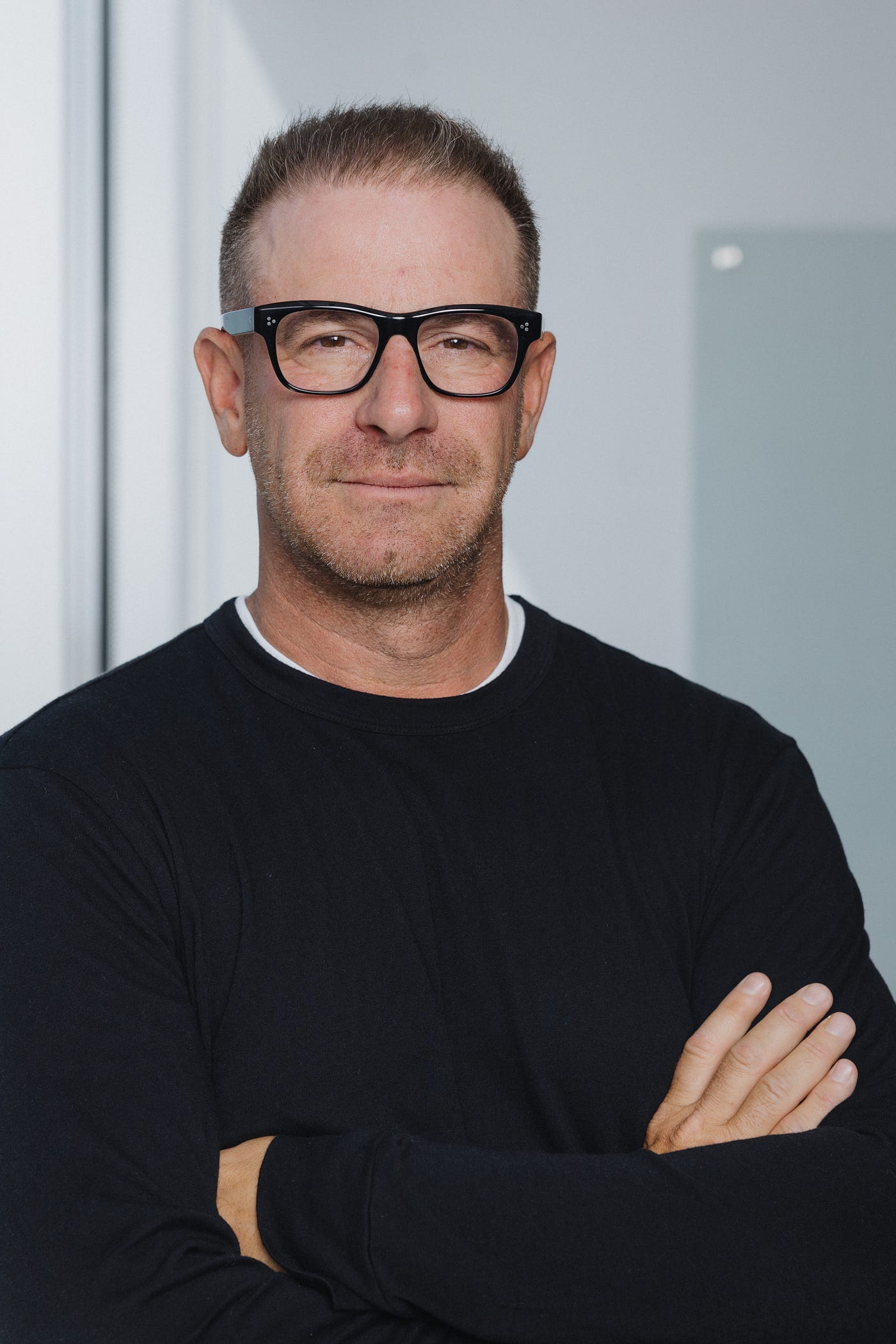
I call it a 20-year overnight success because people see the company today, but they don't always see the thousands of problems, mistakes, sleepless nights and uncomfortable decisions it took to get here.
Entrepreneurship is often celebrated for its victories, but behind many successful businesses are years of struggle, setbacks, risk, rejection, uncertainty, and sacrifice. Great entrepreneurs are not only defined by their ideas, but by how they respond when things go wrong. What helps founders keep going when they face financial pressure, failed launches, difficult decisions, personal challenges, or moments when giving up seems easier? As part of this series, I had the pleasure of interviewing Nick Friedman.
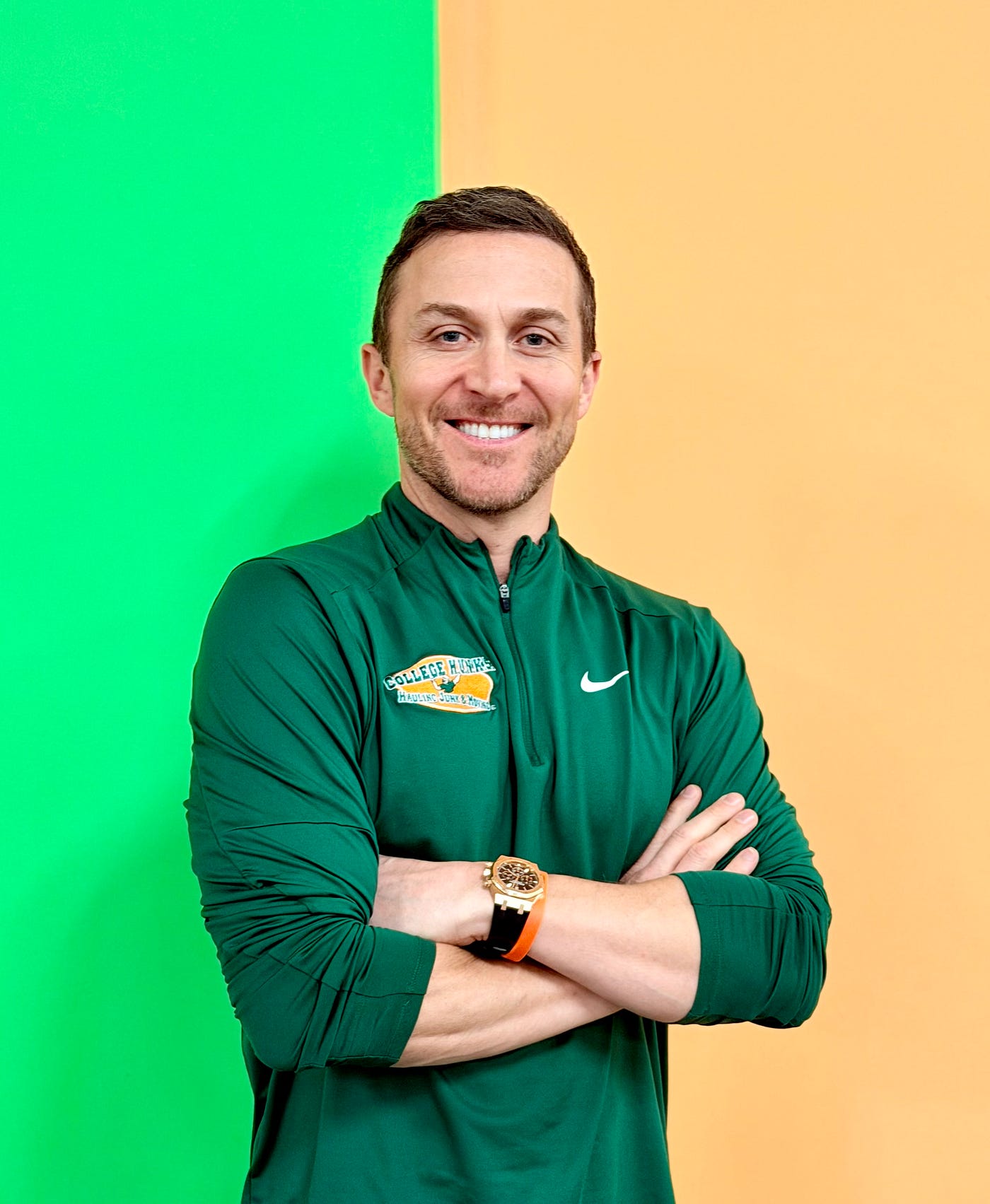
Nick Friedman is the Co-Founder of College HUNKS Hauling Junk & Moving, a purpose-driven moving and junk removal franchise that he started with his best friend in college in 2005. What began with a beat-up cargo van has grown into a nationally recognized brand with more than 200 franchise locations, employing over 4,000 team members. Nick is a best-selling author, entrepreneur, investor, speaker, and Executive Producer who has appeared on Shark Tank and Undercover Boss. He is passionate about entrepreneurship, leadership, branding, and culture.
Thank you so much for joining us in this interview series! Before we begin, can you please introduce yourself? Our readers would love to “get to know you” a bit better. Can you tell us a bit about your ‘backstory’ and how you got started?
My entrepreneurial story really started with a beat-up cargo van. I grew up in Washington, D.C., and met my now-business partner, Omar Soliman, in 10th grade—in detention, of all places. Heading into our senior year of college, we were looking for a way to make some extra money. Omar’s mom had an old cargo van from her furniture store and told us we could use it to move furniture and haul away junk. Then she jokingly looked at us and said, “You guys could be college hunks who haul junk.”
We thought the name was hilarious, but then we realized it was actually a great way to make the phone ring because it wasn't what people typically associated with movers or haulers. We put the name on some computer-printed flyers, started getting calls and quickly realized there was a real business opportunity. The industry was fragmented, the customer experience was inconsistent, and nobody was really building a memorable national brand around it.
We wrote a business plan our senior year, won an entrepreneurship competition and, after briefly taking traditional jobs after graduation, realized we were much more fulfilled building the business. I remember emailing Omar and asking, “What’s our timeline for starting this business full time?” He wrote back in all caps: “My timeline is right now! Let’s do this!”
There were plenty of skeptics who asked, “You’re going to quit your job to haul junk and call it College HUNKS?” We used that skepticism as fuel. That was 2005, and more than 20 years later, we have roughly 200 franchise owners around the country, more than 4,000 team members, and nearly $300 million in annual revenue. I call it a 20-year overnight success because people see the company today, but they don't always see the thousands of problems, mistakes, sleepless nights and uncomfortable decisions it took to get here. That’s entrepreneurship.
None of us are able to achieve success without some help along the way. Is there a particular person you are grateful to who helped get you to where you are? Can you share a story?
Originally, I would have said my business partner, Omar, and his mom, obviously, for giving us the cargo van. But I'll actually give credit to our company president, Roman Collin, who joined us as a senior in college. Roman played a huge role in helping us evolve from two guys flying by the seat of our pants into a real, metrics-driven organization.
Roman first came across our business when he was a college student doing a case study competition. We couldn't afford consultants, so we actually went to a local university and had students do some consulting work for us. Roman was from very humble beginnings in rural Jamaica and became really interested in what we were building.
He ended up going back after he graduated and getting his MBA and CPA, and we eventually hired him as our controller. I can really trace our success from before he joined the organization to after because I call him “Roman numerals.” He's a very numbers-oriented individual. He helped us create scoreboards, performance indicators and metrics and really make us a data-driven organization.
Entrepreneurs tend to fly by the seat of our pants a little bit. We were doing a lot of things on instinct. Roman gave us the measurements to know what our decisions were doing. It was like suddenly we could drive our car with a windshield, a real gas gauge and a speedometer.
I'd contribute a ton of our success to him, as well as every team member and franchise owner we've brought into the organization. I'm actually reading a book right now called Who Not How, and if you have aspirations of growing and scaling, it's the “who” that you align your team around that allows you to leverage the results you're looking for beyond just Omar and me on a truck together in college.
Ok, fantastic. Let’s now shift to the main focus of our interview. Entrepreneurship often looks very different from the outside than it feels on the inside. Can you share one of the most difficult periods you faced as an entrepreneur, and what helped you keep moving forward when giving up might have seemed easier?
One of the hardest periods that jumps to mind was when we first started franchising in 2008 and 2009. If you were going to pick a time in economic history to franchise a home-service business that depended heavily on homeowners having disposable income, that probably wasn't the best time. It was right at the beginning of the housing crisis and economic downturn.
For us, it felt like we were pulling an anchor through the sand, pushing a rope up a hill, flying into the wind. But we didn't know any different.
What that period did for us was force us to get grittier, more resilient and more resourceful. You hear a lot about entrepreneurial DNA, but I think some of that can only be learned through the school of hard knocks. Had we started franchising during an economic boom, we might have become complacent or overconfident. Instead, we learned how to deal with adversity early.
We've dealt with COVID, high interest rates and other challenging economic environments since then, and we're not panicking because we've been through adversity before. We know we can get scrappy and figure it out.
I think the biggest lesson was that we had to make the decision every single day: Are we going to quit, or are we going to keep going? And we kept choosing to keep going. We tapped into mentors and peer groups, read books, went to conferences and tried to apply everything we were learning.
Even in the very beginning, we had a “do whatever it takes” mentality. We bought a 1-800 number because we wanted to look like a bigger company, even though we had one truck and the number was routed directly to my cell phone. People would call to complain about our drivers, and I'd be sitting in the driver's seat pretending to be the corporate office saying, “We'll fire those guys when they get back.” You do what you have to do to keep moving forward.
Setbacks can shake even the most confident entrepreneur. When something you believed in fails, whether it is a launch, partnership, investment, hire, or business strategy, how do you process that disappointment and decide what to do next?
That was a challenge and an early lesson for me: disconnecting the emotional investment in an idea if it didn't pan out.
Whether it was a marketing initiative, a franchise owner or a new hire that we believed in that didn't ultimately work out, I learned not to take it personally and not to allow myself to ruminate about the outcome. Instead, I ask, “What is the lesson that I can learn from this?”
Roman coined the term, “It's not losing, it's learning.” And failure is a “first attempt in learning.” So we try to keep our curiosity and growth mindset on.
Every stepping stone we take is a step, even though it may be a stumble, it's a step forward. Another analogy I use is crossing a river. You're feeling out the stones with your feet, and it's not until you get to the other side that you know which steps you should have done differently or could have made less slippery.
Whenever something doesn't go the way we'd like, we ask ourselves three questions: What actually happened? What did we learn? And what are we going to do differently in the future?
Having convictions and confidence in your vision is important as an entrepreneur, but you don't want to be so tunnel-visioned that you're unable to adjust or learn when things aren't working out as quickly as you'd like.
Financial pressure and uncertainty are realities for many founders. Have you ever faced a moment when the future of your business felt genuinely uncertain? What did that experience teach you about making difficult decisions under pressure?
Absolutely. Anyone who has built a business for more than 20 years and says they've never been scared about the future probably isn't telling the whole story.
Whether it was the recession, COVID or the high-interest-rate market right now, we've definitely had financial pressures. Even in the early days, as we were trying to expand to a second truck or a second location, there were times when we were stretching to make payroll.
COVID stands out because it was so unprecedented. We'd been in business for 15 years, and almost overnight it felt like the business we'd spent all those years building could be taken away. After about 24 or 48 hours of essentially hiding under my bed and sucking my thumb, I realized I had to become decisive. We didn't know if the shutdown would last six days, six weeks, six months or six years, so we had to plan for the worst and hope for the best.
So we had to plan for the worst and hope for the best. We made some immediate cutbacks in our labor force. Our thought process was that it shouldn't be death by a thousand cuts—we needed to cut once and cut deep.
In hindsight, I probably would have reacted a little bit less emotionally, but it's a lot easier to Monday-morning quarterback knowing how things eventually bounced back.
For me, the lesson was making decisive decisions and not waiting when the future is uncertain. But those decisions shouldn't come from a place of fear. They should come from a place of preservation, protection and longevity of the brand.
When you're making decisions from fear, you may make short-sighted decisions. I think it's also important to keep the big picture in mind: cash, clients, culture and communication. Those were really critical to leading through those uncertain times.
Entrepreneurship can take a personal toll as well as a professional one. How have you learned to protect your energy, relationships, confidence, and sense of perspective during particularly demanding seasons of building a business?
I'm still learning this one. It's an ongoing evolution.
I remember coming back from the first vacation I took after we started the business and being so stressed about catching up that I actually lost a patch of hair. I was told it was stress-related alopecia. That happened within the first year of the business, and it was a pretty clear sign that I needed to learn how to manage the stress differently.
I've learned that taking breaks, having mindful moments and maintaining perspective are critical. Physical fitness, family, friendships, travel, meditation, sleep and time away from the business aren't luxuries. They're part of maintaining the energy you need to perform over decades.
One piece of advice I'd give my younger self is: Have the urgency of effort, but patience for the results.
Early on, I had a lot of urgency and not much patience. I wanted everything to happen immediately, and that impatience created a lot of unnecessary stress. Today, I'm much more conscious of being present and remembering how far we've come.
You can build an incredible business and simultaneously miss your life if you're not careful. I love entrepreneurship, competing and building, but I'm also a husband, father, friend and human being. Success shouldn't require sacrificing everything that made you want to become successful in the first place.
Looking back, is there an obstacle or failure that felt devastating at the time but ultimately made you, or your business, stronger? How did that experience change the way you approach challenges today?
There hasn't been one failure. There have been hundreds—bad hires, people leaving, strategies that didn't work, marketing campaigns that didn't convert, investments we shouldn't have made, opportunities we missed and times we moved either too slowly or too quickly.
But one of the most notable was being on the very first episode of the very first season of Shark Tank. On the surface, it looked like a failure because we didn't get a deal. We actually got yelled at by Mr. Wonderful, Kevin O'Leary, and because it was episode one, we didn't know that was just his persona. We thought he was genuinely a jerk.
We also received an offer from Robert Herjavec, but we felt it was a lowball offer, so we turned it down. Then the show became a huge hit and all the Sharks became television celebrities. For a while, we wondered if we'd made the wrong decision and whether having a Shark as a partner would have helped us.
But hindsight is always 20/20. Our business today is worth 100 times what the valuation was that they offered us 20 years ago. We would have been giving up a big piece of our equity, so who knows if we would have made better or worse decisions having made that choice.
Being on the show, making that decision, a bad hiring decision, a bad vendor choice or a bad franchise sale—all of those are lessons that can ultimately move us into the future. We just have to keep failing forward.
Constraints force creativity, so it's important to be resourceful and understand what's at hand when you're dealt a certain hand or when things don't work out as planned.
Ok super. Here is the main question of our interview. Based on your experience and success, what are “Five Things Entrepreneurs Need to Fight Through Obstacles and Keep Moving Forward”? Please share a story or an example for each.
1. Resourcefulness — Use what you have.
When Omar and I started, we didn't have venture capital, sophisticated systems or decades of experience. We had a beat-up cargo van, two guys willing to work hard, a funny name and a willingness to hustle.
Entrepreneurs naturally focus on what they're missing: more capital, more people, better technology, more connections. Sometimes those things are necessary, but one of the most powerful questions you can ask is: What resources are already around me that I'm underutilizing?
That could be your relationships, reputation, creativity, knowledge, customers, team, time, technology or even your constraints.
Resourceful entrepreneurs don't wait for perfect conditions. They create outcomes from imperfect circumstances.
2. Resilience — Don't confuse a bad chapter with the end of the story.
As an entrepreneur, every day you're either having a breakdown or a breakthrough. It could be hour by hour. Nothing is permanent in life.
Over more than 20 years, we've experienced recessions, business mistakes, personnel challenges, competitive threats and plenty of ideas that looked much better on a whiteboard than they did in reality. I've learned not to make permanent judgments based on temporary circumstances.
Just keep moving and keep building.
3. Relationships — Don't try to carry everything yourself.
Obviously, I had the benefit of having a business partner. I think shared vision and values are very critical with any business relationship.
Having a peer group and mentorship gives you relationships you can leverage for knowledge sharing, introductions and growth.
Almost every major breakthrough in my career has involved another human being—a partner, mentor, team member, franchise owner, customer, friend or family member.
Resourcefulness isn't just about what you know. It's knowing who knows what you don't. Build relationships before you need them, and be generous with those relationships when other people need you.
4. Reality — Face the brutal facts quickly.
Optimism is an entrepreneurial superpower. I always say, to a hammer, everything looks like a nail. To an entrepreneur, everything looks like a great idea.
You've got to be willing to say no. You have to have the discipline to look at the reality of the numbers and make decisions based on the data. And if you're not great at numbers, make sure you have somebody like we did when we hired Roman who can help provide those numbers and make good decisions.
If something isn't working, look at it. If someone isn't performing, address it. If customers aren't buying, listen. If the numbers don't work, don't create a story explaining why they eventually will.
Entrepreneurs tend to see opportunities everywhere. Sometimes everything looks like a great idea. You have to be willing to say no and make decisions based on reality and data. You can remain incredibly optimistic about your future while being brutally realistic about your present.
5. Purpose — Have something bigger pulling you forward.
Have that “why” that gets you out of bed in the morning.
Money is motivating, but I've never found it sufficient for the hardest moments. There will always be more money to make, so you need a deeper reason to keep building.
At College HUNKS, our purpose is to Move the World—not just people's belongings, but people emotionally as well. We've built a company around developing leaders, creating opportunities for entrepreneurs, providing meaningful employment, serving communities and creating great experiences for customers and franchise owners.
Of course, there's no mission without margin. You still need to build a profitable business. But having a purpose gives you a North Star when things get difficult and a reason to keep moving forward when entrepreneurship stops being fun.
You are a person of great influence. If you could start a movement that would bring the most amount of good to the most amount of people, what would that be?
I'd start a movement around resourcefulness. I think we spend a lot of time teaching people what to know, but not enough time teaching them what to do when they don't know what to do.
We talk about IQ and emotional intelligence, or EQ. Now we're entering an era where AI gives people access to an incredible amount of information. But I believe the ability to synthesize and creatively apply your resources with grit is what separates the winners.
Can you solve problems without perfect instructions? Can you build relationships? Can you create something from nothing? Can you adapt when the plan changes? Can you turn constraints into creativity? Can you leverage technology rather than be displaced by it? Can you figure things out?
I'd love to see resourcefulness intentionally taught to entrepreneurs, employees, students and especially kids. Because if you teach someone to become more resourceful, you're not just helping them solve one problem. You're increasing their ability to solve problems for the rest of their life.
I believe we need to develop that skill just as intentionally as we develop intelligence and emotional intelligence. In a world where technology is moving incredibly quickly, you can't rely solely on book smarts or emotional smarts. You've got to be a resourceful human being.
How can our readers further follow your work online?
The best place to connect with me is NickFriedman.com, where you can find all of my social media links and contact information. I'm very active on Instagram and LinkedIn, and I regularly share lessons about entrepreneurship, leadership, culture, branding, franchising, scaling businesses and resourcefulness.
You can also follow College HUNKS Hauling Junk & Moving across our social channels. We also have a podcast called HUNKS Talking Junk, where I have conversations with entrepreneurs, athletes, executives, franchise owners, entertainers and other leaders about the experiences and lessons that shaped their success.
This was very inspiring. Thank you so much for the time you spent with this!