If there is anything that I have learned on this journey, it is that there is only one indispensable value in life, and that is raw determination. Nothing can replace grit, resolve, persistence, tenacity.
Social Impact
Nick Adams: How Absolute Tenacity and Uncompromising Values Built a National Movement
The founder of FLAG reflects on overcoming a childhood cancer diagnosis, escaping cultural marginalization, and utilizing unwavering resilience to build an impactful public platform.
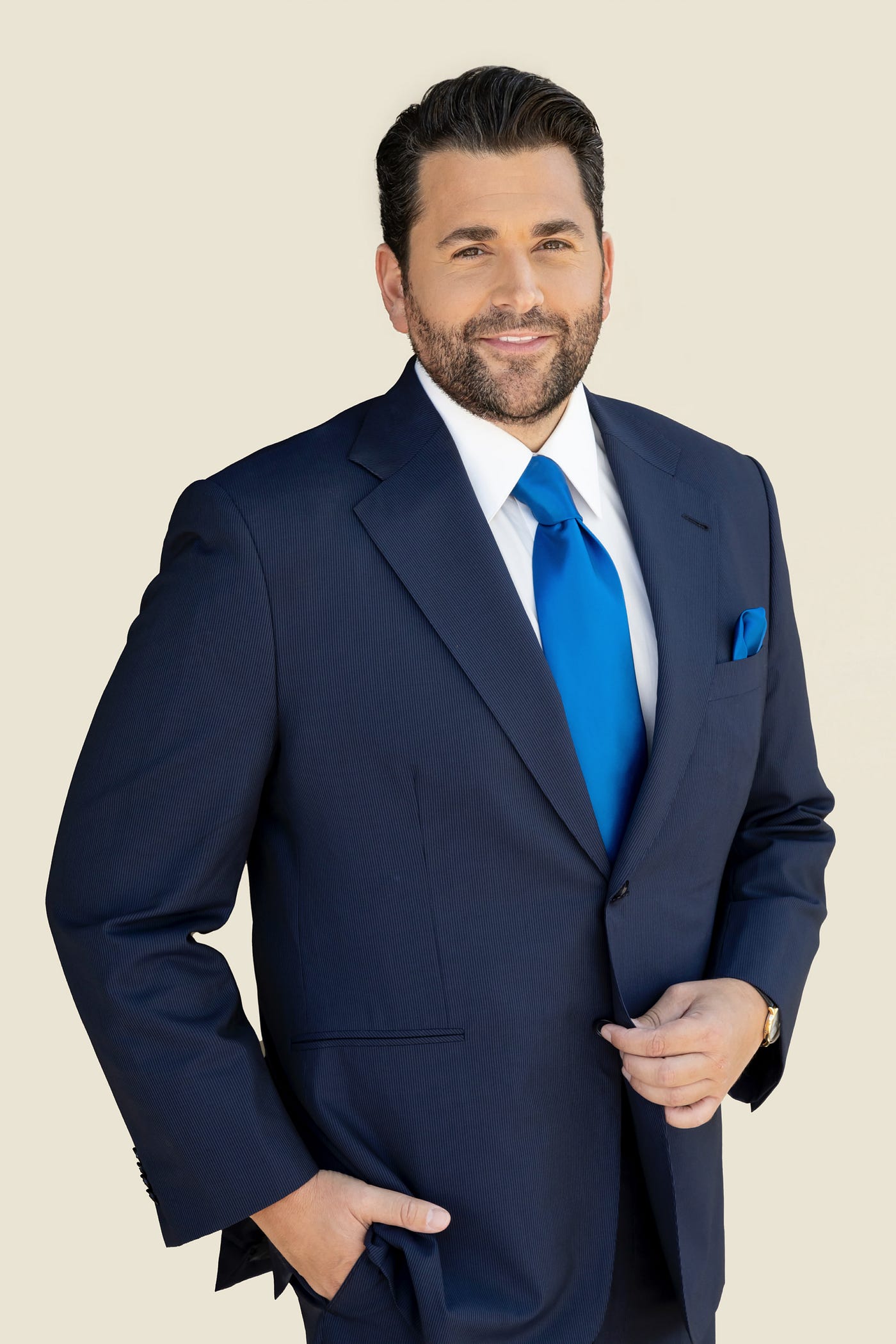
As a part of our series called ‘Five Things I Wish Someone Told Me Before I Became A CEO’ we had the pleasure of interviewing Nick Adams.
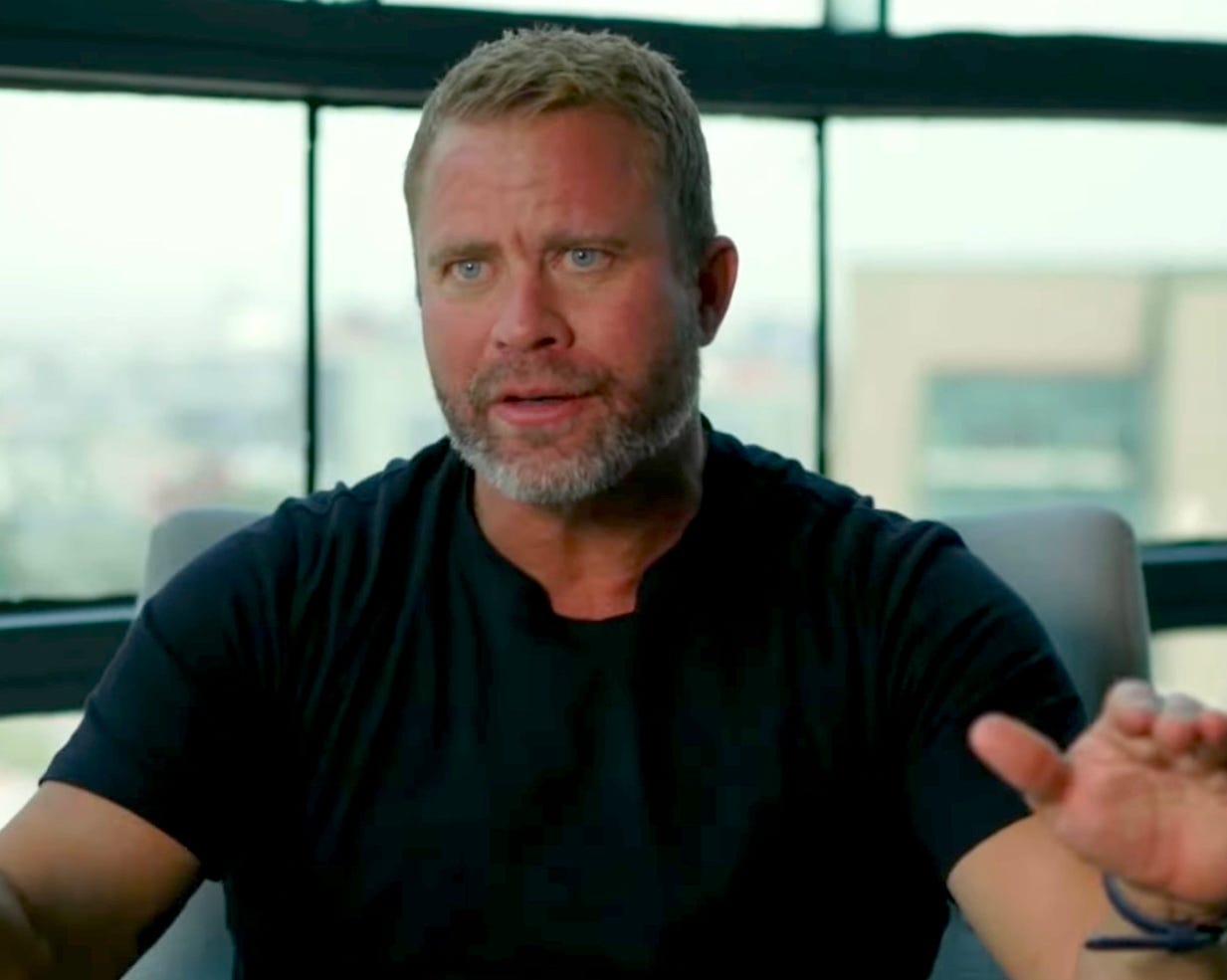
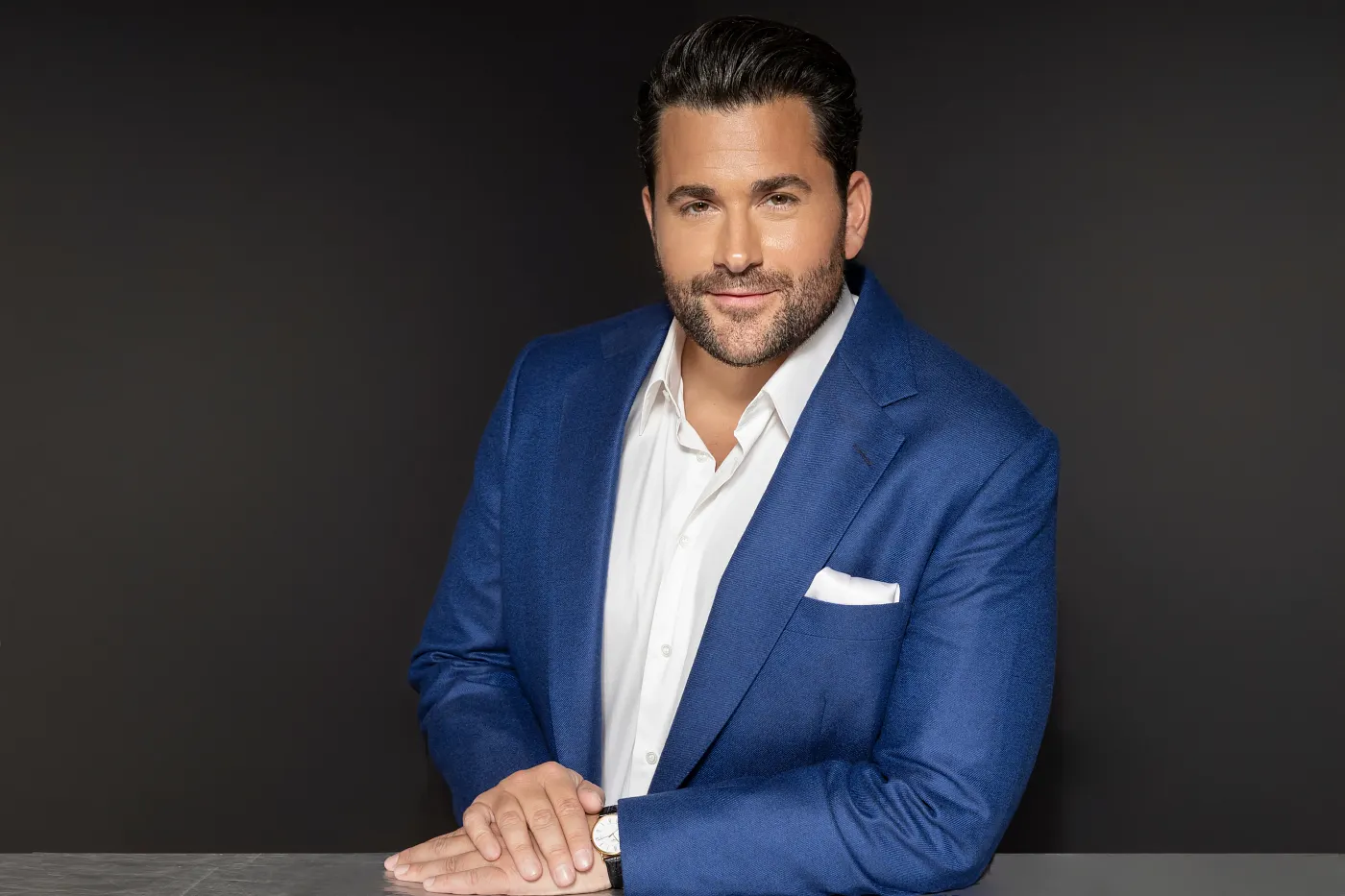
Nick Adams personifies the American dream. A first-generation legal immigrant to the United States, Adams is an author, public speaker, education advocate, presidential appointee, social media influencer and stage IV cancer survivor who is passionate about the preservation of American values and the future of civic education. He is the founder of FLAG, an organization that tirelessly works to develop the next generation of American leaders through community partnerships and collaboration with parents and schools.
Thank you so much for joining us in this interview series! Before we dig in, our readers would like to get to know you a bit more. Can you tell us a bit about your “backstory”? What led you to this particular career path?
It tends to be in these moments that I am most reminded of the improbability of my journey.
As anyone close to me will tell you, my life has been a rollercoaster, full of rapid change in speed, direction, altitude and emotion.
My journey has seen me scale both the heights of exhilaration and plumb the depths of paralysing fear.
But it is perhaps for that very reason that I live my life with such passion, resolve, energy and optimism — all traits that I consider to be inherently and conspicuously American.
If there is anything that I have learned on this journey, it is that there is only one indispensable value in life, and that is raw determination. Nothing can replace grit, resolve, persistence, tenacity.
Many people wait a long time for the defining moment of their life. I didn’t have to.
At sixteen months, my life had barely begun when it almost ended. I was diagnosed with Stage IV Neuroblastoma — a rare form of childhood cancer the cause of which remains unknown even today. Doctors told my parents I had just a five percent chance of survival. That only one in twenty children survive, and that even if I did, there was a possibility I would never be able to walk. For three years, I underwent chemotherapy, radiotherapy and an operation. Through the healing hands of God, our master physician, I defied the odds, and miraculously survived.
As I grew older and was able to comprehend the magnitude of my escape, I resolved to never waste a second of a minute of a day of a week of month of a year. Since I’d had to fight for it, I realized life was precious, and not a given. I figured I was living in credit, and that if the odds were better than five percent, I’d take it.
Except the boldness, confidence, individualism and intensity associated with such an approach to life did not fit the culture of the country of my birth. And it would see me marginalized, blackballed, restricted, and constantly landing in hot water with the establishment — whether at high school, university or in politics.
And so I came over here — and discovered that when people give you their shoulders as opposed to turning their backs, and your approach to life is admired rather than scorned, the sky is the limit when it comes to success. I quickly became a regular on national television, got book deals (even becoming one President’s favorite author!), built a social media following in the millions, and the rest is history as they say.
Can you share the most interesting story that happened to you since you began leading your company?
There are many!
But perhaps the wildest, only-in-America story is the day that a very creative Kentucky businessman approached me in 2018 after hearing me speak at a Louisville convention.
He was so impressed with my presentation and dedication to teaching students about America’s greatness and founding documents that he told me he wanted to build me a museum on wheels and have a Discovery television program cover the entire build.
He explained that he had access to discarded parts of the Statue of Liberty from the 1980s, iron bars left over from the 1980s restoration project. We started working on a plan for the foundation of the special vehicle that would include iron from the State of Liberty, steel from the Twin Towers, and fragments of the Berlin Wall. We were going to get massive, framed copies of all the founding documents, and considered either a large military vehicle we could pick up at an auction, or purchasing an abandoned school bus. We dreamed of how it could be used in parades, and go school to school to offer on-board experiences.
He told me he had budgeted $140,000 toward it initially, but that it was all conditional on ensuring we could get the publicity through a show of some kind.
In early 2019, we traveled to Tallahassee to have some meetings, and made good progress!
Unfortunately, it never materialized, the timing was not right, as we were unable to secure a television program at the time. The good news is, this gentleman and I are still in contact to this day, and we are still scheming!!
But what an incredible story. Anything is possible. You never know who is listening or watching or in attendance at any event, and what it can lead to. In the United States, where entrepreneurship is at a zenith, and creativity and a can-do spirit are in endless supply, you never know what can happen. This is why I love living in this country, running my own business, and why I am so proud to be an American citizen.
Can you share a story about the funniest mistake you made when you were first starting? Can you tell us what lesson you learned from that?
We had finished a big national convention in Philadelphia, where I had been a keynote speaker and we had an exhibitor booth.
It was an extraordinarily successful event, and immediately after my parents and I had to travel to New York for a significant media launch.
From there, I was traveling to Camarillo, California for a speaking engagement, and my mother was coming with me. My father was traveling back to Texas. We were flying out of JFK — he was flying out of La Guardia.
While he had already taken care of shipping our booth and leftover materials at the hotel convention center, there were still some other miscellaneous items.
I told my dad to take all the cash, and all these items home with him in Texas, rather than split it up amongst the three of us (which in hindsight would have been a better option!).
In any event, as fate would happen, as my father was going through security in La Guardia, there was some incident at the airport (the details remain unclear — there was a rumor that someone was discovered with a firearm or ammunition, and they were trying to locate that person in the terminal) and everyone was frozen in place. Not to mention, everyone was on high alert, because the UN General Assembly was meeting that day. (It took hours to get to both airports that afternoon.)
When things finally resolved, and all the mayhem was finished, my dad was up next in the security line. On his person (and hand luggage), he had a few thousand dollars cash, a box cutter, two pairs of scissors and an opened packet of cable ties — all remnants of a successful exhibition/convention! Suffice to say, given what had happened at the airport moments earlier, and the heightened security alert because of the UN meeting, he was subjected to some odd looks and questioning, but still managed to get his flight!
This story still makes me smile to this day. The lesson: always think ahead and realize that sometimes unexpected context can change what is normal to abnormal within seconds! We always split the load now.
None of us can achieve success without some help along the way. Is there a particular person who you are grateful towards who helped get you to where you are? Can you share a story about that?
Without question, it’s my father.
He is the greatest influence on my life, the biggest reason for my success, and the most significant source of my motivation every day.
He taught me everything he knew and made my life his life. He played the very much the role of a father-coach, a role best known in the sporting world, endlessly protecting, developing and assisting me from a young child. He was the creator and chief architect of the Nick Adams the world knows today. At his direction, and my mother’s willing cooperation, they sacrificed tremendously to give their only child the best life and every opportunity possible.
I lost him two years ago, and I’ve never quite been the same, and maybe never will be. All father-son relationships are special, but our relationship was extraordinary.
Tough fathers create champions. And boy, was my father tough.
He was an extremely hard, very old-school and serious man, something that came from his upbringing.
This hardness made being his son difficult at times — having a father that wouldn’t permit failure or mediocrity of any kind — but it was also incredibly rewarding, and brought out the best for me, and prepared me for the brutality of the world. Praise was sparse, and excuses were never allowed — corrective action/improvement was the only course. It was character-building.
My father never told me he loved me, until a few hours before his death. That just wasn’t his way. But he didn’t need to. I never doubted it for a second. He was a man who showed his love through sacrifice and action, and not words. I saw his love through his toughness on me, through his unfailing presence, through his lifelong sacrifice and selflessness to give me the best life. The fact he was so hard on me was an expression of love and care, not the opposite. My father tore me down so other people could never do it. He knew that if I could cope with his hardness, he would never have to worry about the world’s hardness hurting me. This all may sound harsh, but my father knew that if his foot wasn’t always on my neck (metaphorically speaking) or if he wasn’t always present, the outside world would consume me. He didn’t know any other way — it’s the way he was raised, too. That’s why he used ‘force’ to manage me. He didn’t care if I didn’t like him. In fact, he was willing to be hated, so long as ‘they’ would never consume me. Only those that are trying to raise men understand where my father was coming from.
I’m successful now because of it. It made me the man that I am today. No drugs, no crime, no tattoos, no gambling, no bankruptcies, no drop out, no children out of wedlock, etc.
My father also taught me that if nobody helps you, you do it all yourself. That’s something I’ve done a lot of!
Leadership often entails making difficult decisions or hard choices between two apparently good paths. Can you share a story with us about a hard decision or choice you had to make as a leader?
Like any young entrepreneur, when I began FLAG, I was ready to take on the world.
Brimming with energy, filled with desire, and ready to have an impact and create a legacy.
I wanted FLAG to do everything.
Be a rapid response media operation. Go into schools and give presentations. Promote trade schools. Host youth entrepreneurship conferences. Create classroom kits. Function at the highest levels in the social media world. Become the leading research center on anti-Americanism. Create an army of surrogates for television and radio. Running a national speakers bureau who could speak to sports teams.
In my mind, everything was possible. In fact, for each of these, I had already seen success, or at the very least, promise of great things. Every one of them has been warmly received as fabulous ideas by my Advisory Council and supporters. Not to mention, I considered that all these functions were essential if FLAG were to truly spearhead an American renaissance that would secure the American Dream for another two hundred years at least.
I figured a little bit of everything was better than dropping anything.
But as we went to work, I felt stretched, and quickly began fighting the urge to cut corners, or to just do something for the sake of doing it. Everything also felt only skin-deep; there was no deep dive in any of these areas. There couldn’t be. The bandwith wasn’t there. FLAG at that time was not where it is today.
My fundraising director introduced me to a mentor of his who graciously offered some unsolicited advice over the telephone, after I had rather enthusiastically outlined everything FLAG was doing, or wanted to do, and wanted to be. (Prior to the conversation, my fundraising guy had warned me his mentor was rather blunt and could be unfriendly. Of course, being Nick Adams, I thought I could win him over. Not so!
He said, “Nick, I admire your passion, and they are all great ideas, but none of them are going to happen because you are biting off way more than you can chew. You are going to fail unless you pick just one area — and I think it should be the K-12 education portion — make it yours, make your name in it, own that for a couple of years, and then pivot to include these other things, once you are already known as a success in one area. People will be much more likely to support you.”
Just do one thing? I had mixed feelings. It felt like a capitulation. It didn’t seem as exciting, or much of a grand vision. I wrestled with it.
Then I realized, it was great advice. Narrow in this case was better than broad. Slowly I got excited as I began to realize the other opportunities within this new approach. So, we focused on K-12 education, and today FLAG is the leader in the elementary and middle school space!
That advice was given to me more than six years ago. We have recently begun expanding to other areas — and the transition has been much smoother because our reputation is excellent, and our funders know our track record.
It sounds simple, but as a leader, as an executive, the brain and heart will often offer two seemingly good paths — but it is always the brain that must come first. I have always admired men (like my father and this mentor) who have the gift of being far more mathematical in their decision-making.
Ok, thank you for that. Let’s now jump to the primary focus of our interview. Most of our readers — in fact, most people — think they have a pretty good idea of what a CEO or executive does. But in just a few words can you explain what an executive does that is different from the responsibilities of the other leaders?
Make s**t happen.
In just three words, this encapsulates it all.
This is THE big difference. A CEO has the responsibility to make s**t happen. Someone says no, you make them say yes. You go around, you invite, you cajole, you threaten — you do whatever you have to do to get the deal done.
Also, you take full responsibility. The buck stops with you. There is no other department, or budget, or COVID to blame something on. It’s all you. Every week, your employees’ paychecks need to hit their account. You have to make the tough decisions to ensure this is consistent.
What are the “myths” that you would like to dispel about being a CEO or executive? Can you explain what you mean?
Contrary to popular opinion, being a CEO is not about that big corner office.
Many seem to think that when you become CEO, you coast. With everyone working for you, there isn’t much to do, right? There’s this image of the CEO leaning back on his expensive high-backed Oxblood leather Chesterfield chair, discreetly playing solitaire on his computer, contemplating his lunch order, while occasionally gazing out the 47th floor window at the magnificent cityscape.
This is total BS.
The workload only increases. The responsibility only gets more intense. The sleep gets less deep. The decisions are tougher. The stakes are higher. The need for caffeination is greater. Safety turns to risk. Friendships with colleagues are tested.
Being a CEO isn’t all milk and honey — there’s some soy, almond and oat milk, and yes, even some Vegemite.
What is the most striking difference between your actual job and how you thought the job would be?
The most striking difference is that I never fully realized that in being a CEO, there really isn’t an “off” switch. The hustle only gets more intense.
Even when I am working out in the gym, or relaxing by the pool, I am writing reminder notes on my cell phone, or taking down ideas or talking points that come to me, or sending birthday wishes to various stakeholders. Managing relationships is critical.
It’s very un-American, and quite old-school, but one thing I have carried over from the Australian work lifestyle, are occasional long boozy lunches over which business deals are made. This is how the best decisions are made, the most fruitful ideas are conceived, the greatest strategies are developed, and the strongest bonds are formed.
Again, I believe there is no substitute for breaking bread with someone that you do business with or want to do business with. Just as I choose calls over texts and emails, I will always choose a long lunch at a great restaurant for a special catch up, over any other form of in-person meeting. I told you — I’m old school!
When you become a CEO, you will find that you will discover a way to make every little thing you do an opportunity to do work, or in some way advance yourself in your role.
Do you think everyone is cut out to be an executive? In your opinion, which specific traits increase the likelihood that a person will be a successful executive and what type of person should avoid aspiring to be an executive? Can you explain what you mean?
The two most important days in your life are the day you were born, and the day you discover why you were born.
Everyone has a different purpose. Some are cut out to be executives and leaders, and others are far better suited to backing up the CEO. There is absolutely nothing wrong with this. As my great-grandmother in Germany was fond of saying — every pot finds its lid. Admittedly, she was talking about a life partner, but it applies to work, too!
If you want to work 9am — 5pm, forget being an executive.
If you don’t like taking risks and crave safety, forget being an executive.
If a heavy workload and developing delicate situations gets to you, forget being an executive.
If you’re sensitive and easily offended, forget being an executive.
In order to be a successful executive, you must have a high pain tolerance, and an ability to juggle multiple time-sensitive situations in a high-octane environment simultaneously.
Put simply, you must have an alpha personality, not a beta personality.
I have always thought of a CEO or founder as someone larger-than-life, full of forethought, futuristic, that sees trends coming, has an incredible ability communicate, build teams and manage cash flow. And someone unafraid to take the competition head on. You will know instinctively if that’s you.
What advice would you give to other business leaders to help create a fantastic work culture? Can you share a story or an example?
My father always taught me that in business it was critical to know your limitations, and to surround myself with people smarter than me.
For example, that’s one of the many reasons I picked my Vice President who has been with me from the very beginning.
In the early days, my father would often say to me — “Nick, I know you think you know everything, but you don’t. In fact, you don’t know much! Take it from me. (he loved slipping that part in!) You don’t know everything. You can’t. It’s impossible. No one does. The key to leading is finding the best people in the areas you need and take their advice. You need to listen and learn. Everyone has strengths and weaknesses.”
That is why, today, I work with experts I have personally hand-picked every single day. They are in the areas of social media, the law, fundraising, graphic design, accounting and more. I try and call each one every day. (I am very old school — I love speaking to everyone on the phone — it drives my younger employees and contractors nuts — but that’s part of the fun! There is no substitute for a call, other than in-person. So much is lost in the written form). I listen intently, and I make it clear that they are my expert, my counsel, and that I rely on them. I build them up, big time. I have found this gives them a profound sense of purpose, and great self-confidence, and a strong desire to not let me down.
Other than purpose, the other guiding force I use to build a fantastic work culture is loyalty.
In “emergencies”, and believe me they happen frequently, you must go and get on the same level of your staff and work alongside them. That’s a leader. If your staff know that when the going gets tough, you will be in their office making the cold calls alongside them or working on a spreadsheet with them — the things that you no longer do day-to-day because you’re the CEO — that creates an incredible bond.
I work harder than anyone, that’s why I ask for more from those that work for me than most.
I always seek to prioritize loyalty… from the get-go. Here’s an example.
I hired a Development Officer in the early part of 2022.
Two days before she was set to begin, she called to advise me that her elderly grandmother had just passed, and apologized that the funeral was set on Monday, and could she please start the following week?
Of course, I said. So sorry for your loss, take it easy, spend time with family, and see you next week.
I didn’t know her grandmother’s name, but I did know where she lived from the interview process (one of the reasons this employee had wanted the role was to be able to spend more time with her grandmother).
So I called my personal assistant, Cooper, and said, “Coop, I want the whole team to go to this funeral. Please do your research and find out where it is taking place.”
She came back with the details, and sure enough, a couple of days later, the entire local team sat in the back for the duration of the funeral.
I know it sounds a bit Mafia-esque (!), but to me it is so important to treat your employees like family, and to show them that they will never walk alone. I’ve personally assisted interns and employees with everything, from the drafting of their college essay applications to connecting them with attorneys for their own personal legal disputes.
The only way to reasonably expect unshakeable loyalty is to give it.
How have you used your success to make the world a better place?
Being raised in a Greek (and Greek Orthodox) home, the concept of philotimo was taught to me from a very young age.
It’s a complex constellation of values that is difficult to define. It’s the Greek spirit of doing what’s right and what’s honorable, even when one’s own interests are placed in peril. It’s a love of honor.
I’ve always believed in the ladder of opportunity, or giving your shoulders to those who need it. Once you’ve reached the top of your game, a big part of leadership becomes about giving back to those on their way up — whether that’s your time, money energy, or lessons learned.
But to be honest, I began doing this long before I reached the top of my game. As you rise in stature, reach behind and help those less talented, or less fortunate, and you will benefit, too.
I have spent much of my career getting young people to realize that anything you can see in your mind, you can hold in your hand. Embrace challenges as stepping stones to growth and use setbacks as fuel for your comeback. I want every young person to believe in themselves, and know that, particularly in our country, anything and everything is possible. You are limited only by your imagination. I want young men to be proud and confident, and good, decent family people.
I came to America with two things — a dream and a speech.
In less than a decade, the United States of America has seen me achieve almost every single one of my dreams. I often say in speeches that I am in ordinary man living in the most extraordinary country. As a result, I feel it is my obligation to give back to the nation and people that gave me everything. That’s why I have dedicated the last fourteen years to teaching people about the American dream, and young Americans about their founding documents and the uniqueness and exceptionalism of American culture.
There is an old Greek proverb that has always resonated with me: “A society grows great when old men plant trees whose shade they know they shall never sit in.” I have a long way to go to get old, but I want to follow in the tradition of those this thinking.
In addition to running my non-profit — what I consider to be my life’s calling — I support other wonderful organizations such as Leadership 100 and AHEPA. My faith is quiet — that’s the way I was raised — but it is deep and wide. It’s always there, and it guides me every day. At the time of publication, I have been nominated to be an Archon of the Ecumenical Patriarchate, one of the highest honors in the Greek Orthodox Church.
Fantastic. Here is the primary question of our interview. What are your “Five Things I Wish Someone Told Me Before I Became A CEO” and why?
1 . Always be the alpha in the room, and never back down.
For my first book, the publisher was overstocked, and the CEO reached out and offered me what sounded like a superb deal. $2 a book, plus shipping. I was ready to jump on it. My father said, “No. You can get a better deal.” So, I counteroffered with $1. The CEO of the publisher agreed… but I had to pay for shipping. I went back to my father. He said, “No. $1, including the shipping.” I said, “Baba, come on, this is such a good deal, we are being greedy, we are being crazy, this man is going to get angry.” My father let off a few expletives — directed at both me and this CEO — and said, “Nick, you always fight to get the best deal. You never know what a person’s bottom line, their walking away point is, until you test it. You do the deal that’s right for you, not for the other person.” I went back to the CEO, and said — “It has to be $1, including the shipping, or no deal.” Well… I was right. The CEO hit the roof — “I don’t know why you have such an attitude! Did anyone else want to publish your book? Where does this chip on your shoulder come from?” I relayed it to my dad, who said, “Don’t worry about it. Let him get angry and get it off his chest. Just wait a few weeks.” This all happened in June. In August, I got a call from the Editorial Director of the company, the second in command, who did the deal — $1, including shipping. It’s particularly hard when you are young, and respect people that are significantly further in their careers in your industry who may have even helped you — but when it comes to business, you always have to be the alpha.
2 . Don’t sign a contract, unless it’s perfect, no matter what pressure you are under.
This sounds easy, but it’s harder than it appears. I have signed so many contracts, some great, some that were fine, and a couple that I should never have signed. It can be because of time pressure, it can be that you already have other contracts with the same party so you let your guard down, it may have been a great contract at the start, but you didn’t foresee changes. I signed a 3-year contract for a CRM system once that was the industry leader, but we worked out within a week that it was way beyond what we needed. I did it because I really wanted us to get more professional in that space, I had just hired new staff, and it sounded like it was the next logical progression. That CRM company made my life hell. Not my finest hour!
3 . How different people under the age of thirty are
Nothing could have prepared me for the new generation and their idiosyncrasies. It sounds strange, I’m only 38 years old, but the difference between how a 38-year-old grew up and how a person in their early twenties grew up — is night and day.
I am generalizing, but overwhelmingly it has been my experience that this new generation are terrified of picking up the phone to make a call, and due to the changes of technology, many of the manners and much of the etiquette previously considered as a given do not exist.
I have had to fire employees in that age bracket, because despite my (first pleas) and then ultimatums for them to make a call, they refuse to. The written word often causes great misunderstandings — you can’t hear tone, volume or if in person, observe someone’s physical disposition. Similarly, I have had to terminate employees who offend our donors through their lack of communication skills or basic etiquette — using names, offering greetings, maintaining eye contact. Managing these types of employees has been much more of a challenge than I had anticipated.
4 . People are much more sensitive today.
None of us have the same upbringing, unless we are siblings (and even then, there can be differences). As you know, I had a tough father, so I had to learn how to deal with criticism.
I understand that as the decades go on, particularly in times of relative peace, people get softer. But I would like to think that even my generation (technically Generation Y, or millennial), while not holding a candle to my father’s generation (born in 1957), produced strong character.
Becoming a CEO, and witnessing the sensitivity today of employees and contractors, is mind-blowing. Quite frankly, many of them needed to attend the type of school I did and experience the parenting I had!
I had a female contractor once that fired me as a client, because I had 1) responded, in part, to the first draft of her work in an email as “Not your best work” and 2) I had requested that she “please respond to communications by phone or text initiated by me on the same medium in the future.” (in other words, don’t respond to a voicemail with an email, or respond to a text with an email).
5 . Always have an attorney on retainer.
If you can afford it, you should always have an attorney or law firm on retainer. It gives you the upper hand in negotiations, it saves time, it protects you, and it gives you the freedom and flexibility to maximize your chance of getting things your way.
Several years ago, we received a cease-and-desist letter from the Ronald Reagan Presidential Foundation, after it became public information through some national media that our $10,000 annual gift donor level was called “The Reagan Club” and featured a little bust of him as an icon.
Fortunately, because we had a board member that was also an attorney, we were able to deal with it quickly. He was able to identify from just reading the letter that this was the type of legal letter sent out all day, every day.
The law was on their side. But I still found it pathetic, petty, small-minded, and cruel to young, aspiring, enterprising, creative patriots trying to help the country in a big way. Totally contrary to the spirit of American creativity, and culture of boldness and entrepreneurship that have made this country unlike any other. I was extremely upset and distressed at the time (particularly because I adore Ronald Reagan) — but having an attorney to help in that moment was great. If I had been able to, having an attorney on retainer who could have warned us of the potential for this kind of letter, would have been even better!
You are a person of great influence. If you could inspire a movement that would bring the most amount of good for the greatest number of people, what would that be? You never know what your idea can trigger.
As an entrepreneur — not just a CEO — I have the luxury (and benefit) of ignoring the cancer of corporate culture, with all its politically-correct and middling workplace trainings.
The movement that I am most passionate about would explode the heads of every corporate culture cultist, but it is one that is desperately needed.
I believe the decline of strong men and the rise of weak men in our society poses an existential threat. Children who grow up without a father are much more likely to live in poverty, commit crime and go to prison). The attacks on masculinity have led us to a point where young men, all over the world, but particularly in America, have been for generations now, deeply demoralized.
They are dropping out of high school and university at historic rates and applying for university and colleges at lower rates than ever before.
This is not an accident. The reason for this is that they have grown up in this culture, in which everyone from politicians to major companies, have essentially declared that ‘men are the problem’, and that ‘masculinity is the issue’. That nothing will be right in America, or equal until everything is fair between the sexes.
It is true that there are certain high-profile professions where women (and minorities) have been underrepresented. It is also true that historically women have attended university less than men. But the answer to this is not a zero-sum game.
And yet that is exactly what has happened.
In response to this, the elites have said that men of this generation must suffer and pay for the past in the name of equity. In turn, the culture has evolved to beat up on men, told them to ‘hold back’, cast them as incapable buffoons on television, effectively demoralizing and paralyzing (some may say castrating!).
Here’s the reality: if America is going to remain successful in the world and remain the most dynamic economy, it is going to need half the population. It is going to need the female half of the population, and it is going to need the male half of the population.
There are very destructive long-term consequences in telling the male half of the population to curtail their ambitions, to watch their ‘toxic masculinity’, and to shelve their dreams. We will, as a country, rue the day we did this. How will we compete with China in the coming decades? Economically, culturally, scientifically and militarily, without strong determined men?
If you leave your kids a world where you never stood up, they’ll inherit a world where they can’t.
I want to inspire a pro-male, not anti-female, movement to urgently correct this. With my over three million followers on social media, I am already holding the keys to this rapidly developing movement. I want every young man to chase their dreams and fulfill their potential. To that end, I am hosting a Men’s Leadership Conference November 10–12, with Dr Jordan Peterson as the keynote speaker. I urge anyone who wants to be involved in furthering this movement to register their interest here: www.flagusa.org/alpha-males.
Strong men are the best protection and asset to strong women. Men are husbands, sons, fathers, uncles and grandfathers. One thing that all alpha males have in common is their love of women.
Can you please give us your favorite “Life Lesson Quote”? Can you share how that was relevant to you in your life?
When I was young, my parents pushed me into tennis.
As I grew up, I became a big fan of tennis player, Andre Agassi.
In September of 2006, after a twenty-one-year career, he retired. His farewell speech at the US Open remains the greatest I have ever heard.
“The scoreboard said I lost today, but what the scoreboard doesn’t say is what it is I have found.
And over the last 21 years, I have found loyalty: You have pulled for me on the court, and also in life.
I have found inspiration: You have willed me to succeed, sometimes even in my lowest moments.
And I have found generosity: You have given me your shoulders to stand on, to reach for my dreams, dreams I could have never reached without you.
Over the last 21 years, I have found you, and I will take you and the memory of you with me for the rest of my life.
Thank you.”
These remarks impacted me greatly when they were first delivered and have only resonated more with the passage of time.
If there was ever a Nick Adams Trinity — (not to be confused with the far superior Holy Trinity!) — it would be: Gratitude, Loyalty and Dreams.
… and in this brilliant address that I believe should be studied in every classroom in the United States, Mr. Agassi succinctly explores and captures all three themes that are so embedded in my personality.
The most important quality I look for in both my personal and professional life is loyalty. I dispense it in great amount and expect it in return. True growth is only possible where loyalty exists; every other relationship may as well be built on quicksand.
While I come up short more often than I care to admit, I make a deliberate effort to be grateful. Over the years, I have concluded that gratitude is an indispensable guard against the corrosive engines of envy and greed, and the best method of preserving perspective and happiness. I know that I would not be where I am in life if others, beginning with my parents, had not given me their shoulders to stand on. None of us would be. We should celebrate and remain loyal to those that helped us every day.
Those that do not dream are destined for mediocrity. Where caution maims, risk mobilizes. It’s the difference between something and everything. I’ve never seen the virtue in a linear life. I’ve always believed that the only pursuit worthwhile is the seemingly impossible. If given the choice between upward mobility and downward stability, I would unfailingly choose the former. All my life, but particularly on occasions of failure, I have leaned on my dreams. When one dream faded, I reached for another. The loyalty of others allowing me to once more stand on their shoulders to reach further or see in a different direction when this happened deserves special mention.
We are very blessed that some very prominent names in Business, VC funding, Sports, and Entertainment read this column. Is there a person in the world, or in the US with whom you would love to have a private breakfast or lunch with, and why? He or she might just see this if we tag them
Without question, it’s Steve Harvey.
I love Steve Harvey.
I am utterly inspired by his life journey, grind, charisma and approach to life.
Like all of the greats, Mr. Harvey’s life is marked by great loss and great victory.
He was homeless, endured two divorces, and an unscrupulous accountant almost ruined him financially. To me, he is the personification of resilience and relentlessness.
To me, the thing I am most fascinated by is that while most see Mr. Harvey as only an entertainer, he is also a great businessman. The popularity of Family Feud in the United States has led it to become a worldwide franchise, with over 50 adaptations outside the United States. Not many realize this, but Mr. Harvey now owns the Family Feud franchise globally. Now that’s true business genius!
On a personal level, I am extremely moved by his dedication to his parents, even in death. He has noted several times in interviews that he still strives to make them proud, and hopes they are up in heaven looking down on him happily. These are sentiments I can very much relate to. I know that I still live for my father even though he is no longer with us, and that my mother is my everything.
Mr. Harvey’s love of ‘horseshow driveways’ is something else that I share. Growing up in Australia, I can’t even remember once seeing a horseshoe driveway, and when I came to the United States, they were everywhere. My first home in the United States had one!
But perhaps the story that makes me most admire Mr. Harvey is the one regarding his teacher.
A very young Steve Harvey wrote in class on a piece of paper that he wanted to be on TV. His teacher ridiculed his dream. After he fulfilled his lifelong goal, every year this teacher was still alive, Mr. Harvey would send her a TV for Christmas, because he wanted her to see him, each of the seven days a week he is on!!
This is what anybody who has been ridiculed and doubted dreams of being able to do. I can more than relate. Many of my teachers were doubters, not to mention others!
Thank you for these fantastic insights. We greatly appreciate the time you spent on this.
About the Interviewer: Douglas E. Noll, JD, MA was born nearly blind, crippled with club feet, partially deaf, and left-handed. He overcame all of these obstacles to become a successful civil trial lawyer. In 2000, he abandoned his law practice to become a peacemaker. His calling is to serve humanity, and he executes his calling at many levels. He is an award-winning author, teacher, and trainer. He is a highly experienced mediator. Doug’s work carries him from international work to helping people resolve deep interpersonal and ideological conflicts. Doug teaches his innovative de-escalation skill that calms any angry person in 90 seconds or less. With Laurel Kaufer, Doug founded Prison of Peace in 2009. The Prison of Peace project trains life and long terms incarcerated people to be powerful peacemakers and mediators. He has been deeply moved by inmates who have learned and applied deep, empathic listening skills, leadership skills, and problem-solving skills to reduce violence in their prison communities. Their dedication to learning, improving, and serving their communities motivates him to expand the principles of Prison of Peace so that every human wanting to learn the skills of peace may do so. Doug’s awards include California Lawyer Magazine Lawyer of the Year, Best Lawyers in America Lawyer of the Year, Purpose Prize Fellow, International Academy of Mediators Syd Leezak Award of Excellence, National Academy of Distinguished Neutrals Neutral of the Year. His four books have won a number of awards and commendations. Doug’s podcast, Listen With Leaders, is now accepting guests. Click on this link to learn more and apply.

Published inAuthority MagazineTop Lessons, Top Authorities · 42K Followers
Exclusive, curated interviews with the leaders and changemakers shaping tomorrow. Leadership lessons, industry deep dives, and executive profiles.