After years of focus on becoming a strong me, I had taken a lot of pride in my mind and my ability to think my way out of problems. However, the traumatic brain injury and the PTSD I developed was not something I could think my way out of.
As a part of our “Unstoppable” series, we had the pleasure of interviewing Naseem Rochette.
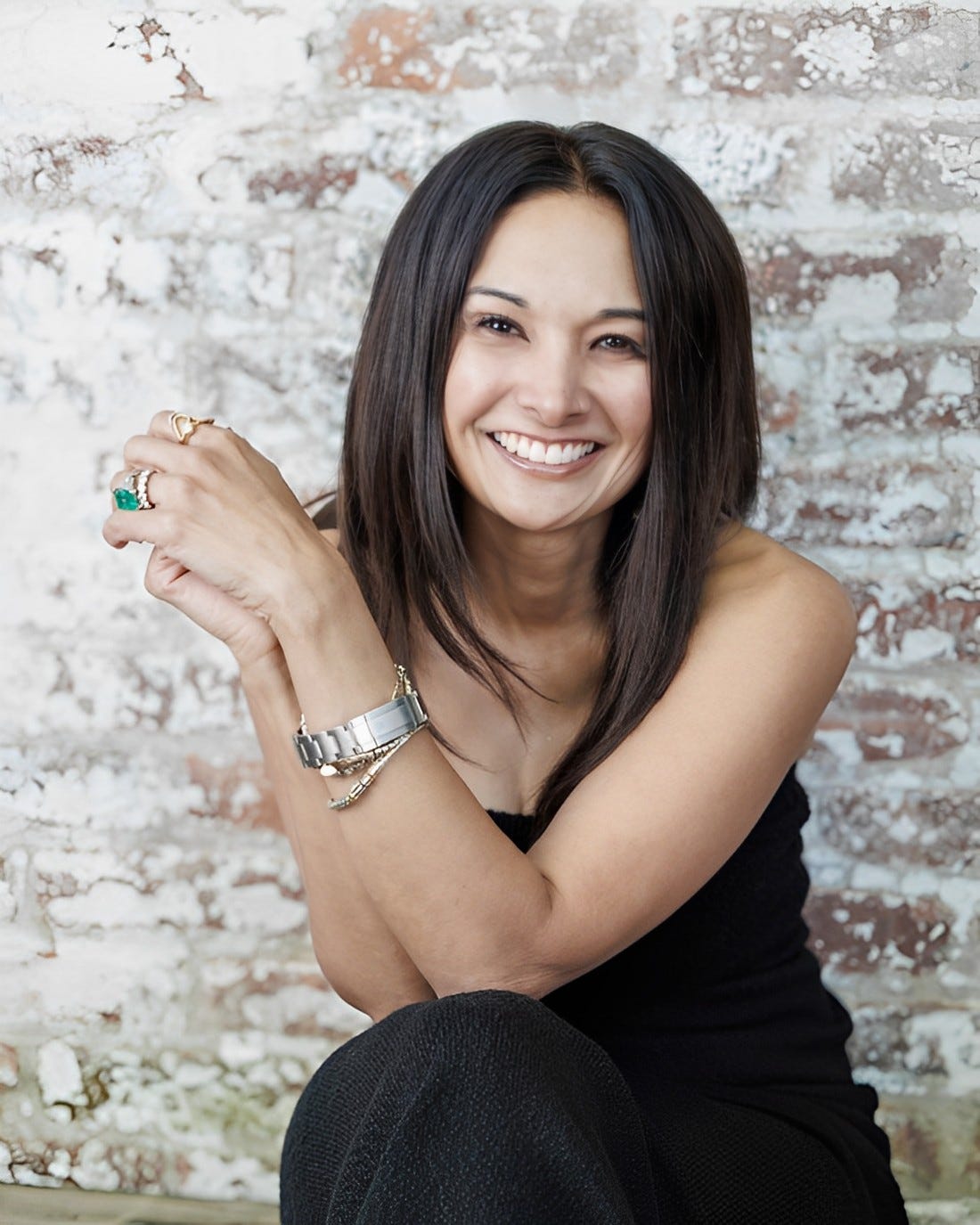
Naseem Rochette is a speaker on trauma and transformation, as well as a seasoned sales executive, having worked for global leaders, including Google, Microsoft, and Ernst & Young. She holds a master’s from Columbia and an MBA from Rutgers, is a mother of three teens, four cats and two dogs (one husband). Throughout her career, Naseem has been helping people solve problems, ideate possibilities, and foster collaboration; however, it wasn’t until her near-death moment that she found her real courage and most impactful gift: the strength to appreciate—and share—the imperfections and insights that inspire transformation in all of us.
Thank you so much for doing this with us! It is really an honor. Our readers would love to get to know you a bit better. Can you share your "backstory" with us?
My backstory is almost a transformation, part one. I went from being an awkward Indian girl growing up in New Jersey in the 1970s who was always insecure and hated being different to a woman who was proud and happy with herself.
It wasn’t an easy journey; it took years and a lot of deliberate effort – but I became someone I really liked. Someone who worked hard, had a great family – three kids and loving husband, a wonderful career in technology – worked at Microsoft at the time of the accident– and was still physically fit, had a robust social life, traveled, laughed and just lived with lots of joy and lots of stamina to juggle it all. “No help needed Naseem.” In a way I was so self-sufficient and “together” someone once called me an unsympathetic character. . . then just after my 47th birthday, on a beautiful sunny day the person I worked so hard to be, was shattered.
Do you feel comfortable sharing with us the story surrounding how you became disabled or became ill? What mental shift did you make to not let that “stop you”?
Of course! Happy to share it. In my transformation part two, I really learned the value of being vulnerable and sharing our cracks and stories.
On May 21, 2018, I was in a pedestrian crosswalk – headed towards my husband who was parked across the street, when I was hit and run over by a car three times. The car hit me (and stopped), then accelerated, drove forward over me, reversed over me, and then went forward again and I was pinned underneath the car. The tires went over my body five times -over my knees and legs, over my chest and over my head and neck. As you can imagine, it resulted in several complex injuries, but the most impactful and long lasting was my traumatic brain injury.
My operating system was completely rewritten after the accident. I went from being able to solve complex problems and easily juggling chaos to not being able to fill out a simple camp form for my son. After years of focus on becoming a strong me, I had taken a lot of pride in my mind and my ability to think my way out of problems. However, the traumatic brain injury and the PTSD I developed was not something I could think my way out of.
That said, I could and did make the decision I was not going to look at the accident with regret. I was determined to make it a happy story – because I wanted a happy life back. Even if it was a changed life. That is why we celebrate May 21 as a holiday – Unbreakable Day. A day we celebrate life, perseverance and thank the amazing people and community that gets us through our tough times.
During my post-accident journey, I clearly saw that our personal energy is directly tied to our life momentum. I could choose to be positive and accept my changes – and be a net positive addition to the lives of those around me – or I could wallow in things I couldn’t change. I choose my attitude and how I interpret my journey – I get to celebrate my wins and milestones – if I let myself. If I choose to, and I decided – my family and I decided – that the day of the accident wound be a celebration of life and strength.
Can you tell our readers about the accomplishments you have been able to make despite your disability or illness?
Although I am not as comfortable with chaos and multitasking and large groups, the desire to pay it forward has helped me navigate my life and direct my energy towards sharing and celebrating the unique and beautiful cracks in our life. I have written a book, The Unexpected Benefits of Being Run Over, and speak about my trauma and what being run over taught me about solving complex problems. I share more openly and have found my relationships at work and in my community have expanded, deepened, and become more fulfilling – which has been especially wonderful during the complexity and isolation of Covid.
What advice would you give to other people who have disabilities or limitations?
I would say we all have challenges and limitations. Some are easier to see than others – but no one is free from challenges. For instance, no one can look at me at see that I have a traumatic brain injury or PTSD, or that my right knee can give out at any moment, or that my neck and back have bulging disks and ongoing pain. We need to make the decision to focus on what drives positive energy in your life.
I would also share the John Wooden quote that has helped me often – “Don’t let what you cannot do interfere with what you can do.”
None of us are able to achieve success without some help along the way. Is there a particular person who you are grateful towards who helped get you to where you are?
There are so many people that I am grateful towards, however it is probably the Japanese philosophy of Kintsugi that I owe the most thanks. Kintsugi is the practice of putting a broken vase together with gold inlay so that the cracks are highlighted, not hidden. Kintsugi gave me a way to think about my cracks, my changes, as a part of my journey that I didn’t need to hide – it gave me a way to frame and share my cracks without making me feel like vulnerability was a weakness (a belief the pre-accident Naseem firmly held).
How have you used your success to bring goodness to the world?
I am certainly trying to pay it forward and I am still early in that journey. I have started speaking publicly about my trauma and what I call a transformation mindset. I recently finished my memoir, The Unexpected Benefits of Being Run Over, and I lay bare my thoughts and experiences – some which I rarely even say out loud. It really takes me out of my comfort zone. Yet the early feedback I have received enforces how worth the effort it was to let others know they are not alone in their struggles. I recently even had a young woman with a TBI send me this message:
“I read your book and it really, really made me feel so much better and comfortable in my situation. So many things that nobody understands about what I have were written down in [your] book and it made me feel so happy and finally acknowledged that I wasn’t the only one going through something like you did. Even saying “I’m happy” the day before your accident- I did the exact same thing which is a little scary. Also wanting [people] to acknowledge that [they] hurt me, losing friendships, PTSD, giving up so soo much . . . . And seeing all the symptoms you had that I also had made me finally feel like I was normal to go through this- which I really haven’t felt or been able to accept.
So thank you so much, your book has really helped me- especially with all of the mental stuff that comes with a bad injury and accepting that I may never be the same again and that’s okay.❤️❤️❤️
Lastly, my 1 year is coming up soon and I’ve been dreading that day but now I want to make that day my Unbreakable day and celebrate it :)
Receiving that message inspired me to put more effort and focus on marketing the book and making sure the people that might need this know it exists.
Can you share "5 things I wish people understood or knew about people with physical limitations" and why.
1 . When I walked into a room with my cane, I could see everyone wondering what happened. The taboo is in the shame or pity people project. Don’t assume the cane means I am broken and need pity – I may have had a grand adventure that got me that cane ... just ask me. Don’t pity me.
2 . PTSD has taught me you can’t think your way out of everything – there are physical reactions, autonomic reactions that a good attitude can’t just wish away.
3 . You can’t always see the limitations. We can’t know someone’s story just by looking at them. No one would look at me and see that because of my TBI. I have sound and light sensitivity and can’t do things like go to events with flashing lights, or handle big loud crowds or even listen to music in my house when it is played in multiple rooms.
4 . We will likely all have a physical disability at some point – maybe not long term – or maybe just partial or situational. When that happens, you will still be you and you will still have a life to live and you probably won’t want to be thought of as less than. So don’t exclude or assume you know what they can and can’t do.
5 . Sometimes a physical disability is tied to physical pain. If I share that I am in pain, don’t react with pity, react with generosity. Kindness does wonders for pain.
Can you please give us your favorite "Life Lesson Quote"?
“You can’t go back and change the beginning, but you can start where you are and change the ending.”
Not sure who said it – but I love it!
We are very blessed that some of the biggest names in Business, VC funding, Sports, and Entertainment read this column. Is there a person in the world, or in the US whom you would love to have a private breakfast or lunch with, and why? He or she might just see this :-)
There are so many interesting and wonderful people in the world – however, if I had to pick one it would be Anna Wintour, the editor of Vogue. I have loved turning through the pages of Vogue for thirty years. Every international trip I would go on would include a stop at the newsstand for the local Vogue. I don’t know how to describe but there is an energy in those beautiful pages that always inspires me to find beauty in my life. I would love to meet Anna not only because she is a force behind that, but she seems to be someone who knows who she is, trusts her instincts and believes in her vision. I like to think each day I get closer to that persona myself, yet I still suffer from Imposter Syndrome more often than I care to admit – and I wonder if she ever does. . and if yes, what she tells herself in those moments.