The biggest challenge has really been the pivot to writing late in middle of my career. Just like if someone was trying to break into tech after twenty-plus years of doing something else, it takes a while to learn a new industry and earn your reputation.
Some writers and authors have a knack for using language that can really move people. Some writers and authors have been able to influence millions with their words alone. What does it take to become an effective and successful author or writer?
In this interview series, called “5 Things You Need To Be A Successful Author or Writer” we are talking to successful authors and writers who can share lessons from their experience.
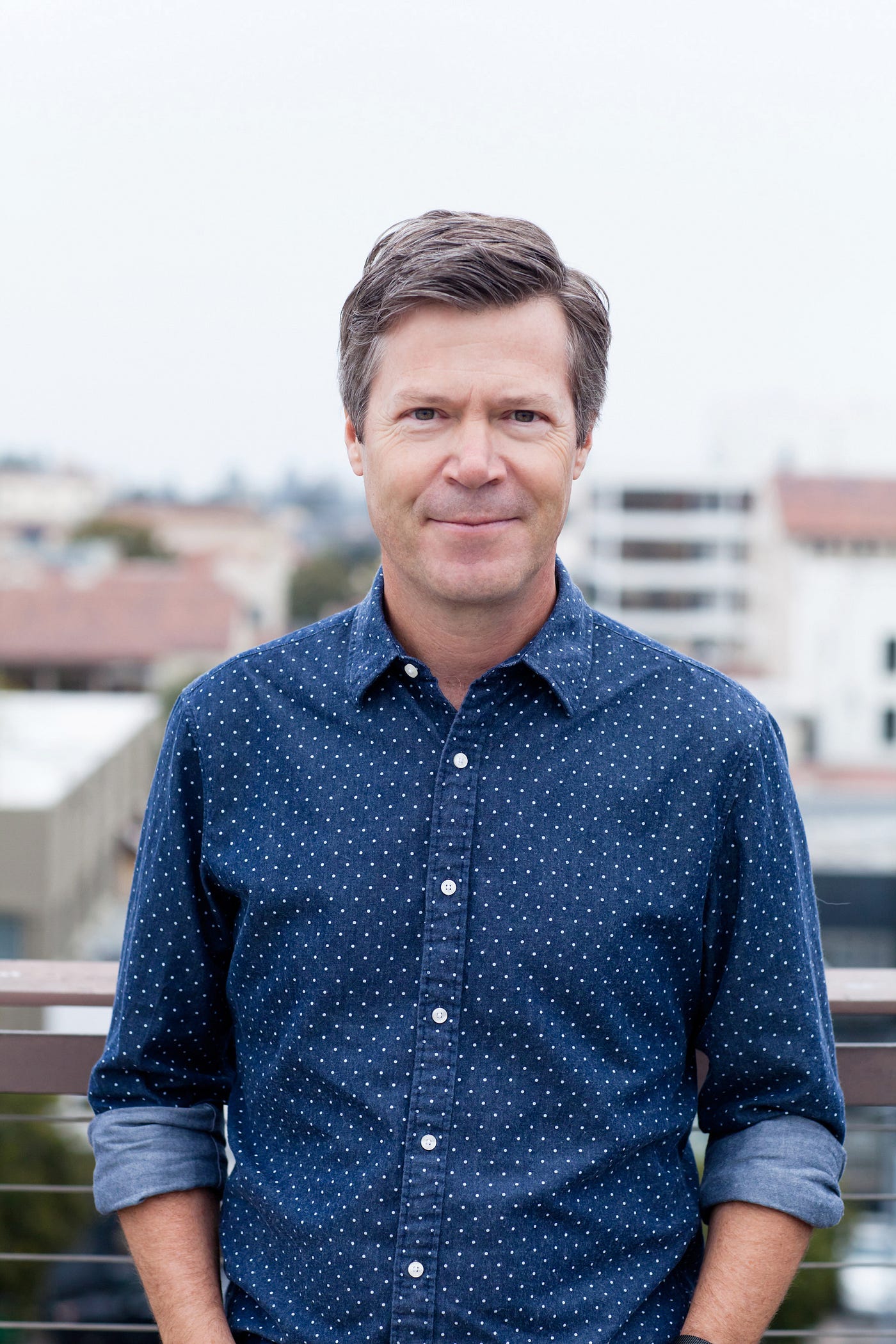
As part of this series, I had the pleasure of interviewing Mike Trigg
For over 25 years, Mike has been a founder, executive, and investor in dozens of Silicon Valley technology start-ups. He turned that experience into a wickedly insightful and occasionally dark corporate thriller called Bit Flip, available August 16. Originally from Wisconsin. Mike earned a BA from Northwestern University before a short-lived stint in politics on Capitol Hill. He then moved to California where he received an MBA from the University of California at Berkeley. After his career in the tech industry, Mike pivoted to writing full-time. He lives in Menlo Park, California, with his wife and two teenage sons.
Thank you so much for joining us in this interview series! Before we dive in, our readers would love to “get to know you” a bit better. Can you tell us a bit about your ‘backstory’ and how you got started?
My backstory is really the basis of my novel. I got an MBA at UC-Berkeley in 1998, in the middle of the first dot-com boom. Since then, I’ve been swept along in the highs and lows, ups and downs, booms and busts of the tech industry. Those 25 years of personal experience are captured in this novel. But, in some ways, I see my career in tech as the departure from writing, rather than the other way around. Becoming an author is something I first wanted to pursue as an undergraduate, and now I’m finally getting a chance to do it.
Can you share the most interesting story that occurred to you in the course of your career?
The most interesting stories are ones I can’t share here! You’ll have to read my book. But the most illuminating story for me happened early in my career. I was a product manager at 3Com—a company that literally created Ethernet and handheld computing, but was long ago devoured into the bowels of H-P—and had been working hard for almost two years developing a new product. The day before our launch, they called all 100 or so of us in our division into a room and unceremoniously fired us all. It all worked out fine because I ended up at a company that was acquired for over $3 billion a year later, but the experience taught me everything I needed to know about Silicon Valley—only homeruns matter, the executives and investors make the decisions, and everyone else is expendable. What else do you need to know? That’s what my book is about.
What was the biggest challenge you faced in your journey to becoming a writer? How did you overcome it? Can you share a story about that other aspiring writers can learn from?
The biggest challenge has really been the pivot to writing late in middle of my career. Just like if someone was trying to break into tech after twenty-plus years of doing something else, it takes a while to learn a new industry and earn your reputation. As a new writer, I took the advice to “write what you know,” so I based my first novel on the tech start-up world. The initial reaction I heard to my book was that nobody wants to read about work. I don’t believe that. We spend most of our lives at work, and I believe we all are looking for insight, empathy, and humor about our professional lives. So that’s my advice: believe in your subject. Passion, knowledge, and credibility are what brings your story to life.
Can you share a story about the funniest mistake you made when you were first starting? Can you tell us what lesson you learned from that?
Maybe not as much a mistake as it was misfortune, but I finished my book and started pitching it to agents and publishers just as the pandemic hit. With my wishful thinking, I hoped the world would be “business as usual,” and I could still get published. But finally, I had to recognize that the world had stopped. So I regrouped, committed to writing full-time and ended up completely re-writing my manuscript. Within six months, I had a publishing agreement with SparkPress. I learned that sometimes there are forces outside your control, and you just need to deal with it. You can’t get discouraged. Just like with start-ups, there’s always a way.
In your opinion, were you a “natural born writer” or did you develop that aptitude later on? Can you explain what you mean?
I’m not sure if I’m a “natural born writer” but I’m definitely a “natural born storyteller.” Ever since I was a kid, I loved telling stories, mostly humorous ones—the more self-deprecating the better. At some point, I figured if I can make my friends and family laugh, maybe I should write some of this stuff down. I know there is a lot I could learn in terms of my literary technique, but I really enjoy writing in a casual, conversational tone that feels natural and approachable to readers. That’s how I relate to people in real life, so that’s how I want to relate to them in my writing.
What are some of the most interesting or exciting projects you are working on now?
I’m incredibly excited about my second novel, Burner. There’s a sneak peek on my author website, but the story is an absolute nail-biter from start to finish. It’s told through dual narrators across a non-linear timeframe with “found objects,” such as social media posts and news articles, that fill in the details and betray the unreliability of the narrators. Reading it is like solving a Rubik’s Cube. The story of Bit Flip will always be near and dear to me because it is so semi-autobiographical. It’s not a sequel, but Burner takes up many of the same themes and cultural critiques and dials them up to eleven.
Here is the main question of our interview. Based on your experience, what are the “5 Things You Need To Be A Successful Author or Writer”? Please share a story or example for each.
Passionate—If this list were limited only to one thing, passion would be it. I feel the same way about writing books as I did about founding companies: I was so passionate about it that I couldn’t NOT do it. I was borderline obsessed, pushing logic aside to pursue it. Becoming a writer isn’t a rational decision. It’s time-consuming, financially stressful, and emotionally punishing. The odds are incredibly stacked against you. Just getting it written, then getting it published, then getting it noticed in a crowded market, and then doing it all over again. If you’re not obsessively passionate about the craft of writing, it’s impossible to succeed. I started writing my first novel as a series of anecdotes from my professional life. Little vignettes and incidents I found amusing or insightful. But I had a passion about capturing them, almost as therapy. If you’re passionate about your story, it comes through in your writing. That’s what readers really want to read about. I’ll read a book about almost any subject, as long as the author has genuine passion for it.
Tenacious—If the old adage says, “It’s a marathon, not a sprint,” then the advice I’d give to become a successful writer is, “It’s not a marathon, it’s ten marathons back-to-back.” One of the main reasons that careers of aspiring authors fizzle out is they just stop writing. They get overwhelmed by the adversity. Their creative well runs dry. They only have one book in them. They falter at the never-ending investment of time and energy. Whatever the reason, they stop. Agents and publishers are wary of this possibility, and it’s one of the reasons they don’t take on new authors who show signs they may not have the tenacity to make it. When I started writing, everyone was encouraging but few believed I could really do it. I have been rejected hundreds of times, but I was determined to stick with it. Becoming a successful writer, like a multi-marathoner, requires continuous, steady, never-ending endurance. You can’t get discouraged. You can’t get distracted. You can’t even really consider the possibility of stopping. Keep writing.
Self-Promotional—I would never teach my kids to brag, but, as a writer, you need to be self-promotional. Advocating for yourself and your work does not come naturally to many authors. It didn’t for me. Because writing is such a solitary occupation, it tends to correlate highly with personality traits like modesty and humility. You can’t be humble about your writing. Unless you do everything in your power to bring attention to your work, it probably won’t get noticed. I had to overcome my apprehension and tap into everyone I knew on email and social media to get the word out about my book. If you want to be a successful author, you must commit to building an author brand and promotional platform—website, email list, social media following, publicity team, event appearances, etc. You need to spend as much time on promotion as you do on writing itself. You can’t expect readers simply to find your work in the tsunami of content that hits them every day. You need to get out there and promote the hell out of it, but do so in a respectful and authentic way. Find a self-promotional voice and style that works for you and your target audience and lean into it.
Original—The importance of differentiation is something that was hammered home in my experience founding tech companies. That was often the first question prospective investors would ask: “how is this different than X?” Somewhat ironically, the publishing world can often seem more oriented toward conformity than originality. Although lip service is given to finding unique stories, there is enormous pressure on publishers to produce hits, and that means abiding to formulas that have worked in the past. Too often, you see plots that adhere rigidly to their genre, covers that look exactly like other covers, and cynical imitation of bestselling storylines. When I started writing Bit Flip, I saw it as very original. I had read few other fictional works that I felt authentically portrayed Silicon Valley tech start-ups and culture. Then I was immediately asked for “comps.” In other words, what book is this book exactly like. Although I offered some, I always resisted that mindset. I wanted to write what I wanted to write, not conform to pre-existing ideas of what would be successful or marketable. Don’t imitate, innovate.
Patient—Success as an author doesn’t happen overnight. Everything takes longer than you expect it ever could. It takes you longer to write, revise, and edit your work than you thought. It takes forever to hear back from agents and publishers. Often, you never hear back at all. Once an agent, editor, or publisher has your work, it takes forever for them to read it. Once the manuscript is finished, it takes forever to get it into design and layout, to complete the final proof, and to print your advance copies. Getting reviews, blurbs, and media coverage takes forever as well. Nothing in this industry happens quickly. Part of that is the inherent time required to consume a novel. Unlike a painting or song or other piece of creative work that can be understood and assessed in minutes, reading a full-length novel can take 10 hours or more. I had to wait patiently for over a year after Bit Flip was done before it was published. Sometimes it felt like pushing a rope, but I remained patient. You need to be prepared for the process mentally, not just for one book but for the multiple books that will comprise your writing career.
What is the one habit you believe contributed the most to you becoming a great writer? (i.e. perseverance, discipline, play, craft study). Can you share a story or example?
Observation. To be a great writer, you need to be a great listener and observer. You need to be a student of human behavior. This habit of observation is one that came naturally to me from any early age. Many of the characters, situations, and scenes in my writing are directly derived from things I have observed in both my professional and personal lives. Stories are uncovered in subtleties. It’s not just what is said, but, often more importantly, what is unsaid—the glances, micro-expressions, and non-verbal cues. These are the giveaways to what really motivates people. And you not only need to be observant of others but observant of yourself as well. If you can be honest with observing yourself, you can present honest and authentic characters in your work.
Which literature do you draw inspiration from? Why?
I read a great variety of literature. I get bored too easily if I stay in one genre, time period, or character profile. I believe that everyone deserves to read about characters like themselves, but everyone also benefits from reading about characters entirely different from themself. That’s the power of literature, to put yourself into someone else’s experience. If you look at my Goodreads, I probably read the most literary fiction because it transports you into someone else’s experience so well. From classics to contemporary work, books that offers deeper observations about the human condition and cultural critiques of our society are appealing to me. That’s what I like to convey in my own work.
You are a person of enormous influence. If you could start a movement that would bring the most amount of good to the most amount of people, what would that be? You never know what your idea can trigger. :-)
I’ve always been a very ambitious person, but, as I’ve gotten older, I’ve grown to appreciate the downside of ambition. Unbridled ambition is a central theme in my books. We live in an era in which everyone wants more—more money, more beauty, more esteem, more stuff. This ambition for more, for a “better life” as measured by these achievements, is deeply ingrained in American culture, and is ascending quickly everywhere in the world. While we’re taught that ambition is good, it’s having catastrophic effects on everything from mental health to the environment. I wouldn’t characterize my movement as “anti-ambition,” but I think we need to all learn to be more happy with what we have, rather than constantly want more. It’s something I coach myself on every day.
How can our readers further follow your work online?
Visit my author’s site at www.miketrigg.com, read my posts, and sign up for my newsletter. I regularly write about themes and opinions that are in my novels. You can ask me questions on my Amazon Author Central page (https://www.amazon.com/Mike-Trigg/e/B09RBFVH6G/) and see what I’m reading on my Goodreads Author Profile (https://www.goodreads.com/mike_trigg). And, of course, you can follow me on all the social sites, including Facebook (https://www.facebook.com/MikeTriggAuthor), Twitter (https://twitter.com/mike_trigg), Instagram (https://www.instagram.com/mike_trigg254/), and LinkedIn (https://www.linkedin.com/in/triggmike).
Thank you so much for this. This was very inspiring!