The law may be limited in certain respects, but I still find a sense of justice in that kind of work.
Business
Michael Mandell of Mandell Law: Inside the Strategy to Redefine Legal Advocacy Through Social Media and Client-First Practices
Top attorney and social media trailblazer Michael Mandell discusses his journey from a family of lawyers to building the ultimate concierge legal practice and digital platform.

The legal field is known to be extremely competitive. Lawyers are often smart, ambitious, and highly educated. That being said, what does it take to stand out and become a “Top Lawyer” in your specific field of law? In this interview series called “5 Things You Need To Become A Top Lawyer In Your Specific Field of Law”, we are talking to top lawyers who share what it takes to excel and stand out in your industry.
As a part of this interview series, I had the pleasure of interviewing Michael Mandell of Mandell Law.
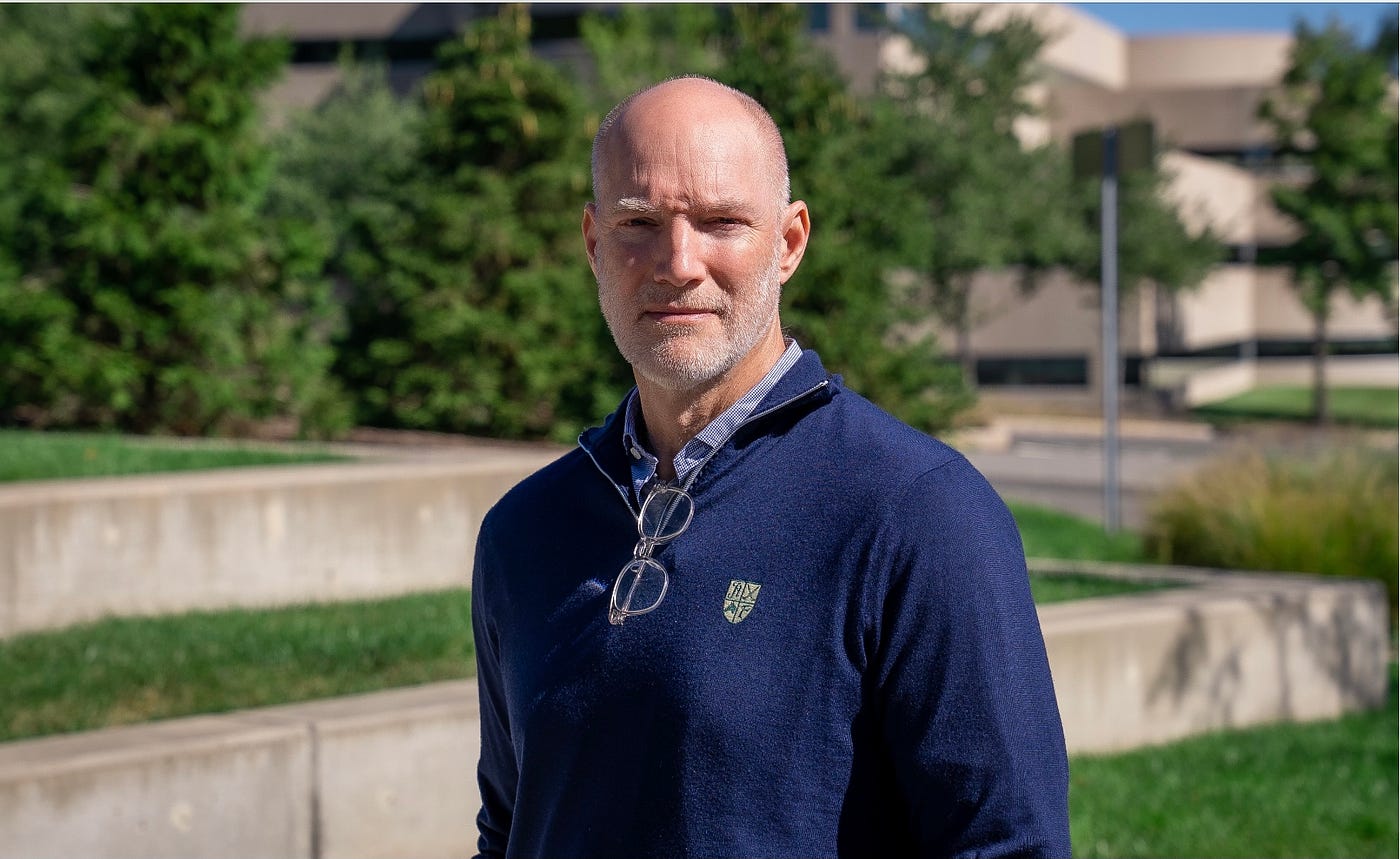
Michael L. Mandell is the #1 lawyer on social media with over 6 million followers due to the popularity of his legal tips and entertaining posts. Mandell is an attorney based out of Los Angeles, California with an undergraduate degree from the University of Southern California and a law degree from Duke University which was recently ranked the top law school on the planet. In addition to his successful following, Mandell practices in a variety of legal areas, specifically in personal injury and criminal law. Mandell has concentrated his talents on redefining the justice process and propelling his profession into the 21st century. Michael and his team at Mandell Law rely on a bespoke, people-first approach to maximize award outcome success and client satisfaction.
Thank you so much for joining us in this interview series. Before we dig in, our readers would love to get to know you a bit more. What is the “backstory” that brought you to this particular career path in Law? Did you want to be an attorney “when you grew up”?
Nurtured by a family of lawyers, I initially developed a strong interest in the area of my family’s practice: personal injury. More or less, I’ve always been oriented toward the side of the underdog. That may be essential to me or part of my upbringing, but that’s what feels like justice — at least to me.
Tort law caught my attention at an early age because I would hear stories of how my family helped get compensation for their clients who suffered from personal injury. You can’t fix their injuries completely, especially when the case involves permanent injuries or death. No one can make you whole again. There can be a duality that feels, at first glance, very financially-based, but when you consider it, this process is the only path to justice reality allows. When someone sees that, I feel like they understand I’m not a messiah. Their situation is improved, however, and as time goes on, other parties understand they can’t have a laissez-faire attitude toward the well-being of human beings. The law may be limited in certain respects, but I still find a sense of justice in that kind of work.
Regarding how I came to be the number one lawyer on social media, the answer is quite simple: I observed an unfilled niche. There’s a separation between lawyers and clients, and that doesn’t seem sensible when you’re an advocate on their behalf. Of course, I recognized I was travelling down an unknown business avenue when I focused on developing my social media presence, but it clicked with my desire to communicate genuinely with clients. Social media wasn’t an intention, but it provided a throughway unavailable otherwise. Initially, I wanted to create social media content to connect with clients and create a sizable web footprint. I began in November 2020 and quickly realized I had tapped into something much more significant than growing a personal client base.
A traditional ad-reliant marketing budget quickly produces high costs, and there’s no guarantee of a return. Conversely, posting on social media remains extremely affordable. Indeed, depending on how you do it, it can be nearly free. Plus, the only limitation on the number of posts is the time involved. Of course, time is money, but our goal is to provide a service that legal clients don’t get unless they have a personal attorney or family office. In a sense, my practice is a concierge business.
A platform, post-based approach can produce unprecedented success and attention. Learning how to do that well opened a wide variety of doors. It isn’t easy, but it remains feasible for anyone with knowledge and drive. Candidly, I felt confident that my videos would draw an audience, but my actual following exceeded my expectations by orders of magnitude.
After my accounts took off, I started to consider the vast array of opportunities my new visibility afforded me. I would feel disingenuous to say that I didn’t see the value that continued development could confer to me. However, the trust and appreciation of my followers genuinely inspired me to keep making public contributions regularly. I want to help educate lay people about the law — there’s a tradition of pro bono work in our field, but that doesn’t address the public’s desire to understand the law better themselves.
The average person doesn’t want or need a lawyer’s skill-set, but it’s clear to me they want to know how the system works at least as much as they understand, say, professional sports. The average person does not expect to hit a 95 MPH fastball out of Fenway or Wrigley, but they wouldn’t go to baseball games if the rules were totally mysterious.
Can you tell us a bit about the nature of your practice and what you focus on?
We handle a variety of cases, particularly in personal injury, sexual abuse, criminal defense, and entertainment. I’m not taking a position, but I can’t say it would be unwise for lawyers to specialize like doctors. We find a firm or counsel in our network that knows this area of the law and we respect experience and prior success. We can support our clients more absolutely by making sure they always have the best shot at success, even if it isn’t through our firm directly.
Which three character traits do you think were most instrumental to your success? What unique qualities do you have that others may not? Can you please share a story or example for each?
The three character traits that were most instrumental to my success were work ethic, adaptability, and creative thinking.
First, the law demands hard work. It’s a gated profession. Sometimes that’s necessary — you need a hard science degree to have a shot at patent law, for instance. But for the average person, I find it intentionally confusing. At Mandell Law, we aim to give our clients simple, clear and effective advice. We don’t try to disguise what’s going on with legalese that makes it challenging for people without a law degree to understand their options. I believe that’s why my social media accounts have gained such popularity — they finally give people a way to understand the law.
Second, adaptability is key. When practicing law, you always have to adapt. You can never know 100% what is going to happen. You can prepare all day, but you can never anticipate issues that make sense retrospectively, but seem summoned from the ether. For instance, you can never wholly guess what your client is going to tell you later in the process, what the other side might argue, and what a judge may question regarding the validity of your approach.
You have to concede that surprises can and will occur. Move forward by understanding your case at a granular level and developing a degree of trust with clients. The vast majority of clients don’t lie or withhold information from counsel as a tactic — if they do it, it’s because they’re embarrassed or afraid. As an advocate, they need to feel you’re not judgemental. You’ll follow the law of course, but the principles of our legal system rely on providing the best case to any client. That’s advocacy.
Finally, you research the other lawyers and judge. That way, you have an idea of who you’re going against and going in front of; e.g., a lawyer who makes his living with settlements, or judges who have a reputation for being friendly to plaintiffs or defendants.
Which brings us to number three, creative thinking. Rigity fails nine times out of ten. You have to expect the unexpected. But if you’re equipped with all that knowledge about the case, the opposing lawyer, and the judge, then you’ll be able to think on your feet and adapt quickly.
One last word of advice: If you make mistakes, own up to them.
As an example, I remember the first time I ever addressed a courtroom. I stuttered and began to lose my train of thought. To dismiss the tension in the courtroom, I made a joke about it. Almost all judges were young lawyers, too. They get it. Embrace the mistakes you make. If you learn from them instead of self-flagellating, you’ll be a better professional and, more importantly, a better advocate for clients.
Do you think you have had luck in your success? Can you explain what you mean?
Yes, but success generally arrives when you persevere, getting ready for the moment when opportunity finally strikes. We’re all in Vegas, and maybe some lawyers are poker kings, but you can’t undo a hand you’re dealt. Yet it goes both ways. You can turn around and seize on opportunity when it presents itself. The legal profession isn’t easy, but you deal with setbacks and count your blessings when opportunity knocks on your office door.
Do you think where you went to school has any bearing on your success? How important is it for a lawyer to go to a top-tier school?
That’s a hard question, and a lot of scholars have written about this issue. The world is changing, but there are only, more or less, 14 schools with degrees you could describe as “portable,” in the sense they draw attention from firms anywhere in the country and even abroad.
I don’t think your GPA and LSAT define who you could be as a lawyer. Plenty of astute legal professionals come from state programs.
Yet at the very bottom tiers, it’s unlikely you’ll pass the bar or become an actual attorney. In that sense, I’m grateful for my undergrad, the University of Southern California (USC), which prepared me for my terminal degree at Duke.
If this kind of higher education were free, I’d beat the drum about giving it a try. However, if you want law to be a remunerative profession, then you have to consider reality. The profession produces too many lawyers. Not getting into an elite school doesn’t mean you’re not bright and capable, but there’s been a push for transparency regarding outcomes. Before you commit to paying hundreds of thousands of dollars, review the actual odds. Alan Dershowitz went to Harvard, but I suspect he’d be as successful if he went to Suffolk. Yet, when it comes to getting into law school, most of us wind up in the middle just mathematically. You should consider that if you want a career in this profession. Anyone from any school can be a brilliant attorney, but know your odds of success.
Based on the lessons you have learned from your experience, if you could go back in time and speak to your twenty-year-old self, what would you say? Would you do anything differently?
I would say don’t hold back on what you want to pursue. I wish I would have started all of this earlier. Working at a big law firm was a great experience, but my skill set combines lawyering with entrepreneurship. Sometimes you have to be willing to take the leap of faith in yourself to reach that potential. If I could have a conversation with myself at age 20, I’d say, “trust your instincts.”
This is not easy work. What is your primary motivation and drive behind the work that you do?
A lot of legal work is rote. I won’t deny that. But every once in a while you nail a really bad, immoral actor to the wall. It reminds you why you’re in the profession — to serve the greater good.
That feeling is also why I appreciate social media — it expands my ability to educate the public. Speaking about law on social media gives me a national (even worldwide) reach to help those who don’t understand the law or who want to learn more about their rights.
What are some of the most interesting or exciting projects you are working on now?
I’m probably best known for my viral videos, which are short informative clips on social media. Now I’m branching out into longer, more in-depth forms of media. I’ve started Law By Mike on the Mic podcast, for instance. Each episode is 20–30 minutes long. I’ve also started posting long-form horizontal videos on a YouTube channel that enable me to cover a lot more than your usual 30-second TikTok or Instagram Reel.
I realize that many people would like to build their following just like me, so I’m also in the process of developing an online video course on optimizing social media. If you are a legal professional and want to promote your own practice, this is going to be the class for you.
If you’d like to keep abreast of these and other projects, please check me out on Instagram and Tiktok: @lawbymike; Youtube: youtube.com/lawbymike; and through my podcast: anchor.fm/lawbymike.
If you or anyone you know is seeking legal assistance, you can go to www.lawbymike.com, call or text 279-LAW-MIKE, or email michael@lawbymike.com. Geographic location is no barrier — we work with top attorneys nationwide.
If you are one such attorney and would like to work with us, please drop us an email at networking@lawbymike.com. We love connecting with other legal professionals.
Where do you go from here? Where do you aim to be in the next chapter of your career?
My goal is to become the Bill Nye of Law. I would love to have an entertaining and educational television series that could be consumed at home or in the classroom. Inspiring people without law degrees to realize they can “get” the law is an exhilarating feeling.
Without sharing anything confidential, can you please share your most successful “war story”? Can you share the funniest?
When I was in only my second year as a lawyer, my team and I won the top defense verdict of the year when I used to work on product liability defense. The odds were stacked against us because courts had permitted people to make claims about mislabeling sunscreen to continue past the motion to dismiss stage. Yet we were able to succeed based on our unique arguments.
With a focus on criminal defense, injury, and sexual abuse, there’s unfortunately no funny stories.
Do you work remotely? Onsite? Or Hybrid? What do you think will be the future of how law offices operate? What do you prefer? Can you please explain what you mean?
I work remotely. The future will likely be a hybrid. People are getting used to working remotely due to the pandemic. In some ways, the increased flexibility of remote options can actually make work better for law firms and lawyers. It can be difficult too, because weekends don’t feel like days off, and you’re always on call, but I think we’ll figure it out as a society and a profession.
How has the legal world changed since COVID? How do you think it might change in the near future? Can you explain what you mean?
On the one hand, COVID has made the practice of law more accessible for lawyers. Lawyers can now attend virtual hearings in areas that might have been geographically prohibitive. On the other hand, we lose some of that in-person human interaction that is so vital to the practice of law. For instance, it’s harder to get a read on jurors, judges, and deponents when you aren’t there in person. It sounds silly, but grabbing a cup of coffee with someone as you walk back to the courtroom can change the outcome of a case.
We often hear about the importance of networking and getting referrals. Is this still true today? Has the nature of networking changed or has its importance changed? Can you explain what you mean?
Think about an elite MBA. Half of the students were consultants or worked in finance. They’re literally buying a digital rolodex. Networks can dictate your net worth. The connections I have made with lawyers across the country not only help me with referrals, but also ensure I can connect people who reach out to me to lawyers who can help them. That way, I don’t leave people without an option for their legal needs.
Based on your experience, how can attorneys effectively leverage social media to build their practice?
Any attorney can improve their reach with social media if they follow a few basic guidelines. First and foremost, the best way to connect with potential followers is to be yourself. Authenticity trumps slick professionalism in today’s digital world. Also, be compassionate and humble. And whenever you post, make sure that you are thinking about what the audience wants and giving it to them, rather than what might stroke your own ego.
Timely responses are also a great way to build your following on social media. People will post comments on my videos and send me messages through social media all the time, and I respond as quickly as I can. I care about people and want that to come through in my communication. I try to create real relationships. Your time isn’t more valuable than a client’s! Approach them like the holistic human beings they are, not sets of facts.
What are your “5 Things You Need To Become A Top Lawyer In Your Specific Field of Law?” Please share a story or an example for each.
1. Focus on your specific field of law at an early point in your legal education. Take courses that are related to it and make connections with professors that are related to it. You never know when those connections could come in handy. In my experience, most lawyers can’t be good generalists. We don’t let doctors do that, so it’s curious that lawyers are allowed to. Most of us need a tight focus to be effective.
2. When you begin your career, take cases related to your specific field of law. The sooner you can start building a record of case wins in your area, the sooner you will be known as the go-to lawyer in that specialization.
3. If you are working at a law firm, align yourself with a partner who also works in that specific field. They can help teach you the nuances of the field and give you practical advice only a seasoned attorney would know. Additionally, that person will advocate for you if you are competent and reliable.
4. Attend continuing legal education related to your specific field. The best way to learn about your field is to learn from others, especially when you are first developing your skill set. Some of the courses may bore you, but there are hidden gems in many CLE programs. Ultimately, it’s a worthwhile endeavor.
5. Always stay up to date on the latest case law in your specific field. A good lawyer knows the case law and the likely developments in case law in the field. A good tip is to sign up to case judgment alerts and blogs related to your field. If you’re on Westlaw (or Lexis), sign up for Practical Law or its equivalent. Doing so will enable you to see the latest boiler plates, which are state specific and continually updated by lawyers. You’ll still have to build your own document, but these notes and pointers can save you time and potentially prevent you from making a catastrophic mistake.
We are very blessed that some of the biggest names in Business, VC funding, Sports, and Entertainment read this column. Is there a person in the world, or in the US with whom you would love to have a private breakfast or lunch, and why?
Well, since I mentioned him before, I’d love to meet Bill Nye. He was a major inspiration for me in pursuing this goal of educating the world about the law and how it can help people in their everyday lives. I’d love to pick his brain — although he’d probably need to go easy on me when it comes to astrophysics.
This was very inspiring. Thank you so much for the time you spent with this. We wish you continued success and good health!

Published inAuthority MagazineTop Lessons, Top Authorities · 42K Followers
Exclusive, curated interviews with the leaders and changemakers shaping tomorrow. Leadership lessons, industry deep dives, and executive profiles.