Writing is a skill that can be learned, honed, and developed, and some of the best writers developed their aptitude through hard work and perseverance.
(insertname) On The 5 Things You Need To Be A Successful Author or Writer
Some writers and authors have a knack for using language that can really move people. Some writers and authors have been able to influence millions with their words alone. What does it take to become an effective and successful author or writer?
In this interview series, called “5 Things You Need To Be A Successful Author or Writer” we are talking to successful authors and writers who can share lessons from their experience.
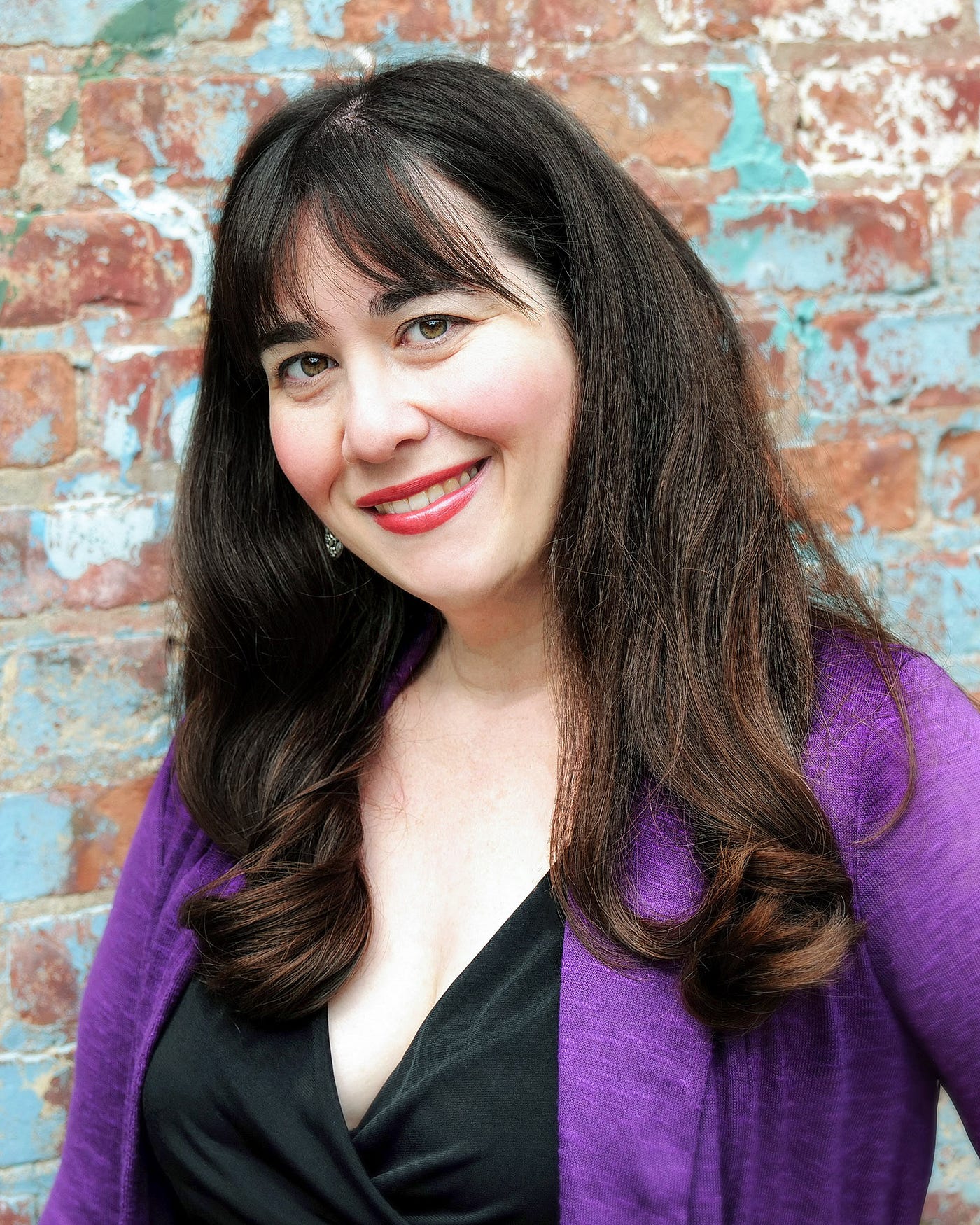
As part of this series I had the pleasure of interviewing Melanie Gall.
Melanie Gall is the author of Deanna Durbin, Judy Garland, and the Golden Age of Hollywood, the first-ever biography about 1930s film legend Deanna Durbin. She is also an internationally-acclaimed writer, editor, performer, and music historian who has sung at Carnegie Hall, Lincoln Center, and Royal Albert Hall. Melanie’s historic-themed plays have been performed in over a dozen countries, as well as mounted off-Broadway at New York’s SoHo Playhouse. “Deanna Durbin, Judy Garland, and the Golden Age of Hollywood” is available for pre-order on Amazon, and you can visit Melanie’s webpage at http://www.melaniegall.com to learn more about Melanie’s music, theatre shows, and upcoming books.
Thank you so much for joining us in this interview series! Before we dive in, our readers would love to “get to know you” a bit better. Can you tell us a bit about your ‘backstory’ and how you got started?
Can you share the most interesting story that occurred to you in the course of your career?
Even for a full-time performing artist, I have had an unusual career. I have several degrees in opera, including one from New York’s Manhattan School of Music. I have written shows that have been performed all around the world, including in Taiwan, Algeria, Morocco, Brunai Darussalam, Israel, Ecuador, and even Sudan. I am the leading authority on historic songs about knitting, as well as the forgotten history of house sparrows (yes, I know how totally random that sounds). I have performed for royalty in Cambodia, sang French cabaret songs in a nudist community in Florida, warbled through a sandstorm in N’djamena, Chad, and starred in a Microsoft Office ad campaign in New York.
But I think the most interesting thing that has ever happened to me was when I was flown to Khartoum, Sudan, to run a Jazz workshop at Ahfad University for Women. Ahfad, founded in 1966 with just twenty-three students, has grown to be one of the top women’s universities in North Africa. I was brought there to sing a concert and to work with the Jazz students, and during the workshop I led, I was blown away. Like many people whose only exposure to Sudan was almost exclusively through news reports, my expectations of the country were very different from what I actually found. The students I worked with were so incredibly talented. Not only did they have an extensive knowledge of the different Jazz traditions, but they possessed more ambition and drive than I had found in most of the students in my private New York voice studio.
Working with the students was a wonderful experience, and their ambition and drive in the face of overwhelming odds made me far more aware of my own immense musical privilege. (In New York, I casually walk past the top Jazz clubs all the time, while at the time I ran this workshop, Sudanese citizens were banned from even entering America.)
What was the biggest challenge you faced in your journey to becoming a writer? How did you overcome it? Can you share a story about that that other aspiring writers can learn from?
The biggest challenge I faced was finding my “voice” as an author. As a guilty pleasure, I read far too many mid-Victorian novels, particularly pre-WWI boarding school girls’ novels from England—they’re saccharine, formulaic, and the perfect thing to read on the go. However, the narrative style in these books involves overly long descriptions, flowery vocabulary, and phraseology that did not age well (One direct example from a book by Margaret Sidney: “It's Polly Pepper!” ejaculated Mr. Cabot. Then a light broke over his face, and he laughed aloud, he was so pleased.)
I also love all the Sophie Kinsella novels (a second guilty pleasure), and I have also spent a fair amount of time in academia, which has its own accepted writing style.
And so, when it came to my own writing, the phrases did not present a consistent voice. I tried too hard to sound clever, with a vocabulary that would require most readers to turn to a dictionary at least once every paragraph. I also attempted to be casual and relatable, but in the end, it just read as pretentious and uneven.
It took a conscious effort to overcome these challenges. I didn’t completely give up my guilty pleasures, but I assigned myself books that were well-written and stylistically constant and read them slowly, consciously absorbing the sentence pacing and consistency of style. I put aside the words I loved (Behoove! Milquetoast! Saturnine!) and, for the most part, I kept things simple. As an editor, I also end up reading other people’s writing, a lot of which contained the same voice issues as my own. Uneven writing is a lot more apparent in work that is not my own, and identifying and correcting this for others has helped me refine the skills I needed to smooth out the narrative voice in my own work.
Can you share a story about the funniest mistake you made when you were first starting? Can you tell us what lesson you learned from that?
This is an easy one, and I’m still pretty embarrassed about it. There was this one manuscript I tried to write that ended with a very dirty, very descriptive sex scene, which contained detailed activities that, at that point in my life, I hadn’t actually managed to try myself. This was before you could just look up dirty videos on the internet, and honestly, I had no idea what I was doing. I’m not saying that you should only write what you know (although for beginning writers, it can be a good idea), but don’t write what you absolutely do not know and can’t exactly picture, because the end result is cringingly hilarious and about as far from sexy as a hamster at a tea party.
In your opinion, were you a “natural born writer” or did you develop that aptitude later on? Can you explain what you mean?
I have been reading since I was two years old. So I was definitely a “natural born reader.” I always liked to write, and I did have natural skills. However, “natural skills” don’t translate into “professional writer” without a fair amount of work and practice. In other words: most people need to write a small mountain of trash before they become good. I was always aware of this—sometimes an acute sense of self-awareness isn’t the most helpful skill—and I didn’t have a lot of patience with myself as a young writer, knowing that whatever I created would likely end up sounding trite and amateurish. Because of that, I didn’t write nearly as much as I should have, and honing my natural born skill took far more time than it would have if I had just written that mountain of trash.
I feel that definitely some people are initially better at writing. However it isn’t, for example, like perfect pitch in music, which is something you’re either born with or not. Writing is a skill that can be learned, honed, and developed, and some of the best writers developed their aptitude through hard work and perseverance.
What are some of the most interesting or exciting projects you are working on now?
There are a few very exciting projects I’m working on right now:
The first is my book, Deanna Durbin, Judy Garland and the Golden Age of Hollywood, which is being released in July, 2022. This is the first biography of Hollywood star Deanna Durbin, and a truly interesting slice of forgotten Hollywood history.
I recently completed a book about the history of house sparrows, and about the people who rescue and raise the saucy birds as pets. My agent is pitching this book to publishers this spring, so fingers (and wings) crossed!
I’m writing and producing a new show based on the life of theater icon Noël Coward, which will be performed in Edinburgh, Scotland. in August, 2022.
I’m also recording a new music album with producer Bennett Paster at Benny’s Wash ‘n’ Dry Studio in Brooklyn, New York, to be released in fall, 2022. It’s an eclectic mix of English ballads, WWII big-band tunes, and Americana songs.
Here is the main question of our interview. Based on your experience, what are the “5 Things You Need To Be A Successful Author or Writer”? Please share a story or example for each.
Please see the accompanying video: https://youtu.be/XuJGvuPXe6M
Understand your genre.
Every writer needs the skills and tools to serve their genre. If you’re writing science fiction, fantasy, or any sort of apocalyptic or dystopic novel, you need to be able to build a world, defining and remaining consistent with the rules that govern your universe. There’s memoir, where the writer needs to be able to tell a personal story while looking beyond their often still-raw emotions to create a work that is both relatable and marketable. A mystery has to be mysterious. Erotica needs to actually be scintillating. And so on. Research the genre. Understand the conventions. Understand what is trite and what is original. And learn what tools you already have or that you need to gain, in order to write the best book possible.
Write in a consistent, readable voice.
When you write a book, it’s not just about coming up with a compelling story; it’s also about telling that story in a way that grabs (and keeps) the reader’s attention. Having a consistent narrative voice is one of the key ways to do this.
Make sure that dialogue sounds natural, with the contractions that occur naturally in speech. Too many small words in a row becomes overly messy. Too many long words often lead to the reader skimming through the paragraph. Try for a good balance, with as few repeated words as possible on a page and a mixture of short, medium, and long sentences.
In most genres, you don’t want every phrase to be overly casual. You also don’t want to sound too academic or pretentious. You already proved that you were smart by writing an entire book! You don’t need to defend your intelligence by dropping in vocabulary that needs a dictionary to be understood. Save “sobriquet” and “wastrel” for the Scrabble board and keep your writing simple and clear.
Write for your audience
As an editor, I see a lot of memoirs. With very few exceptions, these tend to deal with the author describing how they overcame a traumatic life event and how it changed their lives. Now, there is definitely a place for this sort of memoir, and it can truly be inspiring to the reader. However, so many of the manuscripts I see are not written to hearten or motivate the reader, but to help the author overcome and deal with their tragedy.
There is real value in writing your story for yourself, to help you process difficult events and move beyond them. But—and I cannot stress this enough—although professional writing is often therapeutic, it is not therapy. There needs to be enough distance, clarity, and objectivity for a writer to present a traumatic personal event in a way that serves the story and appeals to a reader who doesn’t know or personally care about the author. Otherwise, the story comes across as self-indulgent and maudlin.
In any genre, think about what best serves the story and the audience. When authors write for themselves, the story is easy to put down. When authors write to keep the audience enthralled and engaged with the story, it transforms the narrative. And even in the most intense story, a bit of humor goes a long way in forming a connection with the reader.
If you’re looking to create a successful manuscript in any genre, through traditional publishing or one of the other routes, you need to write a book with a very clear audience in mind. Does the language and difficulty of your children’s book match the target age or the story? Does a novel about ancient Rome contain interesting (and accurate) historic details? If you’re writing a book about cats for cat lovers, don’t spend three pages describing the poodle. Think of what the reader would need to picture each scene or moment without spoon-feeding them extraneous details.
Know the rules before you break them.
Learn basic editing skills. Have a good foundation in grammar. With so many editing programs out there, it’s easy to ensure that you don’t have many spelling errors. But even with the digital tools, take the time to proofread your text. Understand tenses. As an editor, I often see tenses mixed (especially types of past tenses), as well as sentences that aren’t parallel.
Know the spelling and the literary conventions for the target region of your work. In the UK, the punctuation rules are different from in America. In Canada, Australia, and the UK, several words are spelled with the British conventions. Even in America, styles aren’t consistent: there’s Chicago Style, AP, and several others. Book manuscripts tend to use Chicago Style, which is available online. Understand the general book length for the type of book you’re writing. If your novel is 200,000 words, that’s a red flag to an agent or publisher. If it’s 30,000 words, consider adding content.
This is an essential tip. Not just so that your text is readable and appears professional, but also so that if you choose to break any of the rules to serve your narrative, it’s clearly a stylistic or a creative choice and doesn’t just look like an error among errors.
Accept Feedback
This can be a hard one to follow, since nobody likes criticism. But feedback can be essential for a writer. But I don’t mean from just anyone. Your aunt Flo who only reads romance novels should not be the decisive voice of feedback for your epic fantasy trilogy. Your friends or loved ones may be too close (or to kind) to give the kind of honest criticism you need to improve your writing. Luckily, there are several ways to get useful, professional feedback for a piece of writing.
There are writing groups where writers work together, reading and critiquing each other’s work. There are also writing workshops. These often are run in conjunction with conferences, which can also allow an aspiring author to forge connections with fellow writers, as well as with agents looking for clients. There are professional editors who can either arrange a Beta read (where several professionals read a manuscript and give specific feedback on the strengths and on what can be improved), or a developmental edit (where the writer is guided through larger revisions, to tighten and shape the manuscript). For any of this to work, the writer needs to be open to advice, and not overly “precious” about their work.
Sometimes the best feedback to accept is your own. Put down the manuscript for month or two or four. Critically read several books from the genre, noting what you like about each one and what could be improved. Cleanse your writing palate by doing something completely different, like sketching or learning to knit. And when you’re done that portrait or that sock, pick up your manuscript once more. You will be shocked at how much more objectively you can view your own writing, and at both the strengths and weaknesses you find. You may have to do this several times in order to assess your work objectively, but going through this process greatly improves your chances of literary success.
What is the one habit you believe contributed the most to you becoming a great writer? (i.e. perseverance, discipline, play, craft study). Can you share a story or example?
Writing skills are continually being improved and honed, throughout one’s career. I would love to think of myself as a “great” writer, and perhaps one day I will be. I am, however, a successful author. Creating a sellable book is more than just good writing—that’s a baseline. The writing needs to be solid, but that’s just the start. For me, the one habit that has contributed the most to becoming a successful author is ingenuity.
Writing is a business, and is like many other businesses. Often what works well is to find a gap—a niche—and fill it, and that is what I have done with my books. Right now, the market is flooded with memoirs. Yes, that might make finding a publisher for one easier than when they weren’t in style, but the market is absolutely glutted with memoirs at the moment. So, I wrote the Deanna Durbin biography. This immediately stood out when I pitched it to agents. Deanna’s connection to Judy Garland made the pitch marketable, and the meticulously-edited writing and well-crafted manuscript made it low-hanging fruit for agents and publishers. My next book is about house sparrows – both their history, as well as stories I collected from people whose pet house sparrows rule (and, in some cases, have actually saved) their lives. I pitched the proposal to two dozen agents and within a week received five offers of representation. Again, it fills a niche. It is different enough to be noticed but still firmly falls within an identifiable genre (animal books/nature books), and the sample chapters were well-researched but also quirky and funny. Again, what I presented to the agents was the book equivalent of low-hanging fruit. And hopefully, when it gets shopped to publishers this spring, they’ll feel the same.
Which literature do you draw inspiration from? Why?
I feel that not enough people give credit to classic literature. It’s like the base of a soup. Once you know the core ingredients and what works, it’s easy to go off-recipe and make the dish your own. It’s the same with writing—classic literature gives a solid foundation for good writing. The Sherlock Holmes books, a solid translation of War and Peace, and the books in the Little Women series are a good place to start.Then there are the newer classics, such as Philip Pullman’s His Dark Materials series, Dodie Smith’s I Capture the Castle, and Betty Smith’s A Tree Grows in Brooklyn.
I also tend to read the lesser-known works from writers I love. Betty Smith’s Joy in the Morning is a beautiful and honest book. Louisa May Alcott’s book Work is a fascinating and relatable look at the challenges of a single woman navigating the world alone, and it was published in 1873 – almost 150 years ago. L.M. Montgomery’s Rilla of Ingleside was published in 1921, and there is no other book that gives such a simple yet rich view of life on the homefront during WWI. These books all give me ingredients—both narrative and thematic—for my own writing, and I return to them again and again for inspiration.
You are a person of enormous influence. If you could start a movement that would bring the most amount of good to the most amount of people, what would that be? You never know what your idea can trigger. :-)
How can our readers further follow your work online?
Readers can follow me on Twitter or Instagram @melaniepresents, or on my webpage at www.melaniegall.com.
My upcoming biography of 1930s film star Deanna Durbin, Deanna Durbin, Judy Garland and the Golden Age of Hollywood, will be released in July, 2022 by Lyons Press.
Thank you so much for this. This was very inspiring!