I had my first musical experiences at age 12 as a trumpet player in the local brass band. When I was 15, my father sent me to a professional musician to learn classical piano.
As a part of this series, we had the pleasure to interview Bernward Koch.
Bernward Koch is a German composer, pianist and multi-instrumentalist whose melodic instrumental music has reached audiences around the world for nearly four decades. His recordings have appeared on the Billboard New Age charts, accumulated hundreds of millions of streams and been used in settings ranging from international airline programming to relaxation and therapeutic applications. His compositions center on piano and frequently incorporate flute, synthesizer, guitar and percussion, drawing significant inspiration from the natural landscape of his native South Westphalia, Germany. In 2022, Koch founded Tree Tales Records, releasing the album Tree Tales through his own label with international distribution via A-Train Entertainment. His latest album, Behind the Hills, continues his longstanding exploration of melody, nature, stillness and the restorative possibilities of instrumental music.
Thank you so much for joining us in this interview series! Before we dive in, our readers would love to learn a bit about your “origin story”. Can you tell us the story of how you grew up?
I grew up in a small village in the German countryside. Even as a child, I was inspired by the beautiful, rolling landscape — and it still influences my music to this day! I had my first musical experiences at age 12 as a trumpet player in the local brass band. When I was 15, my father sent me to a professional musician to learn classical piano. I loved the instrument from the very beginning and started improvising and taking my first steps in composition. At the same time, I began playing drums and performing in small bands for the first time.
What inspired you to pursue a career in music, and how did your journey begin?
When I was 16, I went to my first jazz and rock concerts featuring professional bands, and they completely blew me away. I wasn’t really familiar with those genres before, but I immediately felt that this was my world. On the piano, I still played a little Bach, Beethoven, and Mozart, but mostly I improvised. Later, I played in my own bands and attended jazz seminars with world-class musicians. Then I began studying at the Cologne University of Music, though that only lasted half a year. I felt that I wasn’t a traditional classical musician, but that I had to find my own path. So I asked myself: “How did the Beatles manage to achieve what they did (and Jimmy Hendrix, the Grateful Dead, Miles Davis, John Coltrane, and all those greats?) The Beatles, for example, learned the most important things under difficult circumstances on stages in Hamburg at night — that’s a different kind of ‘school.’ It all comes down to life itself, especially when it comes to composing, and that’s what matters most to me.
Can you tell us the most interesting story that happened to you since you began your career?
It all started with the first record deal (I got in 1988 — I was already 31 by then, so ancient ;-) ) I’d written a few songs that weren’t meant for live performances, but that somehow spoke to me. Then I started sending a few demo tapes to major record labels. No response — until one day, on a gloomy November day, an A&R manager from EMI (Martin Unger) called me. He said he really liked the music and believed in it. But it wasn’t the kind of thing major labels usually release, so he told me to reach out to two independent specialty labels that I hadn’t even heard of until then. So I sent out two more cassettes and immediately had two record deals on the table. A friend of mine, who was touring the U.S. as the Scorpions’ manager, recommended the label in Hamburg out of the two labels. I really had no idea that this label had good contacts in the U.S.
It has been said that sometimes our mistakes can be our greatest teachers. Can you share a story about the funniest mistake you made when you were first starting? Can you tell us what lesson you learned from that?
Yes, mistakes are often the best teachers. But sometimes it can take a long time to even realize that. Before my very first album, Flowing (1989), was released under my real name, “Bernward Koch,” the record label and I had considered using a catchier stage name, but we couldn’t find anything that fit. So we just stuck with the unusual name, which some people have a hard time pronouncing. Nevertheless, the album became a hit in the U.S. in early 1990 and paved the way for what came next. Maybe it also had a little something to do with the fact that the mayor of New York City at the time was named Ed Koch (although we didn’t know that back then…). And as this example shows, in the end, it probably wasn’t a mistake after all.
None of us are able to achieve success without some help along the way. Is there a particular person who you are grateful towards who helped get you to where you are? Can you share a story about that?
First and foremost, it comes down to your own hard work, and you really should “work as if it were the last time,” as the great drummer Elvin Jones once said. But it’s true — you need a good network and someone to give you a helping hand. After I’d already recorded a few albums that made it onto the Billboard charts and so on, there was a period in the late ’90s when things seemed to have stalled. My record contract had expired, and no one was interested in me anymore — that’s just how it goes in the music business. Right at that moment, Terence Yallop reached out to me — he was the owner of the record label “Real Music” in Sausalito, California, a beautiful place just past the Golden Gate Bridge on the right-hand side as you leave San Francisco. He was absolutely thrilled with my music, had a vision, and offered me a new record deal.
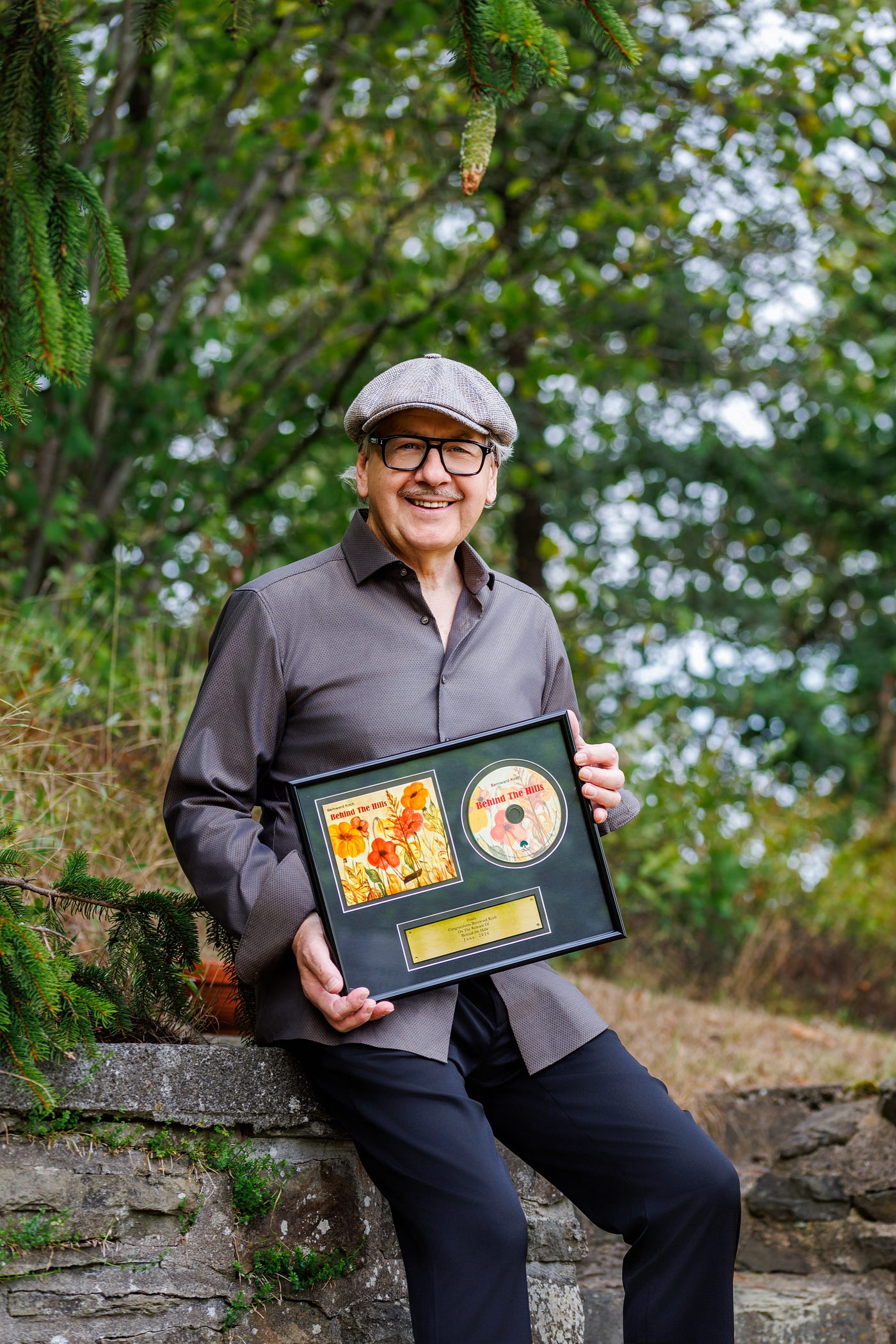
Quite independently of that, I’d gathered many new musical ideas in the meantime. And now this unexpected opportunity presented itself to release the songs — from someone who fully supported them. From then on, things went almost exclusively uphill. This example also shows that patience (and simply sticking with it) is usually the most sustainable approach in life. And I had a similar experience after the “Real Music” label was sold due to the owner’s age, and things weren’t really moving forward at first. Then, out of the blue, Al Evers from Oakland — the owner of “A-Train Entertainment,” an international distributor and music publisher — reached out to me. He knew me from “Real Music” and said that my music had really appealed to him. He encouraged me to work with him and start my own label. Although I naturally prefer making music to label work, it was a good idea that also gave me many new and valuable experiences. So far, in collaboration with A-Train, I’ve released three albums on my own label, “Tree Tales Records” wich the new record “Behind the Hills.”
What are some of the most interesting or exciting projects you are working on now?
I’m constantly discovering new music that speaks to me. That basically covers all genres, from Bach to rock, jazz, pop, world music, and classical, all the way to modern electronic music. It’s fascinating to explore and analyze what was created under what circumstances. Basically, you draw inspiration from everything around you. And in the end, you turn it into something of your own.
We are very interested in diversity in the entertainment industry. Can you share three reasons with our readers about why you think it’s important to have diversity represented in music, film, and television? How can that potentially affect our culture?
Diversity is always a very important issue in every respect. As human beings, we’re all part of nature — and what could be more diverse than nature? The more diversity, the better for all of us. I think it has a positive effect on our culture and, consequently, on people. Diversity should be something completely normal everywhere, especially in the media — which is, after all, what it is: something natural.
As a successful music star, you’ve likely faced challenges along the way. How do you stay motivated? How do you overcome obstacles in your career?
Basically, I just love music. Music helps in every way. Sometimes you need a break, but deep down, you just keep working without even realizing it. And sure, it’s mostly hard work and a matter of “just sticking with it.” Then new opportunities usually arise on their own. At the same time, it’s wonderful to be open-minded and to keep discovering new things — and to rediscover old things as if they were new.
What are your “5 things I wish someone told me when I first started” and why? Please share a story or example for each.
1. If you’re young and don’t quite know what your goal is (in music) yet, but you feel like you have what it takes to make it happen, then just keep going and find the right people and the right environment as soon as possible. I grew up in a village in the countryside and love nature. But people often said things like, “That won’t work,” “You can’t do that,” and so on. Sure, it takes longer — which also has its advantages — but the most important thing is to keep going.
2. I started playing the piano when I was 15, but you’re really supposed to start at age 6. When I was 18, I attended my first 14-day music seminar that focused specifically on jazz. The other participants were already very skilled and could, for example, play jazz standards in any key. I couldn’t do that because I’d never learned all the scales in every key with the correct fingering. (Maybe my teacher just didn’t feel like it… ;-) ) On the other hand, I started practicing a lot afterward (e.g., using the Hanon exercise book from 1873) and made good progress as a result.
3. There were many dead ends along the way. But the point is that there are also many new paths you can take. But you only discover them if you keep going. Looking back, in my case it’s only natural that you can only find your own path — which is rare and unusual — by taking detours. Back then, everyone always said, “Become a teacher — it’s a secure profession — and you’ll have a steady income.” I actually worked as a teacher at a music school, but only two days a week — because, to be honest, it was a way to make ends meet. But there I also met students who were just as passionate about music, and with whom I’m still friends today, which is also very valuable and something I’m grateful for.
4. In my mid-20s, I played in a dance and cover band for several years and made good money. At first, everything went well, but then the same routines kept repeating themselves, and I hit a musical wall. On top of that, I had to be careful not to become an alcoholic. Eventually, I finally left the band and started playing only my own music, even though that meant I had less money. Looking back, it was high time I did that, because you have to follow your own voice — it never lies to you! And only then did I become more creatively free and start developing my own style.
5. My first album (“Flowing”) was released worldwide by a record label in Hamburg and became a hit in the U.S. shortly thereafter — in the early ’90s — which was a great start. So it took me 20 years to take my first step into the international music industry. I didn’t realize that until much later. Would I have had the same success if I’d started earlier? I don’t know. Of course, hindsight is always 20/20, and you’d do some things differently. But maybe the secret lies in simply letting things take their course and just keeping at it. As a composer and musician, you ultimately let more or less everything you experience flow into your music.
Can you share some insights into your creative process? How do you approach songwriting? How do you approach musical collaborations?
Most of the time, I work alone in my home studio and get lost in my own world. Ideas sometimes come to me during a short walk in nature, sometimes in the shower, and sometimes while improvising on the piano. Often, though, they come without any instrument at all — just in my head. I don’t really know what the secret behind it is, but it just happens. Maybe it’s also because I love it — especially melodies. But the quality has to be right, and — very importantly — it has to tell a story. I’m lucky to have wonderful collaborators in my family. My daughter designs and paints the album covers, my son plays electric guitar, my brother plays percussion and acoustic guitar, and my wife is a trained classical flutist. Her sound fits my compositions and arrangements 100 percent and — alongside my piano and synthesizer — gives the music an additional distinctive touch: from the first album in 1989 to, in particular, the new album “Behind the Hills.”
Your music has resonated with so many fans worldwide. What do you believe sets your music apart?
I sometimes feel stressed and need some peace and quiet, and even though producing my own music is really hard work, it actually relaxes me once I’ve taken a step back. “Music has to breathe” — then it fulfills its purpose and touches the depths of the soul. I think other people feel that way too, because music is also a wonderful universal language.
How do you connect with your audience?
Mostly through social media (Facebook, Instagram, Thread), and also via email through my website, bernwardkoch.com
With your busy schedule and demanding performances, how do you prioritize self-care and maintain a balance between your personal life and career in the music industry?
That’s a good question. Well, I try to do what I enjoy and avoid what I don’t like. Life is short, and you should listen to your inner voice — it never lies to you. It’s all about finding the right balance. That’s why I make sure to combine the necessary with the enjoyable whenever possible.
You’re a person with enormous influence. If you could start a movement that would bring the greatest good to most people, what would it look like? You never know what your idea might spark. :-)
It would be a movement of the individual. Be yourself and treat everyone the way you’d like to be treated. Be your own “movement,” because whether on a small or large scale — you can have a positive impact on people, and that ultimately helps everyone. Basically, that’s what I do with my music, too — though more in the same quiet way that the music itself is.
Is there a person in the world, or in the US whom you would love to have a private breakfast or lunch with, and why? He or she might just see this, especially if we tag them. :-)
Tray Anastasio (guitarist for the American jam band Phish). I saw Phish live in Cologne in 1997. It was so inspiring, especially since I’m a jam musician myself. And there aren’t that many bands like that. Phish are storytellers, especially during their collective improvisations. Everything flows seamlessly into one another. Phish played at the Sphere in Las Vegas. And Tray played with the remaining members of the Grateful Dead … Well, I love writing songs. But I also think that improvisation represents a kind of freedom in every musical genre — for example, even among DJs who embrace that style. And I’m just happy that Phish has such a huge fan base for their “Freedom Music.”
How can our readers continue to follow your work online?
The easiest way is to follow me on Facebook and Instagram (plus Threads). You’ll find news and updates on those pages. I also often post recent photos there from my walks around my neighborhood, which is surrounded by a beautiful, hilly landscape. And, of course, there’s my website, bernwardkoch.com, with links to YouTube and other sites.
Thank you so much for the time you spent with us! This has been a very inspiring conversation.
About The Interviewer: Tavares Beverly ( www.tavaresbeverly.com ) is the Founder and CEO of Beverly Boy Productions, a national video production company that has helped organizations tell their stories through video for more than two decades. Over the course of his career, he has worked with everyone from Fortune 500 executives and healthcare professionals to politicians, nonprofit leaders, educators, and artists, gaining a unique perspective on the role communication plays in leadership, business, and human connection. A frequent contributor on topics including communication, entrepreneurship, leadership, and personal development, Tavares believes that the ability to communicate effectively is one of the most valuable skills a person can develop. His work is driven by a passion for helping organizations connect with their audiences and helping individuals unlock their potential through mentorship, perseverance, and meaningful relationships. To learn more, connect with Tavares on LinkedIn or visit www.BeverlyBoy.com . If you’re interested in using the power of storytelling and communication to grow your organization, strengthen your brand, or inspire your audience, he welcomes the opportunity to connect.