Technologies that change the world are rarely the work of one person or one field. They emerge through collaboration, shared expertise, and a common purpose.
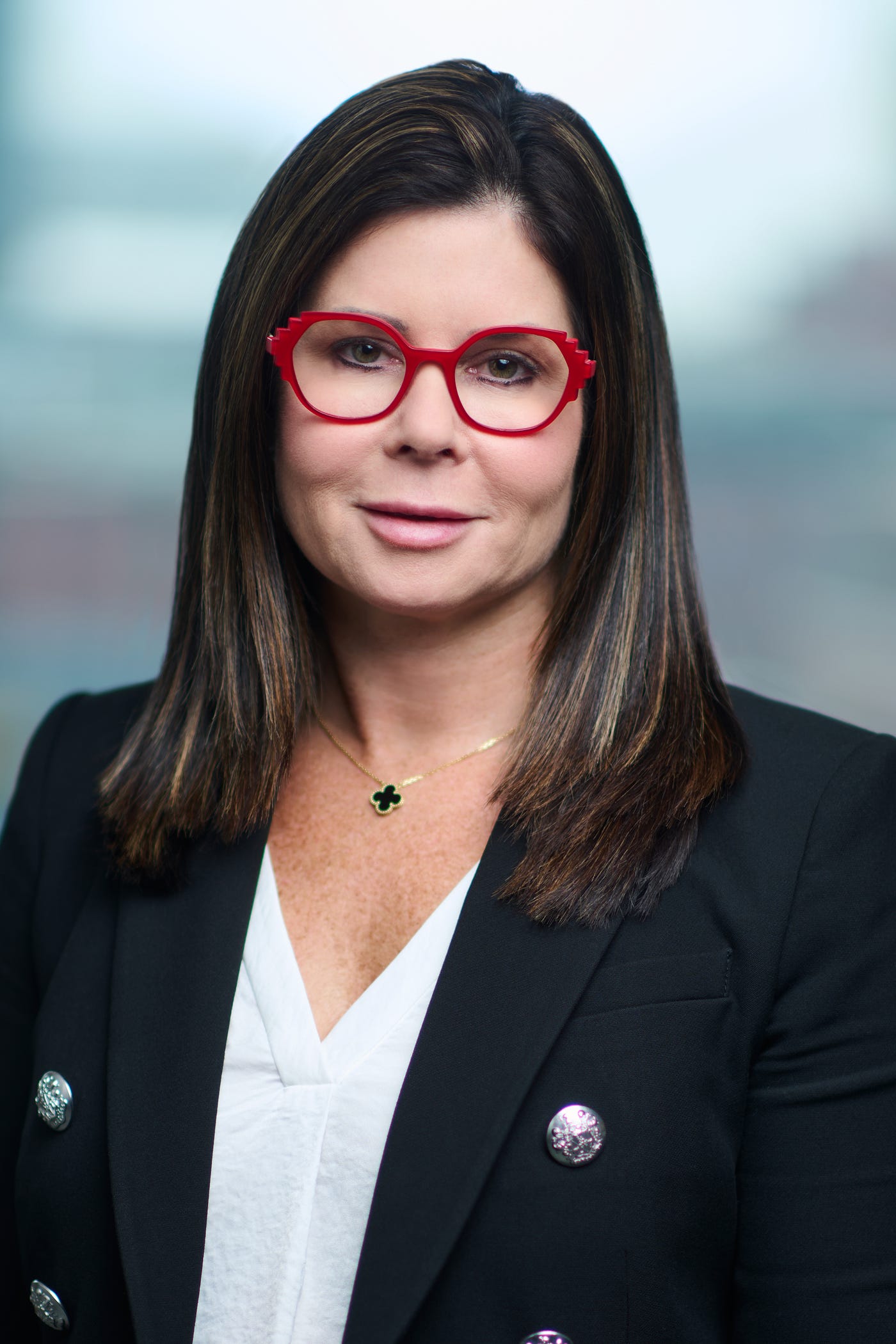
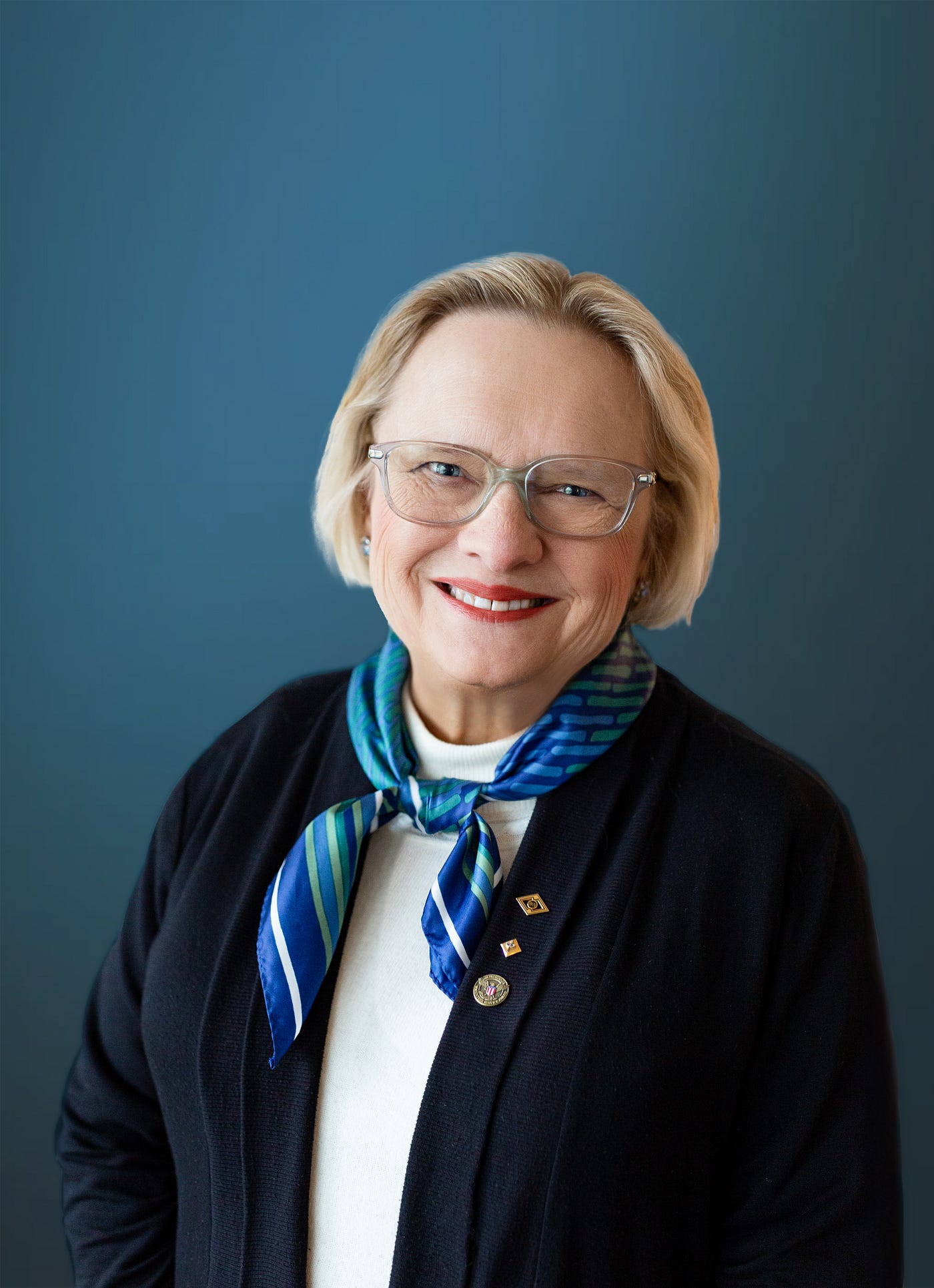
As a part of our series about “Lessons From Inspirational Women in STEM and Tech”, we had the pleasure to interview Mary Ellen Randall.
Mary Ellen Randall is the 2026 IEEE President and CEO. Randall spent more than two decades in technical and management positions at IBM, including in international assignment, hardware and software development, digital video chips, client/server services, network management, operating systems, and test design automation. She subsequently founded Ascot Technologies, Inc., an enterprise software and mobile application company.
Thank you so much for joining us in this interview series! Can you tell us a story about what brought you to this specific career path?
I didn’t expect to land in tech — my original plan was to teach mathematics. But a single college elective in programming changed everything for me. It was there I discovered a passion for applied logic, and later joined IBM as part of an initiative recruiting math and physics majors into software roles. What began as a career pivot evolved into a master’s degree in systems science and computer science, followed by a dynamic career spanning software development, product management, customer-facing technical strategy, and semiconductor design. Today, I lead IEEE, which is the world’s largest technical professional organization and a public charity dedicated to advancing technology for the benefit of humanity. This role reflects many of the aspects of my career I value most: bringing experts together to catalyze breakthrough thinking and help shape a better future.
Can you share the most interesting story that happened to you since you have been involved with IEEE?
I’ve seen many remarkable innovations during my time with IEEE, but one of the most meaningful to me is IEEE MOVE (Mobile Outreach using Volunteer Engagement), a program I am proud to have founded. MOVE was created to address a critical need: providing emergency power, communications, and technical support when disasters destroy essential infrastructure. Through its fleet of mobile, off-grid command centers, the program helps communities stay connected and supports first responders during some of the most challenging moments they face.
The idea began with a simple question: How can we mobilize the world’s best engineering minds when disaster strikes? Watching IEEE volunteers deploy into affected communities and apply their expertise where it is needed most has been one of the most rewarding experiences of my career. As MOVE celebrates its 10th anniversary this year, it stands as a powerful example of engineering in service to humanity.
Since the program’s first deployment, I have witnessed firsthand the resilience of people rebuilding after devastating loss. Those experiences have reinforced the importance of using our knowledge and skills to make a tangible difference in the lives of others. They serve as a reminder that our profession is about more than technology alone. It is about people, purpose, and the responsibility we share to support communities when they need us most.
It has been said that our mistakes can be our greatest teachers. Can you share a story about the funniest mistake you made when you were first starting? Can you tell us what lesson you learned from that?
I wrote my first computer program at IBM with an early mentor. After weeks of work, we were finally ready to run it. The program completed successfully, and I was thrilled.
My mentor looked at the screen and said, “Oh no, that’s bad.” I asked, “Why? It ran perfectly!”
He replied, “Sometimes a clean run is harder to debug than a failure.”
Sure enough, when we stepped through the code, we discovered we had reversed an error check, causing the program to skip most of its instructions. Once we fixed that mistake, we uncovered plenty of others to work through.
That experience taught me a lesson I’ve carried with me ever since: success is not the absence of mistakes. Real progress comes from examining what isn’t working, learning from it, and continuing to improve. Our mistakes are often our greatest teachers, if we’re willing to listen to them.
What do you think makes IEEE stand out? Can you share a story?
At IEEE, our distinction is rooted in trusted cross-sector collaboration that translates technical innovation into reliable global impact — advancing technology for the benefit of humanity in practice, not just principle. By bridging academia, industry, and technical fields across the globe, IEEE uniquely convenes the minds shaping our collective future. We bring together researchers and engineers advancing everything from artificial intelligence to energy systems, all united by a shared commitment to solving society’s toughest challenges. One of the highlights of my time at IEEE was presenting the IEEE Medal of Honor to Jensen Huang last year. Beyond recognizing an extraordinary innovator, the moment served as a powerful reminder of what IEEE stands for. That technologies that change the world are rarely the work of one person or one field. They emerge through collaboration, shared expertise, and a common purpose. That moment reinforced the unique role IEEE plays in bringing together the people and ideas that shape the future.
This is what IEEE is all about — bringing cross-disciplinary leaders together across borders to celebrate impact, share knowledge, and shape the future.
Are you working on any exciting new projects now? How do you think that will help people?
As AI becomes part of children’s everyday lives, our responsibility as technology leaders has never been greater. Through IEEE’s Responsible AI for Children Certification Program, we are establishing a gold standard for safety, privacy, and age-appropriate design in emerging technology. Rather than a one-time checkmark, the program enforces continuous accountability across a product’s lifecycle. We recently marked a major milestone by issuing our first certification to an AI-powered educational platform developed by the National Center for Scientific Research (NCSR) ‘Demokritos’ in Greece. The platform uses Socratic dialogue, a teaching method focusing on guided questions rather than direct answers, to support students in evaluating information independently. This initiative bridges the gap between technology and trust — giving parents and educators peace of mind that children’s safety is built in by design.
Ok super. Thank you for all that. Let’s now shift to the main focus of our interview. Are you currently satisfied with the status quo regarding women in STEM? What specific changes do you think are needed to change the status quo?
If we want more women in STEM careers, we must ensure that girls encounter engaging STEM experiences early and often. Before there are engineers, there are students; before there are innovators, there are learners. Early STEM experiences help young women develop foundational skills, discover their interests, and build the confidence to pursue opportunities they may never have considered otherwise.
At IEEE, we believe that advancing technology for humanity requires participation from the broadest possible range of talent and perspectives. Early STEM engagement helps young women see themselves as problem-solvers, creators, and future innovators. By providing opportunities for exploration, mentorship, and hands-on learning, we can inspire more girls to pursue STEM pathways and unlock their full potential. Expanding access to STEM education at pre-university levels is one of the most effective ways to strengthen the talent pipeline, increase representation, and help ensure that the next generation of engineers and technologists reflects the communities they serve.
In your opinion, what are the biggest challenges faced by women in STEM or Tech that aren’t typically faced by their male counterparts? What would you suggest to address this?
One of the most important opportunities for advancing women in technology lies not only in attracting talent to the field, but also in creating environments where women can continue to grow, lead, and thrive throughout their careers. As professionals advance into senior technical and leadership roles, strong networks, trusted advisors, and opportunities for collaboration become increasingly important. Organizations can help foster this growth by building intentional support ecosystems that connect women with mentors, sponsors, peers, and leadership opportunities. By leveraging global professional communities such as IEEE and the IEEE Women in Engineering (WIE) network, strengthening executive sponsorship programs, and creating pathways to lead high-impact, cross-disciplinary initiatives, we can cultivate a more connected and inclusive innovation ecosystem where technical talent is recognized, supported, and empowered to make its greatest contribution. IEEE Women in Engineering, in particular, demonstrates the power of community-building by connecting professionals across sectors, career stages, and geographies to accelerate leadership development and knowledge sharing.
What are the “myths” that you would like to dispel about being a woman in STEM or Tech. Can you explain what you mean?
I’ve never believed that great engineering and great leadership are separate paths. In my experience, the most impactful engineers are the ones who combine technical excellence with empathy, curiosity, and a commitment to serving others. Throughout my career, from software and semiconductor development to entrepreneurship and founding IEEE MOVE, I’ve seen that the biggest breakthroughs happen when talented people come together around a shared purpose. Some of the most challenging problems I’ve worked on, whether restoring critical communications after a disaster or advancing new technologies, required not only deep technical expertise, but also collaboration, resilience, and the ability to unite people around a common goal.
Real engineering impact doesn’t happen in isolation. It comes from understanding the people our work is meant to serve and designing solutions that meet real human needs. When we recognize that technical rigor and human-centered leadership go hand in hand, we create more opportunities for people to lead, innovate, and make a lasting difference. And ultimately, that’s how we build better technology, stronger communities, and a brighter future for everyone.
What are your “5 Leadership Lessons I Learned From My Experience as a Woman in STEM or Tech” and why.
1. Bring different perspectives into the room.
Some of the most promising ideas emerge when people from different fields work together. Engineers, educators, policymakers, and communities each see different parts of a problem. Bringing those perspectives together helps us develop better solutions.
2. Start with the people you’re designing for.
Our work on children’s digital safety illustrates this. Many digital systems were built for adults, yet children use them every day. Responsible leadership means asking whose needs our designs account for and whose we may have overlooked.
3. Give people opportunities to put their skills to work.
IEEE’s humanitarian technology programs allow engineers to apply their expertise to urgent community needs. Those experiences also develop leadership skills, from navigating uncertainty to working across cultures.
4. Think beyond the invention to its implementation.
A promising technology needs support and delivery systems to make it useful. Humanitarian technologies require us to consider local conditions and practical constraints so that a solution can work where it is needed.
5. Help the next generation find a sense of purpose.
Students and young professionals want opportunities to make a difference. Projects that connect technical learning with community needs can help them build confidence and see the impact they can have.
None of us are able to achieve success without some help along the way. Is there a particular person who you are grateful towards who helped get you to where you are? Can you share a story about that?
I’ve been fortunate to have an incredible foundation of support. My parents instilled in me early on the importance of giving everything my best effort. They taught me key life lessons about resilience, work ethic, and integrity, and their continuous encouragement gave me the confidence to pursue my goals. My husband has also contributed significantly in providing support to me throughout my career. He has a wonderful way of keeping things in perspective, whether it’s helping me step back after a challenging day or celebrating the small wins, his grounding presence and unwavering belief in me have made all the difference. Knowing I have that system of support behind me has truly shaped both who I am and where I am today.
How have you used your success to bring goodness to the world?
Through IEEE, my mission has been to bridge the gap between technical expertise and real-world impact. Programs like MOVE demonstrate the power of technology in service to humanity, delivering critical energy, communications, and technical support to communities in their most vulnerable moments following a disaster. I firmly believe that empowering more engineers and technologists to engage in humanitarian technology activities creates a powerful double impact: it strengthens communities while accelerating the personal and professional growth of volunteers and young professionals.
The engineers who will solve the hardest problems of the next decade are those who pair technical excellence with compassion, a sense of service, and a commitment to improving lives. True leadership is not just about managing projects. It is about helping people unlock their potential, creating opportunities for them to contribute, and building the platforms that enable them to make a meaningful difference. It is about never losing sight of the human beings our work is ultimately meant to serve.
To me, that is what it means to be an engineer or technologist in service to humanity: serving with purpose and leading with heart. It is also the embodiment of IEEE’s mission and one of its greatest strengths. By connecting technical expertise with real-world challenges and fostering a global community committed to positive impact, IEEE helps inspire the next generation of innovators while sustaining and strengthening the profession we are entrusted to pass forward.
You are a person of enormous influence. If you could inspire a movement that would bring the most amount of good to the most amount of people, what would that be? You never know what your idea can trigger. :-)
The challenges facing our world today demand collaboration across disciplines, sectors, and perspectives. The most transformative innovations emerge when technology is paired with purpose, bringing together engineers, educators, environmental scientists, ethicists, humanitarian leaders, and other experts who share a commitment to improving lives. When we combine diverse expertise with a common mission, innovation becomes more than a technical achievement. It becomes a force for positive change.
That vision is central to the IEEE Impact Challenge which I launched this year as a global call to action to help inspire tomorrow’s engineers and technologists to design a better world for all, and to turn expertise into innovation. It encourages engineers and technologists to see their expertise not simply as a means of solving technical problems, but as a platform for service. By fostering cross-disciplinary partnerships and empowering engineers to collaborate beyond traditional boundaries, we can transform promising ideas into scalable solutions that strengthen communities, address global challenges, and create lasting impact.
Can you please give us your favorite “Life Lesson Quote”? Can you share how that was relevant to you in your life?
Maya Angelou famously wrote, ‘People will never forget … how you made them feel.’ That principle drives everything we do with IEEE MOVE. Beyond the wires and power supplies, our real work is bringing comfort, reassurance, and connection back to disaster-stricken communities. Technology is only as powerful as the human impact it creates.
We are very blessed that very prominent leaders read this column. Is there a person in the world, or in the US with whom you would love to have a private breakfast or lunch with, and why? He or she might just see this if we tag them :-)
Someday I wish to meet Pope Leo XIV. He was raised in America and enriched by the perspectives of a global community. He leads with compassion, understanding and forgiveness. Who could be more inspiring than that?
Thank you for these fantastic insights. We greatly appreciate the time you spent on this.