The current chapter, as CEO of OpenExchange, draws on the previous six chapters, including my experience as an equity trader.
Business
Mark Loehr of OpenExchange: How Timing and Video Interoperability Scaled Financial Services Technology
Mark Loehr, CEO of OpenExchange, shares lessons from a 35-year career spanning financial markets, mentorship, and scaling innovative video infrastructure for institutional investors.
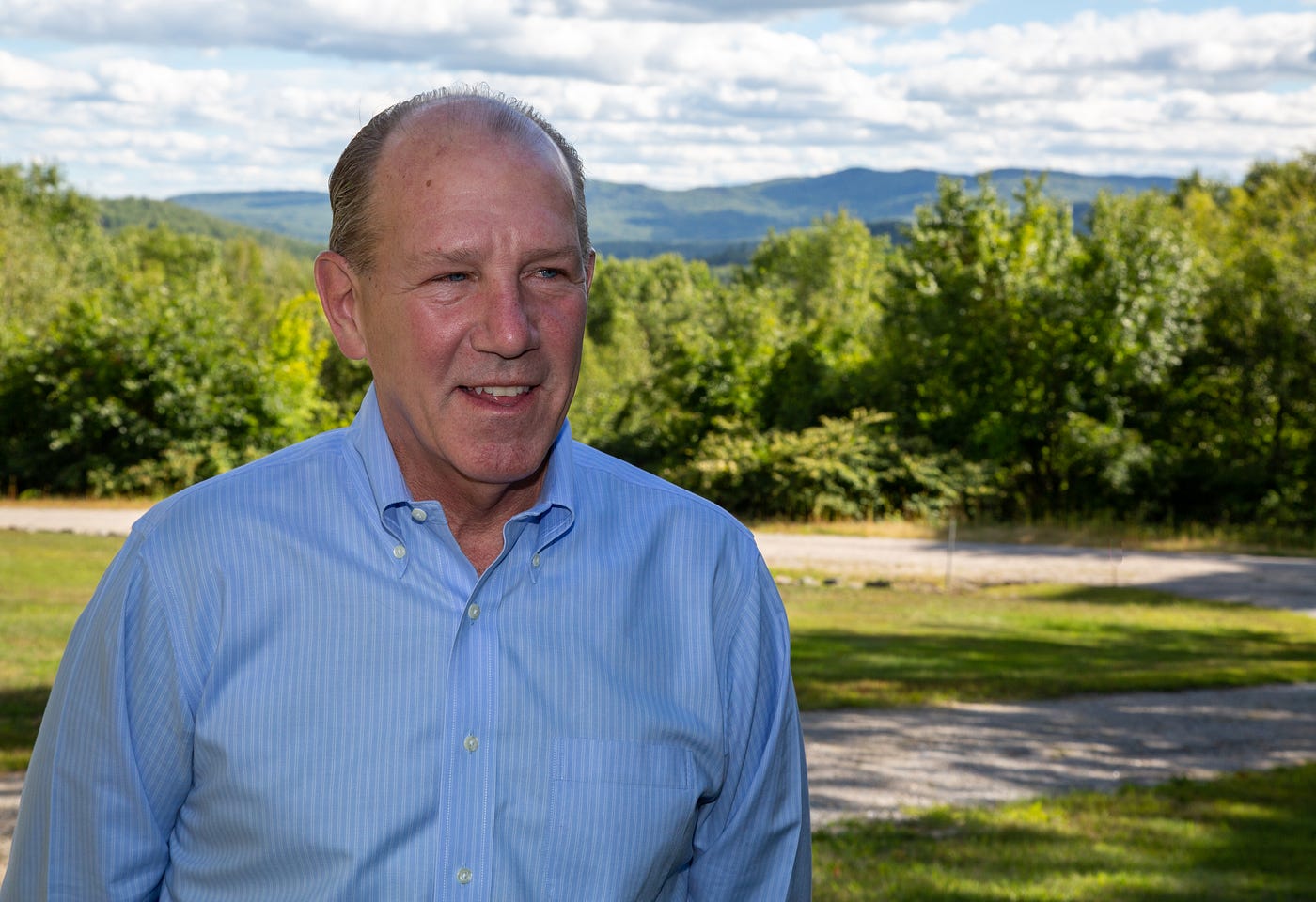
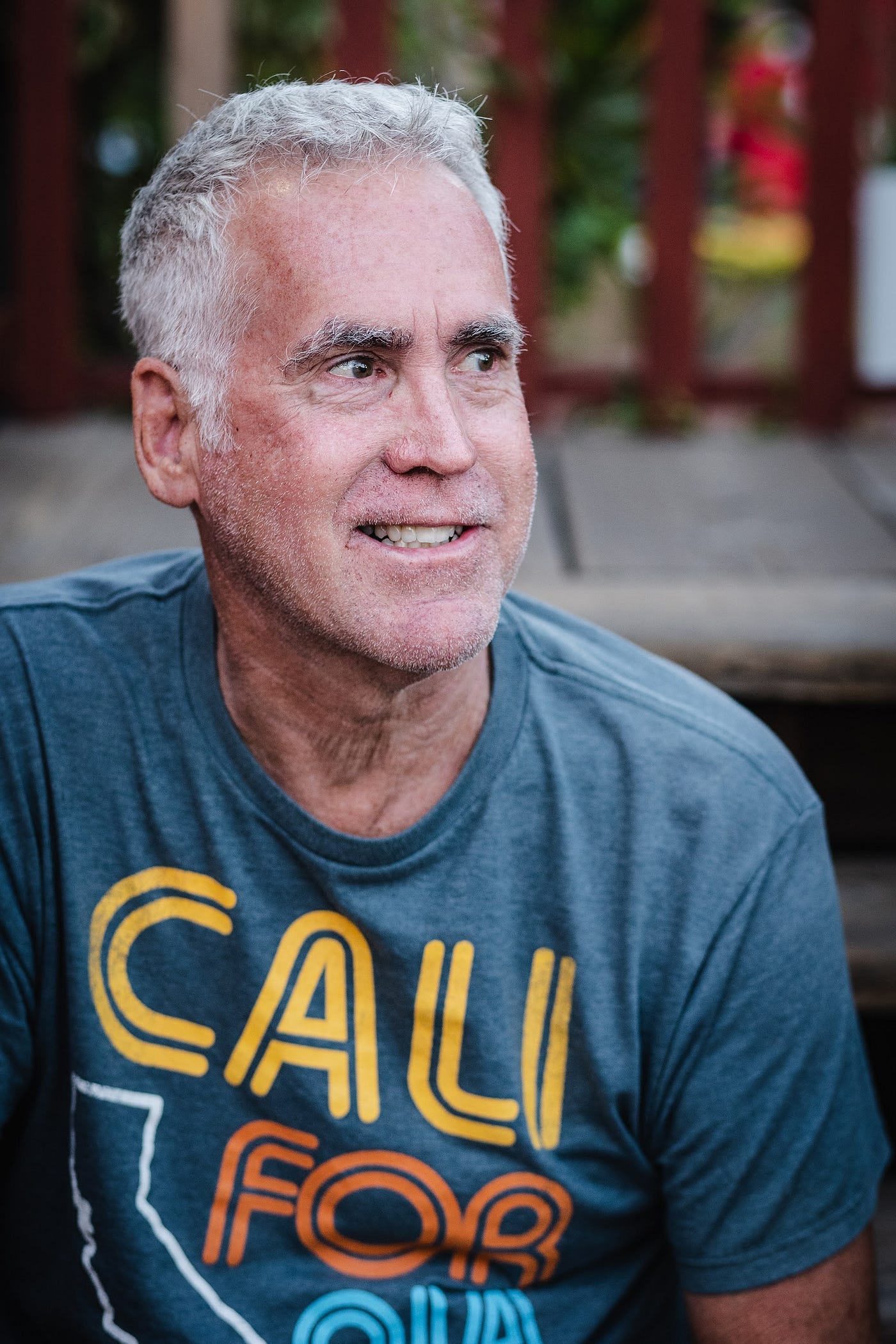
As a part of our series about business leaders who are shaking things up in their industry, I had the pleasure of interviewing Mark Loehr.
Mark is a seasoned leader with extensive experience in the financial sector. Mark’s vision for OpenExchange is driven by his ability to see where traditional financial services are enhanced by technological advancements. He was previously CEO of Soundview Technology Group and, through its acquisition of Soundview, an EVP of Charles Schwab Corp. Before Soundview, Mark was the head of investment banking of the firm’s predecessor, Wit Capital, the first online investment bank, known for pioneering innovation to the distribution of IPOs. Earlier in his career, he was with Smith Barney, and was president of Smith Barney Pacific, head of global equity sales and head of equity capital markets. Mark currently serves on the board of Proctor Academy. He earned his BA in economics from Cornell University.
Before we dig in, our readers would like to get to know you a bit more. Can you tell us a bit about your backstory? What led you to this particular career path?
My 35-year career has been divided into seven five-year periods. The current chapter, as CEO of OpenExchange, draws on the previous six chapters, including my experience as an equity trader.
My time on the trading desk was an eventful one. I experienced the dot-com era, participated in the sale of one-million share blocks (which were commonplace trades) and I authored a book on the BP oil spill.
Throughout my career, I’ve learned that some of the most important elements in business are cultivating comprehensive relationships, building trust, and believing in your colleagues. These are true whether you’re working on the trading desk, persuading CEOs to pursue a $2 billion follow-on deal, or convincing a founder to move forward with an IPO. There are a lot of long-term relationships that you need to cultivate in order to make situations work for both your clients and your employees.
I “failed” retirement. Ten years ago, I thought my full-time career was pretty much over. But in OpenExchange, I saw an opportunity that was too good to pass up. And today, that opportunity has been realized and then some. As the leading video meeting and streaming solution for financial institutions and professional investors, we handle all the components of the business that I love: video technology, building relationships, and crisis management, all within the financial sector.
I truly never thought I would come out of retirement because I love doing nonprofit work, investing in small companies, and being at home with my kids. But when I saw that OpenExchange could seamlessly tie together the past six chapters of my career, I thought to myself, okay, let’s put this together and see what happens. I was willing to put all of my effort and money into jump-starting this initiative, even if others couldn’t see the same vision I had.
Can you tell our readers what it is about the work you’re doing that’s disruptive?
“Disrupt” is a funny word to me because when a company is a “disruptor,” it has already spent time laying the foundation and it’s reached a tipping point. Disruption doesn’t necessarily take place at inception. I think disruption is when you create something that people have never seen before at scale. That definition always motivates me with OpenExchange. I wake up every single morning with the belief that people are going to be using video in financial services in a very big way.
At OpenExchange, we laid the foundation of interoperability among Zoom, WebEx, Microsoft Teams and other video conferencing platforms. We created a managed service offering and built a proprietary database of connections covering every corner of the financial services world. That multitiered foundation was ready when the COVID-19 pandemic hit, accelerating the adoption curve for video technology. That’s what created disruption. The whole game changed overnight, and we were ready to handle a dramatically increased usage of virtual conferencing.
Can you share a story about the funniest mistake you made when you were first starting? Can you tell us what lesson you learned from that?
It was August of 1982, and the market had been on its heels since 1974. I was on the trading desk and the first day the market took off, I got a call from Warren Buffett’s team to buy 25,000 shares of Teledyne at $72. I ran into some difficulty completing the order: I convinced the counterparty at the NYSE to give it to me at $70, but then the price jumped, and we had to end up cancelling the order. Our clients were so upset. By the end of the day, Teledyne closed at $80 a share.
So, the following Saturday morning, we were on the phone with the client team and they were demanding $250,000 because they’d missed out on the 25,000 shares. My boss at the time — one of the most creative people I ever met — took full responsibility for the mishap. He offered to buy or sell five million shares of stock, commission-free. The clients agreed and we ended up buying five million shares of Coca-Cola. As it turned out, Warren Buffet’s initial stake in the company was a result of my huge mistake!
I will never forget that experience. What I learned from this situation was every problem can become a solution. Our relationship with Warren Buffett from that day forward at Smith Barney grew from a massive mistake to a relationship that extended for over 30 years.
We all need a little help along the journey. Who have been some of your mentors? Can you share a story about how they made an impact?
My first mentor was my mother. She was campaign manager for a Democratic congressman in New York and worked closely with Mario Cuomo back in the day. I was an intern for the campaign. Every day, I would listen to my mother speak to others with intelligence and class, yet in the same sentence get her argument across succinctly and professionally. My mother taught me so many lessons, but most importantly she demonstrated early on how to stand your ground and advocate for what you believe in — no matter how big or small the matter.
Mike Walsh, CEO of Tenneco, is another that comes to mind. We went down to see him and we pitched this $2 billion deal against Morgan Stanley, Goldman Sachs, J.P. Morgan and Credit Suisse. After we finished, he said, “I’ve heard four pitches and I couldn’t tell them apart. Tell me what you’re going to do that’s different.” We said, “We’re going to sit on your shoulder — not across the table from you.” Ever since that day, I’ve changed my approach to client service. I’ve never mentally sat across the table — instead, I’m on their shoulder, looking at the situation from their perspective.
Another mentor that comes to mind is Jacques Theriot, executive vice president at Smith Barney, who taught me to never be afraid of the client.
In today’s parlance, being disruptive is usually a positive adjective. But is disrupting always good? When do we say the converse, that a system or structure has ‘withstood the test of time’? Can you articulate to our readers when disrupting an industry is positive, and when disrupting an industry is not so positive? Can you share some examples of what you mean?
To me, the downfall of using terms like disruption is that it’s a far too precise word for how much is actually involved in the evolution and what it takes to actually make something work.
I think you can’t really be disruptive unless you’ve gotten a head start. If you’re prepared, you’ll have the resources to take advantage of an opportunity at any moment and be willing to scale at the same time. Small business owners and entrepreneurs should ask themselves: how can you scale effectively with enough capital to take advantage of the lightning bolt that can bring your idea to fruition?
Can you share three of the best words of advice you’ve gotten along your journey? Please give a story or example for each.
If I showed you my list of lessons learned, there would be hundreds of items on that list. But there are three ideas that I keep top of mind when it comes to disruption.
The first is that a problem is just a solution in waiting. Don’t get frustrated because there’s a problem. If you have enough people around the table and you approach it creatively, it should sort itself out.
The next thing I tell entrepreneurs to remember is to use their tools. Sometimes, your ego gets in the way and says, I can do this by myself. But you should always walk into a situation and say, What tools can I bring to this?
The final thing I live by is that time is a weapon. I use this as a CEO a lot. When I think we’ve got positive developments throughout the year. I might try to stage them out so that I can keep the momentum going versus having everything happen at once and nothing for the next six months. Sometimes you need to slow time down and sometimes you need speed time up in terms of achieving what you want.
How are you going to shake things up next?
I think people just have no clue about the degree to which remote work is going to change the way companies collaborate. We’re still going to see fifty percent of the workforce working from home in 2021.
These changes will be reminiscent of the dot-com era. There are going to be many spin-offs and new innovations — some will work better than others. It’s happening quickly, and we’re seeing it with virtual conferencing.
What will shake people up the most is the amount of video conferencing that’s involved with working from home. I think the next part of this journey is video conferencing that’s recorded, transcribed, translated, and searchable — and the massive content library that comes out of that is going to be wildly interesting.
When it comes to information about companies and financial markets, there will likely be three or four destinations for this video content. Realistically, people are not going to want to have, for example, fifty financial services content portals, but I think they should expect a vertical “YouTube,” for example, for each industry that is appropriate and searchable.
Do you have a book, podcast, or talk that’s had a deep impact on your thinking? Can you share a story with us? Can you explain why it was so resonant with you?
A book that I love is called “How We Decide” by Jonah Lehrer. It dives deep into the biology of the brain and how we make decisions. One concept he discusses is how after doing something one thousand times, your brain is trained to notice differences. Whether you’re in the military, a teacher, a firefighter, or working in an office, you’ll reach a point where you have to learn to trust your expertise and your judgment. Sometimes you can’t explain why you feel a certain way, but you know you’re right based on your experience.
As a leader, it’s important to understand how you make decisions. That’s why I love the book — it reinforces for people how much experience matters. Chapters within your career path matter because you’re pulling in different observations from different parts of your life.
Can you please give us your favorite ‘life lesson’ quote? Can you share how that was relevant to you in your life?
“Instead of sitting across the table, try to sit on your client’s or employee’s shoulder.” Understanding how your clients or colleagues think, process information and prefer to work will ultimately set both you and them up for success.
If you could inspire a movement that would bring the most amount of good to the most amount of people, what would that be?
I personally believe that Black Lives Matters is one of the most important organizations and movements of our time. Aside from genocide, slavery is the worst thing to happen in our history, and as a global community we have not addressed it. Change can be hard but more needs to be done to ensure we are treating everyone in this country and around the world equally.
At OpenExchange, I’m proud of how quickly we’ve grown globally to help address the COVID-19 pandemic. We have achieved a modest level of diversity, but not enough. This is top of mind for me and my team, and we are working to be more proactive to create equal opportunities.
How can our readers follow you online?
I’m personally not active on social media, but folks can learn more about what we’re doing at OpenExchange on LinkedIn and Twitter (@openexc).
AM
Written by
Authority Magazine Editorial Staff
Editorial Desk · Authority MagazineThe Authority Magazine Editorial Desk produces, verifies, and edits long-form primary-source interviews with executives, innovators, clinicians, creators, and social impact leaders across Business, Tech, Pop Culture, Wellness, and Social Impact.

Published inAuthority MagazineTop Lessons, Top Authorities · 42K Followers
Exclusive, curated interviews with the leaders and changemakers shaping tomorrow. Leadership lessons, industry deep dives, and executive profiles.