The big thing about being an executive and leading a business, is you must give yourself the space and have the ability to come up from the trenches and look across the horizon for your business.
Business
Mark Holweger of Legal &: How Disrupting Your Own Profitable Business In Full Sun Secures Future Growth
Mark Holweger shares insights from his journey from North Wales to leading Legal & General America, emphasizing the importance of forward-thinking transformation and strong teams.
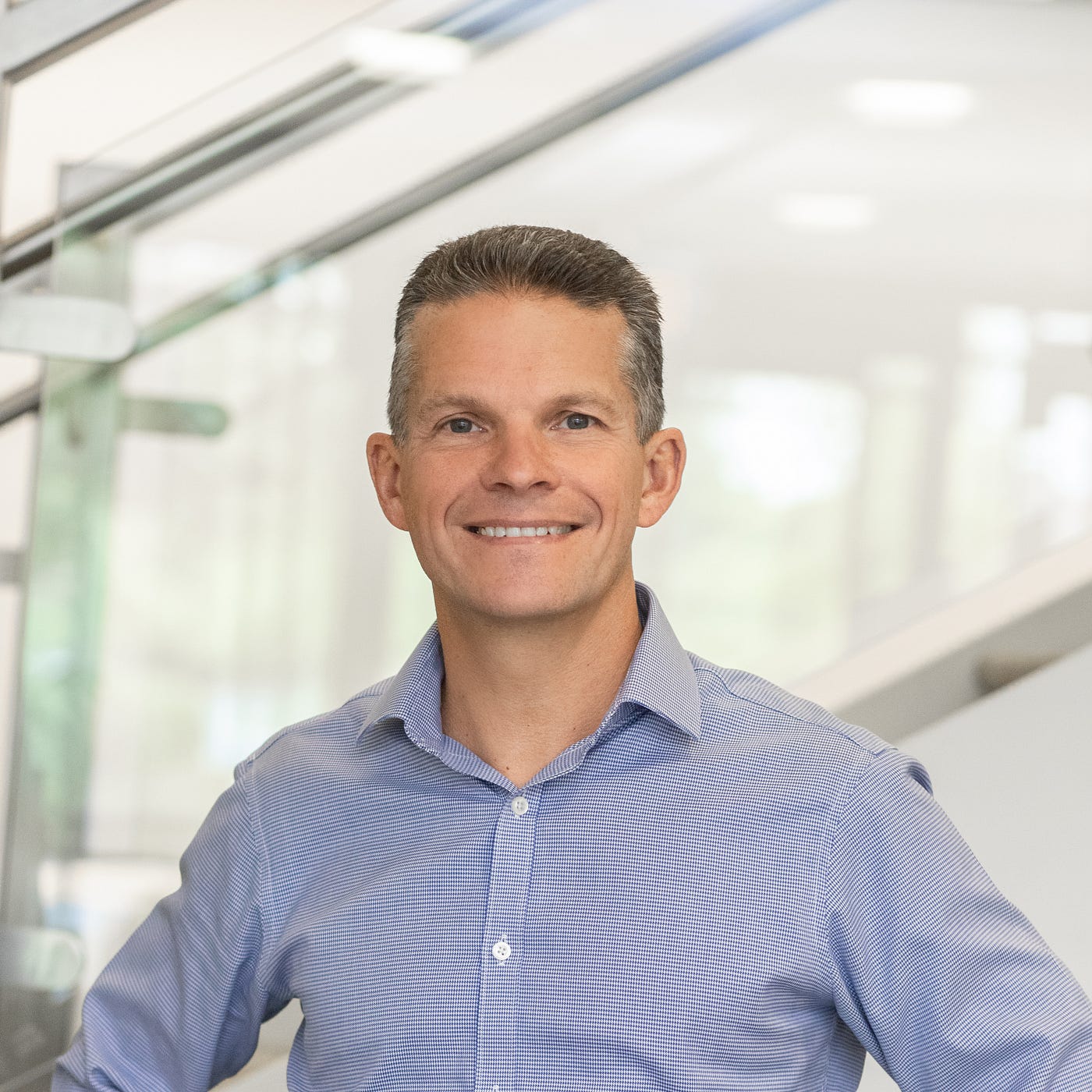
As a part of our series called ‘Five Things I Wish Someone Told Me Before I Became A CEO’ we had the pleasure of interviewing Mark Holweger.
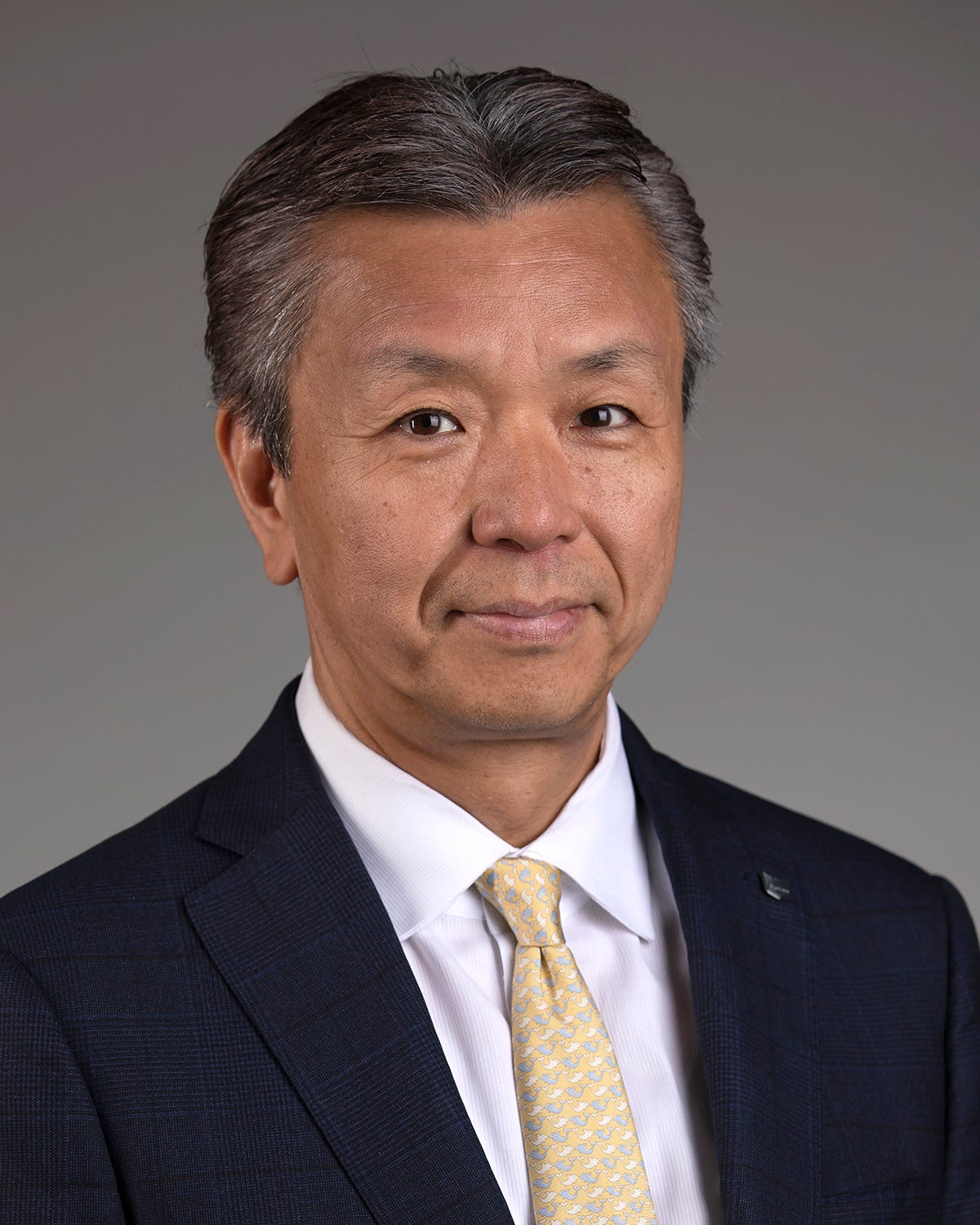
Mark Holweger is president and CEO of Legal & General America and is responsible for the day-to-day operations of the business, ensuring service excellence, continued distribution expansion and achievement of the digital transformation strategy. In 2011, he joined Legal & General Group in the UK where he held numerous senior level positions prior to relocating to the United States in 2018.
Thank you so much for joining us in this interview series! Before we dig in, our readers would like to get to know you a bit more. Can you tell us a bit about your “backstory”? What led you to this particular career path?
I was born in Wrexham, North Wales, an old mining and steelworks town that had a very high unemployment rate. You may know it now from the Welcome to Wrexham fame thanks to Ryan Reynolds and Rob McElhenney. When I turned 18, the coal mines and steelworks had shut down and there were few jobs, so education was key to building my future and opening up job opportunities.
I chose to study economics at Kingston University in London because it was the capital of the UK where there were more jobs and looking at the people with math or economics degrees, they tended to have a good chance of starting in a role that would lead to a strong career. Coming from a town where unemployment was high, I felt going into financial services was a smart move given the UK’s success in that field. So, I went into the insurance industry through a graduate program with AVIVA.
I worked my way up through the company, running the property and casualty (P&C) business for AVIVA in the Southeast of England. I was then headhunted by AXA to be the director of corporate partnerships where I grew its business, leading RSA to approach me run various divisions at Director level with my last role picking up the emerging markets sector (P&C) .
In 2008 I left to co-found a new business, Coverwise, which is a leading International online digital broker of travel insurance. I left the business in 2011 to head back into the corporate world after being approached by Legal & General to expand their UK P&C business. Within a few years I moved to the role of MD of Intermediary for both the P&C as well as the Life business where L&G are market leaders in the UK. The role continued to expand with additional divisions including mortgages and surveying. Then in 2018 I was asked to lead the digital transformation and expansion of our US business as president and CEO of Legal & General America (LGA), so I made my way to the United States.
Can you share the most interesting story that happened to you since you began leading your company?
More of an observation than a story. Despite the US being the world leader when it comes to technology and exponential growing companies often driven by digital innovation, it was noticeable how some industries had not advanced at the same pace, including the life insurance. I remember my shock when my US bank handed me 3 check books, I had not seen a check book for circa 10 years in the UK let alone use one. I was so surprised they were still being used or contactless was not the norm in all stores, but then I spoke to executives in the American banking industry it became clear. It’s about the cost of change in such a large market which is so significant compared to most other countries and if the business is trading profitably that cost can sometimes be difficult to swallow until you have to, the trick is not leaving it too late! It’s the old adage of Jack Welch, change while the sun is shining. Yet many companies don’t want to change while it’s shining, so they wait until it’s raining and by then it’s too late. Legal & General had the opportunity to digitize in full sun, so that was my biggest driver when I became the CEO. Even though the company was performing well, I had to disrupt my own business and change it.
Can you share a story about the funniest mistake you made when you were first starting? Can you tell us what lesson you learned from that?
I was attending a major conference where I was one of the keynote speakers. It was a long drive away, so I had to leave around 4 a.m. It was still dark outside and I didn’t want to wake my wife by turning on the lights, so I put my suit on in the dark.
When I arrived at the formal event, I grabbed my suit jacket only to realize it was a different color to my trousers, or pants as you say in the U.S. The colors were similar but obviously not the same. If it had been a completely different color, I think it might’ve been OK.
I was set up to walk onto the stage with a jacket and clearly mismatched trousers. My solution? As I walked on stage, I immediately started taking off my jacket saying “boy it’s hot under these spotlights, so I hope no one minds me being a little more informal by ditching the jacket”. No one noticed.
Learning — turn the lights on when you get dressed.
None of us are able to achieve success without some help along the way. Is there a particular person who you are grateful towards who helped get you to where you are? Can you share a story about that?
That would be Lee Gladwell. He’s the one that chose me for the graduate job with AVIVA and spent a lot of time mentoring me. Lee ended up leaving AVIVA after about five or six years of me being there and went to AXA. I guess he’d been monitoring my success after his departure, as he ended up asking me to join him at AXA for my first director role.
Lee is the one who gave me a leg up to the c-suite. In some ways, my background didn’t always fit the “mold” of your average c-suite executive at the time because of where I grew up, and without Lee, I wouldn’t be where I am today.
Leadership often entails making difficult decisions or hard choices between two apparently good paths. Can you share a story with us about a hard decision or choice you had to make as a leader?
The hardest decisions I find myself making are the ones that involve the people you work with, your colleagues. You sometimes have to make tough decisions to ensure you have the right long-term capabilities and talent to meet the future needs of the business and your customers. By keeping the business successful you also create jobs. My upbringing in Wrexham had shown me the consequences of companies not adapting and the effects on the community.
I’ve always tried to put myself in the shoes of the people being impacted and understanding how it’s going to affect them and where possible minimize and mitigate the impact. “Treat others how you would want to be treated”.
Ok, thank you for that. Let’s now jump to the primary focus of our interview. Most of our readers — in fact, most people — think they have a pretty good idea of what a CEO or executive does. But in just a few words can you explain what an executive does that is different from the responsibilities of the other leaders?
The big thing about being an executive and leading a business, is you must give yourself the space and have the ability to come up from the trenches and look across the horizon for your business. You have to be able to set that vision of what’s happening in the future and make sure the business is adapting and ready to be successful. This ability to identify opportunities and adapt quickly constantly driving forward.
A key is people, can you build and inspire teams as you are only as good as your team. Great teams will give a business the best competitive advantage and most difficult to copy, apart from which all competitive advantage initially comes from people.
What are the “myths” that you would like to dispel about being a CEO or executive? Can you explain what you mean?
I didn’t realize there were any myths! As you work your way up in your career you have a pretty good idea what being a CEO will entail as each advancing roles builds your understanding so in a way there are few surprises both the good and the not so good especially from a personal perspective.
What is the most striking difference between your actual job and how you thought the job would be?
To be completely genuine here, there are no striking differences — the job is exactly how I thought it would be. As I said before, when you move into the role, it’s not like it happened overnight. You’ve grown in a number of ways throughout your career, so each phase is a progression to develop and help you become a CEO.
Each leadership role has elements to it that play a part in being successful — whether you’re running a small business or leading a team. That is where you start to develop the skills that are essential. I don’t see becoming a CEO as a shock change, but rather as an extension of your first management role, where the responsibilities have broadened. Having a strategic vision is key because its more important now than in those lower-level positions.
Do you think everyone is cut out to be an executive? In your opinion, which specific traits increase the likelihood that a person will be a successful executive and what type of person should avoid aspiring to be an executive? Can you explain what you mean?
I’m a true believer in self-responsibility and I don’t think anybody should ever say to anyone “you can’t” or “won’t be”. My attitude is if you want something to happen, you can make it happen. It just depends on how much you want it.
I love the personality type Triangle which depicts how people operate. You have the rescuer, who’s constantly trying to rescue other people and making excuses for them; the persecutor, who’s basically blaming other individuals for why they can’t get something done; and the victim, who doesn’t take responsibility for their actions and blames it on their set of circumstances. Most people will operate around the triangle and go round and round, but where you want to get to is self-responsibility. You can influence anything once you get there — and the only reason you won’t have made something happen is because you didn’t want to or you didn’t try hard enough. Everybody has challenges in life, but it is how you overcome those challenges that is the most telling.
What advice would you give to other business leaders to help create a fantastic work culture? Can you share a story or an example?
Set a vision that everybody can relate to. At LGA, our vision is protecting families. It doesn’t matter what you do in the business — you can feel connected to that.
Another thing is to be approachable. I consider myself a member of the team where I have a role to fulfill, just like everybody else.
And my last piece of advice would be to communicate, communicate, communicate. You cannot under communicate.
How have you used your success to make the world a better place?
I’m really passionate about coaching and mentoring people. I had some great mentors in the early stages of my career so I’m all about paying it forward having an open door policy, going back to approachability.
Fantastic. Here is the primary question of our interview. What are your “Five Things I Wish Someone Told Me Before I Became A CEO” and why? (Please share a story or example for each.)
Nothing can fully prepare you to become a CEO. When you take on this position, you’re not assuming the role overnight — your previous experiences are what help you get ready. Every company has varying needs, especially throughout the years as business needs change and evolve. So not sure I can say there are any five particular things I wished someone had told me!
You are a person of great influence. If you could inspire a movement that would bring the most amount of good for the greatest number of people, what would that be? You never know what your idea can trigger.
I think it’d be a movement to create a safer world for all. Too many people often don’t feel safe in their communities, and we need to create a world where everyone can feel safe. I know many friends who won’t go out at night alone and they say they don’t feel safe even in the daytime. No one should ever have to feel unsafe in their own community.
Can you please give us your favorite “Life Lesson Quote”? Can you share how that was relevant to you in your life?
“If you want to achieve something, you can make it happen — self responsibility”. That’s what has driven me all my life and if something did not happen, I did not want it bad enough.
We are very blessed that some very prominent names in Business, VC funding, Sports, and Entertainment read this column. Is there a person in the world, or in the US with whom you would love to have a private breakfast or lunch with, and why? He or she might just see this if we tag them
Not to disappoint your readers but my list is a little different.
- My wife. She is my best friend and gives me plenty of advice and feedback.
- My daughters. They provide even more advice and more feedback! Often without a filter.
- Nelson Mandela. He had a true understanding of people and leadership.
Thank you for these fantastic insights. We greatly appreciate the time you spent on this.
About the Interviewer: Douglas E. Noll, JD, MA was born nearly blind, crippled with club feet, partially deaf, and left-handed. He overcame all of these obstacles to become a successful civil trial lawyer. In 2000, he abandoned his law practice to become a peacemaker. His calling is to serve humanity, and he executes his calling at many levels. He is an award-winning author, teacher, and trainer. He is a highly experienced mediator. Doug’s work carries him from international work to helping people resolve deep interpersonal and ideological conflicts. Doug teaches his innovative de-escalation skill that calms any angry person in 90 seconds or less. With Laurel Kaufer, Doug founded Prison of Peace in 2009. The Prison of Peace project trains life and long terms incarcerated people to be powerful peacemakers and mediators. He has been deeply moved by inmates who have learned and applied deep, empathic listening skills, leadership skills, and problem-solving skills to reduce violence in their prison communities. Their dedication to learning, improving, and serving their communities motivates him to expand the principles of Prison of Peace so that every human wanting to learn the skills of peace may do so. Doug’s awards include California Lawyer Magazine Lawyer of the Year, Best Lawyers in America Lawyer of the Year, Purpose Prize Fellow, International Academy of Mediators Syd Leezak Award of Excellence, National Academy of Distinguished Neutrals Neutral of the Year. His four books have won a number of awards and commendations. Doug’s podcast, Listen With Leaders, is now accepting guests. Click on this link to learn more and a

Published inAuthority MagazineTop Lessons, Top Authorities · 42K Followers
Exclusive, curated interviews with the leaders and changemakers shaping tomorrow. Leadership lessons, industry deep dives, and executive profiles.