I learned early on as a fellow that you cannot move mountains alone. It truly takes a dedicated, multi-disciplinary team to make the dream work.
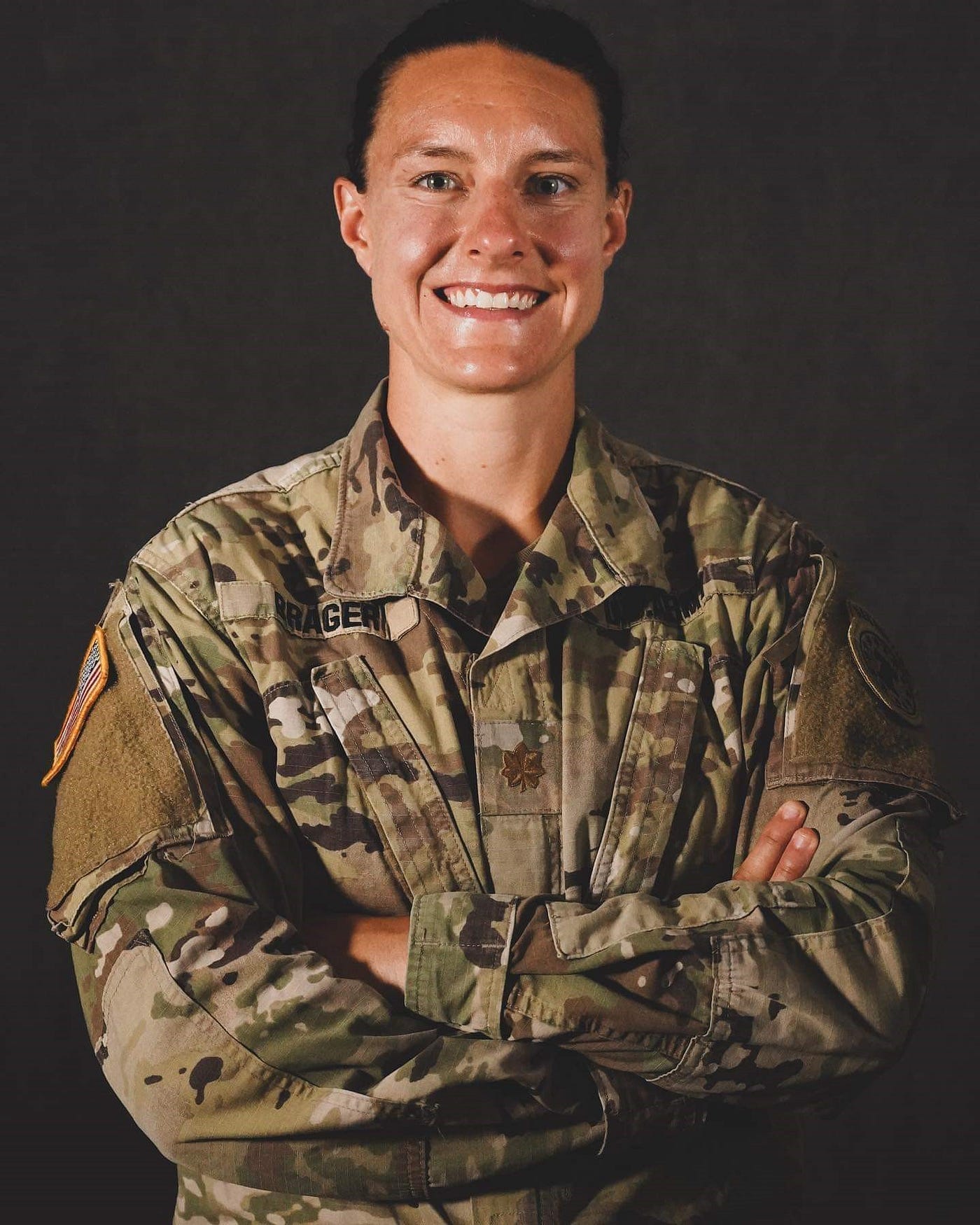
As a part of my series about the women in wellness, I had the pleasure of interviewing Major Allison Brager.
Major Allison Brager is a neuroscientist involved in the U.S. Army’s Holistic Health and Fitness System, or H2F, which aims to improve the performance, health and wellness, and readiness of our Soldiers. The system takes an integrated health approach that focuses on both physical and non-physical domains, one of which is sleep readiness. As a leader of the Sleep Readiness domain, Major Brager helps develop and implement the sleep practices that help Soldiers improve performance and reach their full potential.
Major Brager also studies survival under extreme conditions, such as sleep deprivation and stress, and what makes people more resilient. She oversaw clinical testing and field support as part of the Army’s COVID-19 response at the Javits Center in New York, where she led research and development around the physiological health of the team. She has also served on the Army Warrior Fitness Team, competing alongside elite athletes.
Major Brager has a Bachelor of Science in Psychology and a PhD in Biological Science.
Thank you so much for joining us! Our readers would love to get to know you a bit better. Can you tell us a bit about your backstory?
I grew up in a Jewish neighborhood in a Rust Belt city (Youngstown, OH). Like most kids who grew up in Youngstown in the late 1990s, it was a great place to grow up to learn the art of “grit,” but a great time to leave. Our economy had collapsed, and our crime rate was one of the highest in the nation. I–like many of my peers and family–also had aspirations to be a professional athlete.
This was a well-known fact about Youngstown, OH. We had a talent for producing world-class boxers, football players, and coaches. Because of this, I learned from my uncle, who was a professional boxer, how to push my body and build mental toughness at an early age. This discipline helped me both athletically and scholastically. I went on to be valedictorian of a very large public high school and a two-sport state-contending athlete in track and field and gymnastics. Thanks to my high school coach (who I dedicated my popular science book Meathead: Unraveling the Athletic Brain to years later), I was also fortunate enough to be one of the first female pole vaulters in the state of Ohio (the state finally let high school girls pole vault in 2002).
Although West Point was my top choice for college, our country went to war that year and I could not convince my parents that I should attend. Instead, I chose Brown University, where I flourished as an athlete and did my best as a scholar. It was at Brown that I took a psychology of sleep course taught by the world’s expert in sleep who paved the way for women as one of the field’s first female scientists. I admittedly took her class to get an “easy A” (the athletes at Brown had a habit of doing this), but quickly fell in love with the psychology of sleep. It was from this day on that I knew I would put my aspirations to be a psychiatrist aside and would ultimately begin the journey towards pursuing a career in sleep research. It was also easy for me to be invested in sleep research because of how much I knew sleep had contributed to my own athletic and scholastic performances.
During my post-doctorate fellowship years, I had a second opportunity to serve our country when I was awarded a National Academies of Sciences fellowship to work at the Walter Reed Army Institute of Research. When Col. Maurice Sipos, the Chair of the Center for Military Psychiatry (talk about full circle!!) and Neuroscience called me into his office on my first day and said I’d make a great Army officer, I could not and would not say “no,” no matter how my parents felt. Turns out, they are the proudest parents ever that I serve our country.
Since then, the Army has taken me on an incredible ride and has enabled many of my dreams to be fulfilled. I had the opportunity to be a professional athlete through the Army Warrior Fitness Team, I had the opportunity to command a unit, and I have had the opportunity to work on next-generation cutting-edge science and technology projects with world-class academic and industry partners, and even Defense Advanced Research Projects Agency (DARPA). I also had the opportunity to achieve a lifelong dream–one that I thought was out of reach but made possible because of the Army–becoming an Army Astronaut Candidate Applicant.
Can you share the most interesting story that happened to you since you started your career? What were the main lessons or takeaways from that story?
About two years ago, a phone call brought my career full circle. I was part of the no-knock deployment to New York City to set up a field support hospital in the Javits Center as part of the Army’s COVID-19 response. As someone with family in NYC and as someone who decided in high school that I wanted to serve my country because of 9/11 and the impact it had on my family, this was my true calling to service. Most importantly, the experience provided me with the opportunity to leverage over 15 years of basic and clinical laboratory training to help the people of NYC.
From the friendships forged during hardship, the long days and late nights on the patient floor, and the support of the city, I will remember every detail of my four months in NYC for the rest of my life. The main takeaway from this experience was just how incredible the Army logistics and medical corps are. In a matter of 48 hours, we deployed from all corners of the United States (including Hawaii) to be boots on ground at a makeshift field support hospital of 1,900 beds, including an auxiliary lab, pharmacy, and imaging support–all fully mission capable in less than a week.
My Army training prepared me for this moment in history. It was terrifying to walk right into the belly of the beast itself and in the place most impacted in the U.S., but I had my Army, Navy, and Public Health Service battle buddies and the City of New York by my side. With teamwork, the dream always works.
Can you share a story about the biggest mistake you made when you were first starting? Can you tell us what lesson you learned from that?
I learned early on as a fellow that you cannot move mountains alone. It truly takes a dedicated, multi-disciplinary team to make the dream work. I always thought of the pursuit of scientific discovery being individualistic, but I quickly learned the best science is done as a team. Teamwork is how the Army accomplishes its mission and teamwork is, above all else, why I love being in the Army. Putting together a multicultural team from all walks of life and educational backgrounds for the purpose of one team, one fight, people first mission is one of the greatest gifts of serving.
Let’s jump to our main focus. When it comes to health and wellness, how is the work you are doing helping to make a bigger impact in the world?
Our work takes the latest and greatest scientific discoveries out of Army research labs and from our academic and industry partners in order to create motivating and action-oriented goals toward bettering holistic health. All of our discoveries result in what we call knowledge products (e.g., the sleep research team I was on at the Walter Reed Army Institute of Research recently commercialized an app, Peak Alert, where you can program in your daily caffeine intake in order to optimize daytime waking and peak performance or use it during military operations to protect against the negative consequences of sleep loss). We also host seminars and provide evidence-based fitness, nutrition, recovery, and sleep protocols to units at-large upon request.
This is what I love about doing research with the Army compared to my previous life as a research professor at a medical school. There is a plan for impact that the Army follows through on to help our men and women stay safe in whatever situation–in their Army career and beyond. Take the Army’s Holistic Health and Fitness System, or H2F, for example, which aims to improve the performance, health and wellness, and readiness of our Soldiers. The new system takes an integrated health approach that focuses on both physical and non-physical domains, including physical, mental, nutritional, sleep, and spiritual wellbeing. The Army wants Soldiers–and everyone–take an active role in the health, functioning, and longevity of their body and mind.
Can you share your top five “lifestyle tweaks” that you believe will help support people’s journeys towards better wellbeing? Please give an example or story for each.
Buy blue-light-blocking glasses. Nearly everything we use during the day and off-duty in the evening hours is a source of blue light. Blue light during the day is wonderful for alertness, but terrible for sleep. A pair of blue light blocking glasses, which typically cost less than $30, can help protect blue light from interfering with sleep disruption at night. This was actually a huge win I had in the early days working with the Army eSports Team, who adopt an around-a-clock gaming schedule. My colleague and I published about this success (and another lifestyle hack below) in the journal of the Society for Neurosports last year.
Use caffeine on a use case basis, not just because. The scientists at the Walter Reed Army Institute of Research have spent several decades discovering precise caffeine dosing schedules for Soldiers under many conditions of stress and sleep deprivation. Many of these schedules can also help enhance and/or optimize performance on a daily basis. The bottom line up front is to use caffeine when needed and to avoid consuming more than 200 mg (two cups of coffee) every 4 hours.
Develop meaningful (in-person) relationships. Camaraderie is what makes the Army the incredible organization it is. The Army practically guarantees the opportunity to learn, grow, and form new bonds with fellow Soldiers from different walks of life. As a former college athlete and coach, camaraderie is now essential to my well-being. Research shows that individuals who have a positive outlook on life are more likely to be resilient under situations of stress and positive people attract positive people. There’s actual scientific evidence for the Biblical verse of “iron sharpens iron.”
Engage in high-level work for 25 minutes at a time. This tip, known as the Pomodoro technique (after the vintage Italian kitchen timer shaped like a tomato), is a hack high performers use on a daily basis. The human brain can only attend to an engaging task for a limited amount of time. Research shows that an individual can engage in any cognitive or physical task for up to 25 consecutive minutes until there is a precipitous decline in performance. Immerse yourself in a task for 25 minutes then take a short break before getting back to work.
Make time for a good workout — it only takes 7 minutes. High-intensity exercise is short-term pain for long-term benefits. Research shows that highly anaerobic activity has significant carry over to aerobic activity, but not vice versa. For this reason, a quick metabolic workout (try 7 minutes of jumping jacks) can do the job anywhere, any time. I was that person who, while deployed, was constantly doing 7 minutes of burpees any free moment I had down range.
If you could start a movement that would bring the most amount of wellness to the most amount of people, what would that be?
Be 1% better every day. This is the mantra of a company I consult with who has helped thousands of high performers reach their goals. Wellness and lifestyle changes do not happen overnight. Each take time but developing short, attainable, and actionable goals on a daily basis that are equally motivating and fun can lead to monumental change within a few months. The human body and brain are incredibly adaptive to both positive and negative stress, and the little bit of daily work can lead to permanently healthier lifestyle choices.
What are your “5 Things I Wish Someone Told Me Before I Started” and why?
Fail at your own pace. These are the words of my PhD mentor. Leaders fail and fail often. How often you choose to listen and learn from mistakes will dictate your future.
Less is more. Additional words of wisdom from my PhD mentor. What this means is talk less and listen more. Meaningful questions and ideas are developed from listening and engaging, not shouting from soap boxes.
Plan your career around your lifestyle not your lifestyle around your career. I heard this years ago and I’ve adopted it ever since. When you do work that doesn’t feel like work and is nested around passion, work isn’t work. Work is play and you’ll never burn out.
Collaborate, collaborate, collaborate. I learned this the hard way. Teams make the dream work. Seek out mentors, advisors, and others who share different ideologies than you. This is the formula for success.
Iron sharpens iron. Surround yourself with people who are better than you at everything. Learn from and listen to them. Getting beat at sports, school, and sharing similar values and beliefs as these individuals has been my key to success.
Sustainability, veganism, mental health, and environmental changes are big topics at the moment. Which one of these causes is dearest to you, and why?
All are important, but mental health is my top choice. The pandemic has challenged all of our mental health states. I think about the next generation of Soldiers and what impact the pandemic has had on their mental health as young, impressionable teenagers and children in a growing brain and body. How they learn and what they learn has been continually disrupted. How they communicate digitally is also leading to long-term, maladaptive changes in the brain of a species (us) who have evolved to be incredibly social creatures. As cyber continues to enter the battle space, it is going to be imperative to recruit incredibly resilient and empathic individuals with healthy coping mechanisms.
I think finding recruits with strong mental health profiles is going to be the military’s biggest challenge ahead. That’s why keeping our Soldiers mentally fit is a top priority and one the many domains within the H2F system I mentioned. The idea is to teach and prepare Soldiers how to perform well in any environment they find themselves in. Practicing mental readiness supports your body’s wellness in countless ways. Our training can include deep breathing techniques that regulate our stress responses to understanding how our body reacts in certain stressful situations, even the power of positive thinking.
I manage the Army’s sleep and human performance portfolios to help our Soldiers get good quality sleep and stay as healthy as possible. That is the only way you can protect yourself, especially in times of extreme stress. There is nothing better for alleviating stress than creating a physical and mental balance, keeping both your brain and your body in shape.
What is the best way our readers can follow you online?
Visit GoArmy.com to learn more about life in the U.S. Army and you can find me on Instagram @docjockzzz. Also, check out my book Meathead: Unraveling the Athletic Brain.
Thank you for these fantastic insights!