I learned that I could always sell myself short if I wanted to, but nothing could compare to giving something all I had and being surprised by my own abilities.
INTERVIEW QUESTIONS.
(If you are unable to download it, please click File-Download)
As part of my series about “authors who are making an important social impact”,
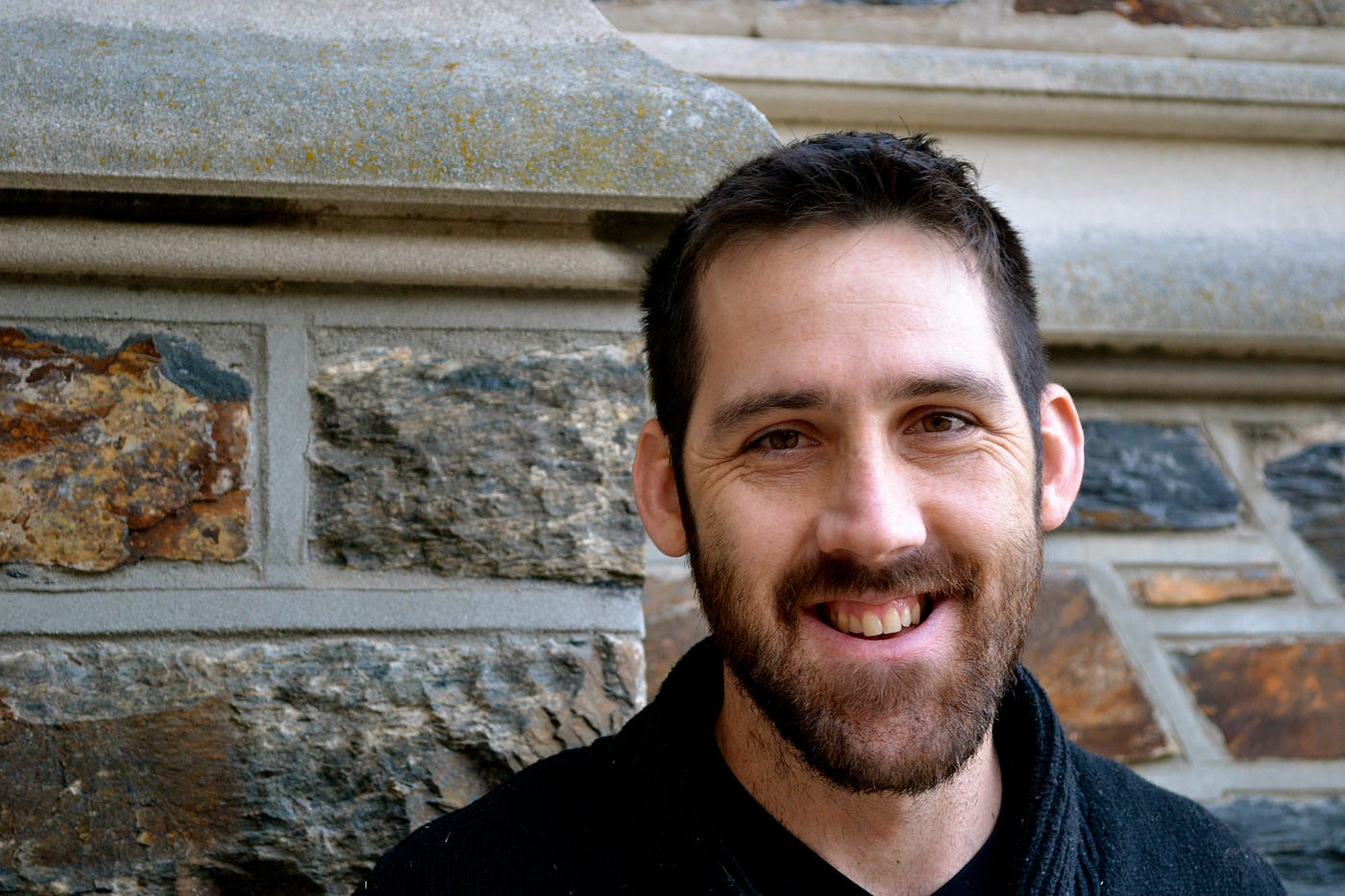
I had the pleasure of interviewing Logan M. Isaac
Logan M. Isaac spent over six years in the United States Army as an artilleryman, including a deployment in support of Operation Iraqi Freedom in 2004. He was discharged as a Noncommissioned Officer in 2006 and went on to earn a BA from Hawaii Pacific University and a Master of Theological Studies from Duke University. Logan spent a year teaching at Methodist University in North Carolina before leaving to study at the University of St Andrews in Scotland, from which he received a Master of Letters in Systematic and Historical Theology in 2015. After returning to a teaching position at Duke University, he went on to earn a Certificate in Business Administration from Georgetown University and start PewPewHQ.com, a social enterprise that promotes human dignity for soldiers and veterans. Logan is the sole author, as Logan Mehl-Laituri, of Reborn on the Fourth of July (InterVarsity, 2012) and For God and Country: In That Order (Herald, 2013). His first book received a Publishers Weekly Starred Review and he has served as a consultant or contributing author of nearly twenty additional publications, including books such as The Gospel of Rutba (Orbis, 2012), and Jesus, Bombs, & Ice Cream (Zondervan, 2012). He has been featured on the cover of Christianity Today magazine and was awarded an Evangelical Press Association award for Best Article Series for “Ponder Christian Soldiers” in 2016. He lives in Maryland with his partner and two children.
Thank you so much for joining us in this interview series! Before we dive into the main focus of our interview, our readers would love to “get to know you” a bit better. Can you tell us a bit about your childhood backstory?
Yeah, thanks for asking! I grew up in suburban Orange County, CA in relative affluence, or at least it seemed like I did. I went to good schools in wealthy neighborhoods, but I noticed I had less than many of my peers. I’d be the one packing a bag lunch to a field trip while a lot of the other students brought enough cash for lunch and a souvenir. It only dawned on me later in life how hard my parents had to work to get us what we had; my dad worked multiple jobs for several years and my mom went back to school for her teaching credentials and started a career as an educator at a time and place in which a lot of moms were stayed home in McMansions with paid housecleaners. Just before I was to finish junior high my parents split up and I started acting out, which for me included shoplifting. I got caught and, when my mom had to pick me up from the police station without saying a word, began going to church because I thought that would make things right. Roughout high school, I went to youth group and got to know the Bible just enough to pique my interest.
For the graduating class of 2000, it was assumed that everyone would go to college (this was literally the premise for Orange County, with Colin Hanks and Jack Black). Two of my best friends signed up for the military; one got an ROTC scholarship and became a helicopter pilot and another enlisted as an Army Reservist and received generous Tuition Assistance. My dad had served offshore in the Navy during Vietnam, but his service was never a big deal, and I never felt any pressure to join the military.
My parents helped make sure I got the most money, training, and opportunity I could get out of the military. After testing well on the Armed Services Vocational Aptitude Battery (ASVAB), I chose the Military Occupational Specialty (MOS) that offered the most college money, which happened to be artillery. I began my military service as a paratrooper with the 82nd Airborne Division at Fort Bragg, NC less than a year before the World Trade Center Towers were attacked.
When you were younger, was there a book that you read that inspired you to take action or changed your life? Can you share a story about that?
I was a voracious reader, and still am, but the book I remember feeling most affected by was about a young man who liked to run. The name of the book escapes me, but he had a difficult home situation and running was his way of getting away from it all. If you ask my family, they will probably say that I’ve been sensitive to others for my whole life, but this book is when I remember feeling that way; this book made me aware of my own sensitivity to people in need because the protagonist had such a hard time.
Decades later, I still remember reading the book on this green chair in our family room when the narrator describes how run down his home was and how much his single mom struggled to provide what little they had. Reading the narrator describe all this left me, if not in tears, certainly deeply heart broken. My first reaction was to go around the house and turn off all the lights in rooms that were empty. I knew that could keep the electricity bill down and maybe take some of the burden my own family might have felt to keep up with the Joneses. To this day, I get this sense that I feel for others more deeply than I am supposed to, or than others expect me to. But I’d rather feel too much of something than nothing at all.
Can you share the funniest or most interesting mistake that occurred to you in the course of your career? What lesson or take away did you learn from that?
Honestly, my biggest mistake was underestimating myself. Basic combat training was a deeply humbling experience, but it taught me to believe in myself. Throughout junior high and high school I was told I had “potential,” something my grades did not reflect. Looking back, I think I was bored and disengaged. Then, in boot camp, we were put in front of a series of platforms and told we had to ascend and descend using only each other to complete our mission. We could not use ladders, and each platform was about a foot wider than the one below it. I was convinced it was a game, that the ‘teachable moment’ would come when we inevitably gave up and were told we must know our limits, blah, blah, blah. Much to my chagrin, however, the drill sergeants did no such thing. Instead they stood, stoic, at the base of the tower and berated and cajoled us until, low and behold, we all made it over.
I eventually realized that I might have potential after all, that I was capable of more than I imagined. Boot camp was the beginning of that realization, and I became an over-achiever as a young paratrooper and artillery forward observer. The lesson was fully realized right before I would go to combat, when I was completing Air Assault School (AAS) at Schofield Barracks, Hawaii. The final requirement is a competitive 12 mile road march through the muggy hillside. I woke up that morning just wanting to finish it and get my AAS Badge, it was the final class before the school was to shut down so units could deploy in support of the global war on terror. At the turn around point, I realized there were only a few people ahead of me. Then at the homestretch, an instructor in a truck pulled alongside me to tell me I was in second and that I could take the lead if I wanted. I shrugged him off, just wanting to be done, telling him without words that I didn’t care about being first. Then he disclosed that he was also artillery, and that none of us had ever come in before the infantry AAS students. He made it clear that I had better shut the fµ¢k up and catch the grunt in front of me. I crossed the finish line with my hands above my head, like Willem Dafoe in Platoon, a full 10 minutes before the second place finisher. I learned that I could always sell myself short if I wanted to, but nothing could compare to giving something all I had and being surprised by my own abilities.
Can you describe how you aim to make a significant social impact with your book?
My third book, God is a Grunt, is an invitation to read Christian scripture and traditions through the eyes of lower enlisted soldiers. The fancy way of saying that is I am developing a martial hermeneutic, an interpretive lens that assumes military families have always had something of value to Christianity. As an enlisted man myself, I have seen ministers and ministries interact with soldiers and veterans as though they have nothing to teach and everything to learn. Even worse is when “Christian soldiers” are caricatured as little more than proud victors, penitent villains, or pitiful victims.
The martial hermeneutic I am constructing owes a lot to liberation, black, feminist, womanist, and queer theologies that press against dehumanizing systems of power in their own way. Where they begin from the experiences of the poor, African American, and gender minorities, I try to do the same from the point of the rank-and-file soldier. When the lived experience of military service is our starting point, the decision making that goes into waging war or military intervention is pretty far removed. The average soldier spends less than six years in service and is discharged before acquiring much rank, but most commentary and public discussion centers on career soldiers. By starting with grunts, I hope to reflect the reality of military service and practice theology from below.
Can you share with us the most interesting story that you shared in your book?
*see below
What was the “aha moment” or series of events that made you decide to bring your message to the greater world? Can you share a story about that?
There were so many that I should be ashamed of how long it took me to finally take the initiative to share the good news as I saw it. One of those moments I share in the book involves a prominent theologian I had been studying under. Over the course of several years, I became disillusioned not with what he had to say or teach, but how he was doing it. He had a biting wit that appealed to folks like me who were tired of stuffy, artificial faith that put words over deeds. But that same wit, wielded recklessly, had the effect of alienating and dehumanizing soldiers and veterans. No matter how many times I brought this to his attention he continued to speak in harmful generalities about military families. Battle buddies felt similarly but raised their concerns to me privately, for fear of the social influence he possessed.
The “aha moment” I write about in my latest book came when I confronted him about his rhetorical belligerence and, rather than asking to know more and avoid further harm, he asked me “Who are you to judge me?” That kind of said it all – he was not driven by Christian or scholarly curiosity, but by self-interest and pride. Although we were members of the same denomination, much less Christian faith, he saw me as beneath him and unworthy to call him to accountability. It was moments like this that I realized I could not count on influential people or institutions to change on their own. I realized that I would instead have to create something new and distinct, a place where GIs could find the human dignity they deserved, the image of God in which they were created.
Without sharing specific names, can you tell us a story about a particular individual who was impacted or helped by your cause?
One student veteran had as hard a time as I did in higher education, but I encouraged them to stick it out and get their degree rather than walk away. We still wonder together whether it was worth it; what was promised versus what we received. Because the military incentivized us with college money, to quit before we get that coveted degree can feel like we have failed when it was really systems of power, their brokers and gate keepers, that failed us. A lot of people I studied with are not using their degrees for what they were intended, including this veteran friend of mine. But sometimes, the degree is a finish line rather than a starting point. And I think that’s okay.
Are there three things the community/society/politicians can do to help you address the root of the problem you are trying to solve?
In the final chapter of my book, I explore the intersection of civil rights and military history while profiling Rev. Ralph Abernathy, Rev. Dr. Martin Luther King Jr.’s top lieutenant. Ralph was just one of many black veterans who returned from war only to be denied their rights because of the color of their skin. What Ralph and Martin taught us about combating injustice can be used to promote human dignity for soldiers and veterans. King’s rebuke of “pious irrelevancies and sanctimonious trivialities,” for example, reminds many veterans of being thanked for their service, a ritual that benefits the patriotic sentiment of the speaker more than it helps the hearer.
The movement’s emphasis on concrete results, like properly enforced federal protections can also be inspiring. Politicians need to hold agencies accountable failing to enforce federal laws protecting military families from hate crimes (18 USC § 1389) and some veterans from employment discrimination (38 USC § 4212). Congress can also pass laws to require agencies add military families to their jurisdiction, like the Equal Employment Opportunity Commission (EEOC) and the office of Fair Housing and Equal Opportunity (FHEO). I have a draft law, the Military Civil Rights Act (MCRA), available online at GIJustice.com/mcra. For regular folks, I recommend watching my video, “5 Things You’ll Wish You Knew Before Talking to Veterans.”
How do you define “Leadership”? Can you explain what you mean or give an example?
I try to take my cues on leadership from scripture, in which God repeatedly favors the outcast, the least experienced, and the marginalized: barren women, stuttering outsiders, youngest siblings. This is not because God turns leadership on its head or anything, this is the way I think leadership was meant to be. Leadership is best exercised from the bottom, where the great weight of responsibility rests and where leadership must draw its authority.
The way I think of it in my head is that lead is a dense metal, so heavy that you might think it’s best left on the ground. Grunts learn that, to complete the longest marches, the heaviest items should be packed last and placed at the top of your rucksack. This makes it easier to carry over the long haul. I also believe that leadership ebbs and flows like any natural rhythm, and I am skeptical of permanent or professional leaders. When the march is over, the crisis passed, or the organization matured, leaders know when to gracefully step aside and pass the torch. It should be counterintuitive to think of leaders as being above their so-called subordinates, and I think “servant leadership” is redundant.
What are your "5 things I wish someone told me when I first started" and why. Please share a story or example for each.
*Please see my “5 Things” video that covers this - https://youtu.be/pKd9SBZ7Kus
Can you please give us your favorite "Life Lesson Quote"? Can you share how that was relevant to you in your life?
After I served in Iraq I began examining my own faith and trying to make sense of what it meant to be a Christian soldier. Shopping at a local Christian bookstore, I found a Keyword Study Bible with Greek and Hebrew guides that really interested me. It was leatherbound, and when I went to the cashier she asked if I wanted it engraved with my name. Something inside me didn’t like that idea; putting our name on things can make us believe they belong to us, but I think I should feel that way toward the Bible. I kept browsing as I pondered what to engrave it with. Then it came to me, I would engrave it with a prayer; Lord grant me wonder, may wisdom follow. I don’t know where it came from, but it felt beautiful. Many years later, I would come across the incredible work of Rabbi Abraham Heschel, who described marching for civil rights with Ralph and Martin as “praying with my feet.” In his book of Yiddish poems, many written before fleeing the Nazis in his native Germany, he dedicates his work to God, writing “I asked for wonder, and You gave it to me.” The world could use more people like Heschel.
Is there a person in the world, or in the US with whom you would like to have a private breakfast or lunch with, and why? He or she might just see this, especially if we tag them. :-)
Stephen Colbert, for sure. He is insanely intelligent and cultured without being condescending or aloof. Watching The Colbert Report throughout seminary helped me laugh off some of the more difficult experiences I had as a student veteran. It doesn’t hurt that he is a devout Christian, but he has no problem being snarky about the things and people whose actions call for critique. Fr. James Martin, S.J., who has endorsed my latest book, God is a Grunt, hand-delivered Stephen Reborn on the Fourth of July while serving as his unofficial chaplain. So there’s a chance he may know of my work, but who knows?
How can our readers further follow your work online?
My personal website, iamLoganMI.com, is mostly an archive of my essays, videos, etc. If folks want to keep up with what keeps me up, they should check out PewPewHQ.com, where they will find links to my Substack, online courses, and a social network made by and for Christian soldiers. For advocacy, or to learn more about civil rights for military families, people can head to GIJustice.com.
This was very meaningful, thank you so much. We wish you only continued success on your great work!
About The Interviewer: Growing up in Canada, Edward Sylvan was an unlikely candidate to make a mark on the high-powered film industry based in Hollywood. But as CEO of Sycamore Entertainment Group Inc, (SEGI) Sylvan is among a select group of less than ten Black executives who have founded, own and control a publicly traded company. Now, deeply involved in the movie business, he is providing opportunities for people of color.
In 2020, he was appointed president of the Monaco International Film Festival, and was encouraged to take the festival in a new digital direction.
Raised in Toronto, he attended York University where he studied Economics and Political Science, then went to work in finance on Bay Street, (the city’s equivalent of Wall Street). After years of handling equities trading, film tax credits, options trading and mergers and acquisitions for the film, mining and technology industries, in 2008 he decided to reorient his career fully towards the entertainment business.
With the aim of helping Los Angeles filmmakers of color who were struggling to understand how to raise capital, Sylvan wanted to provide them with ways to finance their creative endeavors.
At Sycamore Entertainment he specializes in print and advertising financing, marketing, acquisition and worldwide distribution of quality feature-length motion pictures, and is concerned with acquiring, producing and promoting films about equality, diversity and other thought provoking subject matter which will also include nonviolent storytelling.
Also in 2020, Sylvan launched SEGI TV, a free OTT streaming network built on the pillars of equality, sustainability and community which is scheduled to reach 100 million U.S household televisions and 200 million mobile devices across Roku, Amazon Fire TV, Apple TV, Samsung Smart TV and others.
As Executive Producer he currently has several projects in production including The Trials of Eroy Brown, a story about the prison system and how it operated in Texas, based on the best-selling book, as well as a documentary called The Making of Roll Bounce, about the 2005 coming of age film which starred rapper Bow Wow and portrays roller skating culture in 1970’s Chicago.
He sits on the Board of Directors of Uplay Canada, (United Public Leadership Academy for Youth), which prepares youth to be citizen leaders and provides opportunities for Canadian high school basketball players to advance to Division 1 schools as well as the NBA.
A former competitive go kart racer with Checkered Flag Racing Ltd, he also enjoys traveling to exotic locales. Sylvan resides in Vancouver and has two adult daughters.
Sylvan has been featured in Forbes, the Wall Street Journal, the New York Times and has been seen on Fox Business News, CBS and NBC. Sycamore Entertainment Group Inc is headquartered in Seattle, with offices in Los Angeles and Vancouver.