We were able to show a very human side of this disaster and it taught me a lot about giving a voice as a journalist to people who most deserve it.
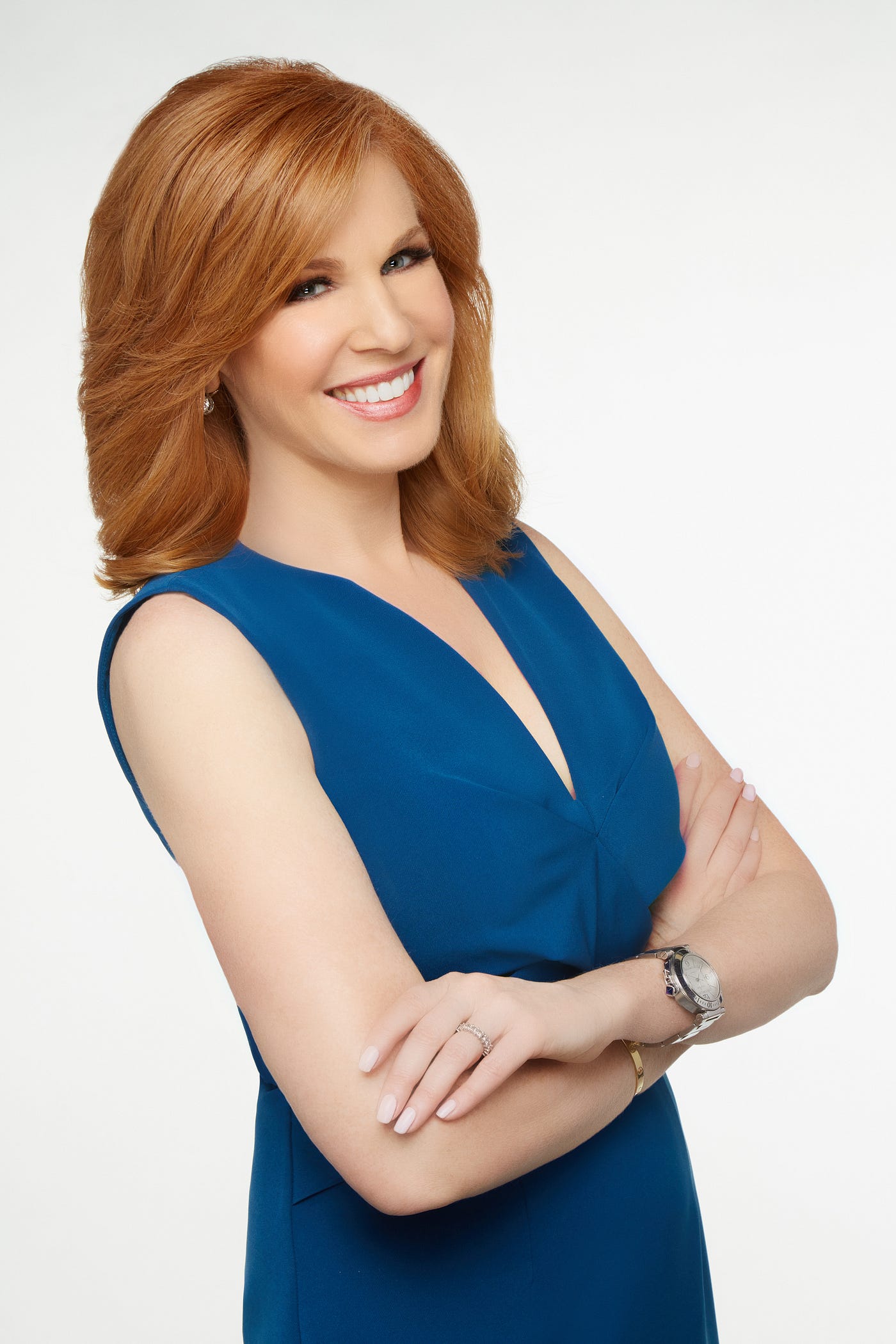
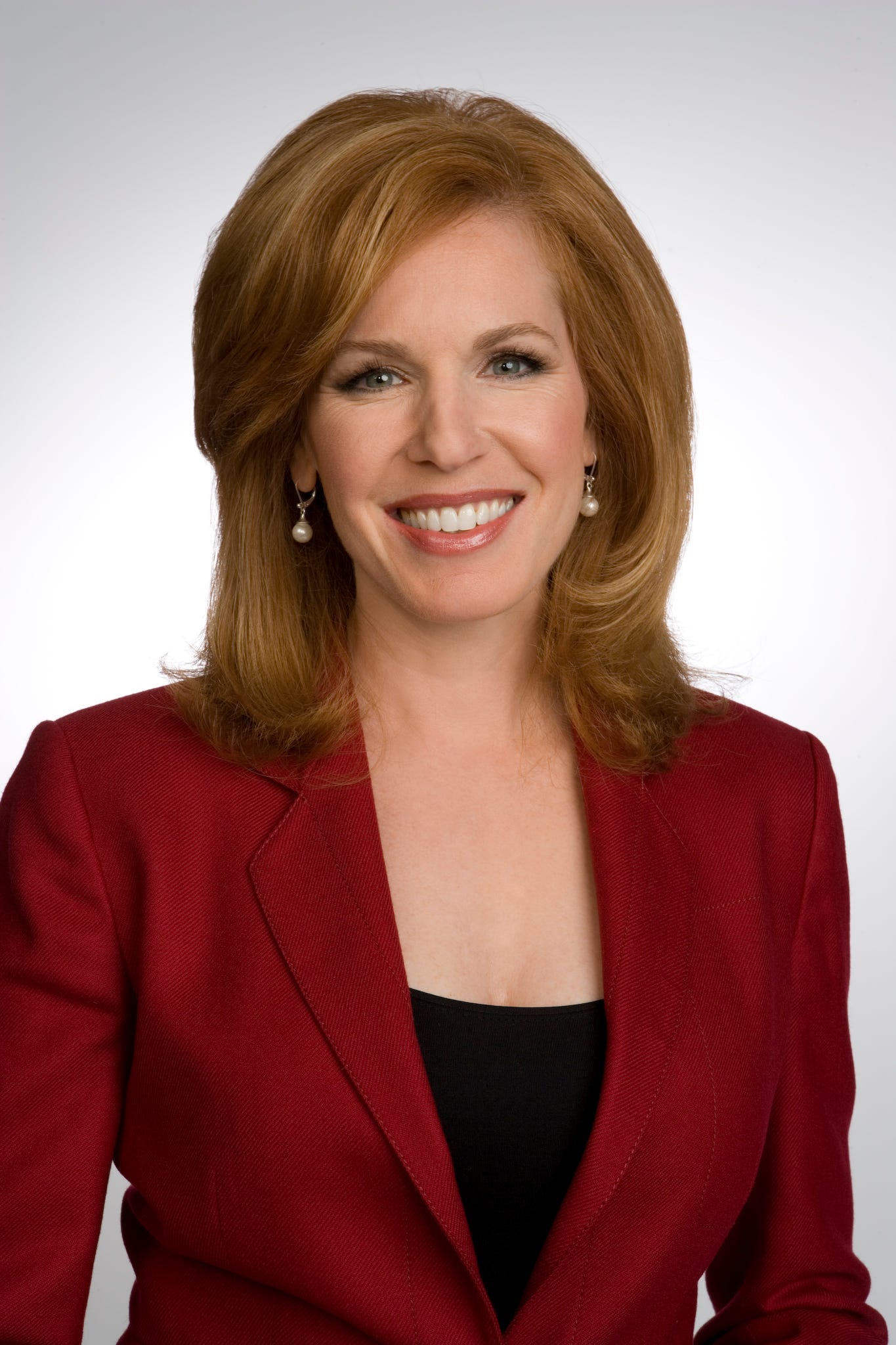
I had the distinct pleasure of interviewing Liz Claman. Liz joined FOX Business Network (FBN) as an anchor in October 2007. She anchors The Claman Countdown (weekdays 3–4PM/ET).
Her October debut on FBN included an exclusive interview with Berkshire Hathaway CEO and legendary investor Warren Buffett. Throughout her tenure at FBN, Claman has conducted exclusive interviews with every U.S. Treasury Secretary from John Snow to Paul O’Neill, Larry Summers, Timothy Geithner and Jack Lew. Claman has brought a roster of business leaders including JP Morgan CEO Jamie Dimon, Starbucks CEO Howard Schultz, Apple CEO Tim Cook, Twitter co-founders Jack Dorsey, Evan Williams and Biz Stone, Google/Alphabet Executive Chairman Eric Schmidt, and Microsoft founder Bill Gates to Fox Business viewers as well as world leaders, including Israeli Prime Minister Benjamin Netanyahu and Ukraine President Petro Poroshenko.
Additionally, Claman has reported from the Berkshire Hathaway Annual Shareholders Meeting in Omaha for more than a decade, where she interviews shareholders and investors in attendance. She has also covered the Consumer Electronics Show for the past 10 years, where she has interviewed industry leaders in business and technology including LG Electronics President Dr. I.P. Park, GoPro CEO Nick Woodman, and Samsung North America CEO Tim Baxter, among others. During the 2018 midterm elections, Claman reported live from New Jersey to gain voter insight from the key state.
Prior to joining FBN, Claman served as an anchor at CNBC, most recently anchoring Morning Call and Wake Up Call, Market Watch, and Today’s Business. During her time at CNBC, Claman landed the first one-hour live one-on-one interview with Warren Buffett. Before CNBC, Claman, a two-time Emmy Award winner, served as an anchor and reporter for Boston’s WHDH-TV (NBC). She was also a contributing correspondent for NBC’s syndicated daytime program RealLife. Prior to that, she anchored a two-hour daily talk show, The Morning Exchange for WEWS-TV (ABC) in Cleveland. She received an Emmy for her work on The Morning Exchange.
A graduate of the University of California, Berkeley and the Sorbonne in Paris, Claman began her on-air career at WSYX-TV (ABC) in Columbus, OH as a reporter and later a weekend anchor. Earlier, she was a news associate for KCBS-TV (CBS) in Los Angeles where she was the youngest person in the station’s history to win a local Emmy Award for Best Spot News Producer. Claman is a member of the Board of Directors of the American Theatre Wing and is a Tony Award voter. She is an active fundraiser for Building Homes for Heroes, an organization that builds mortgage-free homes for severely wounded soldiers returning from Iraq and Afghanistan. She has completed 7 triathlons and one New York City marathon.
Thank you so much for doing this with us! Before we dig in, our readers would like to get to know you a bit more. Can you tell us a bit about your childhood “backstory”?
Myparents were both Canadian-born, sons and daughters of Ukrainian and Romanian Jewish immigrants. Both grew up during the Depression, bitterly poor (my mom likes to remind us she lived in a house with earthen floors) but were raised with that immigrant spirit. Dad became a world-renowned surgeon, and Mom a Royal Academy-trained Shakespearean theatre actress. In the ‘60’s they decided to move to America because they completely believed in the American dream. They picked California because they had one relative there, and Beverly Hills for the school system. I’m one of five kids. I’m the fourth daughter, and then my little brother arrived (we call him the Messiah). Even though we were surrounded by people with great wealth and Hollywood glitter, my parents raised us to understand the value of a dollar and that hard work was a requirement, not a choice.
Can you tell us the story about what led you to this particular career path?
In 5th grade, I had this calling to be an AV geek. I asked if I could train to run the classroom audio-visual equipment — the Super-8 movie projector, slide, and overhead projector. I became the first girl in the school’s history to get an AV license. This sounds unrelated to journalism, but it was the beginning of my interest in the visual medium. A year later when my dad brought home the first video camera, I insisted on playing the reporter and forced my siblings to pretend to be Barbra Streisand, Mario Andretti, or anyone famous so I could ‘interview’ them. In Beverly Hills High School I became editor-in-chief of the yearbook and one summer helped run the student radio station at Phillips Academy Andover. But I’d have to point to the Broadcast Journalism course I took at UC Berkeley that truly crystallized what would become my unrelenting push to become a news anchor and reporter. My professor showed us old CBS News Edward R. Murrow “See It Now” broadcasts where Murrow and his ‘boys’ as they were called — famed reporters Murrow recruited — from Eric Sevareid to Morley Safir to Charles Collingwood. They were so gutsy, covering the Blitz, the liberation of France, and the Vietnam War. I sat there watching thinking, I MUST do that, or at least die trying.
Can you share the most interesting story that happened to you since you began your career as a TV host?
I’ve been so fortunate to have covered incredible news stories on location from the OJ Simpson verdict in L.A. to Election Night 2008 in Chicago when Barack Obama became the first African American to win the Presidency — amazing historic moments — but I’d have to say that being sent to Louisiana ahead of Hurricane Andrew in 1992 was truly one of the most memorable. I was working for WEWS-TV in Cleveland, Ohio. The world knew it was a Category 5 storm, extraordinarily dangerous and very rare. It was heading straight for New Iberia, Louisiana, home of Tabasco Sauce. I marched into the news director’s office and said, “This is going to be a century storm. You need to send me.” He barely looked up and said, “Get in line. All my reporters want to go. Why should I send you?” I told him my bags were already packed, I had already connected with the Louisiana State Prison system which had lines of prisoners filling sandbags, I had located what would be the town shelter and gotten clearance to come in and interview those setting up, and that I would be intrepid when it came to getting every angle of the story. I may have been the last reporter to ask, but unlike others, I came in loaded with focused plans and ideas, ready to roll. My cameraman and I caught the last flight into New Orleans before they shut down the airport. Once there, we jumped in a rental car and headed south. Not a cloud in the sky yet. By the time we hit Baton Rouge, we were the only car aside from emergency vehicles heading in that direction while a massive traffic jam of cars was fleeing north. I could see drivers were frantic, they were running out of gas, but all the ATM machines were tapped out. We pulled over, ran across the highway, and started interviewing people. From that moment on for 2 days straight, we didn’t sleep. We covered every possible angle of that story including the moment the eye of the hurricane went right over New Iberia. It wasn’t just the storm that made it so memorable; it was the grace under pressure that the people of Louisiana demonstrated. We were able to show a very human side of this disaster and it taught me a lot about giving a voice as a journalist to people who most deserve it.
You are a successful leader. Which three-character traits do you think were most instrumental to your success? Can you please share a story or example for each?
1. Don’t ever expect anyone to work harder than you do. It’s critical to lead by example. My team knows I’m up at 5:45 am reading, studying up, and sketching out ideas for the show. When I’m on the road covering business stories like the G-20 meetings, the World Economic Forum in Davos, Warren Buffett’s Berkshire Hathaway shareholder weekend, or the Consumer Electronics Show in Las Vegas, it’s important that the crew sees I’m right there sweating out the details like they are. It never works if the leader just breezes in vs. working step-for-step with the team to bring the story to viewers.
2. Be generous with credit. Look, people are hired to do a job and arguably should not expect an over-the-top thank you daily for doing that job, but if someone really crushes an assignment or tries something creative, acknowledge it. Even just a mention during a group meeting goes a long way. I’ve been on the receiving end of it. Fox Business Network is coming up on its 15th anniversary and just hit some amazing metrics against the competition and our CEO Lauren Petterson called out my “Claman Countdown” show as a winner during a town hall. I levitated hearing that. There’s a currency to that which doesn’t have a dollar sign on it but can be just as valuable.
3. Have a vision and work with people to see that vision. When you really define leadership, it means having the ability to influence your team to work with relentless perseverance toward what you believe is the goal. But you must define that goal, that vision. I remind my team almost daily that our mission during the hour we have been gifted is to bring the viewer up to the very second on all the news that’s affecting the markets and their money and to educate them about what’s behind those moves. The vision also means bringing viewers business newsmakers, trends, and yes, contrarian opinions including, on occasion, my own. We were the earliest to challenge the Federal Reserve’s assessment in April of 2021 that inflation would be transitory, or temporary. I assessed the situation, studied up on it, and then factored in what the team and I were seeing across America, even as top bank strategists we invited on the show disagreed with us. Here we are, a year and a half later and we’re still stuck with inflation.
Ok, thank you for that. Let’s now jump to the primary focus of our interview. Can you help articulate a few of the biggest obstacles or challenges you’ve had to overcome while working in a male-dominated industry?
My dad was the original feminist. With four daughters, how could he not be? He taught me that if they wouldn’t let me in the door, to fight my way in. I had the advantage of watching my eldest sister Danielle battle her way into the television entertainment industry. She was brilliant, had her finger on the pulse of cutting-edge pop culture, and knew she wanted to be a producer but the only thing she could get in the ’80s was a temp job as front office secretary at Aaron Spelling Productions. She told me that she’d be pouring the coffee in a conference room filled with men mulling whom to cast for the next “Dynasty” episode. She decided to drop little suggestions to Aaron about the upcoming new talent she had discovered, including Heath Ledger. He started listening and when Barry Diller, who was running 20th Century Fox at the time, came to Aaron and asked him to create a show about growing up in Beverly Hills, Danielle said, “Um, I went to Beverly High, let me do this.” The show became “90210” and from there she was hired by Fox to run the Dramedy Department, ultimately bringing to the screen “X Files,” “Ally McBeal,” “Party of Five,” and “Melrose Place” among others. Thanks to her, by the time I forged my career, I had a map and a flashlight. Local news is heavily populated with women but when I entered business news, it was dominated by men making the decisions. I comported myself as someone who would work like a crazy person to land the big CEOs and stories until they could no longer ignore me. In the end, it’s about delivering the goods.
Can you share a few of the things you have done to gain acceptance among your male peers and the general work community? What did your female co-workers do? Can you share some stories or examples?
I’ve found that regardless of gender when you offer to help a co-worker, you’ll win that person over for life. When I worked at WHDH-7News Boston, Joel Cheatwood, the news director who hired me, had a policy: on major breaking news stories, he’d send a second reporter to the scene to help the lead reporter get interviews and information. That second reporter didn’t necessarily get on the air that day but by getting us all used to helping each other, the station moved from a distant third place to a strong second. At that station you checked your ego at the live truck doors, and we found that whomever we helped on a story would in turn do the same for us when we needed it.
What do you think male-oriented organizations can do to enhance their recruiting efforts to attract more women?
If recruiting women matters to them, organizations should establish a reputation for equal pay for equal work. I once was told by a man that there is no gender pay gap, only a negotiation gap. He was absolutely 50% right. Whoever negotiates the smartest gets what they want. However, by definition, negotiation has advantaged men. I can speak from experience that a man demanding something is accepted way more than a woman demanding something. When negotiating, a woman can often be seen as ungrateful whereas a man can be seen as gutsy and confident. I think if companies can be transparent and show that women are on equal footing with men when it comes to compensation, that’s a big first step. That said, I’m not a big fan of holding an outperformer — male or female — to the same pay as their peers. I believe in meritocracy. If you’re the fastest runner, you should be allowed to win with higher compensation, but the problem in many organizations is that before you even walk in the door there’s a systemic pay gap between men and women and that’s got to stop. I would add generous maternity benefits to this. Without women, you can’t populate the world and I speak from experience when I say that there’s a huge difference between 6 weeks and 8 weeks of maternity leave. I was at CNBC when I had my first child and the network only offered 6 weeks. At the end of 6 weeks, I was still recovering from pushing a baby out of my body and becoming a new mother, so I took another two weeks for which I was not paid. On top of that, I was scheduled for an annual raise which coincided with my maternity leave and the network refused to give me that raise because technically under their benefit rules, maternity leave was categorized as disability leave. I was outraged. I wasn’t disabled, I HAD A BABY. The network chief (a man) refused to fight for me. Then NBC bought Universal from Vivendi and one of the top sticking points during the negotiating of that deal was NBC’s stingy maternity benefits. Hollywood at that time was much more forward-thinking when it came to family, maternity, and same-sex partner benefits so NBC was forced to add another 2 weeks to maternity benefits to seal the deal. It made such a difference when I had my second child to be granted that extra time to bond with my infant and recover.
Ok, thank you for all of that. Here is the main question of our interview. Based on your opinion and experience, what are the “Five Things You Need To Thrive and Succeed as a Woman In a Male-Dominated Industry?”
- Be the best at what you do. Then no one can deny you opportunities. You can’t just expect that because you’re a woman you should be granted special status. You have to *earn* the position you want. And that takes a voluminous amount of work, time, and commitment.
- Show real commitment: get out of your comfort zone. The first offer I got to be an on-air reporter was in Columbus, Ohio. So, I filled my car with my notebooks, clothes, and blow dryer and moved from Beverly Hills to Ohio. My friends and family kept asking, “Wait — why are you moving to Ohio?” I kept replying, “Give me a few years and you’ll see why.”
- Work harder than everyone else. I landed that job by telling the news director during my interview that I’d be the one who would come in early and stay late on a sub-zero February night. In a world where a lot of employees watch the clock and dash out the door the minute their shift was over, you’ll prove you’re in it to win it.
- Grow rhinoceros skin. People are going to say all kinds of stupid or insulting things to you. A male managing editor at my former network once said to me, “Wait until you see what we just hired. She’s way prettier than you.” Ok. Think about that. First, he said “what,” not “whom” the company had hired. As if women are objects. Second, the absurdity of the ‘she’s way prettier than you’ comment spoke for itself. He was a man trying to pit women against each other to fight for the few jobs in business news that were available to women at the time. I recall I burst out laughing and walked away. Thankfully that guy had very little power but just steel yourself against the barrage of idiocy that will come your way and rise above it.
- Raise your hand. Managers can’t read your mind. And trust me, men have no qualms vocalizing what they want to tackle. Nothing is ‘rightfully’ yours. Just because you know you’ve done the most work on a project or have had the most success in your current position doesn’t mean your superiors have any idea you’re ready for more. I was a very aggressive reporter in Columbus and after a year, I wanted to have a shot at anchoring. I scrutinized the schedule and saw that the weekend anchor was going on vacation. I marched into the news director’s office and said, “I’d like to fill in for her when she’s off in 3 weeks.” He was a little perplexed and said, “I’ve barely done next week’s schedule and you’re talking about 3 weeks from now?” I smiled and said, “I get it. Just didn’t want to miss out on the opportunity and then hear you say, ‘I had no idea you wanted to anchor. You didn’t tell me.’ See? I’m telling you.” Big smile, then walked out the door. Put decision-makers on notice that you’re raising that hand.
If you had a close woman friend who came to you with a choice of entering a field that is male-dominated or female-dominated, what would you advise her? Would you advise a woman friend to start a career in a field or industry that’s traditionally been mostly men? Can you explain what you mean?
This one’s easy. Go for the field that has the magnetic pull. What do you really want to do for the rest of your life? What gets your heart racing to the point where you can’t sleep at night because you’re so excited to run down that path? No matter how hard anyone tells you it is to succeed in that business, tune them out and DO IT. Nothing worth having is ever easy to attain. Do you think Marie Curie passed on becoming a physicist and chemist because the field was dominated by men? No. She dove in and became the first woman to win the Nobel Prize for her discoveries in radioactivity. And the only woman to win it twice.
Have you seen things change for women working in male-dominated industries, over the past ten years? How do you anticipate that it might improve in the future? Can you please explain what you mean?
Oh sure. When I first got into business news, there were very few women running network divisions. Fast forward to today and at Fox, the most important divisions are all run by women. Suzanne Scott is CEO of Fox News Media, Lauren Petterson is President of Fox Business and Sharri Berg runs news and operations for Fox television stations. And funny how all three are now number one, almost fifteen years to the date since FOX Business Network started. It’s incredibly gratifying for me that Fox Business is now beating the competition which had an 18-year head start on us. On another note, Silicon Valley is still way behind. It just amazes me that venture capitalists continue to throw money at male founders vs. female founders. The number of women in STEM who are running start-ups has increased exponentially in the past 2 decades and yet they still find it incredibly difficult to wring capital from venture firms. And women CEOs at Silicon Valley companies are still, I believe, held to completely different standards. One of the smartest CEOs I have ever had the honor to interview and get to know is Carol Bartz, who ran the architectural design software firm Autodesk and later became the CEO of Yahoo. In 2011 the Yahoo board (dominated by men at the time) fired her by phone after reneging on the time they gave her to turn around the company. Never mind that she was barely into the second year of working to fix a very flawed company and boom, they couldn’t even fire her face-to-face. I have watched as male CEOs in Silicon Valley drive companies into the ground and yet they’re allowed to languish in the position for years. The Valley has a lot of work to do when it comes to women.
We are very blessed that some very prominent names in Business, VC funding, Sports, and Entertainment read this column. Is there a person in the world, or in the US with whom you would love to have a private breakfast or lunch with, and why? He or she might just see this if we tag them.
Can I be greedy? I would love to put together a mini modern-day Algonquin Roundtable of sorts. My dream invitations would be French president Emanuel Macron, who has such a business mind and has made it a priority to grow the country’s tech sector. I would die to have US Women’s Soccer star Megan Rapinoe, whom I see as one of the gutsiest people on the planet for successfully leading the fight that resulted in the historic equal pay settlement that guaranteed the US women’s national team identical pay and bonuses to the US men’s national team. Finally, I’d insist Paul McCartney be there. Aside from the fact that “Maybe I’m Amazed” is my favorite song of all time, he’s a very smart businessman. He’s got a music publishing business he founded in 1969 along with a real estate portfolio. Plus, he’s a Beatle. How could you not invite a Beatle?
Thank you for these fantastic insights. We greatly appreciate the time you spent on this.