The Awake Code is a personal journey. Not every path will be walked in the same manner. My hope was that readers wouldn’t simply finish the book and move on. I wanted them to question their habits, challenge their assumptions, and start making conscious choices about how they live.
As a part of this series, we had the pleasure to interview Gordon Charles MacLean.
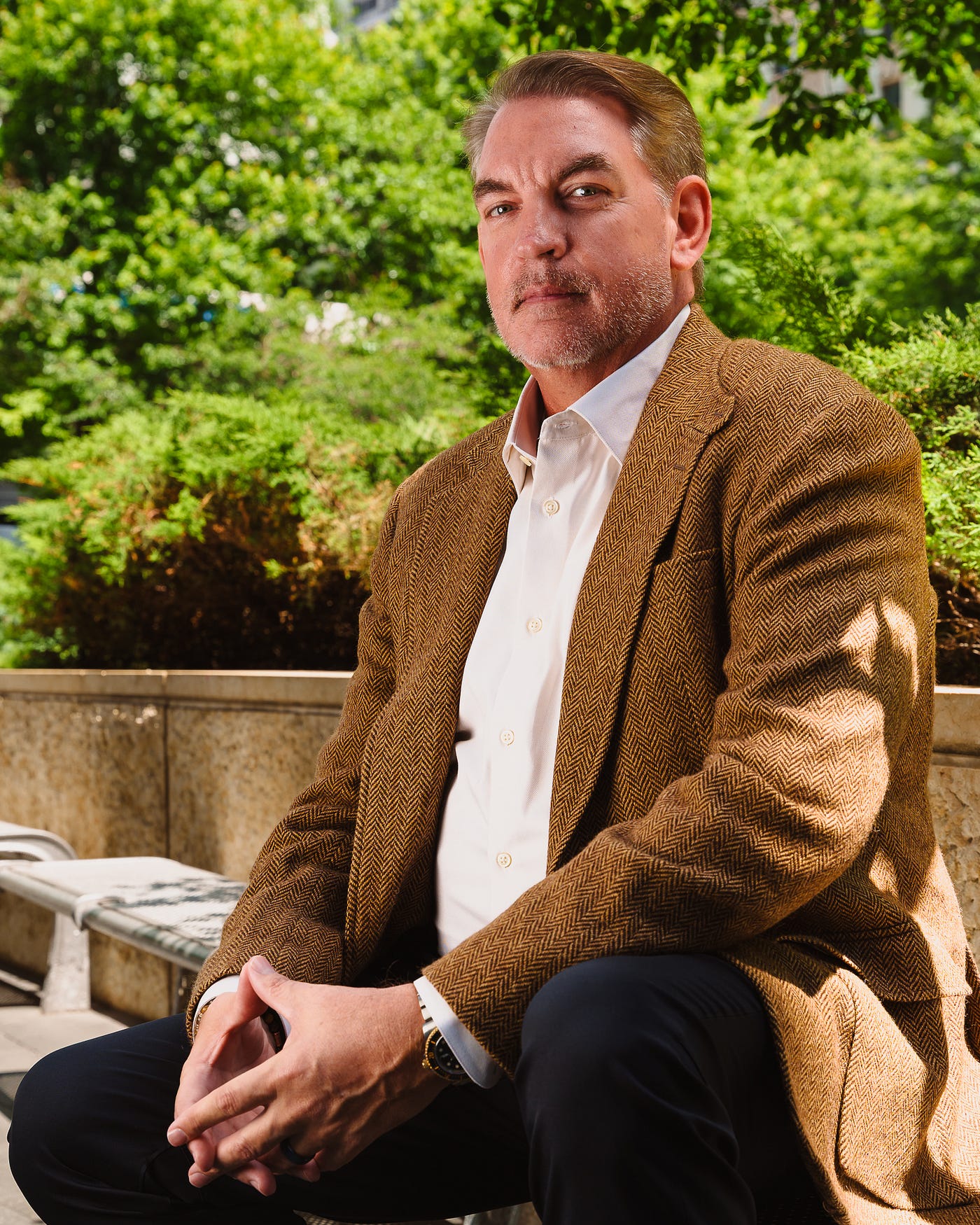
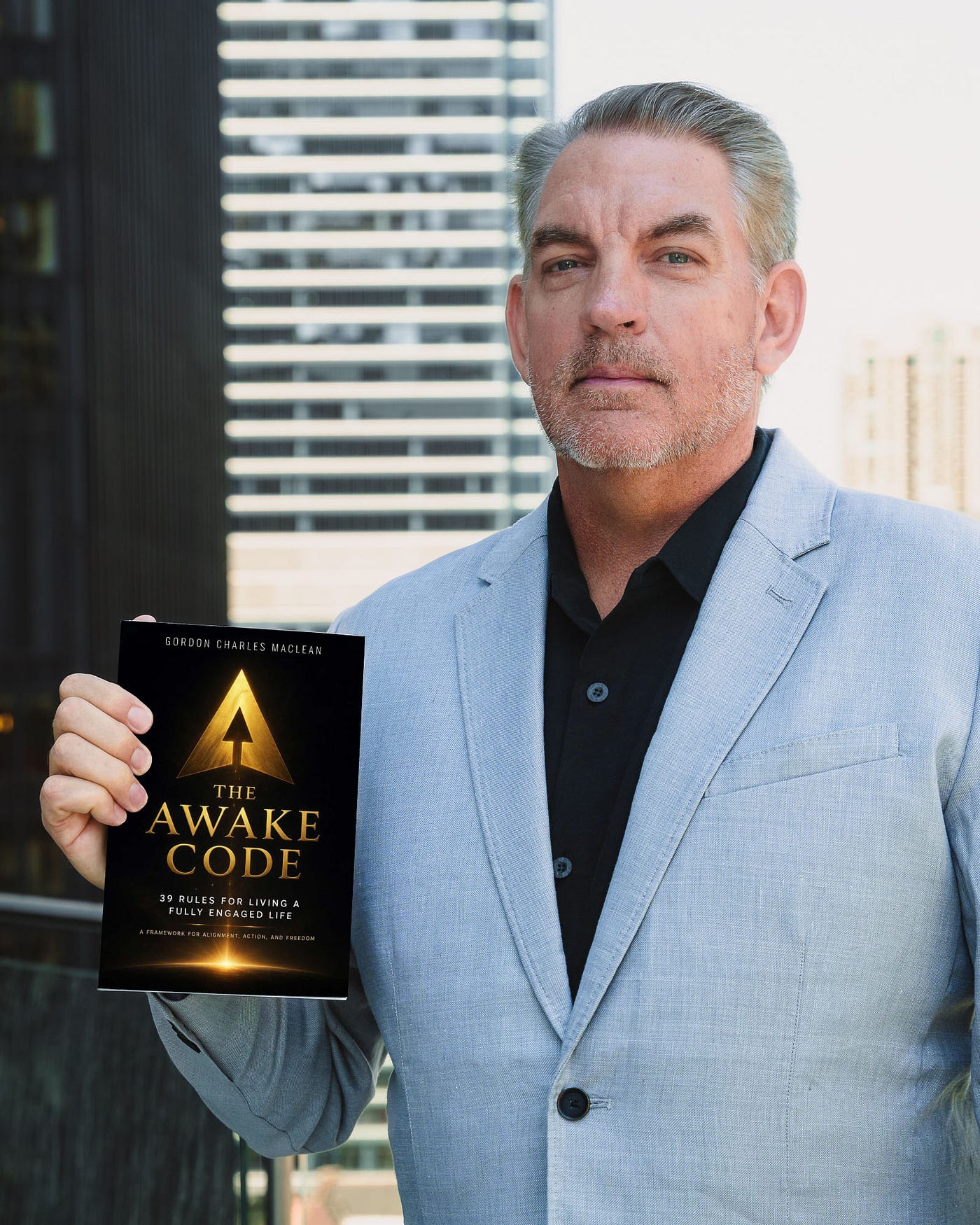
Gordon Charles MacLean is a U.S. Air Force veteran, entrepreneur, commercial real estate executive and author of The Awake Code: 39 Rules for Living a Fully Engaged Life. With more than 30 years of experience in business, leadership and entrepreneurship, MacLean draws on personal triumphs, professional setbacks and lessons learned throughout his career to inspire others to live with greater purpose and intention. He is also the founder of The Awake Code Society, a community dedicated to helping individuals take the principles of his book beyond the page and put them into practice. Through his writing, speaking and community-building efforts, MacLean encourages people to move beyond living on autopilot and embrace a more conscious, engaged and fulfilling life.
Thank you so much for joining us in this interview series! Can you share the “backstory” of how you grew up?
I was born in Jacksonville, Florida. My parents divorced when I was very young, but I was fortunate to have two loving parents who remained very much a part of my life. I never questioned how much I was loved or cared for, and looking back, I have wonderful memories of my childhood. I lived with my mother in Palm Valley until the third grade. She remarried, and we moved to Tallahassee, where she and my stepfather completed their education at Florida State University. I still have fond memories of going to FSU football games. In the middle of seventh grade, we moved to Okaloosa Island, where my stepfather joined his father — my grandpap — in the condominium management business. I eventually graduated from Fort Walton Beach High School.
Growing up on Okaloosa Island in the 1980s was special. The Gulf beach was my backyard. When I wasn’t in school, I was surfing, skateboarding, or working. We lived at a condominium complex with more than 800 units, so every spring and summer there were new kids arriving each week. Some came back year after year, and I made lifelong friends. I had been shy before moving to the beach. Meeting new people all the time taught me to initiate conversations and relationships, something I still do today.
At thirteen, my grandpap gave me my first job at the complex: cleaning pools and picking up trash in the parking lots. I worked Monday through Friday in the summer, from seven in the morning until noon, for two dollars an hour. I saved up for my first surfboard. I was stoked! I’ve surfed ever since.
When you were younger, was there a book that you read that inspired you to take action or changed your life? Can you share a story?
I enjoyed reading random volumes of encyclopedias in the library because I liked the variety. I also liked books we read in school, including The Great Gatsby and works by Edgar Allan Poe, and Mark Twain. But Rich Dad Poor Dad by Robert Kiyosaki changed my understanding of money, assets, and real estate. I went on to buy most, if not all, of his books.
My interest in real estate had already begun while I was in the Air Force. From September through December 1995, while I was on temporary duty in Saudi Arabia, I took a California real estate salesperson’s course by correspondence. I never sat for the California state exam because I planned to return to Florida. I left the Air Force in 1997 and believe I first read Rich Dad Poor Dad around 1998, after moving back to Florida. It expanded the way I thought about real estate and money at a time when I was learning the business.
What was the moment or series of events that made you decide to bring your message to the greater world? Can you share a story about that?
At a real estate student event in Chicago, I was giving advice about the industry — what makes it so challenging, but also rewarding. I had quite a few principles about other parts of life, too, but real estate was the beginning. I started with about ten rules, some directly related to real estate. Over the next few weeks, the more I thought about them, the more I wanted to make them universal. I broadened the scope to include the principles of living fully Awake.
The rules were pretty much my own, drawn from my experiences. Later, we added stories about famous people to give them relevance and help illustrate the ideas. What began as advice for people in one industry eventually became a much bigger message about how we choose to live our lives.
What impact did you hope to make when you wrote this book?
At first, I was thinking about professionals navigating life on autopilot. As the book grew, I realized it could apply to younger people, and really anyone. I wanted readers to examine the code they are living by and realize they can change it if it isn’t serving their purpose in life. The Awake Code is a personal journey. Not every path will be walked in the same manner.
My hope was that readers wouldn’t simply finish the book and move on. I wanted them to question their habits, challenge their assumptions, and start making conscious choices about how they live. The book was intended to be a starting point for meaningful change.
Did the actual results align with your expectations? Can you explain?
I’ve been surprised by how much the book resonates with readers. I’ve had nothing but positive reviews and feedback so far. I’ve also met some incredible people during events and continue to work with some of them today. That has been an unexpected part of the experience.
What has been especially rewarding is seeing the conversation continue beyond the book itself. Through The Awake Code Society and its educational resources, readers have opportunities to explore the principles more deeply and consider how to apply them in everyday life. That’s the kind of lasting engagement I hoped the book could inspire.
What moment let you know that your book had started a movement? Please share a story.
One reader I met at the Chicago event later wrote to tell me they’d subscribed to The Awake Code Society and had started going through the material, including the Six Stages Mini-Course. They wanted to experience the ideas firsthand and see how they translated into practice.
I was excited that someone cared enough about the project to actually tell me. Sometimes people keep positive feedback to themselves and only relay negative feedback. I’ll take both equally, but feedback can feel one-sided much of the time.
I wouldn’t claim that one message proves a colossal movement. But it showed me something important: the ideas were moving beyond the pages of the book. Someone was taking the next step, exploring the principles and looking for ways to put them into practice. To me, that’s how meaningful change begins — with one person making a conscious decision to do something differently. The Awake Code Society provides a way to continue that journey, and seeing someone take advantage of it was incredibly encouraging.
What kinds of things did you hear right away from readers? What are the most frequent things you hear from readers about your book now? Are they the same? Different?
Usually there’s one rule that hits a reader hard. It’s been a different rule for most everyone. I’ve heard “Live Every Day to Its Fullest” come back to me twice. Those readers didn’t explain why that rule resonated, so I don’t want to put words in their mouths.
What’s interesting is that the same book can speak to people in very different ways. Each person brings their own experiences and challenges to the principles. That’s part of what makes the Code meaningful — it encourages people to think about their own lives rather than follow someone else’s exact path.
What is the most moving or fulfilling experience you’ve had as a result of writing this book? Can you share a story?
Going from notes on a yellow legal pad to holding the hardcover in my hands on the day it launched in Chicago — that was it. But the people I’ve met have also changed me forever.
Writing the book challenged me to examine my own principles more closely. I have become the embodiment of the Code — my Code — and I strive to live by those principles every day. Sharing that journey with others has made the experience even more meaningful.
Have you experienced anything negative? Do you feel there are drawbacks to writing a book that starts such colossal conversation and change?
Funny enough, writing a book is a bit selfish. I spent a lot of time thinking, researching, and writing. It has been an up-and-down experience, especially because this is the first time I’ve done something so in-depth. Promoting the book also means travel, which takes me away from my spouse and home.
It’s a gamble and a risk of time and money. But I feel strongly about the message and its potential impact on many, many people around the world. You invest a tremendous amount of yourself without knowing what the outcome will be. In that sense, it’s selfish, but the motivation is also to pay it forward and hopefully make a positive difference in someone else’s life.
Can you articulate why you think books in particular have the power to create movements, revolutions, and true change?
I think reading is interesting because it gives you someone else’s perspective and ideas, but in your own voice. That distinction doesn’t exist in quite the same way in video, podcasts, or social media. The reader brings their own inner voice to the ideas.
A book also gives you time to pause, reflect, and return to an idea when you’re ready for it. Sometimes a single principle can change how someone thinks about a decision or approaches a challenge. When readers begin applying those ideas and sharing them with others, a book can become the foundation for something much bigger.
What is the one habit you believe contributed the most to you becoming a bestselling writer? (i.e. perseverance, discipline, play, craft study) Can you share a story or example?
Perseverance. I often took a break for a few days and thought about what I was writing, then came back with fresh eyes and ideas. I worked on the book two or three nights a week, sometimes more and sometimes less. I never felt rushed, but I knew the biggest challenge was to actually finish. I kept at it.
Writing a book requires patience, especially when you’re balancing it with everything else in life. I learned that progress doesn’t always happen in one big burst of inspiration. Sometimes it’s simply about returning to the work, thinking through your ideas, and continuing until you’ve created something you believe in.
What challenge or failure did you learn the most from in your writing career? Can you share the lesson(s) that you learned?
Early in the writing process, I brought in an editor, and she completely ripped the manuscript apart. She told me the writing was impersonal and bland. It felt like a gut punch. I had already put months into the work. But I never once thought about quitting. I knew she was right, and I wanted to make her proud.
I decided to rewrite most of the content, although most of the rules were already set. Finding my voice changed the book. I learned that I could take hard criticism seriously without abandoning what I believed in.
That experience taught me one of the most valuable lessons of the entire process: don’t confuse criticism of your work with criticism of your purpose. The message was still there, but I hadn’t found the right way to communicate it. Once I stopped trying to simply explain the rules and started writing in a way that reflected who I really am, the book came together. Sometimes the feedback that’s hardest to hear is exactly what you need to move forward.
Many aspiring authors would love to make an impact similar to what you have done. What are the 5 things writers need to know if they want to spark a movement with a book? (please include a story or example for each)
1. Just Start. Don’t Wait for the Perfect Idea.
A few lines, a few paragraphs, a few pages. If you truly have something inside, it will come out on its own. I began with about ten rules on a yellow legal pad. At the time, I wasn’t thinking about a book or a movement. I was simply putting ideas on paper. Those ten rules eventually grew into the 39 principles in The Awake Code. You don’t need to know exactly where your idea will lead. You just need to be willing to begin.
2. Find Your Authentic Voice.
Be true to your voice. Nothing is gained by compromise. Don’t worry about how other authors do their thing; focus on being you. I learned that lesson through the editing process. The book became much stronger when I stopped worrying about what I thought an author should sound like and focused on communicating my own experiences and beliefs. Readers connect with authenticity. Your perspective is what makes your message different from everyone else’s.
3. Be Disciplined and Finish What You Start.
No one is coming. It’s up to you to keep at it. Enjoy the journey, not just the finish line. I wrote two or three nights most weeks, took time to think, and kept returning to the manuscript. There will always be competing priorities and reasons to put the work aside. You have to make the commitment to yourself. An unfinished manuscript can’t inspire anyone. Consistency, even in small steps, is what turns an idea into something real.
4. Write With Your Reader in Mind.
Believe in your message, but remember that writing a book isn’t just about what you want to say. It’s also about what the reader takes away. Ask yourself: Will this make someone think differently? Will it challenge an assumption? Could it inspire someone to act? An author has the power of influence and must use it respectfully. Meeting readers and hearing from them after events has made that responsibility real to me. I’ve found that different readers connect with different rules in The Awake Code. That reminds me that you can’t predict which idea will resonate with someone, but you can create something meaningful and give people the opportunity to discover what speaks to them.
5. Think Beyond the Book. Build Something That Lasts.
If your goal is to spark a movement, the book should be the beginning of the conversation, not the end. Think about how readers can continue engaging with your ideas, connect with others, and incorporate the message into their lives. For The Awake Code, that has included The Awake Code Society and the Six Stages Mini-Course. Those resources offer readers a way to go deeper and explore the principles beyond the initial reading experience. A movement isn’t created simply because people buy a book. It begins when people connect with the message, make it part of their own lives, and help carry it forward.
The world, of course, needs progress in many areas. What movement do you hope someone (or you!) starts next? Can you explain why that is so important?
I’d like to see more people make the conscious decision to stop living on autopilot and start living fully Awake. Too often, we move through life following routines, expectations, and beliefs without stopping to ask whether they’re leading us toward the life we actually want.
Imagine what could happen if more people took responsibility for the choices they make every day — how they spend their time, how they treat others, how they approach challenges, and what they choose to pursue.
That’s the movement I hope The Awake Code and The Awake Code Society can help inspire. Not a movement where everyone follows the same path, but one where people have the awareness and courage to create their own.
Because ultimately, living Awake isn’t about reading 39 rules. It’s about what you choose to do with them. And real change begins the moment you decide to live differently.
How can our readers follow you on social media?
Readers can find The Awake Code on Instagram at @awake_code, on Facebook at The Awake Code, and on LinkedIn at The Awake Code company page. The website is AwakeCode.com.
Thank you so much for these insights! We wish you continued success with your book and your movement.