When we said yes, we honestly didn’t know yet how we’d handle all the logistics. We just knew it was an opportunity and we were willing to figure it out.
Women-led businesses are on the rise, and the data shows they often outperform their peers. From fostering strong company cultures to driving innovation and long-term success, women bring unique strengths to entrepreneurship and leadership. What are the key reasons behind their success? As a part of this series, I had the pleasure of interviewing Lindsay Steiner.
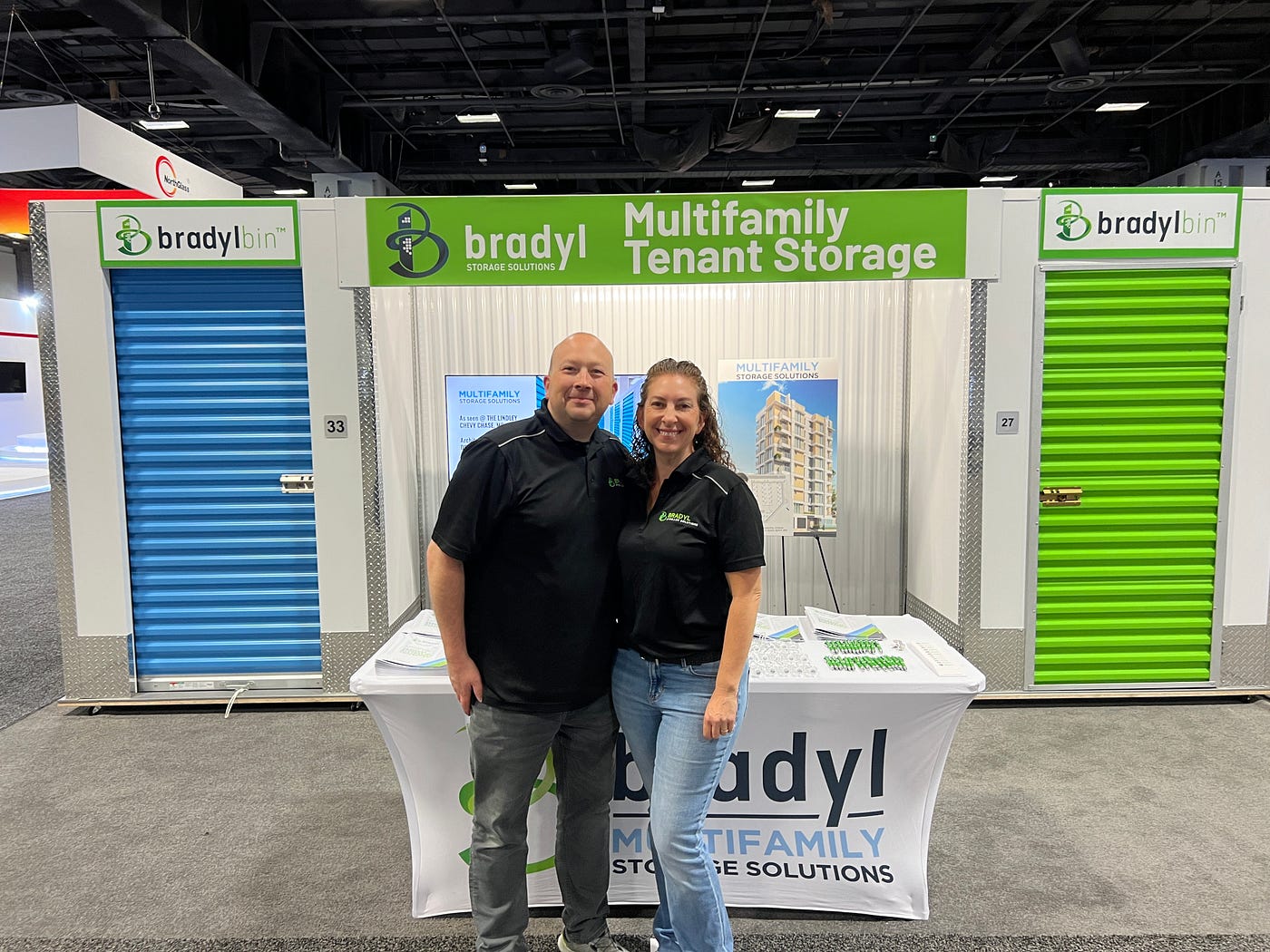
Lindsay Steiner is the co-founder of Bradyl Storage Solutions, a trusted leader in the multifamily storage industry since 2009, delivering innovative, high-quality product solutions to clients nationwide. Bradyl Storage Solutions is a locally owned and operated small family business based in Chevy Chase, Maryland, dedicated to meeting the unique needs of property managers, general contractors, architects, and real estate developers. Under Lindsay and her husband and co-founder Mike Steiner’s leadership, Bradyl Storage Solutions has earned a reputation for excellence, reliability, and personalized service.
Thank you so much for joining us in this interview series! Before we dig in, our readers would like to get to know you a bit more. Can you tell us a bit about your “backstory”? What led you to this particular career path?
My path into the multifamily storage business started with an occupational therapy degree from Boston University, which surprises most people. It trained me to study how people move through their days and look for small changes that make them easier. It turns out that the same lens applies to buildings just as well as it does to people.
Additionally, entrepreneurship and my family go hand in hand. My great-grandfather’s shoe store in Scranton, Pennsylvania, stayed in our family for generations, and my father has run his own ventures since I was a teenager. Watching them, I learned early that building something of your own takes persistence and grit.
The idea for Bradyl Storage Solutions was born when my husband, Mike, who has been my best friend since childhood, was cutting materials for our custom closet business in a parking garage. He noticed how much space around him was sitting empty, and he couldn’t stop wondering why properties weren’t putting it to use. That question became the foundation of Bradyl Storage Solutions in 2009.
Can you share the most interesting story that happened to you since you began your career?
One of the most memorable moments in my career was our first call for a project well outside our local market: a large new-construction job in California. The idea of managing a project across the country terrified me. Mike was much more confident that we could make it work.
When we said yes, we honestly didn’t know yet how we’d handle all the logistics. We just knew it was an opportunity and we were willing to figure it out. And we did. That project became the first step in taking Bradyl from a local business to one that could serve customers nationwide.
It taught me that you don’t need to have every detail figured out before you take the next step. You need to know what you’re capable of, say yes to the right opportunity, and then do the work to figure out the rest.
Can you share a story about the funniest mistake you made when you were first starting? Can you tell us what lesson you learned from that?
Our first trade show booth makes me laugh. At the time, I was so proud of it. We were trying to explain an idea that was still unfamiliar to a lot of people, that unused space in apartment buildings could become a source of revenue.
We spent hours making this enormous floor sign that said, “There’s money right under your feet,” thinking it was incredibly clever. To get people into the booth, we used the old kids’ trick of attaching a dollar bill to a retractable string so we could pull it away when someone reached for it.
Looking back, it was pretty ridiculous, but people stopped, they laughed, and it gave us a chance to explain what we did. Our marketing has gotten much more sophisticated over the years, but the lesson stuck — you don’t have to look perfectly polished to get started. Enthusiasm, a willingness to put yourself out there, and a clear message can take you a long way.
None of us are able to achieve success without some help along the way. Is there a particular person who you are grateful towards who helped get you to where you are? Can you share a story about that?
There are many, including my family, Mike, and my two sons, Brad and Dylan. But when it comes to the very beginning of Bradyl, two people come to mind first.
I owe a great deal to Mike’s late stepfather, Bernie, who was well known in the D.C. construction world. When we were still figuring out how to get our foot in the door, he helped us land our first new construction project. I didn’t expect how far that single job would carry us. The contractors on that project became some of our earliest champions as they invited us to bid on future work and introduced us to people we never would have reached on our own.
My father has been an incredible support, too. He’s been an entrepreneur since I was a teenager, and in Bradyl’s early years, he was the person I leaned on when a decision felt too big to make alone. His perspective has kept me focused on the long game whenever the short term feels uncertain.
Is there a particular book that made a significant impact on you? Can you share a story or explain why it resonated with you so much?
I’m probably going to break the rules of this question, because there isn’t one particular book that has had a significant impact on me. Most of my business reading happens online. I’m much more likely to read newsletters, articles, and commentary from people working through the issues I’m dealing with rather than sit down with a traditional business book.
That’s how I learn best. When I’m trying to solve a problem, whether it’s sales, marketing, managing employees, or figuring out how technology might change our business, I read widely, take pieces from different sources, and then actually decide what makes sense for us. I’ve rarely found one person or one philosophy with all the answers, so I’d rather keep exposing myself to different ideas than follow any one business playbook.
Do you have a favorite “Life Lesson Quote”? Do you have a story about how that was relevant in your life or your work?
“You miss 100% of the shots you don’t take.” — Wayne Gretzky. Or, as fans of The Office might know it, Wayne Gretzky via Michael Scott.
Mike has always been the bigger risk-taker of the two of us. He can see an opportunity and be ready to jump, while my instinct is usually to think through everything that could possibly go wrong first.
Over the years, though, I’ve learned that the quote is true. Some of the biggest opportunities required taking a chance before we knew exactly how everything would turn out. I still think someone needs to ask the uncomfortable questions, but you can’t eliminate every risk without also eliminating a lot of opportunities.
Mike still pushes me to take the shot. I still make him think about where the ball might land. After more than 20 years in business together, that balance has served us pretty well.
How have you used your success to make the world a better place?
Mike and I have worked hard to build a workplace where people have room to grow professionally and flexibility when life calls for it. I know firsthand what it’s like to balance business with raising a family. Outside the office, we make a point of supporting other local businesses and giving to charities that matter to our family. We’re a small company, so our impact doesn’t come from grand gestures. It shows up in how we treat the people we work with and the community we’re part of.
Ok, thank you for that. Let’s now jump to the primary focus of our interview. What unique strengths do women bring to leadership that give them an edge in building successful companies?
In my experience, women are exceptionally skilled at noticing what’s missing. Many of us spend our days managing a dozen moving pieces at home and at work, and that trains you to spot friction points and unmet needs quickly. In industries where women have historically been underrepresented, that perspective becomes a real advantage, because you aren’t tied to how things have always been done.
I also think many women are very good at reading people. While leadership is certainly about having the right strategy, it is also about understanding what motivates your employees, what your customers actually need, and sometimes what people aren’t saying.
Additionally, women tend to move easily between the big picture and the details. I might be thinking about where we want the company to be several years from now while also noticing a small problem in the customer experience that needs fixing today. Both matter.
Of course, none of these qualities belong exclusively to women, and plenty of men lead this way too. But I do think our experiences can help us develop certain muscles particularly well.
Can you share a moment in your entrepreneurial journey where your perspective as a woman helped you solve a major challenge?
Storage rooms are a great example. It’s easy to look at an underutilized area of a parking garage or building and think primarily about how many storage units will fit and how much revenue the space can bring in. But I would also walk into that same space and think, “Would I feel comfortable coming down here by myself at night?”
That question shaped how we approached our installation. Beyond maximizing storage spaces, we considered lighting, visibility, sightlines, and ensuring there weren’t hidden areas where someone might feel vulnerable.
It reinforced something I’ve carried through my whole career: solving the functional problem isn’t always enough. You have to think about the person who will actually use what you’re creating. My perspective as a woman helped me ask questions that weren’t always being asked, and ultimately helped us create a better product for everyone.
What role do mentorship and networking play in the success of women-led businesses, and how have they influenced your own path?
I’ll admit that I’m not a natural networker, and I’ve never really had a traditional business mentor. What I have learned, though, is how valuable it is to have a small group of people you trust enough to be completely honest with.
Several of my friends are also small business owners, and it helps to talk with people who understand the realities of running a business. Sometimes you don’t need someone to give you the answer; you just need someone who understands the problem, will challenge your thinking, and can offer a perspective you haven’t considered.
One of my most valuable sounding boards is my best friend, who has spent her career in Chief of Staff roles for large companies. She has a real ability to listen to a complicated business problem, cut through the noise, and help me identify what actually needs to be solved.
So while my version of mentorship hasn’t been formal, I’ve come to appreciate how much those relationships matter. You don’t need an enormous professional network. A few people you trust, who will be candid with you and bring different experiences to the table, can be incredibly valuable.
What misconceptions still exist about women as business leaders, and how do you push back against them?
One misconception that still exists is that women have to choose between being empathetic and being tough. Being collaborative can be mistaken for a lack of authority. But being very direct or holding people firmly accountable can be read differently coming from a woman than from a man.
I don’t think good leadership requires choosing one or the other. I care a great deal about the people who work for us, and I want to understand what’s happening in their lives and hear their perspective. At the same time, I run a business, which means setting clear expectations, measuring results, having difficult conversations, and sometimes making decisions people won’t like.
So I push back by not trying to fit myself into either version of what a female leader is supposed to be. You can listen and still be decisive. You can be compassionate and still hold someone accountable. In my experience, the best leaders need both.
Can you please share “5 Reasons Why Women Build Great Companies”? If you can, please share an example or story for each.
1. They notice the gaps others overlook.
Women often approach problems from a different angle and catch unmet needs and inefficiencies that others miss, particularly in fields where we haven’t traditionally had a seat at the table. When Bradyl Storage Solutions launched, the idea of turning unused space into rentable storage wasn’t on most people’s radar in the multifamily industry, so a big part of our early work was showing them where it fit.
That different perspective has continued to influence how I look at our business. I’m not only thinking about how many storage units we can fit into a space; I’m thinking about the resident who will actually use it. Would I feel comfortable walking into that storage area alone at night? Is it well lit? Are the sightlines open? Are there places where someone could be concealed? Looking at a problem through the eyes of the end user can reveal things that aren’t obvious on a set of plans.
2. They show other women what’s possible.
There is tremendous value in seeing someone who looks like you doing something you may not have pictured yourself doing. When I started Bradyl Storage Solutions, I wasn’t setting out to be a role model. I was trying to build a business. But over the years, I’ve realized there is value simply in being a woman who owns a company and is comfortable sitting at the table in industries where most of the people around that table have traditionally been men.
I think that matters particularly for younger women. You don’t have to wait until you feel like an expert or until someone invites you into a leadership role. You can create the opportunity yourself. And every woman who does that makes the idea a little more normal for the woman coming behind her.
3. They understand that flexibility and accountability can coexist.
Supporting your employees and expecting results aren’t mutually exclusive. People have lives outside of work, and sometimes the best solution is simply to be flexible enough to recognize that.
For example, one of our employees had a temporary childcare issue and asked if he could work remotely a few days a week while he worked through it. We were able to accommodate that. His responsibilities and our expectations didn’t change; we just changed where he did the work for a while. A relatively small accommodation helped a good employee through a difficult period, and the business kept moving forward.
4. They don’t wait until they have everything figured out.
There have been so many things over the years that we started without knowing exactly how we were going to make them work. We understood the opportunity, believed we could figure it out, and took the first step. Then we solved the problems as they came. If you wait until you have every detail mapped out and every possible problem anticipated, you may never start. Some of our best decisions began with a general direction rather than a perfect plan.
That doesn’t mean being reckless. I’m actually the more cautious one in our partnership, and I ask a lot of questions before I’m comfortable moving forward. But there’s a difference between doing your homework and waiting for certainty. At some point, you have to be willing to take the shot and trust your ability to adjust along the way.
5. They bring their whole range of experiences to the business.
One of the advantages of entrepreneurship is that you don’t have to separate everything you’ve learned in one part of your life from everything you do in another. The skills you develop managing a household, raising a family, volunteering, maintaining friendships, or navigating difficult situations don’t suddenly disappear when you walk into the office.
Some of the skills that have served me best as a business owner weren’t learned in a business setting at all: prioritizing when ten things need attention at once, recognizing when something isn’t working, having uncomfortable conversations, changing plans quickly, and knowing when to ask someone else for help.
For a long time, leadership was described as though there were one particular way a successful executive was supposed to look and behave. I think women have helped broaden that definition. You don’t have to imitate someone else’s version of leadership. You can bring the full range of your experiences to the job — and those experiences can become a competitive advantage.
How do women-led companies tend to approach company culture and employee engagement differently, and what impact does that have on success?
Women leaders often put real value on understanding what employees need in order to do their best work. That can mean flexibility, open communication, or simply recognizing that people have responsibilities outside of work. It also means creating environments where employees feel comfortable raising a problem before it becomes a bigger one.
A strong culture isn’t about making everyone happy all the time. I believe in being flexible when we can, listening when someone has a concern, and treating employees like people rather than just positions on an org chart. But I also believe in clear goals, accountability, and addressing problems directly when something isn’t working.
That balance has a real business impact. When good employees feel trusted and valued, they’re more invested in the company’s success. And when expectations are clear, a supportive culture translates into better performance, not just a nice place to work.
What are some underrated strategies women entrepreneurs use to secure funding and scale their businesses?
One underrated strategy is recognizing that outside capital isn’t the only way to build a significant business. We didn’t build Bradyl by raising large amounts of outside funding. We focused on proving that the business worked, generating revenue and reinvesting in the company as we grew.
That can sometimes mean growing more deliberately, but it forces you to look closely at whether an investment is actually going to produce a return. When we’ve expanded into new markets, added people, or invested in new capabilities, the question has generally been the same: does the opportunity justify the investment?
Entrepreneurs also underestimate their existing customers as a source of growth. Accomplishing great work for one customer can lead to another project, another property, or an introduction to someone else in the industry. Some of the most valuable opportunities don’t come from a formal fundraising strategy at all. They come from building a reputation that makes people want to work with you again.
For women entrepreneurs in particular, I think it’s important not to assume that scaling has to look like the version we hear about most often — raise money, grow as fast as possible, and pursue the next funding round. There are many ways to build a successful company, and the right one depends on what you ultimately want from it.
If you could change one systemic barrier that makes it harder for women to build companies, what would it be and why?
I’d change the assumption that women can build careers or companies while still disproportionately carrying most of the work at home. Starting and running a business takes an enormous amount of time and mental bandwidth, and that’s a much harder risk to take when you’re also expected to handle the childcare, appointments, and school schedules.
I was fortunate to build Bradyl Storage Solutions with Mike as a true partner. In the early years, we both had day jobs and young kids, so we’d put the kids to bed and then work on Bradyl until one or two in the morning. It worked because we shared the load at home, too.
We sometimes talk about encouraging more women to become entrepreneurs without acknowledging the practical infrastructure that makes entrepreneurship possible. Talent and ambition are important, but so are time and support. If women had more equal freedom to devote those resources to building their ideas, I think we’d see many more of them become business owners.
You are a person of great influence. If you could inspire a movement that would bring the most amount of good for the greatest number of people, what would that be? You never know what your idea can trigger.
I’d love to see people share what they’re good at with someone who doesn’t have access to that expertise. We usually think of giving back as donating money or volunteering, but everyone has skills they’ve built over a lifetime, whether that’s finance, marketing, law, parenting, or just solving a certain kind of problem.
I’ve seen how much that matters. My best friend has given me her time to help me work through tough business problems, and what might take me days to untangle, she can help me see differently in one conversation. If sharing what we know became as normal as writing a check, I think a lot of people would benefit.
We are very blessed that some very prominent names in Business, VC funding, Sports, and Entertainment read this column. Is there a person in the world, or in the US with whom you would love to have a private breakfast or lunch with, and why? He or she might just see this if we tag them.
I’d love to have lunch with Barbara Corcoran! I appreciate how candid she is about her mistakes as well as her successes, and I think some of the most useful lessons come from talking honestly about what didn’t work.
I’d want to ask her how she identifies talent and knows when it’s time to take a chance with someone. I’d also ask about risk. Mike is much more comfortable with it than I am, so I’d love to hear how she tells a smart risk from an unnecessary one. And I suspect she’d give a very direct answer to anything I asked — and I’d probably have a lot of questions!
How can our readers further follow your work online?
Website: Here
Instagram: @bradylstoragesolutions
LinkedIn: @bradylstoragesolutions
Thank you for these fantastic insights. We greatly appreciate the time you spent on this.