Writing is my “native” language. It is the means by which I was able to cut through all of that and reach my audience on this magical field of expression that didn’t require memorization of a list of “dos” and “don’ts” of body language or of modulating non-verbal communication.
Some writers and authors have a knack for using language that can really move people. Some writers and authors have been able to influence millions with their words alone. What does it take to become an effective and successful author or writer?
In this interview series, called “5 Things You Need To Be A Successful Author or Writer” we are talking to successful authors and writers who can share lessons from their experience.
As part of this series, I had the pleasure of interviewing Laurie A Couture.
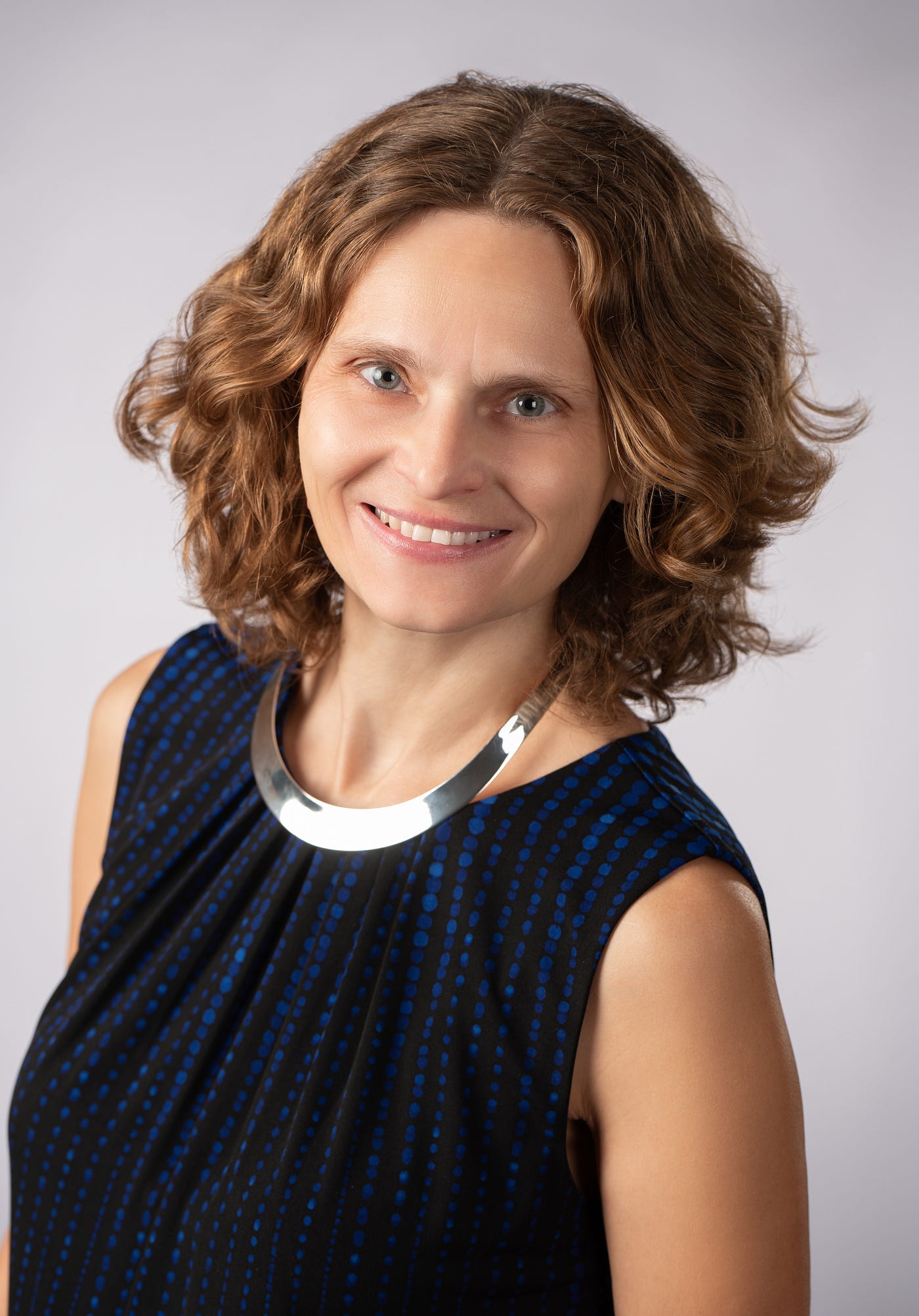
Laurie A. Couture is the author of Instead of Medicating and Punishing and the upcoming book, Nurturing and Empowering Our Sons. She is an expert in child behavior, learning, and attachment and a specialist in treating developmental trauma in children and youths. Laurie was featured in the documentaries, The War On Kids and Class Dismissed.
Thank you so much for joining us in this interview series! Before we dive in, our readers would love to “get to know you” a bit better. Can you tell us a bit about your ‘backstory’ and how you got started?
When I was about 21, with my school newspaper days in my past, I was writing a philosophical column for a local newspaper, Paradigm Times. At that same time, I was commissioned to write and illustrate a children’s coloring book for the York County Child Abuse and Neglect Council in Maine. The coloring book educated at-risk children about identifying and preventing child sexual, physical, and emotional abuse.
Thinking back to those first steps into my career, it seems like a lifetime ago and I could easily view such toe-dips into my career ocean as trivial. However, the coloring book was one of my first professional writing gigs. It was also one of the sparks that launched me into a dynamic, multi-genre career of working with traumatized youths and sharing my research and expertise through the channels of writing and speaking. My first book, Instead of Medicating and Punishing: Healing the Causes of Our Children’s Acting-Out Behavior by Parenting and Educating the Way Nature Intended was published in 2008 when I was 34—a lifelong dream made into a reality.
By career, I am a licensed mental health counselor who specializes in treating developmental trauma in children at the neuro-somatic level, and promoting alternative education. By my humanitarian purpose, I work to promote a world that prevents trauma; a world where children are raised and educated in a way that echoes the principles of what I call, “nature’s intent”: The way our Paleolithic tribal cultures once parented and educated. Although both of these endeavors sound like they are aligned, the systems are very different and I functioned within two parallel careers for two decades: I did direct service with children, youths, and families at the same time that I used my writing, speaking, and independent research to reach a wider audience to realize my larger humanitarian goal.
Writing, for me, has been the vehicle by which I can best communicate and express to the world what I have to offer to humanity. This passion for writing was especially integral early in my career, as a person on the autism spectrum—with what used to be known as Asperger’s syndrome. Early in my writing and speaking career, I endeavored to grasp how to reach from the introspective world of being a “walking textbook” to joining with my audience in such a way that builds connection and trust. I had a natural knack for being warm, playful, funny, empathic, and seen as “cool” with children and youths. I knew I needed to expand that to joining with my adult audience, too: The parents and professionals who were in need of trauma-informed skills and tools for helping children and youths with serious behavioral, emotional, and learning problems.
Autism feels like one is an expat, on a foreign planet, where one’s sensory, vestibular, and communicative world feels to be distressingly incongruent with the external environment and the “native” social language. Two “neurotypical” people will volley a conversation relatively fluently; but the professional with autism in a communication dyad is often internally running down the list of reverse-engineered social skills and anxiously self-scrutinizing whether or not he or she is performing body language “correctly”. Writing is my “native” language. It is the means by which I was able to cut through all of that and reach my audience on this magical field of expression that didn’t require memorization of a list of “dos” and “don’ts” of body language or of modulating non-verbal communication.
For my readers, I combine concepts from anthropology, neuroscience, epigenetics, and children’s psychological and cognitive development and link them to how children are holistically decimated by trauma. For example, psychological trauma in childhood negatively impacts health outcomes for the entire lifespan. I show readers how nature alerts us to children’s distress through their challenging behavior. I have a talent for narrowing this complex amalgamation of dry research down into bite-sized, salient, dynamic points that my audience can grasp with empowered ease. Their “Ah ha!” grasp allows my audience to feel like the experts, so they are able to receive and apply the solutions. Most importantly, my empathy for them, their children, or their clients, shines through my written words.
Can you share the most interesting story that occurred to you in the course of your career?
When a window or door of opportunity opens in life, we must move fast to seize it, because once-in-a-lifetime opportunities are tests of self-actualization, and may not present again. That being said, we must be prepared for the new world this door will open to us once it does present, so that we can leap through ready to rock n’ roll! I landed a sponsorship in 2016 that allowed me to take a writing sabbatical at the exact same time that I was making a different leap of faith in leaving the mental health field.
In 2011, I sat down to write my second book—The concepts, topics, and ideas had been churning within. However, I realized I would have to bend space-time in order to accomplish it! I was completely maxed-out with my time: I was providing direct service in urban Massachusetts community mental health clinics. Community mental health typically runs like an assembly line of putting band-aids on tragedy after tragedy without stopping the bleed-out or sources of wounding. I was exhausting myself by trying to cauterize the wounds of mental trauma for each and every one of the hundreds of children I would see. Meanwhile, I was building a consulting business on the side, writing articles, accepting speaking gigs, and most importantly, homeschooling my son, Brycen. Being fully involved in Brycen’s education and in his music and creative projects was my top priority. I decided to put off my book.
In 2016, I was ready to move on from providing direct service to children and families and to start transitioning into taking private contracts where my reach would help a greater number of people in the same amount of time spent. It was as if I was about to jump off of a career cliff, from a factory-like model—a model that provided a paycheck but would never allow me to stop the psychological “bullets” that inflicted trauma on children—to the void of uncertainty that would allow me to actualize my life’s purpose. It was at that moment that I realized that I needed to write my second book. It was erupting like a supernova inside of me. It was a pivotal, “now or never” moment, and I took the leap.
Since my second book would be focused on the emotional, behavioral, and learning struggles that boys were facing in all areas of their lives—boys ages 10-24 account for 81% of suicides in that age category— I wrote a letter to every stakeholder in child advocacy who I personally knew, whom I thought would care about the plight of boys. In order to take a sabbatical, I needed a sponsor; a crowd-funding patron platform like Patreon would not be stable, nor sufficient. Of all the child advocates to whom I wrote, one private sponsor couple came forward, answering the philanthropic call to be part of a greater solution for helping children.
The gratitude I have to this private sponsor is beyond words! With this gift, I was able to take a long sabbatical to perform the deeper research for and write my second book, Nurturing and Empowering Our Sons, which I hope to have out in late 2022/early 2023. After the book was written and I ended my sabbatical, this partnership was able to launch me into negotiating private contracts so that I was 100% supporting myself through my consulting business, rather than supplementing it with clinical work.
In one of these exciting contracts, I’ve used my writing, artistic, and research skills to design training modules for a healthcare clinic’s trauma-informed workshop for staff. In fact, as part of these modules, I wrote and designed a few board games, including modified versions for remote trainings. In my second contract, I provide intensive research reports on a specific topic relating to child trauma so that the program can then apply for grants to help the children they serve. These private contracts give me time to edit my book and ready it for publication.
It was persistence, gratitude, giving to others, knocking on every door, and being open to accepting the creative unknown of possibilities—rather than remaining in a rigid mindset or in an exhausting job—that brought me to this point.
What was the biggest challenge you faced in your journey to becoming a writer? How did you overcome it? Can you share a story about it that other aspiring writers can learn from?
The greatest challenge for me early in my writing career was in knowing where and how to get my foot in the door, who to query, and how to find those media outlets and publishers that matched the message of my work. I overcame that challenge by researching and seeking out independent media outlets that had a mission that was aligned with what I had to offer. The keys are persistence in doing the research and in querying multiple outlets that have a mission that is a match for your work. Be determined to succeed!
I recommend joining networking groups for writers, creators, and media makers. I joined a few reputable groups at different points in my career, including The New Hampshire Writer’s Project and NH Media Makers. These groups provide good opportunities to network with other creators, but be aware that, at least in my experience, they were less helpful at helping me find publishing matches for my writing. Many of the members are in the same boat, seeking the attention of media outlets. However, creators can team up to feature one another on their podcasts, video platforms, shows, blogs, and writing projects. Both Brycen and I teamed up with other creators at NH Media Makers to boost our reach and to expand our respective audiences.
It is important for aspiring writers not to put all of their hopes into one media outlet, media opportunity, or publishing company. It is also imperative that aspiring writers polish their work and build a professional portfolio before approaching a prestigious media outlet or publisher. Start by perfecting your craft. Find and query small, independent media outlets or publishers, and build a portfolio of published work from those smaller successes. That way, when you have the attention of a larger outlet or publisher, and they ask to see your professional bio, samples of your published work, or media clips, you will be prepared to confidently send those along. I found it to be helpful to get to know my local news reporters and even the Executive Editor of my local newspaper media group. Form relationships by offering them an intriguing story about your work.
Can you share a story about the funniest mistake you made when you were first starting? Can you tell us what lesson you learned from that?
When I was 16, my best friend, Brenden and I had developed a comic strip that was a histrionic mosaic of high school drama, inside jokes, and fictitious characters demonstrating all types of family, peer, and school dysfunction. Somehow, we had it in our heads that our comic—which had absolutely nothing to do with the superhero genre—was on par with the Marvel comic universe! We wrote a query to Marvel, with the intention of getting across to them that our comic was going to be as big as any of theirs, so they best grab the next big thing while they had a chance! We mailed out a query and some comic samples, and we spent weeks gabbing about the millions of dollars we were going to make when Marvel wrote back to tell us they were accepting our completely incongruent comic!
One day, sure enough, a letter arrived in the mail with a colorful Spider-Man emblazoned across the envelope. In ecstatic glee, I called Brenden and we met up at my grandmother’s house to open the key to our fame and fortune! In fact, we were so nervous, between bursts of squeals and hops up and down, that we made a ritual out of it, and we both took turns opening it carefully—We wanted to be certain we preserved the envelope so that one day, we could say, “This is how it all started”! Our cocky teenage aspirations were demolished when we opened the single page letter and received a very formalized rejection, informing us that our work was not aligned with Marvel’s genre. We were appalled—How could they not see that we had the next big comic franchise?
Of course, this story brings laughter and great nostalgia now, but its lesson was an important one for two teenage creators who actually would have successful careers in the arts awaiting them in the future. That success was contingent upon us understanding: Thou shall not query a company with work that has nothing to do with the company’s work or mission. Thou shall thoroughly research a media outlet or publisher and know exactly what they are seeking. Thou shall also know thy target audience and start by learning what media they read!
In your opinion, were you a “natural born writer” or did you develop that aptitude later on? Can you explain what you mean?
I was definitely a natural born writer, to the point where, at age four, I started inventing ways to string letters together in order to simulate writing. I had an obsessional need to create as a child, and starting at four, I would draw pictures, write a story line, and staple the pages together to make books. I was very prolific at this throughout my childhood; I made dozens and dozens, stacks and stacks, of handmade books, newspapers, comic strips, and even activity books (of which I’d test out on my younger sister, Caroline). I wrote and illustrated all of these myself.
At age nine, I was baffled by how “grown-up authors” magically materialized multiple copies of their books—I was only able to make one copy each of the books I created through laborious writing, drawing, coloring, sewing, cutting, and gluing. That passion for writing and drawing was foundational to my childhood. In 5th grade, I won first place and was chosen to represent my elementary school for the Young Author’s award. Students from around the state who were selected to represent our schools were sent to a young writer’s conference where we had creative writing workshops and met children’s author, Lois Lowry. As a teen, I was winning awards for my poetry, artwork, and writing, culminating in winning a Merrill medal just before high school graduation for one of my poems.
Some talents are indeed innate, and drive such a force of passion through a person that they are like the language of the soul. That is how writing has always felt for me. Even when a talent is innate, one must still hone and mature that talent by developing, challenging, and expanding it. I also believe that aptitudes like writing can be discovered during different stages of life. Therefore, it is important for people—especially young people—to experiment with various forms of creative expression and challenge themselves to explore channels across the multiple intelligences, including verbal linguistic intelligence. Interestingly, it is often when someone is exploring one intelligence, such as musical, mathematical, or movement, that one discovers an aptitude for another.
What are some of the most interesting or exciting projects you are working on now?
My most exciting project right now is finalizing my second book, Nurturing and Empowering Our Sons, to get it ready for publication and release this or next year. It has been a long, expansive labor of love as well as of anguish, and I will collapse at the finish line with an exhalation of relief when the first copy drops from the press! A year into my sabbatical, my beloved son, only 23 at the time, committed suicide. Here I was, writing a book about the suffering of boys and young men, the high suicide rates among them, the reasons for their struggles, and how to help them heal, and the greatest nightmare that any parent could fathom occurs: My own son ends his life.
To say I have been devastated is trite—human language, even that which emanates from the ink of the most poetic writer, can covey no poetry nor words sorrowful and cataclysmic enough to describe child loss. However, it was the book itself that lifted me up from the ground when all I wanted to do was lay on the grass or in the snow over my boy’s grave. Before he died, Brycen provided me with several self-reflective interviews for my book, and he gave me permission to share any part of his history with my audience “to help other children” like him. I adopted my son when he was 11, after he spent years cycling through foster and group homes. He struggled since preschool with a history of suicide attempts and ideation, as he was haunted by deleterious sexual abuse and years of traumas he endured.
Leading up to his death, Brycen had been struggling for two years with a relapse of Post Traumatic Stress Disorder. The sabbatical actually made it possible for me to spend more time trying to help him get back into treatment and to get things back on track. In mid-2017, Brycen was finally back in treatment again and reconnecting with his support system, but then suddenly, about six weeks before his death, he cut it all off again. The personal circumstances in his life were too much to bear in the fragile state he was in. After my son died, my book now had a renewed purpose: I was not only going to bring attention to the plight of boys’ mental health in our society, I was going to tell Brycen’s story, as he had given me permission to do. I was not going to let his voice die.
I ended up rewriting entire chapters and sections of the book to incorporate more of his story and the harrowing urgency for parents to heed nature’s alarm signals in their sons to prevent tragedies like the death of Brycen. In short, knowing I needed to get up every day and write that book so that Brycen’s voice had a podium amongst my words, literally saved my life.
Here is the main question of our interview. Based on your experience, what are the “5 Things You Need To Be A Successful Author or Writer”? Please share a story or example for each.
My top picks for the “5 Things You Need to Be a Successful Author or Writer” are to:
1. Read profusely, a variety of genres, styles, and formats of writing.
The most natural way to develop as a writer is to read profusely. Read from every format of writing style: Classical literature, contemporary fiction, research documents, magazine articles, technical documents, textbooks, encyclopedias, comics. Read across genres: Shakespearean plays, poetry, music lyrics, novels, non-fiction, graphic novels, etc. Read writing from a variety of time periods in history and from various cultures. Read up on a multitude of topics. Attune yourself to the tempo of sentences, the pitch of mechanics, the foreplay of colorful vocabulary, and the flow of good grammar. A voracious reader won’t need to memorize grammar lessons; you’ll just feel whether a sentence is properly structured… or not.
2. Read eloquent and linguistically rich literature—from real books.
With the advent of the blog, writers are now a dime a dozen. To develop multi-dimensional depth, exquisite tempo, and a writing style that grips your readers and compels them to hunger for more of your words, stand out from the very flat, muted, and too-casual form of today’s writing. By reading eloquent and linguistically rich, classical literature—from real paper and print books—your writing will reflect this brilliance even if you write in the most contemporary or technical style. The brain and body react very differently to the sensory experience of reading on paper verses on a screen. With books, reading is a holistic experience that alights the brain, caresses the finger tips, and excites the eyes. Even the ears and nose become involved as the scent of paper and ink, the snap of a new book cover, and the ruffle or crinkle of a page provide sensory enchantment to the spirit. Screens stress the eyes, tax the muscles, and fatigue the brain.
3. Write 4-7 times per week in a real “paper and pen” journal.
About writing daily in a personal journal, I cannot rave enough. To engage the sensory channels, find a blank journal that calls to your style, and invest in a pen that becomes the kind you can’t write without. Spend a few minutes daily, or multiple times per week, writing your thoughts, observations, feelings, ideas, and experiences. Vent! Practice! Pour out your soul… Enhance your journal by writing your own poetry, lyrics, and quotes, as well as adding sketches, drawings, and even small watercolor paintings. Keeping a journal regularly, over years, is one of the single best ways to build and exercise your writing skills and keep them reflexive and fluent. Keeping a journal on a device or on a computer will not involve a holistic sensory experience. Part of journaling is to associate the sensory experience of writing with comfortability and ease of flow.
4. Free associate your ideas on paper and just start writing!
When you have an idea for a piece of writing, be it a research paper, a fictional story, an essay, a poem, or a cartoon, the most crucial thing to do is just start writing! Do not worry about grammar, spelling, sentence structure, or editing when you are getting your ideas down on paper. Yes, again, I recommend starting your idea phase on paper, and once you have your flow, then transferring to using a laptop. A computer keyboard is the second best way to write, so that the slowness of typing on a smaller device doesn’t hold back your writing fluency.
What’s most important in the beginning phase of an idea is just to free associate and write whatever comes to mind. So many brilliant ideas never come to fruition because people are too perfectionistic to write them down, killing their creativity by trying to edit themselves before the idea is even manifested on the page. Did you know that the moment you express on paper, your work is copyrighted? Respect your ideas by expressing them in writing—you can edit and rearrange them later. If you suffer from writer’s block, get out a project notebook, your journal, or a blank sheet of paper and do an ecomap of your idea: List a key word, plot, or point in the center, and draw a circle around it. Then, start adding words and ideas around the page that connect to that center word. Draw circles around each of these and connect them by tentacles to the center. Outlines are also helpful.
5. Use a thesaurus to develop a vocabulary that intrigues.
A pet peeve of mine is when a writer reuses the same simple terms over and over in writing, or uses overly common prose that is mundane and disengaging. Invest in a (paper) thesaurus and challenge yourself to learn new vocabulary by discovering the many synonyms for words you commonly use in your writing. For example, rather than constantly write, “he said”; “she says”, how about, “he quipped”; “she intonated”?
What is the one habit you believe contributed the most to you becoming a great writer? (i.e. perseverance, discipline, play, craft study). Can you share a story or example?
Writing daily in a journal. Without a shadow of a doubt, keeping a daily journal over a long period of time not only crafted my penmanship style (a dying art), but it gave me the freedom to play with language, express with abandon, invent words, and develop ease and fluidity of writing. I have fond memories of my best friend and I taking our journals downtown, on hikes, while out rollerblading or biking, and on day excursions when we were in our late teens and early 20s. We’d sketch, write some poetry, record observations, or just vent about life. Sometimes we would share our entries with one another. This habit is one I’ve turned to time and again to evolve both my writing and drawing skills. I treat it reverently.
Which literature do you draw inspiration from? Why?
Recently, I’ve been crushing on Hawthorne’s writing. I’m a natural speed-reader, but with the classic literature, I read slowly and deliberately, savoring each decadent word. The imagery in The House of the Seven Gables is described with such melancholic chill and yet empathic brilliance, that it tricks your mind into believing that you are viewing a masterful painting rather than reading a page. Hawthorne’s gift for descriptive, multi-sensory detail; his sympathetic, yet sometimes cynical, other times whimsical, and even chiding narration style puts the reader right in the doomy rooms of the haunted house, desperately calling out to wake the characters from their curse.
As much as I am fascinated by the “gothy”, gloomy literature of Hawthorne, Poe, and Lovecraft or the spiritually noble universes penned by C.S. Lewis and Tolkien, for example, I am not much of a reader of fiction. Although I’ve read my share of brilliant fiction, comics, and classics alike, more than 90% of what I read is research and non-fiction: Deep cuts of science, psychology, history, medical, spirituality, and anthropology, especially pertaining to the effects of childhood trauma on the holistic self. People on the autism spectrum are known for our passion for crunching factual data and research, and I am no exception. I read a lot of philosophy when I was a young adult; as a teen I was into reading rock and metal music history, and as a younger child I read encyclopedias and dictionaries. In my adult years, nothing has inspired me more than picking up and pouring over a densely packed research study article or review—and I get to pour over hundreds upon hundreds of them for my work!
You are a person of enormous influence. If you could start a movement that would bring the most amount of good to the most amount of people, what would that be? You never know what your idea can trigger. :-)
I would love to help people to understand that we could eradicate most violence, suicide, and human-inflicted suffering within two generations if today, we focused seriously on preventing childhood developmental trauma. By developmental trauma, I mean psychological trauma that stunts and injures a child’s development on multiple levels. Part of this process could entail pairing parents up with mature mentors who would guide and “parent” the traumatized parents. The nurtured parents will develop the capacity to nurture their own children and respond sensitively to their needs. I read a lot of calls for “suicide prevention”, but suicide prevention is too late—We need intensive, coordinated childhood trauma prevention across all institutions of our society (e.g., education, healthcare, legal, human services) over at least two generations. Then, just about everything wrong with our world would heal naturally. To heal our world, this is where we should direct our energy.
How can our readers further follow your work online?
Readers can follow me at LaurieACouture.com or on my YouTube channel, Laurie A. Couture. Once my second book is closer to launch date, I will resume my blog posts and posting on Facebook, Twitter, and Linked In.
Thank you so much for this. This was very inspiring!