You can have the highest IQ in the room, but that alone won’t guarantee success. Emotional intelligence is about knowing how to stay calm under pressure, speak to your colleagues with empathy, resolve conflict, coach and mentor peers, and understand your strengths and weaknesses.
Business
Lauren Landry of marketing and communications at Harvard B: Technical Aptitude Fails Without Emotional Intelligence to Resolve Workplace Conflict
The Harvard Business School Online executive shares how mastering emotional intelligence transforms professional setbacks into critical leadership lessons.
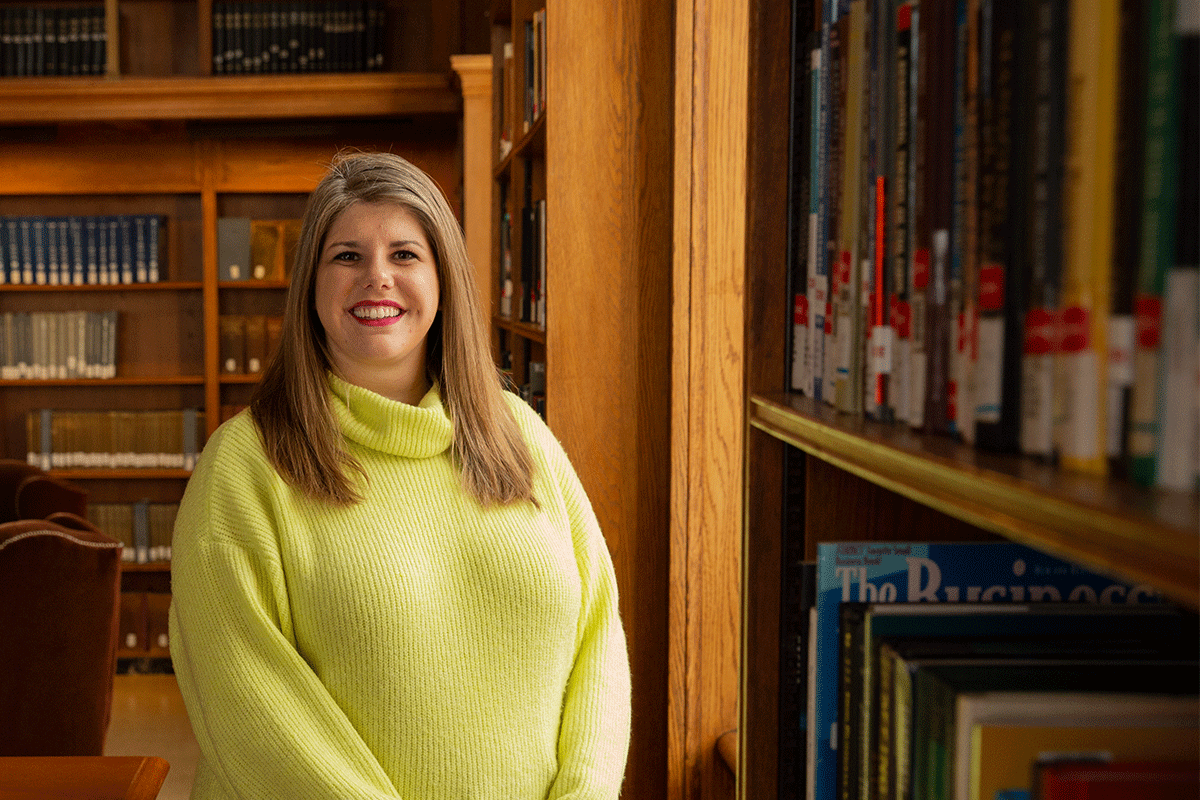
As a part of our series about “Emotional Intelligence, I had the pleasure of interviewing Lauren Landry.
Lauren Landry is the associate director of marketing and communications at Harvard Business School Online and an affiliated faculty member at Emerson College. Before joining HBS Online, she served as an associate director of content marketing at Northeastern University, a contributing writer at Boston magazine, and an associate editor at online news site BostInno — where she wrote nearly 3,500 articles covering all things campus innovation, higher education, and early-stage tech. Her work has been cited in the Wall Street Journal, Businessweek, Inside Higher Ed, and more.
Thank you so much for joining us in this interview series! Before we dive into the main focus of our interview, our readers would love to “get to know you” a bit better. Can you tell us a bit about your childhood backstory?
I grew up in what was once considered a small French-Canadian mill town called Lewiston, Maine. The mills are still there, but now house breweries, restaurants, and other businesses. I was that kid who always looked forward to the first day of school. I loved picking out new supplies and would pocket my allowance for the Scholastic Book Fair. I even made my own grade book and would line up my stuffed animals in a row on my bedroom floor and teach them what I learned in school that day. I guess you could say education has consistently played a big role in my life.
What or who inspired you to pursue your career? We’d love to hear the story.
Growing up, you’d often find me with my nose in a book. I loved how words could transport you, and I naturally gravitated toward reading and writing. Thankfully, I had several amazing teachers who encouraged me to pursue those passions further while also showing me what it means to be an effective educator and change someone’s life. I initially wanted to be a writing teacher but thought I couldn’t teach until I was a writer first, so I chose to pursue a journalism degree. I couldn’t have guessed then that I’d be working in education marketing now, but, in hindsight, my career feels rather serendipitous.
None of us can achieve success without some help along the way. Was there a particular person who you feel gave you the most help or encouragement to be who you are today? Can you share a story about that?
My father had to deal with me the day that my high school guidance counselor told me I wouldn’t get into Emerson College because my SAT scores were too low. He told me not to listen — that my dream school wasn’t out of reach — and he was right. Not only did I get in, but I graduated Summa Cum Laude and now teach there. He’s always believed in me, even when I didn’t believe in myself, and I’m forever grateful for that.
Can you share the funniest or most interesting mistake that occurred to you in the course of your career? What lesson or take away did you learn from that?
I don’t know if this is funny or interesting, but I’ll never forget the first time I lost my temper in my first job out of college. I had the scoop on a story and stayed up all night writing, but spent the morning squabbling with my editor. I slapped my hands on the table, raised my voice, and stormed off to the bathroom before starting to cry. When I walked out, the CEO was sitting there waiting for me. It was then that I realized my reactions matter and that everyone is always watching. I can’t say I haven’t lost my temper since, but it was my first lesson in emotional intelligence.
The road to success is hard and requires tremendous dedication. This question is obviously a big one, but what advice would you give to a young person who aspires to follow in your footsteps and emulate your success?
It never hurts to ask — whether for a raise, interview, promotion, or a simple, “Why?” I used to be nervous about pushing back on projects or asking a more high-profile person for an interview, but it became much less daunting when I realized the worst thing I could hear was, “No.” I’ve bounced back from plenty of “Nos,” and I’m sure to face many more in my future.
Is there a particular book, film, or podcast that made a significant impact on you? Can you share a story or explain why it resonated with you so much?
This is a far more recent read, but I can’t stop thinking about “The Midnight Library.” It explores regret, parallel universes, and the choices we make. Beyond being beautifully written, it reminded me that we can’t question every life choice we’ve ever made; we just need to move forward.
Can you share your favorite “Life Lesson Quote”? Why does that resonate with you so much?
I’ve never lived by a particular motto. I did underline this quote in “The Midnight Library,” though: “You don’t have to understand life. You just have to live it.” So often, I’ve questioned whether I took the right path when life has presented a fork in the road, but it reminded me that I need to keep following my instinct and explore my curiosity, wherever that might lead me.
What are some of the most interesting or exciting projects you are working on now? How do you think that might help people?
Helping create content and community at HBS Online has continued to be one of my most rewarding and exciting projects. Particularly now, during the pandemic, people are looking for ways to upskill, gain confidence, and advance in their careers. I feel fortunate to work for an organization dedicated to providing committed individuals with access to a top-tier business education from wherever they are in the world.
OK, thank you for all of that. Let’s now shift to the core focus of our interview. Can you briefly tell our readers a bit about why you are an authority about Emotional Intelligence?
“Authority” is a weighty word, but I can say that I’ve attended several trainings on emotional intelligence, dived into the research, written multiple articles about it, and taken one too many self-assessments.
For the benefit of our readers, can you help to define what Emotional Intelligence is?
Emotional intelligence is the ability to understand and manage your own emotions, as well as recognize and influence others’. It’s typically broken down into four competencies: self-awareness, self-management, social awareness, and relationship management.
How is Emotional Intelligence different from what we normally refer to as intelligence?
You can have the highest IQ in the room, but that alone won’t guarantee success. Emotional intelligence is about knowing how to stay calm under pressure, speak to your colleagues with empathy, resolve conflict, coach and mentor peers, and understand your strengths and weaknesses. Those skills have nothing to do with your technical aptitude or IQ.
Can you help explain a few reasons why Emotional Intelligence is such an important characteristic? Can you share a story or give some examples?
Emotional intelligence enables you to recognize your emotions and the effect they have on others. Take my first real work meltdown: Had I been practicing emotional intelligence, I wouldn’t have reacted — I would have paused, collected myself, and problem-solved with my editor. I would have worked to understand why she was giving the feedback she was and tried to see the problem from her perspective, so that the conversation didn’t turn into a conflict. I later became an editor myself and learned firsthand that you can’t bring out the best in others without knowing how to bring out the best in yourself, which requires understanding your blind spots and emotional triggers.
Would you feel comfortable sharing a story or anecdote about how Emotional Intelligence has helped you in your life? We would love to hear about it.
In early 2019, we were slated to have hundreds of people registering for an on-campus conference. Unfortunately, we experienced a glitch in our payment system, and those hundreds of prospective attendees resulted in hundreds of support tickets. I could have started to tailspin, but my colleagues were depending on me. Losing my cool wouldn’t help the situation. Emotional intelligence enabled me to manage my emotions, coach my colleagues through the problem, and know when to ask for help. After resolving the issue, we later had to cancel the conference due to the coronavirus pandemic. While that stung, we’ve remained optimistic, learned from the experience, and since pivoted to virtual events.
Can you share some specific examples of how Emotional Intelligence can help a person become more successful in the business world?
Technical skills might land you your first job but won’t necessarily be what gets you promoted. If you want to keep advancing in your career, you need to master emotional intelligence. It’s what enables you to motivate employees, work well with others, and boost productivity. For example, research shows that unaddressed conflicts can waste about eight hours of company time in gossip and other unproductive activities, putting a drain on resources and morale. Yet, if you excel at relationship management — one of the four core competencies of emotional intelligence — you’ll know how to effectively address issues as they arise and can improve your team’s productivity and culture.
Can you share a few examples of how Emotional Intelligence can help people have better relationships?
Empathy — the ability to understand someone’s experiences and emotions — is a key tenet of social awareness and can help you communicate more effectively with your colleagues, friends, family, and partner. By actively listening and dedicating time to understanding others’ wants, thoughts, and needs, you can build trust and, in turn, enhance your relationships.
Can you share a few examples of how Emotional Intelligence can help people have more optimal mental health?
One activity I was urged to do after completing an emotional intelligence self-assessment was to jot down a list of what or who triggers me and why. Identifying the root “why” of my reactions was helpful in and of itself, but it also empowered me to manage my emotions better. Rather than erupt or react every time an incident occurred or a particular person spoke, I could sit back and relax because I internally prepared myself by learning what my triggers are and how to combat them. That’s done wonders for my mental health. I’m no longer spiraling over repeat behaviors or issues.
Ok. Wonderful. Here is the main question of our interview. Can you recommend five things that anyone can do to develop a greater degree of Emotional Intelligence? Please share a story or example for each.
- Pause before responding: Take a deep breath and allow for a 20-second pause before spewing a knee-jerk reply. This will help you get your feelings out of the way of your thoughts and ensure you respond more tactfully
- Take a step back: If a 20-second pause isn’t enough, then leave the room (or, in today’s work-from-home era, turn off your camera). Taking a walk or calling a friend are far more productive activities than lashing out at your team or sending an email you might later regret.
- Conduct a daily post-mortem: At the end of the day, take time to reflect on how your interactions went. Was there something that went incredibly well? Or, did you find certain people or situations frustrating? If so, why? By jotting down your observations, you can start to identify patterns and behaviors about yourself or your colleagues that can enable you to better manage your emotions, and theirs, in future meetings.
- Undergo a 360-degree assessment: During a 360-degree assessment, you request feedback from your manager, colleagues, and peers while also completing an individual self-assessment. Through the process, you can uncover how others perceive you and identify any blind spots you might have. For example, what you might regard as a strength, others might see as a weakness. This can help enhance your self-awareness.
- Take an online course or training: I’m a big believer in lifelong learning, and emotional intelligence is something you always need to practice. Consider brushing up with online training. One program to consider is HBS Online’s Leadership Principles course, which features a 360-degree self-assessment to help you better understand who you are as a leader and how others perceive you.
Do you think our educational system can do a better job at cultivating Emotional Intelligence? What specific recommendations would you make for schools to help students cultivate Emotional Intelligence?
I do. In high school, I learned geometry, Latin, and took ceramics. While I’m sure helpful skills to have in certain circumstances, I haven’t used any of them since. Why not instead put the same emphasis on teaching emotional intelligence and build it into the curriculum? Leverage group projects to not only talk about the end product, but the process. Rather, how did each student work together? Did they play to each other’s strengths and weaknesses and collaborate effectively? Debrief with them. Or, consider placing students in scenarios they might face on-the-job or in college and ask how they might solve them. When a national movement or dialogue is happening, can you encourage them to express their feelings in a safe, constructive way? These are little things but can go a long way toward helping students cultivate emotional intelligence early.
Ok, we are nearly done. You are a person of great influence. If you could inspire a movement that would bring the most amount of good for the greatest number of people, what would that be? You never know what your idea can trigger.
I think we can continue to improve access to education. To me, education equals opportunity, and everyone should have a chance to pursue their dreams. I think there’s a lot of buzz around this right now regarding student debt, but that’s just one piece of the puzzle.
We are very blessed that some of the biggest names in Business, VC funding, Sports, and Entertainment read this column. Is there a person in the world, or in the US, whom you would love to have a private breakfast or lunch with, and why? He or she might just see this, especially if we both tag them :-)
I know this is two people, but I’d love to have a power lunch with Bethenny Frankel and Mark Cuban. I admire each of them as businesspeople and love their banter, whether on “Shark Tank” or Bethenny Frankel’s “Just B” podcast. I know Mark Cuban has some big thoughts on the future of education, and the MBA in particular — even just riffing on that for an hour would make my day.
How can our readers further follow your work online?
You can always find me on LinkedIn and Twitter, but where I share my best career-related insights is on Harvard Business School Online’s Business Insights Blog.
Thank you for these really excellent insights, and we greatly appreciate the time you spent with this. We wish you continued success.
Thank you for featuring me!
PP
Written by
Parveen Panwar
Mr. Activated · Authority Magazine ColumnistAuthority Magazine Columnist & Contributor

Published inAuthority MagazineTop Lessons, Top Authorities · 42K Followers
Exclusive, curated interviews with the leaders and changemakers shaping tomorrow. Leadership lessons, industry deep dives, and executive profiles.