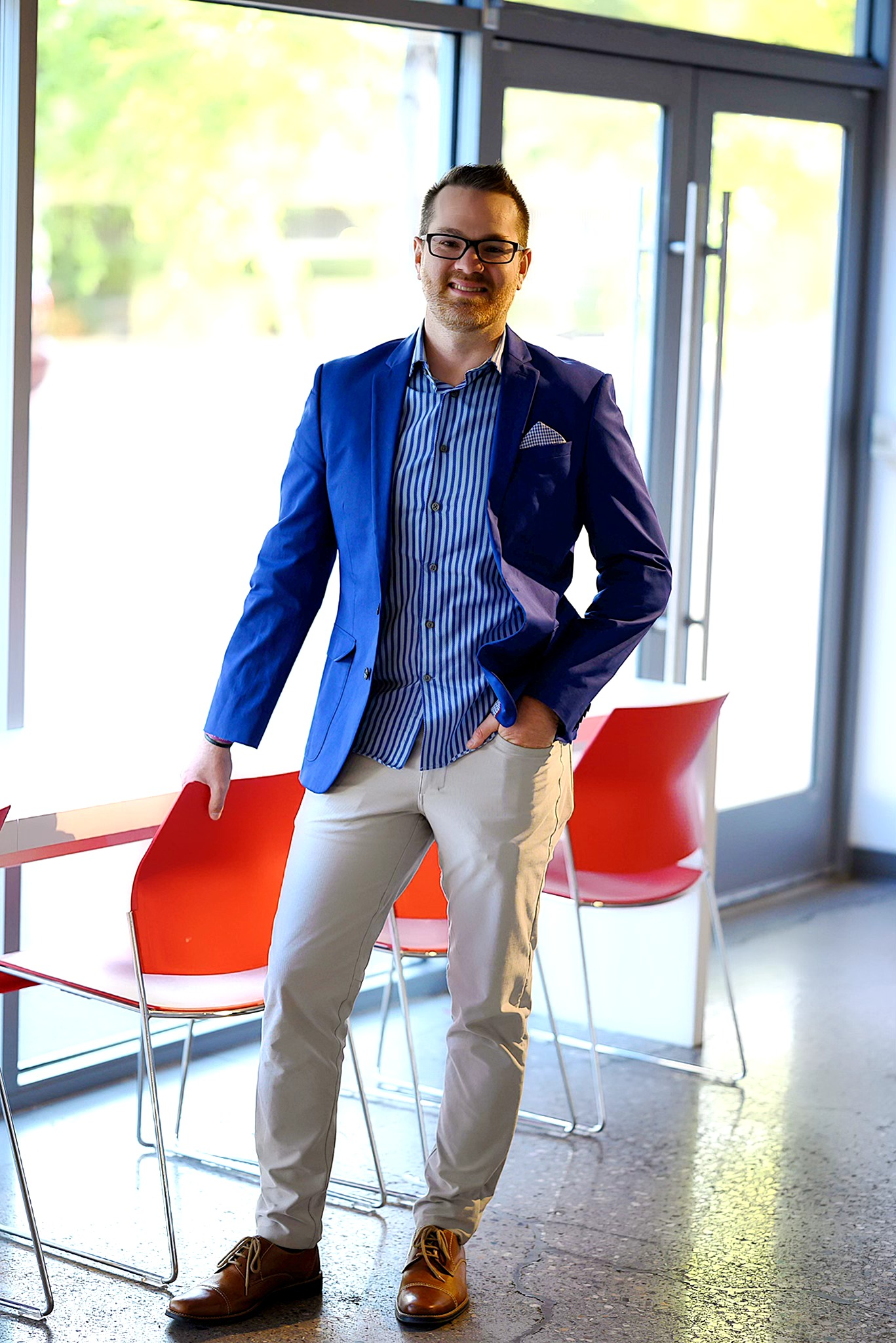
My childhood was filled with travel adventures like white water rafting, and I was always mounted outdoors on anything with handlebars, and went to concerts with my dad.
(Kurt Walker & VentureHaus) On Five Things You Need To Create A Highly Successful Startup
Startups have such a glamorous reputation. Companies like Facebook, Instagram, Youtube, Uber, and Airbnb once started as scrappy startups with huge dreams and huge obstacles. Yet we of course know that most startups don't end up as success stories. What does a founder or a founding team need to know to create a highly successful startup? In this series, called “Five Things You Need To Create A Highly Successful Startup” we are talking to experienced and successful founders and business leaders who can share stories from their experiences about what it takes to create a highly successful startup. As a part of this series, we had the pleasure of interviewing .
Kurt Walker is the Founder of VentureHaus and Mainsail FO. VentureHaus is a platform utilizing a series of properties that is dedicated to fostering ventures in the Vegas area and an ecosystem in Nevada to find the best founders and connect them to the right resources and relationships they need to capitalize their funding. MainSail Family Office (FO) Collective is a collective for Founder-Funders, family offices and ultra high-net worth investors providing access to exclusive, invite-only events such as the Pitch World Series @ FormulaOne Vegas, Super Bowl, and Jets and Capital to name a few.
Thank you so much for joining us in this interview series! Before we dive in, our readers would love to “get to know you” a bit better. Can you tell us a bit about your ‘backstory’ and how you got started?
I was so fortunate to be born in the mountains of Utah to abundant-minded parents. My childhood was filled with travel adventures like white water rafting, and I was always mounted outdoors on anything with handlebars, and went to concerts with my dad. My mom taught me about service and community through an example of contribution. She’s the best den mother and cheerleader ever!
This was the backdrop that allowed me to fearlessly go out into the world and fail and fail often. Much to my parents' chagrin, I paid more attention to my personal development books and alternative finance curiosities as I found myself working on capital, brokering transactions in real estate and private equity as a freshman and sophomore.
This journey led to my first love affair with capital: plunging myself into the problem of solving for how to fund startup loans. After years, I grew this into a venture including becoming a venture capitalist (VC) providing direct investment into founders through debt and equity. I also run events and built communities of founders and funders alongside being a VC, which I still do to this day.
What was the “Aha Moment” that led to the idea for your current company? Can you share that story with us?
Between directing money for startup loans, and then investing into startups, I loved the experience of helping them raise and at the same time, loved raising for our own deals and funds…it became all too clear that fundraising is broken for most founders and even funders.
Founders struggle with learning the foreign language of fundraising as there is challenge they all have to embrace: falling from the sky building a parachute at the same time. How is it possible that blockchain and AI is moving at the speed of light, but founders need to spend 9 months to a year raising? How is that good for innovation?
For many years, I wanted to streamline, simplify and even automate the fundraising experience for founders. Technology and software is finally making that possible.
Enter my obsession and our North Star: More than anyone else in the world, we want to graduate more founders to become capitalized and exit their companies to become funders. We want to cut the time to exit from 11 years to half that. Founder-Funders or bust!
Was there somebody in your life who inspired or helped you to start your journey with your business? Can you share a story with us?
My father always taught me to leverage the business ownership lifestyle and in solving problems for others. He would say to me: “I can’t afford this, but our business can”.
Freedom isn’t free—I tip my hat to the Founding Fathers and Mothers who were already very well to do and did not need to risk it all on this great enterprise that would become the entrepreneurial nation of the United States.
I have had many entrepreneur and leader mentors in history that never knew me, but certainly had a great impact on me and informed my purpose to create prosperity for others. I found strength in their success and resolve in their struggle.
What do you think makes your company stand out? Can you share a story?
Not many founding teams know funding and community like we do.
We learned from building financial products, transactions and building multi-city communities where the feedback and iterative process is amplified from thousands of “at bats” and hundreds of events in the past few years alone. Tremendous volume brings instinct and experience.
Our obsession is fundraising. We are also capital architects and forensics. “Who’s Got My Money?” is a live event and video series we created to also provide additional education on fundraising for founders including what gets capital to move and what is needed to create aligned capital relationships, for example.
How have you used your success to bring goodness to the world?
I could not have known that my dad’s constant surprising us with planned events, over the top experiences and my mother’s energy of contribution was the perfect training ground to learn to design and launch founder communities touching thousands across cities nationwide and beyond.
Our communities teach founders to build and realize their dreams.
I’m grateful to be surrounded by moon shot takers and game changers. My founder friends and I solve real problems in the market and also stand at the ready for emergency relief and host impact trips to build houses and schools around the world.
You are a successful business leader. Which three character traits do you think were most instrumental to your success? Can you please share a story or example for each?
1. Tenacity - If you know me, then you feel the fire. I won’t be stopped. I am fearless, even relentless, in the pursuit of that which sets my soul on fire. Setting founders free does that.
Other than being a crazy startup founder investor, I like finding the nastiest, steepest rock chutes to pilot my mountain bike down in the searing 115+ desert heat.
2. Gratitude - Gratitude is the key to increase. It’s a gift to build the technologies, companies and communities of the future. There is a refiner’s fire that we receive as we close the gap between what is imagined first in the mind and what is then birthed into reality. I experience this with each new venture and every level of the game I play.
3. Adaptability - If there is a real superpower to have both in life and in venture, this has to be the one. Are you capable of driving that truck through the dense jungle, then kayaking the falls, and mountaineering the rock face all in the same breath? This is a week in building a startup.
You may have started off as a team, only to be the last man standing. Can you plant that flag at the finish line? Summon that tremendous power inside you.
Often leaders are asked to share the best advice they received. But let’s reverse the question. Can you share a story about advice you’ve received that you now wish you never followed?
I would not trade my life for almost anyone’s. Following the advice of those who have never been or are not going where you are going is a fool's errand. They are not crazy; hey just don’t think like we do. The world belongs to those who have the courage and conviction to go the distance; to see a future that others can’t see and build until the world sees it.
Can you tell us a story about the hard times that you faced when you first started your journey?
Hard times only at the beginning of the journey? Hahahha. Yeah right. How about hard times ALONG the founder journey? Sometimes all the time. ;)
If you are really pushing it, you will experience these “dips and chasms” after gains and before each new ascent of new mountain highs. That is the game.
I didn’t see the pattern until later on, and how I was recreating this experience across a few of my partners: I was choosing partners that didn’t choose me. They told a good story but didn’t truly share values and vision. Business, as with life, is a team sport. Choose your starting team very carefully. I sure had to learn that lesson the hard way a few times.
We are literally so powerful, that we can subconsciously keep recreating the same crap sandwich over and over until we learn the lesson and shift to create something new.
Where did you get the drive to continue even though things were so hard? What strategies or techniques did you use to help overcome those challenges?
Start doing the work on you, now! You are the X factor in your life and your business. See yourself as the author and creator of your life. You can achieve anything when you recognize yourself as the owner of your experiences and results.
I attended a six month transformational training. It’s like Navy Seal boot camp for the heart, mind and soul and is not for the faint of heart, but rather, a gateway to growth, [providing a deep tool kit, and language I draw on every day since that experience.
I have also recognized the two biggest things that make up my influences are: My mindset is made up of my identity which I can “positively brainwash” through being a true student by reading and meditating daily as part of my personal practice. Secondly, your environment has an incalculable influence on your trajectory and the outcomes you create. It’s like a gravity “well” pulling you towards or away from what you truly intend and desire.
What is the biggest thing that makes up your environment?
People. Their thoughts, hopes, fears, relationship with themselves and money will become yours. Choose very carefully. They will either reinforce the vision of yourself and the life you wish to create or disempower you. Community counts.
Being a founder is a game of relationships: Relationship with yourself and relationships with others. Your investors, clients and team. You also cannot outrun the relationship you have with yourself.
The journey of an entrepreneur is never easy and is filled with challenges, failures, setbacks, as well as joys, thrills and celebrations. Can you share a few ideas or stories from your experience about how to successfully ride the emotional highs & lows of being a founder”?
Find joy in the journey; it’s going to be a long way. Think in ten year time frames. How long can you hold out? How much can you endure? The only way out is through.
Know that if you truly believe in your frame, and it’s backed by consistent effort, compounded over time, you will bring that forth into reality. It’s already done. Just put in your reps and sets.
You must develop endurance for what lies ahead. Does your inner circle, team, community and set of personal practices set you up for success for this?
I went to great lengths to keep myself safe from succumbing and going back to the “Matrix”: Knowing how possible it was for me to go unconscious and follow the herd, the nonbelievers and naysayers.I built whole communities that would keep me honest and focused on only one option:
FORWARD.
Let’s imagine that a young founder comes to you and asks for your advice about whether venture capital or bootstrapping is best for them? What would you advise them? Can you kindly share a few things a founder should look at to determine if fundraising or bootstrapping is the right choice?
You are asking yourself the wrong questions.
Do you know that VC’s only allocate 3% of the available capital? Where is the rest?
Do you know that there are 60 plus capital types? Do you know how to find aligned capital?
When you choose a capital type, you choose a business model that will either support or sink your startup. Play the long game with relationships, especially those that lead to investor partners.
Be willing to become fundraising fluent and know the difference of options in the spectrum of capital available. A financially savvy founder knows when to play the right capital cards. I invite any founders who are interested in going further to join our weekly sessions to master fundraising and our pitch Kung Fu sessions.
Be honest with yourself. Look within. Ask yourself: Would you fund you? Have you done and are you doing EVERYTHING to be the kind of founder who adapts, learns and leads? There is an energy of enrollment that funders, clients and recruits can FEEL.
Is that you? If the answer is not 1000% yes. (No one can answer 1000%)
Then there is work to do, get to it.
Your fundraising and future is dependent on it.
Ok super. Here is the main question of our interview. Many startups are not successful, and some are very successful. From your experience or perspective, what are the main factors that distinguish successful startups from unsuccessful ones? What are your “Five Things You Need To Create A Highly Successful Startup”?
If you can, please share a story or an example for each.
1 . Be coachable. You must be a high learner if you are to gain the skills necessary to become the best founder you can be as you don’t know it all, or even what you don’t know.
2 . It’s these soft skills that truly set us free. The soft skills I advocate and look for are: enrollment, emotional intelligence, people skills, and grit. Enrollment is your ability to enroll others into your vision. Investors, clients and team members.
3 - Adaptability is crucial and truly a superpower as a founder. If you aren’t willing to look at things differently or change what you’re doing, how can you possibly learn and grow?
4 . Becoming fundraising fluent, in particular in the acquisition of capital and the best ways to find it. Fundraising tends to be the hardest thing a founder will ever have to do in their business, best start learning the language and the game.
5 . Embrace marketing. This is no business without clients. Capital will not fix your inability to attract clients and customers. Only mastering marketing and sales will do that. Capital is the rocketfuel.
What are the most common mistakes you have seen CEOs & founders make when they start a business? What can be done to avoid those errors?
Thinking that it won’t take ten years to be an overnight success. It’s a war of attrition. Will you be the last woman or man standing when others fall away or give up?
Are you sure you are willing to do what is required to be a true entrepreneur? Will you do the uncomfortable thing that always needs to be done? You better learn to like doing hard things.
What is sexy is calling yourself an entrepreneur or venture capitalist. What is not sexy is the work to become truly great at either.
Top Fortune 500 CEO’s set aside 25% of their time to THINK. Don’t be so caught in the fight that you are reactive versus intentional and proactive leading the company and field. Self inquiry and assessment is where the gold is hiding in plain sight.
Startup founders often work extremely long hours and it's easy to burn the candle at both ends. What would you recommend to founders about how to best take care of their physical and mental wellness when starting a company?
After nearly two decades in the funding game, I can immediately spot a founder who is close to burn out. Isn’t it interesting how it’s always accompanied with losing sight of their WHY and purpose along with letting their personal practice slip?
In the sprints (fundraising) inside of the larger marathon (more fundraising, as you are always fundraising), you MUST have a daily practice that supports you regenerating yourself. It’s no one else’s job but yours to attend to.
Your pacing and ability to withstand the difficulty is directly proportionate to the self inquiry, recharging and personal care you invest in yourself.
My personal practice starts in the mornings before calls and content. I pray, meditate, and visualize the evental reality I am creating before heading off to lift weights and look out into the mountain vistas. Nature has become my classroom and thinking place. I also listen to audiobooks while I mountain bike. I feel grounded and grateful outside. The great outdoors is a great equalizer. That mountain, ocean and river don’t care how cool you think you are. Yoga is my next addition for breath work.
You are a person of great influence. If you could start a movement that would bring the most amount of good to the most amount of people, what would that be? You never know what your idea can trigger. :-)
BE the kind of person you wish to see more of in the world. BE the person that enrolls all those around you like all the great men and women leaders in the world. FIND a problem in the world you are obsessed with solving. CREATE companies that solve the greatest challenges of our day. BUILD community around you. Nothing moves faster than the speed of trust in community.
We are blessed that some very prominent names in Business, VC funding, Sports, and Entertainment read this column. Is there a person in the world, or in the US with whom you would love to have a private breakfast or lunch, and why? He or she might just see this if we tag them.
Brian Johnson from Braintree/OSFund, Founder Funders: family offices world wide.
For his excellence in entrepreneurship and courageous captain of capitalism: Patrick Bet-David.
Music: Sting, Members of the band Toto. Thank you for adding richness to my world.
How can our readers further follow your work online?
I write about capital every day on Linkedin
Join us online weekly for our Pitch Kung Fu sessions online, and in person monthly Who’s Got My Money? Sessions and at our large founder/funder community events. We are launching a site and podcst dedicated to mastering fundraising.
This was very inspiring. Thank you so much for the time you spent with this. We wish you continued success and good health!
About the Interviewer: Douglas E. Noll, JD, MA was born nearly blind, crippled with club feet, partially deaf, and left-handed. He overcame all of these obstacles to become a successful civil trial lawyer. In 2000, he abandoned his law practice to become a peacemaker. His calling is to serve humanity, and he executes his calling at many levels. He is an award-winning author, teacher, and trainer. He is a highly experienced mediator. Doug’s work carries him from international work to helping people resolve deep interpersonal and ideological conflicts. Doug teaches his innovative de-escalation skill that calms any angry person in 90 seconds or less. With Laurel Kaufer, Doug founded Prison of Peace in 2009. The Prison of Peace project trains life and long terms incarcerated people to be powerful peacemakers and mediators. He has been deeply moved by inmates who have learned and applied deep, empathic listening skills, leadership skills, and problem-solving skills to reduce violence in their prison communities. Their dedication to learning, improving, and serving their communities motivates him to expand the principles of Prison of Peace so that every human wanting to learn the skills of peace may do so. Doug’s awards include California Lawyer Magazine Lawyer of the Year, Best Lawyers in America Lawyer of the Year, Purpose Prize Fellow, International Academy of Mediators Syd Leezak Award of Excellence, National Academy of Distinguished Neutrals Neutral of the Year. His four books have won a number of awards and commendations. Doug’s podcast, Listen With Leaders, is now accepting guests. Click on this link to learn more and apply.