My husband and I were married for exactly as many years, almost down to the very month, as a marathon has miles—26 years, 3 months, and 2 days as a married couple and 26.2 miles for marathons.
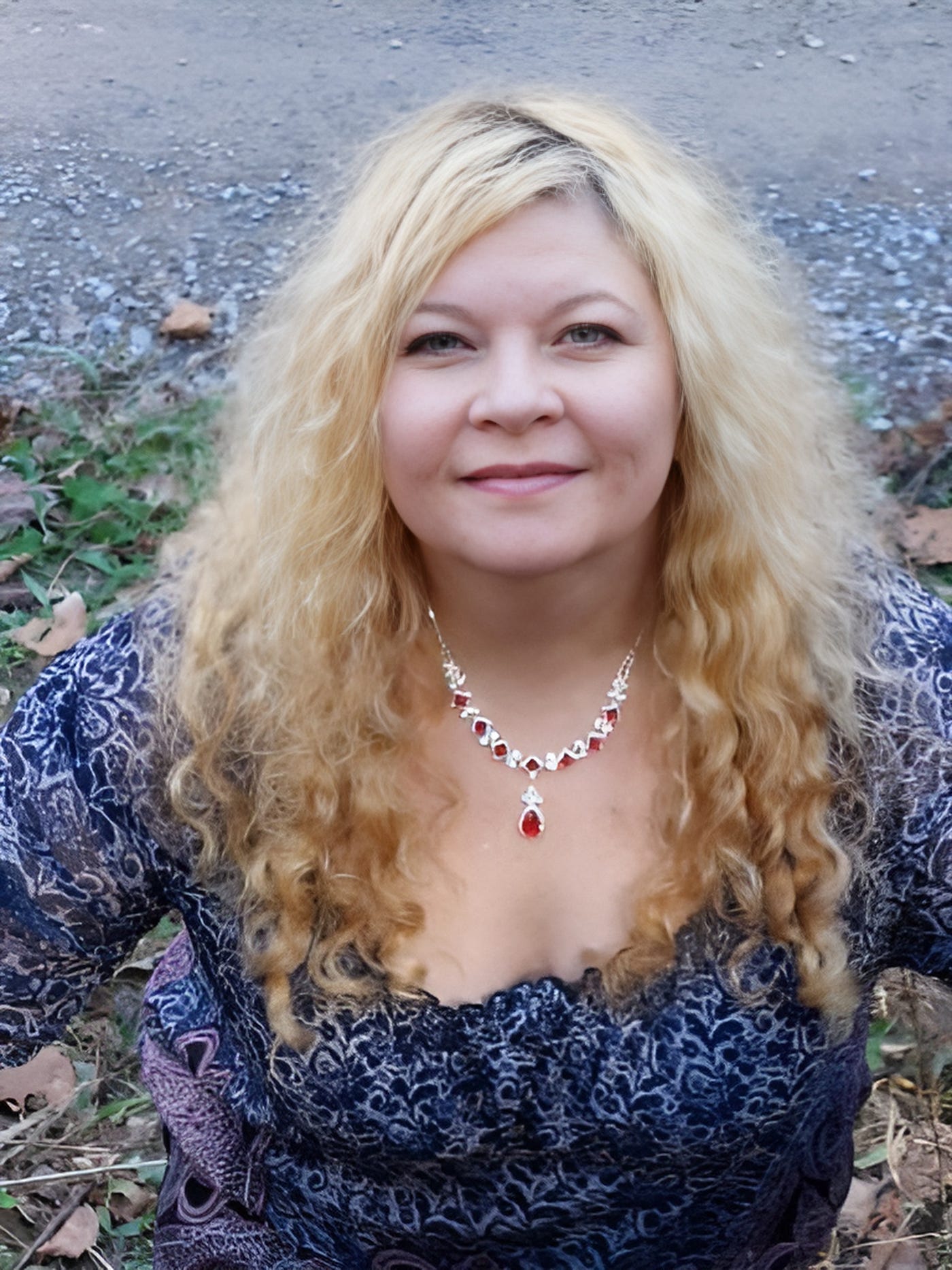
Kirsten Schuder’s favorite writing projects make a positive impact upon social issues. Kirsten has written hundreds of parenting and mental health articles and has edited thousands as an expert mental health professional. She fetched an international award with her first co-authored book, Farming Industrial Hemp: Not Your Daddy’s Tobacco where their book was instrumental in raising awareness of the dangers of growing industrial hemp in unsafe conditions and influencing Congress in growing guidelines for the budding industry. Her second book, Schooling Your Kids Through a Pandemic: Your Step-by-step, Guilt-free Guide to Remote Learning, Homeschooling, or Somewhere in Between, helps parents navigate the difficulties of remote learning. She also authored a fiction series, Inside Dweller, set for publication by Black Rose Writing September 14, 2023. She serves as the Vice President of Apex Literary Management, a growing boutique literary agency, and loves long subtitles. Finally, she writes whatever the heck she wants in Kirsten’s Short Attention Span on Medium.
Marriage is a lifelong journey that requires dedication, understanding, and continuous growth from both partners. To delve deeper into what makes a marriage truly happy and enduring, we are seeking to feature authors who have explored this topic through their writing. As a part ofthis series, I had the pleasure of interviewing Kirsten Schuder.
Thank you so much for doing this with us! Many of our most powerful lessons come from personal experience. What experiences inspired you to write a book of relationship advice?
Before his death, my husband and I were writing a number of relationship and personal growth books. My husband was a gifted therapist with decades of experience, and with my Masters in Science in mental health counseling and my writing experience, we planned on putting out a number of books on mental health, happiness, and building lasting relationships. However, now I will have to complete these projects on my own, and one of these projects was how to build a lasting marriage.
John and I should not have survived as a couple. Many tried to break us up! Also, both of us discovered deep-seated personal issues that could have been marriage-enders. Despite our odds, I was blessed to have spent many years with my best friend, my husband. We had a happy, lasting marriage, and we would have remained so if he were still alive today.
Yet, we had many challenges to overcome from other people and from our own pasts, but we successfully worked through most of them before his passing. I am writing my relationship book to show people what it really takes for two people who love each other to work out their differences and to be able to coexist for many years. There are so many divorces today. I think people do make mistakes, but a lot of people would benefit from learning the skills needed to maintain a long-term relationship and to build the happiest of marriages.
The reason I wanted to write The Marathon Marriage: Lasting the Long Haul is highly personal. My husband and I were married for exactly as many years, almost down to the very month, as a marathon has miles—26 years, 3 months, and 2 days as a married couple and 26.2 miles for marathons. Like running marathons, people who complete successful, long-term marriages must train themselves to acquire skills so they can survive together as a couple.
In your opinion, what are the core principles that underpin a thriving marriage? Can you share a couple of examples from your book that illustrate these principles in action?
My book in production, The Marathon Marriage: Lasting the Long Haul, shares realistic expectations driving the core principles that underpin a thriving, lengthy marriage. Many of these germinated from my own marriage and all of the wonderful lessons my husband and I learned before his passing. We learned to enjoy the good times and commit to working through every single difficulty thrown our way. Below are only some of the principles because one cannot oversimplify what it takes to have a happy and long-lasting marriage.
Commitment
First and foremost, commitment is a key to a thriving marriage. Marriage is a special type of relationship. It is both a heartfelt as well as a legal commitment. Marriage takes work to make sure that couples can remain together. You made a promise to each other during your wedding vows to stick together. Both people must take that to heart and remain dedicated to finding ways to stay together. Of course, mistakes happen, but commitment means that you explore all ways to stick together.
This also means that both people are committed to working on themselves. Problems in marriage don’t arise from just interactions with each other. Fights occur because each partner in a marriage has a past that is interfering in the present. If both spouses can acknowledge this fact and accept responsibility for it, then both spouses can commit to the process of learning how to live with each other.
Accept Your Spouse for Who They Are Right Now
It’s surprising to me how many people I speak with who see the potential in their spouses, if only… The last part is the problem. It’s great to see potential in a person, but if you cannot live with the person the way they are at this very moment, it’s not going to set the marriage up for success. Every person has an aspect of their personalities that could really bug another person, but this is a bit different in a marriage setting. There is a difference between working on behaviors that are not productive for a great marriage and not being able to accept a person for the way he or she is at this moment in time.
You cannot make another person change, and a spouse cannot change for you. Spouses must change because they see the value in changing for themselves. In the meantime, your marriage will be a lot stronger if you accept and love the person for who he or she is right in this moment.
Treat Your Spouse Well by Acknowledging that We Are Responsible for Our Own Bad Behaviors
Married couples can stay together for many years without treating each other with kindness and respect, but it is very difficult for the marriage to thrive under those circumstances. As we grow, we learn behavior patterns from our parents. Many of these patterns become intermixed with our idea of love. “I yell because I love you” or “I’m yelling because you’re making me angry” are examples of one of those misconceptions people develop in childhood.
My husband and I were not perfect in this regard either, especially me! I grew up in a house with yelling as the primary form of communication, and it took me many years to learn the skills I needed to control my own behavior during time of strong emotion. These patterns become ingrained into our behaviors, so as adults, it takes more than a day to unpack those issues and resolve them.
Because my husband promised me that we would stay together no matter what, he allowed me the time to work through those issues until our disagreements became decibels lower, and we both had the ability to separate for a bit and work through our own anger before coming back to each other and working it out.
We are human, and we may not be able to maintain this standard well all the time, but as long as we are striving to learn why we blow our tops, we can work towards resolving our own personal issues.
We all have healing to do in this lifetime. Successful married couples learn to heal together, and as they heal, they learn to grow together, and those who can grow together stay together long-term.
Mistake Management in Marriages: No Blame, Everything to Gain
We must allow our spouses to be human, and we must acknowledge that we are human ourselves. It’s unrealistic to think that we never mess up. We make mistakes. It’s how we learn. Marriage occurs between human beings, and humans are not perfect or infallible. We must allow our spouses the space to be human and mess up, even when that mistake is legendary.
Now, this doesn’t excuse a person from making the same mistake over and over again. The assumption is that the person who is in the doghouse is just as committed to preventing the error or behavior from reoccurring, even though it may take multiple attempts. We learn as we grow, and growth can be painful.
On the flip side, we must also allow our spouses to learn how to not make the same mistake. When we make a mistake, this means we are missing something, such as a skill.
Let’s do that again, but with blame. When we mess up, we must own up to it. On the flip side, it’s the spouse’s job to listen and try to understand. Blaming your spouse is not a constructive thing to do. It will not help you move past the present situation.
Blame is never good under any circumstances. It’s punitive, judgmental, divisive, and damaging to any form of relationship. It takes the focus off of ourselves. It does not allow us to acknowledge our own role and actions in our relationships.
Without blame, couples can work toward empathy, understanding each other, and resolution.
Learn to Truly Forgive
A lot of marriages don’t survive because we don’t anticipate that mistakes will occur, and then, we don’t know how to work through the process of forgiving. Mistakes truly test a marriage. Not only must the person who made the boo boo work through what lead to the mistake in the first place, but couples need to learn how to let things go.
One way to let go of past hurts is to communicate well when fights, misunderstandings, and mistakes occur. To communicate well, couples must learn to hear each other out. Each person takes turns. Set a timer if you have to, to about five minutes each. It’s okay to take notes if you need to keep track of your thoughts. Use “I” statements instead of “you” statements. Talk it out, and discover where the miscommunication happened. Be willing to admit to your own mistakes. With this process of working through the issue, it becomes a lot easier to let go and truly forgive your spouse. Strive to understand each other’s perspective, and make sure you acknowledge each other’s perspective as well.
Let me share an example of a recent misunderstanding that happened before my husband passed, which will help illustrate all of these concepts and how they work together. I couldn’t understand why explaining my perspective didn’t work a lot of times. When I spoke with my mother recently, it clicked as to why my husband and I seemed to have the same disagreement over and over again. My mother has a tendency to explain things from her point of view, and she seemed to think that it would somehow help me. All at once, I realized that I was unconsciously doing the same thing when my husband and I argued, except I should have been listening to him rather than trying to explain what happened.
Luckily, over the years, we forgive each other easily, but this is because we managed to resolve most of our conflicts.
Notice how I have not mentioned trust. Trust is a byproduct of developing good marriage practices rather than a principle. The things we say to and do with our spouses will over time develop trust if we follow the principles.
Also, honesty is not included. Honesty can be maintained in a relationship when we stop lying to ourselves. Again, this is a byproduct rather than a principle. Honesty comes from both people first working on themselves. It takes honesty and courage to confront what is troubling us. When that happens, total honesty can be achieved. I know because my husband and I both had to battle our past demons, and we were both successful in this.
Trust and honesty are not really something you do, believe it or not. What couples should focus on are behaviors that will eventually lead to trust and honesty. It’s a process with a learning curve rather than an absolute, one-time act.
How do you address the topic of conflict resolution in your writing? What strategies do you believe are most effective for couples to navigate disagreements and maintain harmony?
Conflict is what breaks up most marriages. In my writing, I encourage couples to resolve their conflicts instead of letting them fester. Allowing disagreements to remain unresolved will only make future fights worse. It encourages “kitchen sink” fighting, where old, unhealed wounds are brought up along with the present conflict, and then it can seem almost impossible to just get through the present conflict. It becomes this big, ugly thing that didn’t need to happen.
However, I find a lot of marriage advice is good, but there is a tendency to leave out a crucial ingredient in conflict resolution that is most important, which I discuss at length—emotional self-regulation. That’s just a fancy term for keeping your cool during fights and disagreements.
Easier said than done, though, right? Many people don’t learn how to regulate their own emotions and keep them in check.
I was one of those people. I flew off the handle while my husband, most of the time, kept his cool.
Do you know what helped me gain control of my own emotions? I had to first let go of past trauma and resolve it. I had a lot of issues compounding upon issues, and it took many years, but I finally did it. Again, this cannot be oversimplified, but there are some basic steps couples can take to get started to bring down the heat when arguments flare, even when we have trauma and painful events in our past.
First, pay attention to your body’s reactions. When we perceive a threat or a conflict, our bodies go into fight or flight mode, which activates our body’s stress response system. A cocktail of hormones overload our bodies and mind so we can prepare for the stressful situation.
Unfortunately, while this will help us fight off wooly mammoths or other physical threats, this is the worst time to have a discussion with your spouse, so it’s best to go to different parts of the house, work out, or do something soothing to help you calm down.
If you are having trouble calming down, most often, this is due to the fact that something in your past was triggered. You can tell when this happens because it will feel like you’ve been “transported” back to a difficult time in your childhood, or the fight or the words expressed will loop around and around in your head.
Usually, therapy can help resolve these issues. In the meantime, you have to try and navigate around your past and try to handle the present situation.
Believe it or not, deep breathing deactivates the body’s stress response, reducing elevated cortisol levels, which is the stress hormone. It doesn’t require years of introspection (although I do recommend not skipping over the inward journey), and you and your spouse can use it on the spot to calm down to have a rational discussion.
There is another reason why we need to calm down before going in. Anger often masks other pain, such as hurt or an old wound. Anger often rises so that we don’t have to deal with the stuff underneath that is much more painful than the matter you’re trying to get through with your spouse. It takes the focus off that pain and shifts your focus to your spouse, but this is neither desirable nor productive. Getting that anger to dissipate is necessary so you can be honest about what happened and why it affected you that way. It’s important to put the focus back on yourself so you can correctly analyze why you reacted the way you did, without the anger.
For example, it could make us angry when someone says something off-colored to us, but what else is going on? Often, there is pain mixed in with that anger, like hurt feelings and sadness. However, anger will mask all the other emotions going on underneath it.
After that, employ the principles discussed above. Watch your tone so you don’t come off angry and offensive. Respect your spouse. Take responsibility for your own behavior. Employ active listening on both ends.
Marriage often involves significant changes and challenges over time. How do you suggest couples can grow and adapt together through different life stages while maintaining a strong bond?
Primarily, change is seen as a negative thing, but change can also be positive. For example, if you and your spouse are constantly working on improving your emotional regulation and communicating well, you can grow closer and closer with time.
For instance, I would joke with my husband that we were growing so close, we were becoming the same person.
Because we grew so close, we were able to weather challenges, such as my husband’s declining health and further loss of his mobility. It put a strain on us, but because we had such a close, strong relationship, a lot of the negative emotions with being a caretaker and a breadwinner were kept to a minimum. My deep respect and profound love for my husband helped me endure through the difficult times just so we could get together every night, talk, and have fun with each other. I helped distract him from his chronic pain, and he was the loveliest company I ever had.
When couples work steadily on their relationship over the years, they become stronger and stronger as a unit. You understand each other on such a complex level that it creates a bond that cannot be broken. My husband and I almost didn’t survive, but because we found ways to remain together, this gave us the chance to work out all of the issues we had over the years, and with each issue that was resolved, we got as close as two different people could possibly be. After a while, after the challenges we faced, nothing could break us asunder. Couples just need to ensure that they continue to respect each other, treat each other well, communicate… sound familiar?
Based on your research and writing, what practical advice would you offer to couples looking to strengthen their marriage? Are there specific habits or routines you recommend that can foster deeper connection and mutual support?
Among work, running a household, and family obligations, it can be difficult for spouses to make time for each other, but this is the best way to strengthen a marriage. Individually, it’s not good for people to be busy from sunup to sundown. People need to make time to relax and enjoy their families, especially their spouses.
For example, almost up until the end, my husband and I would spend time together every night talking and watching some shows he really liked. We always found something new to talk about, whether it was about our day or something funny the kids said or did, and very often toward the end, a memory. The more time we spent with each other, the more memories we were able to review. It was always interesting to me to hear John’s perspective on a memory we shared because as we were experiencing it at the time, I didn’t really hear his thoughts or feelings about that event. This made me appreciate him all the more and helped us to remain strong. The more we talked over the years, the more in depth we were able to explore our memories, creating an even deeper connection.
The time we spent talking to each other every night allowed us to develop a deep appreciation of each other, and never did I feel lonely. Daily communication can also help couples broach a subject that, in the heat of the moment, could trigger a fight. Speaking with each other every night allows couples to explore a subject together while in a relaxed state and helps prevent future quarrels.
What are 5 Primary Points that you wish every couple knew and practiced? Please share a story or example for each.
1 . Devote yourself to knowing your spouse.
People are wonderfully complex in all the best ways. In addition, people’s knowledge and maturity expand as they grow up from young adults to older adults. If spouses take an interest in each other, they will find that there will be stories repeated over and over again, which is okay, but also, they’ll continue to learn something brand new about their loved ones that they never knew before. Continuing to talk to each other assists with couples building a strong, unbreakable bond. It enhances every good aspect of a marriage.
I continued to learn something new from my husband right up until his last week, and I continue to learn about him even after his death as I process his early demise.
2 . Have courage.
Most people have something from their past that is too painful to face. These inner demons can be more difficult to face than climbing Mt. Everest. We must have the courage to face them because these same past traumas often become obstacles in relationships we really want to keep, like our marriage.
My husband and I both had our inner demons. When we faced them together, even though it was difficult and it didn’t go smoothly all the time. If we didn’t, we still would have been stuck in the same old arguments. Facing these truths was one of the hardest things we had to do. It made us question who we were to the core. However, when we came out of the other side of it, we were stronger together and in ourselves, and we were still alive and able to piece everything back together and be happy together.
3 . Make positivity part of criticism… and everything else.
It’s difficult for people to thrive when they are surrounded by negativity. Marriages where spouses take potshots at each other might make for funny television, but in real life, it can create distance and resentment.
One way to make sure criticism doesn’t get too negative is to not make the feedback personal. For example, instead of saying, “You always leave your clothing on the floor every time you come in,” you could instead say, “I really appreciate all the hard work you do. It would really help the household if you could put your clothing in the hamper when you come in. This way, I have more time to pay attention to you.” There is a difference in tone, the second emphasizing the team aspect of marriage rather than one’s failings.
4 . For heterosexual couples, give up the battle of the sexes.
If you and your spouse are often embroiled in a battle of man vs. woman, it’s best to change your viewpoint. Inside your male or female spouse is a person. Men and women have different physiologies, and men and women might prefer to do different things with their time, such as watching football versus crocheting, but viewing your spouse through a gender lens often creates distance between you and your partner.
Many of us grew up with gender stereotypes, but these stereotypes bring harm to a relationship and to people as individuals. For example, wives might be surprised if their husbands cry or tear up, or even think negatively about them if they do. Men are people too, and once in a while, they need to cry. On the other hand, husbands might be surprised when their wives display independence and strength. Women are capable of being strong and independent.
Through knowing my husband, I learned that growing up in conditions in the 1960s and 1970s affected his ability to express hurt. He rarely cried because boys who cried were known as “sissies.” It was only half way through our relationship, after I saw him cry when his father died (also at 59 years of age), did he feel comfortable enough to cry in front of me after a disagreement. That’s when it hit me how growing up in our time affected his ability to express emotions. It also helped me understand how anger, his go-to emotion, masked everything else going on underneath. Anger was a lot more acceptable of an emotion for men rather than hurt and sorrow. We could have avoided a lot of arguments if I had understood that he was hurting too, but I had no way of knowing without him telling me or showing me.
Every person is affected by gender norms and stereotypes, especially if one grew up in the 1900s. I truly hope that society is becoming more open-minded so that people can develop without unhealthy restrictions and have happier lives and relationships.
5 . Learn to be reliable.
Being reliable in a marriage encompasses both word and actions. It’s not about being controlled by another person. It has to do with a bit of common sense, mutual respect, and courtesy. Follow through with what you say, and keep your promises, and really try on this part. It’s one thing to miss a dinner and quite another to miss dinner all the time. It’s about making your spouse a priority in your life rather than an afterthought.
Cultivating communication and behavior habits to show reliability helps couples build trust, but there is always a flip side. On the other hand, you want spouses to give you a degree of trust and latitude. If trust is shaky in a relationship, increasing communication and showing that you are reliable can help ground the relationship in trust.
How do you reach couples with this message?
I hope my book, The Marathon Marriage, will be a source of inspiration for couples. My husband and I had a very successful marriage, and I hope that people will find value in all the lessons we learned together.
Are you working on any exciting new projects now?
Yes, many, many writing projects. I am working on book 2 of the Inside Dweller series, IN-Vasion. I am working on a video course and book series for how high school and college students can get A’s on all their college papers. I am also working on a series featuring Jack Gallagher, a spinoff from the Inside Dweller series, always reality tinged with supernatural.
Is there any particular book or concept that helped you overcome a turning point in a marriage?
For me, no. My husband was able to teach me everything he learned in his practice on how to develop and nurture great relationships, and we applied that wisdom to our marriage.
Other than your book, how are you using your success to bring goodness to the world?
I hope to be a messenger and source of information for people who wonder about the great beyond, who wish to have a happy and successful life, and to be self-fulfilled.
None of us are able to achieve success without some help along the way. Is there a particular person or couple who you are grateful towards who helped get you to where you are? Can you share a story about that?
My husband was my everything. John was (and is) my best friend. My successes in life were due to his undying support and love.
For example, I struggled with becoming a writer in my early adulthood because my father actively put down my efforts, actually telling me that I would fail. My husband always expressed his belief that I could be successful at writing. He is the only person in my life who fully supported me, until my children came along. Now, we all support each other. John’s influence will always be a part of this family.
You are a person of great influence. If you could inspire a movement that would bring the most amount of good to the most amount of people, what would that be? You never know what your idea can trigger. :-)
We should have “Spouse Appreciation Day.” We have Mother’s and Father’s Day, but spouses need an appreciation day as well.
Can you please give us your favorite "Life Lesson Quotes"? Can you share how that was relevant to you in your lives?
I have a friend who is an author, David Philips. This is what he said when my husband and I had our 25th year anniversary. You see, I didn’t know that a 25th year anniversary is considered the “silver” anniversary. He corrected me and let me know that the 50th year anniversary is the golden anniversary, and because he has this adorable Scottish accent, his observations about marriage were even funnier:
“Twenty-five years of marriage is the silver anniversary, fifty years of marriage is the golden anniversary, and anything beyond that is a prison sentence.”
-David Philips, bestselling author of The Errol Flynn Conspiracy
With marriage, it’s important to maintain a sense of humor. The above quote is my new favorite quote regarding long marriages.
We are very blessed that some of the biggest names in Business, VC funding, Sports, and Entertainment read this column. Is there a person in the world, or in the US with whom you would love to have a private breakfast or lunch with, and why? He or she might just see this if we tag them :-)
It has always been Stephen King. He has been married a while. Maybe he has some marriage tips to share as well.
How can our readers follow your work online?
Follow me on Medium: https://medium.com/kirstens-short-attention-span
For news and updates, sign up for my newsletter on my website: kirstenschuder.com
Thank you so much for joining us. This was very inspirational.
About the Interviewer: At 79 years young, Nancy guides couples to transformative relationship skills, specializing in strategies for stepfamilies to succeed. Nancy brings her MA in Spiritual Psychology, personal experience and research proven strategies to guide couples to healthy communication skills and relationship happiness. Nancy has contributed to multiple media outlets including Huffington Post, Psych Central, and Woman’s Day magazine, to name a few. Nancy coaches in person, on Zoom, in her online courses at www.MillionaireMarriageClub.com , on "Relationship Rehab" TV and Talk and has authored eight books, including "How to Stay Married & Love It!" and "Stepping TwoGether: Building a Strong Stepfamily". Nancy's goal is to lower the divorce rate globally.