Electric cars will only work for society as well as the grid they rely on. Electricity usage in the U.S. today is ten times what it was in 1950, and growing very quickly with crypto, EVs, etc.
Vehicles of The Future: On The Leading Edge Technologies That Are Making Cars, Trucks & Motorcycles Smarter, Safer, and More Sustainable
(If you are unable to download it, please click File-Download)
Please answer the questions, and leave the questions formatted as they are in the document. We may schedule a follow-up call or skype to round things out.
INTERVIEW QUESTIONS:
The automotive industry has been disrupted recently with new exciting technologies that have made cars and trucks much smarter, much safer, and much more sustainable and more environmentally friendly.
What other exciting disruptive technologies will we see in the next few years? How much longer will fossil fuel powered cars be produced? When will we see fully autonomous vehicles? Can we overcome the challenge of getting stuck in traffic? As cars become “moving computers”, do we have to worry about people hacking our cars? How else will our driving experience be different over the next five years? To address these questions, Authority Magazine started a new interview series about “Exciting Leading Edge Technologies That Are Making Cars & Trucks Smarter, Safer, and More Sustainable.” In this series we are talking to leaders of automotive companies, automotive tech companies, EV companies, and other tech leaders who can talk about the vehicles of the future. As a part of this series, I had the pleasure of interviewing (please add your name here).
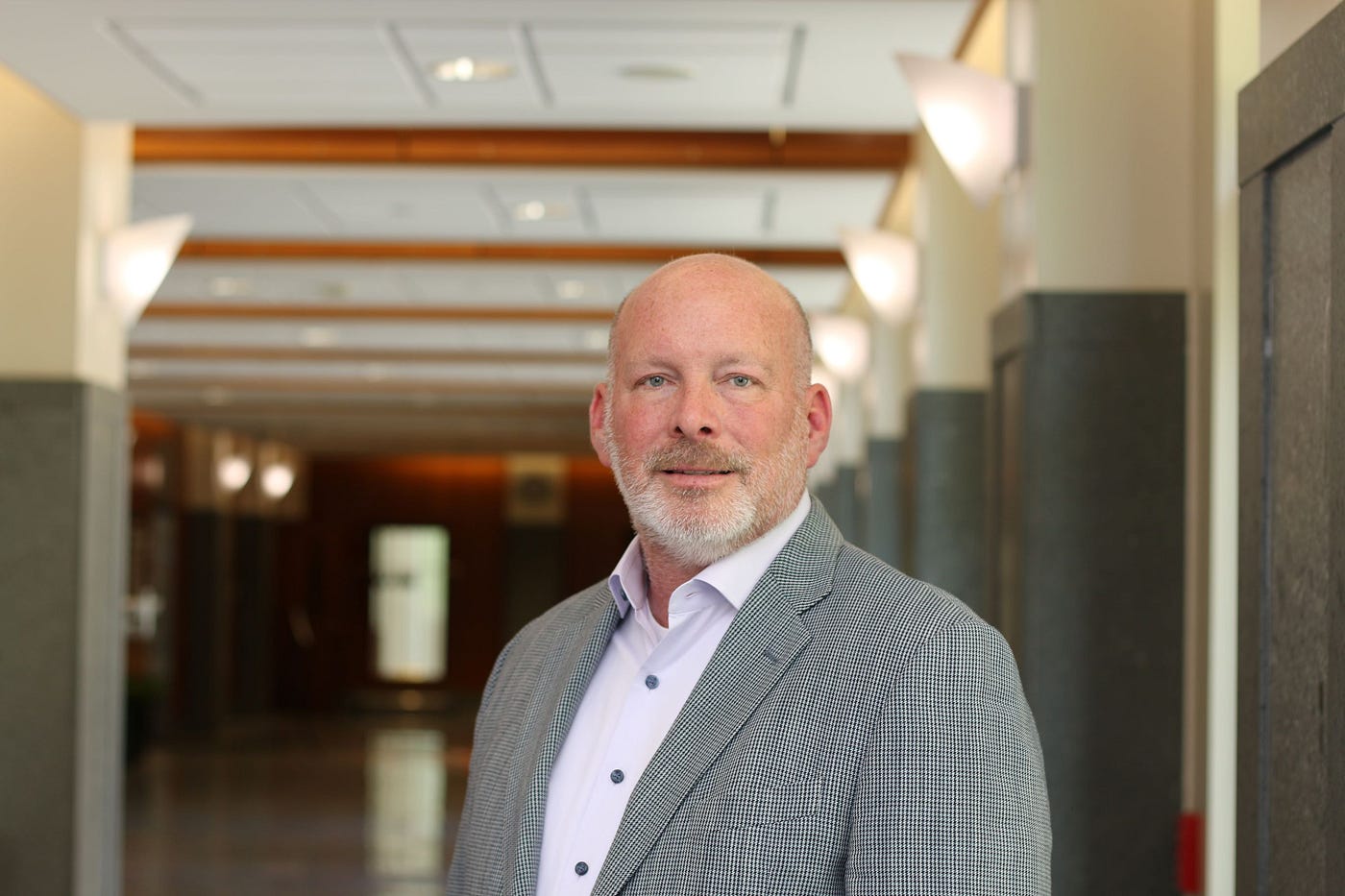
Kenneth K. Boyer combines a lifelong love of cars and engineering with a career focused on management and supply chain. He's the Fisher designated professor of operations and business analytics at Fisher College of Business, Ohio State University, was coeditor-in-chief of the Journal of Operations Management, and served on the faculty at Michigan State and DePaul universities. He's a member of the Academy of Management, Production and Operations Management Society, and the Decision Sciences Institute. Recently, he visited Vietnam to study Vinfast's rise. He's published numerous academic articles and two books. His latest is The Electric Vehicle Revolution: Five Visionaries Leading the Charge. He lives in Columbus, Ohio, and currently drives a Tesla Model 3. Learn more at gearschange.com.
Thank you so much for joining us in this interview series! Before we dive in, our readers would love to “get to know you” a bit better. Can you tell us a bit about your ‘backstory’ and how you got started in the automotive industry?
I am not really “in” the auto industry — I am a professor who teaches and researches supply chain management issues, who loves cars, and who has spent the last quarter-century teaching in leading universities in the two largest automotive producing states in the U.S. I had the opportunity to take a sabbatical in the spring of 2023 in Vietnam, which planted the seed to write a book about the historic transformation occurring in the industry.
Can you share the most interesting story that happened to you since you began your career?
In 1995 I was teaching for a year at Miami University and had a class on process quality improvement with only four students in it. Having never taught this topic, I was a little raw, and while talking to a mentor, a suggestion came up to use the book The Machine that Changed the World — now a classic on operational excellence in the automotive industry and the wider world. I used that as a foundational portion of the course and took students on tours, because with a small class I could. Among the places we visited were the Toyota Georgetown, Kentucky plant that opened in 1986 and the Honda Marysville, Ohio assembly plant that opened in 1982. Fast forward a few decades, and that experience informs my book — particularly the chapter on Honda the Nervous Giant as it relates to Vinfast which has Vietnamese visions.
Ok wonderful. Let’s now shift to the main focus of our interview. Can you tell our readers about the most interesting projects you are working on now?
Right. My book, the Electric Vehicle Revolution, examines automakers, suppliers and the entire ecosystem of the auto industry. It tells the story of five visionaries seeking to lead the revolution, and the many other leading influencers throughout history.
How do you think this might change the world?
Simply put, electric power trains have several distinct advantages over existing internal combustion engine (ICE) powered vehicles. They are faster to accelerate, slower to degrade, and usually better for the environment. China has used public policy and investments to build a sizable lead, while Europe and the U.S. are racing (and debating whether) to catch up.
Keeping “Black Mirror” in mind, can you see any potential drawbacks of this technology that people should think more deeply about?
Fair point. Electric cars will only work for society as well as the grid they rely on. Electricity usage in the U.S. today is ten times what it was in 1950, and growing very quickly with crypto, EVs, etc. We can generate much more electricity from renewable sources, and do so more cleanly and cheaply. Except, the ability to connect this to our national grid is severely lacking. This is reminiscent of Marcus Samuel, who built the first successful oil tanker, The Murex. In 1886 all the oil produced in all Pennsylvania amounted to 25 million barrels per year, all controlled by Standard Oil and John D. Rockefeller. Meanwhile, the oil in a single field in Baku, Azerbaijan produced 28 million barrels a year — except at the time engineers did not know how to cap the wells so there was a vast lake of oil — not exactly environmentally friendly. Marcus Samuel was the visionary who built the first successful oil tanker by hiring a brilliant designer, and eventually breaking Rockefeller’s monopoly. My book tells this story in more detail and examines many such opportunities/challenges where the EV revolution will likely follow unpredictable paths.
What are a few things that most excite you about the automotive industry as it is today? Why?
Nobel prize winner Herb Simon said that energy and information are the two basic currencies of organic and social systems, leading to profound changes in society. The car industry is re-inventing itself — with over 100 all-electric models on offer in the U.S. this year. Tesla, the pioneer and long-dominant player, recently slipped below 50% market share. Numerous companies are jockeying for position in this race. Some will win, most will fail. In the process, consumers will ultimately have better transportation options, just like when Henry Ford said, “If I had asked customers they would have said they wanted a faster horse.”
What are a few things that most concern you about the automotive industry as it is today? What must be done to address these challenges?
Charging — or the lack of it. The Biden administration's National Electric Vehicle Infrastructure (NEVI) program seeks to spur installation of the hundreds of thousands of chargers needed nationwide. Yet it cedes much control to individual states, which are adopting at radically different rates.
Politics — EVs have become a flashpoint for the presidential campaign this fall. Regardless of who is elected, carmakers have announced/planned well over $50 Billion in investments. As hockey great Wayne Gretzky says, skate to where the puck is going. Regardless of the election outcomes, it is hard to believe these investments will be unwound. Also, consumers worldwide are flocking to EVS. Norway is close to 90% of all cars, while China is over 25% of sales. Chinese companies including BYD, Nio, Geely and CATL have a huge lead in technology and the supply chain they have built. America’s risks falling terminally behind, much like in the 1970s and 1980s, when Honda (profiled in book) and Toyota came to America both to sell and to produce.
Based on your vantage point as an insider in the automotive industry, what other exciting disruptive technologies will we see in the next few years? Can you share some of the new developments that will make vehicles smarter, safer, and more sustainable?
Self or autonomous driving is clearly a game-changer. The question is how and when will it be as reliable(?!) as humans? Further, even if it is, how will humans react when people are killed in car accidents without a human driver? Elon Musk touts (and perhaps over touts) Tesla’s self-driving capabilities and there have been high-profile accidents and lawsuits. One key question regards the consumer's willingness to commit to this new technology. When it is fully operational and safe, it is easy to imagine very different cars — setup like someone’s gym, game or living room. If and when that happens, travelling may look very different.
In your opinion, how much longer will fossil fuel-powered cars be produced? When do you think EVs will be the majority of vehicles in use? Can you explain?
It will be a long while. In 2023, EV sales grew by 50% year over year in the U.S., reaching 8% of the total market. Through the first half of 2024, sales are up roughly 8% year over year. There are many factors behind this, one of the major being what is called the adoption S curve: essentially a flattened S. In the U.S. many of the early adopters already have gotten on board, and the automakers were hoping/expecting rapid adoption. So far this year that has not happened. I believe adoption rates will increase. Let’s imagine that EV sales grow 30% per year for the next 8 years. By the end of 2032, EVs would account for roughly 2/3 of sales in the U.S. In that case, ICE would be on the way out.
Except, the U.S. currently has roughly 215 million registered light vehicles, with 20% of them over 12 years old. Thus, even if/when EVs approach 100% of all sales, there will be a long period before the vehicles on the road approach 100% electric. My guess is that by 2040 the U.S. will be well over half electric, but even in 2050 there will be a sizable portion of gasoline cars on the road.
When do you think we will see fully autonomous vehicles deployed in a mainstream way? What do you think are the main barriers to reaching that stage?
Autonomous has been drastically over-hyped, in my opinion, largely by Elon Musk. There are stages defined by the National Transportation Safety Board of autonomous driving and no vehicle has passed the third of five stages. Over 42,000 people are killed by automobiles and trucks each year, a number that has been increasing rapidly over the past decade. The challenge with autonomous is that it sounds great, but when inevitable accidents and deaths happen, humans are not psychologically equipped. Who do you blame?
How else will our driving experience be different over the next five years?
Well, back to the prior question. Autonomous does help more in certain situations. Imagine if we could agree to dedicate a single lane on every major highway to only autonomous driving. With the computer handling the driving there is much less “human induced” uncertainty. In essence, the fast/carpool/autonomous lane would begin to look like a train with the cars coupled together, except by computer. We could move more people and freight without drivers, so automakers can make cars differently. Imagine a living room in your car.
What are your "5 Things You Need To Create A Highly Successful Career In The Automotive Industry? (Please share a story or example for each.)
Three things lead every list: work hard, get along with (most) people, and show your smarts/willingness to learn. At the same time, I have seen a lot of lazy jerks who think or act like they are the smartest person in the room. More specific to the automotive industry, show commitment. Spend some time every week reading key news or influencer outlets to stay on top of trends and news. Finally, chase your opportunities, which is a nice way of saying your weaknesses. We all have them. Stretch yourself into areas that are not your natural comfort zone. The more you can present a spread of skills, the more valuable you will be.
You are a person of great influence. If you could inspire a movement that would bring the most amount of good to the most amount of people, what would that be? You never know what your idea can trigger. :-)
Gears of Change: the willingness to commit. And who are you trying to commit? Friends? Colleagues? Companies? Government agencies? This is essentially marketing. Ability To Profit: how is the change you/we are trying to make going to get paid for? By who, and how is there profit in the equation? Transform the Supply Network: how do different companies need to collaborate to change? How do these collaborations mesh with the other gears?
I firmly believe the world gradually moves toward being better. But we can accelerate this process when smart, energetic and passionate people embrace the Gears of Change.
How can our readers further follow your work online?
Follow me on Linked In - https://www.linkedin.com/in/ken-boyer-283ab26/
Or, visit my website - https://www.gearschange.com/
Thank you so much for the time you spent doing this interview. This was very inspirational, and we wish you continued success.
About The Interviewer: David Leichner is a veteran of the Israeli high-tech industry with significant experience in the areas of cyber and security, enterprise software and communications. At Cybellum, a leading provider of Product Security Lifecycle Management, David is responsible for creating and executing the marketing strategy and managing the global marketing team that forms the foundation for Cybellum’s product and market penetration. Prior to Cybellum, David was CMO at SQream and VP Sales and Marketing at endpoint protection vendor, Cynet. David is a member of the Board of Trustees of the Jerusalem Technology College. He holds a BA in Information Systems Management and an MBA in International Business from the City University of New York.