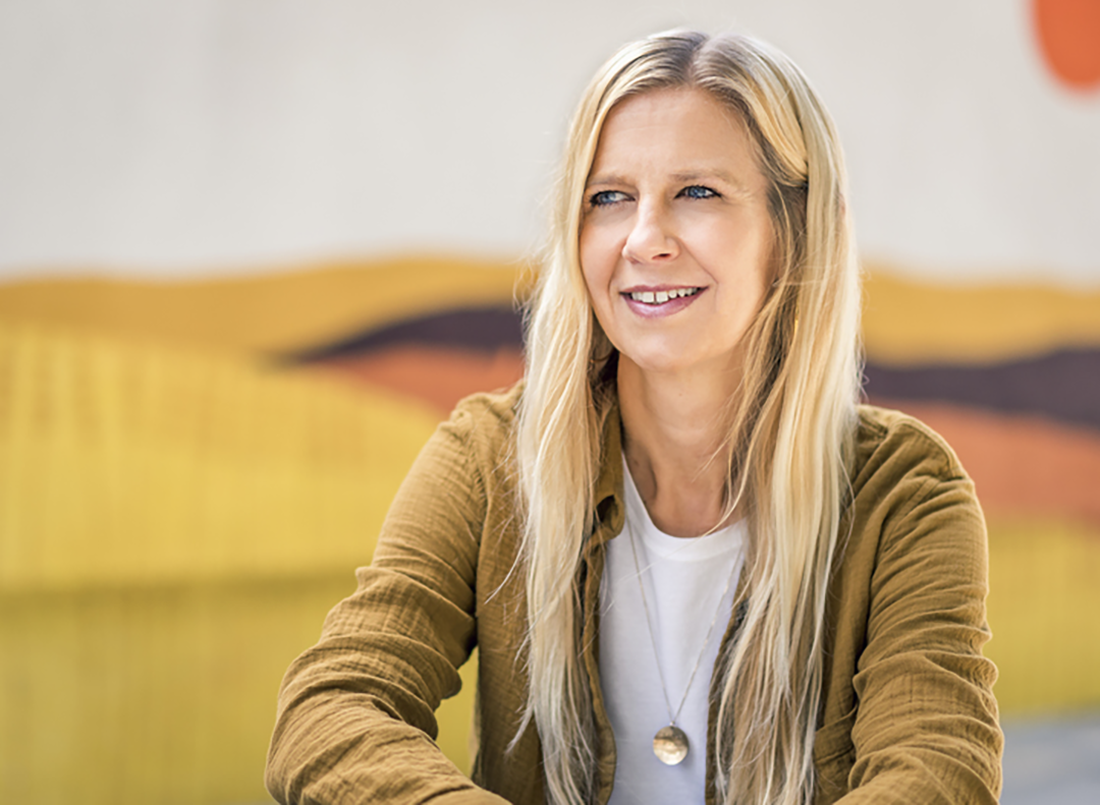

I was born in Chicago and moved to Arkansas at three — that's really where I grew up — in a town of about 30,000 people and cows.
Artificial Intelligence is transforming industries at a breakneck pace, and the entrepreneurs driving this innovation are at the forefront of this revolution. From groundbreaking applications to ethical considerations, these visionaries are shaping the future of AI. What does it take to innovate in such a rapidly evolving field, and how are these entrepreneurs using AI to solve real-world problems? As a part of this series, I had the pleasure of interviewing Keith Zubchevich.
Keith Zubchevich is president and CEO of Conviva, the digital intelligence platform for apps, websites, and AI agents. He speaks and writes regularly on why customer-facing AI agents fail in production — covering how to measure accuracy and efficiency in automated systems, and why an "80% success" rate in agent interactions is functionally a failure. Keith is known for cutting through AI hype with operator-level realism, drawing on Conviva's work at the intersection of agentic AI, real-time analytics, and digital experience.
Thank you so much for joining us in this interview series. Before we dive in, our readers would love to learn a bit more about you. Can you tell us a bit about your childhood backstory and how you grew up?
I was born in Chicago and moved to Arkansas at three — that's really where I grew up — in a town of about 30,000 people and cows. Living there taught me two things that have defined my career: how to connect with people, and how to keep things simple. In a small environment you become an expert at reading people, and small-town folks have zero patience for noise or jargon. They want you to give an answer in three sentences. I went to college in Colorado, then lived in San Diego and the Bay Area, but I've always carried that mindset with me.
Can you share the most interesting story that happened to you since you began your career?
Early in my career at a company called Endatico in San Diego, I got my first real exposure to a strong executive leader — and it was a shock to my system. I was this people-person kid from Arkansas who thought leadership was mostly about warmth and connection. This CEO was a pure driver: clear, no-nonsense, relentless. It took me a while to adapt, but looking back, that experience gave me something invaluable. I learned that true leadership isn't soft or hard — it's both. The best leaders combine genuine human intelligence with real conviction. That balance became the blueprint I've built myself around ever since.
Can you please give us your favorite "Life Lesson Quote"? Can you share how that was relevant to you in your life?
"I can do anything." My father wouldn't let me say "yes" when someone asked if I could do something — the answer was always "I can do anything." It sounds small, but it fundamentally rewired how I approach obstacles. It tells you there's always a way forward if you're willing to look for it. It's a blessing and a curse — it can get you into trouble when you commit before thinking things fully through — but it's also the reason I've taken on challenges most people walk away from, and it's been the quiet engine behind everything I've built.
You are a successful business leader. Which three character traits do you think were most instrumental to your success? Can you please share a story or example for each?
First, understanding people. I studied economics and sociology and everything in my career has been about trends in human nature. The leaders who truly stand out personalize their approach to the room, the team, the individual. That's also what we're building at Conviva: teaching AI agents to understand each consumer so interactions feel personal, not generic. Second, seeing in trend lines. Studying human behavior patterns gave me the ability to read where things are going before they arrive — which is what drew me to AI early. Third, the "I can do anything" mindset: a relentless belief that there's always a path through, and bringing that same energy to every team I lead.
Ok super. Let's now shift to the main part of our discussion. Share the story of what inspired you to start working with AI. Was there a particular problem or opportunity that motivated you?
Being in Silicon Valley puts you at the epicenter of where these ideas take shape. I started hearing about what was coming, dug in, and — like most people — my first experience with ChatGPT was jaw-dropping. The quality and speed of what these systems could produce was unlike anything I'd seen. It wasn't a single moment; I got on a path. I watched the first iterations, then the acceleration, then the compounding value. As a company, Conviva got on that path too. And once you see the potential, you can't unsee it.
Can you describe a moment when AI achieved something you once thought impossible. What was the breakthrough, and how did it impact your approach going forward?
Two things stand out. First, when AI started to mimic how I think and communicate — I'd give it a prompt and get back something I would have literally written myself, maybe a minor edit away from what I'd say. It understood not just the what, but the how: my tone, my structure, my logic. Second was the totality of the responses. Traditional software gives a specific answer to a specific question — finite scope. With AI, you get enormous depth: rich context, nuanced detail, accurate information, all packaged coherently and in a human way. It reminded me of getting an answer from a genius who'd read everything and could explain it back exactly the way you needed to hear it. That changed everything for me.
Please talk about a challenge you faced when working with AI. How did you overcome it, and what was the outcome?
The real challenge — and opportunity — is harnessing AI at the organizational level, not just for personal productivity. For Conviva, that meant rethinking how product and engineering teams work together. What used to be a multi-person, multi-step, long-cycle development process has been transformed into what we call build pods: small, focused teams rallying around a shared codebase with AI as a core contributor. Everyone becomes a builder. Market requirements go in, working software comes out — in days, not months. Converting from complex sequential workflows to a single, unified output is a massive operational shift, but the payoff is genuinely unprecedented. Building prototypes in days, moving from prototype to pre-production in days — that simply hasn't been possible before now.
Can you share an example of how your work with AI has had a meaningful impact (on others, on business results, etc)? What was the situation, and what difference did it make?
The build pod model is our best internal example. We've consolidated siloed, sequential teams into cohesive units where everyone contributes to the same output with AI as the multiplier. What used to take weeks now takes days — and it's not just speed, it's quality and alignment. AI bridges the gap between product thinking and engineering execution in ways that weren't possible before. For our customers, we're seeing the same dynamic: organizations with AI embedded in core workflows operate at a fundamentally different velocity, and that's exactly how we think about Conviva's role in helping companies build and measure intelligent systems at scale.
Here is the main question for our discussion. Based on your experience and success, can you please share "Five Things You Need To Know To Help Shape The Future of AI"? (Please share a story or an example, for each.)
If we're talking about shaping the impact of AI — not just the technology, but how it changes our lives — here are five things everyone needs to understand:
1. Understand what AI actually is and how it works. The power of AI is largely untapped, and the limitation isn't the technology — it's our ability to imagine what to do with it. The more you understand how these systems work, the better equipped you are to use them wisely and avoid the pitfalls of blind reliance.
2. Find your own productive use cases. Whatever takes the most time in your life or work, AI can probably accelerate it. For me it started with organizing thought — synthesizing research and data into a clean brief or presentation. Work that used to take days now takes minutes. The output still needs a human touch, but 80% is done before you start editing.
3. Use it responsibly — don't just become dependent on it. Social media is the analogy. It connected the world, but people who didn't understand the mechanics often found it working against them. If you turn decisions over to systems you don't understand, you've given up something important. Use AI in ways that serve you, not the other way around.
4. Know the difference between AI models and AI agents. Most people think of AI as ChatGPT or Gemini — a conversational interface on a large model. Agents are different: small, practical AI engines you build, tune, and deploy for specific purposes. That's what we do at Conviva. The distinction matters for privacy too — consumer AI products can feed your inputs back into the model, while agents you own keep your data yours.
5. Recognize that shaping the impact of AI is in your hands. The companies building models will push AI to be as broad and powerful as possible — that's their job. But whether AI actually improves human life is up to the people using it. Just like social media, the responsibility for using it wisely sits with us. The future won't be determined by the models alone; it will be determined by the choices we make about how to apply them.
When you think about the future of AI, what excites you the most, and how do you see your work contributing to that future?
I've always been an efficiency freak — my parents joked I turned laziness into a career, but I call it efficiency. I've always believed there's a better, faster, easier way to do anything, and AI is the ultimate expression of that. What excites me most is the life efficiency it will unlock: compressing long, time-consuming tasks into minutes, and eventually making every digital experience autonomous. Your TV, your phone — not just responding to commands, but actually going out and doing things for you. We're just scratching the surface of that. That's the future Conviva is building toward: AI as a massive life efficiency engine, not just for businesses, but for people.
What advice would you give to other entrepreneurs who want to innovate in AI? Can you share a story from your experience that illustrates your advice?
Explore relentlessly and research broadly — don't just look at how one person uses AI; see how different industries, functions, and roles are applying it. Then ask yourself: what takes the most time in my work? Whatever the answer, AI can probably accelerate it. For me the breakthrough was organization of thought — giving AI a massive amount of information and asking it to synthesize it into one document or one slide. The output still needs a human touch, but 80% of work that used to take days now takes minutes. Start there, build the muscle, and as agents and automation evolve, the use cases will only expand. The sky is genuinely the limit.
Is there a person in the world, or in the US with whom you would like to have a private breakfast or lunch, and why? He or she might just see this, especially if we tag them. :-)
John Chambers, without question. I spent time at Cisco early in my career and have followed his work closely ever since, including his book Connecting the Dots. He possesses a combination I've rarely seen: genuine human connection, technical vision, and the conviction to take a technology and make it touch every person on the planet. Cisco did for networking and the internet what AI is about to do for everything — they changed how people live, learn, and play. He's the last great pioneer of a civilization-shifting technology, and I'd love to have that conversation about the parallels, the responsibilities, and what comes next.
How can our readers further follow your work online?
Visit conviva.ai and follow Conviva on LinkedIn.
Thank you so much for joining us. This was very inspirational, and we wish you continued success in your important work.
About The Interviewer: Gabriel Borden is an American investor, advisor, and entrepreneur. He is the managing partner of Arrow Fund, a private investment firm with publicly reported assets under management of about $150 million. In that role, he has overseen investments spanning technology companies, private markets, media, and special-situations opportunities.
Borden attended Loyola Marymount University from 2012 to 2016, where he studied business. At Arrow Fund, Borden leads a firm focused on technology, private markets, and event-driven opportunities. The fund has invested in a number of private companies tied to innovation and growth sectors. Publicly reported investments have included Polymarket, the prediction market platform; SpaceX, the aerospace company founded by Elon Musk; and Valar Atomics, among other private technology businesses. The firm has also expanded beyond minority investments into direct ownership of operating companies. In a recent transaction, Arrow Fund acquired a majority interest in LeVecke, a California-based bottling and beverage manufacturing company. LeVecke has been reported to generate roughly $220 million in annual revenue and operates across beverage production, bottling, and distribution. The deal signaled a broader strategy that combines financial investing with hands-on ownership in established industrial businesses.
Before launching Arrow Fund, Borden held senior roles managing capital for prominent entrepreneurs and private investors. He previously served as managing director of the family office of Brock Pierce, where he worked on investment management and portfolio strategy across technology, media, and real assets. Family offices, which manage wealth for individuals or families, often invest with longer time horizons than traditional funds and can move across industries with greater flexibility. In that setting, Borden’s responsibilities included evaluating opportunities and overseeing portfolio decisions in multiple sectors.
Borden comes from a family involved in creative and design fields. He is the son of filmmaker Bill Borden, a producer known for commercially successful films including the High School Musical series, La Bamba, Desperado, and Kung Fu Hustle. His mother, Melinda Gray, is an architect and the founder of Gray Matter Architecture, a firm focused on modern design. That background placed him in an environment shaped by both entertainment and entrepreneurship, industries that often rely on risk-taking, financing, and long-term project development. While Borden’s own career has centered on investing rather than film or architecture, those influences connect his professional path to a broader family history of business and creative work.
He is married to Sydney Borden, and the couple live in Santa Monica, California.
As private markets continue to attract more capital and expand their reach into sectors once dominated by public companies or strategic buyers, investors like Borden represent a model of finance that blends traditional portfolio management with direct ownership and operational involvement.