There have been instances where producers may have gotten a little too personal, and I’m not sure as many men would have to deal with that. But for the most part I’ve not had too many issues.
(If you are unable to download it, please click File-Download)
Please answer the questions, and leave the questions formatted as they are in the document. We may schedule a follow-up call or skype to round things out.
INTERVIEW QUESTIONS:
How does a successful, strong, and powerful woman navigate work, employee relationships, love, and life in a world that still feels uncomfortable with strong women? In this interview series, called “Power Women” we are talking to accomplished women leaders who share their stories and experiences navigating work, love and life as a powerful woman.
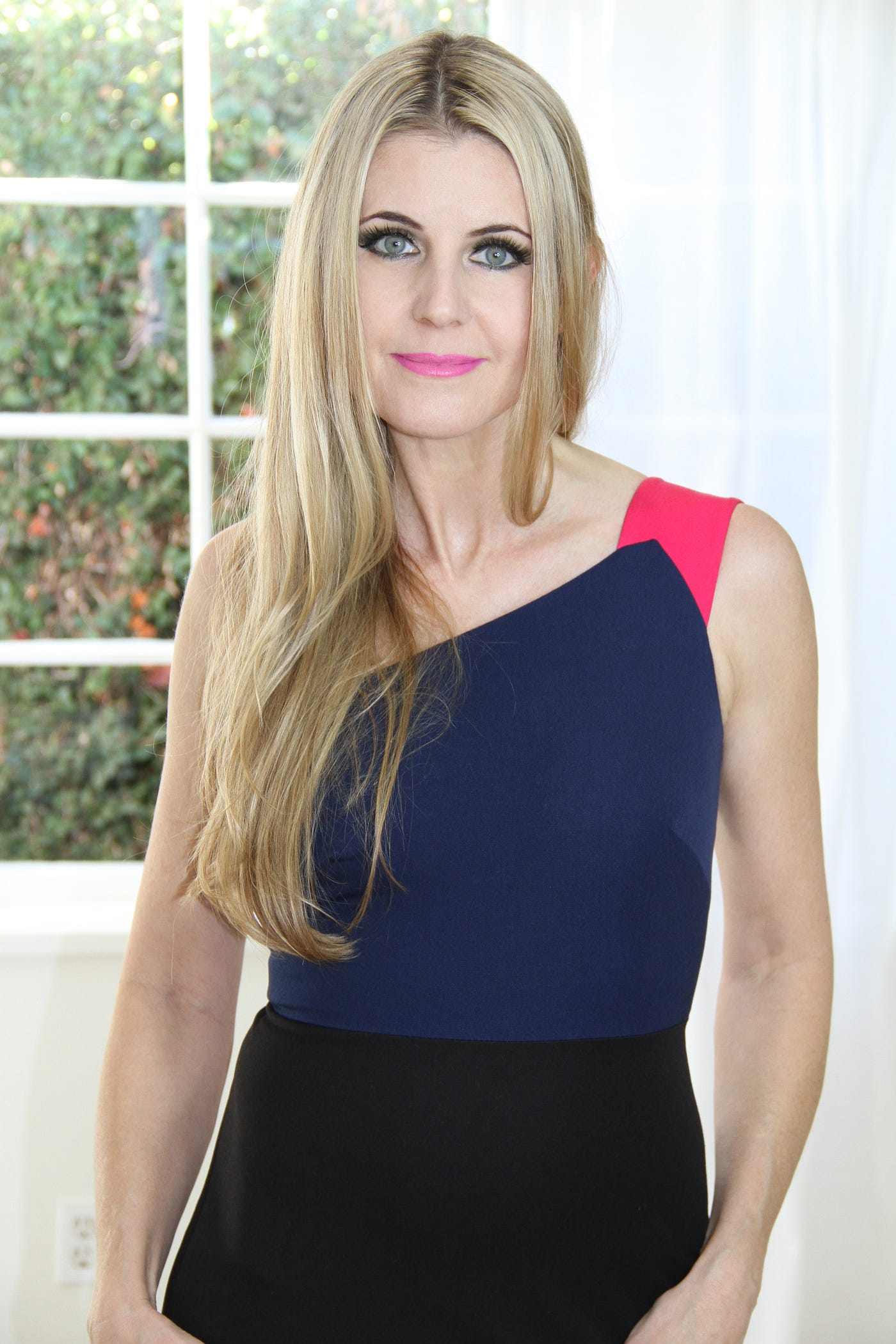
As a part of this series I had the distinct pleasure of interviewing Kathy Kolla.
Kathy Kolla is one of the top filmmakers to keep an eye on in Hollywood today. She wrote/directed the award-winning film “Plastic Daydream” starring Shari Belafonte, as well as the hit music documentary “Who Is Billy Bones?” – both of which garnered rave reviews from television audiences. She’s currently developing a new feature project in Los Angeles, where she took a moment to speak with us about her experience being a powerful woman in Hollywood. Http://www.ColaKat.com
(Kindly insert your three sentence bio, written in third person, here. The rest of the interview should be in first person)
Thank you so much for doing this with us! Before we dig in, our readers would like to get to know you a bit more. Can you tell us a bit about your childhood “backstory”?
I grew up in Michigan, near Detroit, and from a young age had a passion for all things creative. Movies and acting were my personal creative outlet. So the first chance I had, I headed to Los Angeles.
Can you tell us the story about what led you to this particular career path?
I started in entertainment as an actor and model, which led to a lot of great opportunities to work with inspiring teams on film and television productions. Seeing how everyone worked together, and seeing how the director made their vision come to life, well, it made me want to investigate being a director, to look into that career path.
Can you share the most interesting story that happened to you since you began your career?
There have been many interesting moments. It’s so hard to pick one. I do remember one thrilling shoot when I was able to explore the now-defunct punk rock club The Masque off Hollywood Boulevard during the filming of my documentary “Who Is Billy Bones?.” We got to go down into the basement of the club, where the graffiti had sat unchanged on the walls for more than 30 years. It was like entering a tomb in a way. Like being an explorer discovering a place that had been untouched by time. And I got to experience Billy Bones’ first view of the club in all those decades. Seeing his face as the memories came back to him was something I’ll never forget.
You are a successful business leader. Which three character traits do you think were most instrumental to your success? Can you please share a story or example for each?
I believe character traits can change, so why not start with adaptability? It’s important to be flexible and adapt to a situation. An example in filmmaking would be if you show up to location and find that the lighting or the background is not what you expected. This has happened to me. You have to forget your preconceived plans and adapt and figure out how to make it work. To change the staging or find new ways to light the scene.
Next I would say it’s important to be empathetic. I’ve worked with many good actors before, and the best ones have the most empathy. They can get into character and feel the feelings that script calls for. I’ve had many conversations with actors about this, and it always helps them dig deeper into their role.
Finally, I have to add the trait of being respectful. Respect goes a long way. I’ve worked with some crew members before who didn’t show respect, sometimes challenging me in disrespectful way, or disrespecting other crew members. I’ll tell you what, I didn’t hire them again.
Ok, thank you for that. Let’s now jump to the primary focus of our interview. The premise of this series assumes that our society still feels uncomfortable with strong women. Why do you think this is so?
It would take a PhD in psychology, or perhaps a sociologist, to truly answer that, but I’ve always assumed it stems from centuries of group-think. Different cultures throughout the world have obviously had different experiences, but I think we’re finally getting to a place where society is getting more comfortable with strong women.
Without saying any names, can you share a story from your own experience that illustrates this idea?
Of course. As mentioned above, I’ve worked with male crew members – who I’ve hired – that have shown disrespect for my vision even when they were there to help support the team. There have been times when they’ve disagreed in ways that were inappropriate. It’s something we all have to deal with.
What should a powerful woman do in a context where she feels that people are uneasy around her?
You have to keep your eye on the prize, on the task at hand. You can try to make people comfortable around you, but ultimately it is up to them. As long as you show everyone respect, you’re doing your part.
What do we need to do as a society to change the unease around powerful women?
We need to hire and appoint more women into positions of power. And it’s heading that way, thankfully. The more examples we have of women in leadership roles in the entertainment industry, the more the workforce as a whole will accept powerful women.
In my own experience, I have observed that often women have to endure ridiculous or uncomfortable situations to achieve success that men don’t have to endure. Do you have a story like this from your own experience? Can you share it with us?
It’s difficult to know what people have to endure, as everyone’s path to success is different. People from all different backgrounds endure different scenarios on their way to success. Personally, I’ve been very lucky to work around good people. There have been instances where producers may have gotten a little too personal, and I’m not sure as many men would have to deal with that. But for the most part I’ve not had too many issues.
In your opinion, what are the biggest challenges faced by women leaders that aren’t typically faced by their male counterparts?
The biggest challenge might just be getting your foot in the door. For instance, in television directing, there are many amazing women working, but the percentage of women is smaller than men. The challenge in the entertainment industry, or the corporate world in general, may be that we need to do a better job of hiring new female talent.
Let’s now shift our discussion to a slightly different direction. This is a question that nearly everyone with a job has to contend with. Was it difficult to fit your personal and family life into your business and career? For the benefit of our readers, can you articulate precisely what the struggle was?
I’ve been fortunate to work on my own projects in recent years, projects that are a passion for me, which means they do spill over into my personal time. And as with any creative endeavor, there are long hours, where you might be away from your family. So that is a struggle, being away late at night when you feel as though you may be missing something at home. I’m sure everyone is a work-in-progress in that regard. We’re all trying to find work-life balance.
What was a tipping point that helped you achieve a greater balance or greater equilibrium between your work life and personal life? What did you do to reach this equilibrium?
To my previous point, working on my own projects gave me a freedom to have a greater balance of work and life. I found that as I took control and started producing under my own production company that it enabled me to find equilibrium that working for someone else might not have provided.
I work in the beauty tech industry, so I am very interested to hear your philosophy or perspective about beauty. In your role as a powerful woman and leader, how much of an emphasis do you place on your appearance? Do you see beauty as something that is superficial, or is it something that has inherent value for a leader in a public context? Can you explain what you mean?
That’s a very good question. I think it depends on one’s own personal interests. I’ve always enjoyed the fashion industry and I suppose have been interested in the beauty industry that goes along with it. It’s been inspiring and fun for me to work in the realm of fashion and beauty. But if that’s not someone’s “thing” – if it doesn’t bring them joy – then I don’t think they should ever feel obligated as a woman to take on a role focused on appearance, if that doesn’t feel true to their personal narrative. They should be able to let their work speak for itself, regardless of their outward appearance.
How is this similar or different for men?
It probably is different for men, as far as not having as much pressure to focus on appearance. There are men who also love fashion and beauty and putting energy into their own personal style because it makes them feel good. But if they aren’t interested in that – if they just want to wear the same clothes every day and forego their appearance – it is probably more accepted. That’s true.
Ok super. Here is the main question of our interview. Based on your opinion and experience, what are the “Five Things You Need To Thrive and Succeed as a Powerful Woman?” (Please share a story or example for each.)
VIDEO: https://youtu.be/DHnbwv-TpDg
A Supportive Team: No matter what anyone says, nobody rises to a high level of success by themselves. It takes a team to accomplish anything. So to thrive you need to surround yourself with a supportive team, people you trust and admire, who want to reach the same goal as you and who will help you on your way. Of course, it has to go both ways, though. Once you have a group of like-minded colleagues working together, you need to support them as well. Everyone will lift each other up.
Communication Skills: A person can have a great vision, or a great plan, and if they can’t communicate it, it’s not going to go far. To thrive as a powerful woman you need to learn good communication skills. It will not only help to get your vision across, but it will also help in any disagreements, if you can communicate clearly. I’ve had some situations on set where there was a disagreement that could’ve turned ugly, but once I started communicating with respect, it turned out we weren’t dealing with opposing opinions, we were just dealing with a misunderstanding stemming from poor communication. Once we cleared it up, everything was fine.
Self-Respect: This one may seem cliché, but it’s a rare cliché that’s based in truth. You have to have self-respect if you’re going to succeed as a powerful woman. Many people are going to try and drag you down. I’ve faced a lot of rejection over the years, and yet I’ve always continued on, and I believe self-respect is what’s at the root of that. I have the self-respect to not give up.
Accountability: Anyone in a position of power needs to learn to not be afraid of accountability. If you expect your team to be accountable, you have to be, too. You have to take responsibility and can never play the blame game. For example, if I make a decision and task my team to act it out, and it doesn’t work, I’m going to be the first one to step up, take responsibility, and look for an alternate solution.
Adaptability: You need to be able to adapt to unforeseen circumstances. I’ve seen challenges arrive out of nowhere, for instance, a crew member doesn’t show up to work or a set piece falls apart, and you have to adapt on the spot to make it work. You might have to change your shots to account for the new obstacles. It’s also important to be flexible and adapt to industry changes. Theatrical screening formats and even filming and writing formats are changing, and those who adapt will continue to thrive.
We are very blessed that some very prominent names in Business, VC funding, Sports, and Entertainment read this column. Is there a person in the world, or in the US with whom you would love to have a private breakfast or lunch with, and why? He or she might just see this if we tag them.
Let’s go with Chloé Zhao, the director of the wonderful Nomadland and The Eternals. I’d love to speak with her about being in a leadership role where she’s handling $200 million budget films. It’s a rare space for a woman to be. She’s one of only a handful of women who have ever done it. It would be great to have lunch with her to discuss filmmaking and learn about her personal creative process, too.
Thank you for these fantastic insights. We greatly appreciate the time you spent on this.