I was not diagnosed autistic until I was 40, but when I look back at some of the stuff that occurred to me when I was a kid, I think it’s pretty clear.
Pop Culture
Jorge Gutierrez: How Quitting DreamWorks and Embracing Neurodivergence Fueled a Bold Animation Career
The visionary director and animator shares how his unique perspective, refusal to compromise his crew's well-being, and fearless creative risks shaped his cinematic journey.
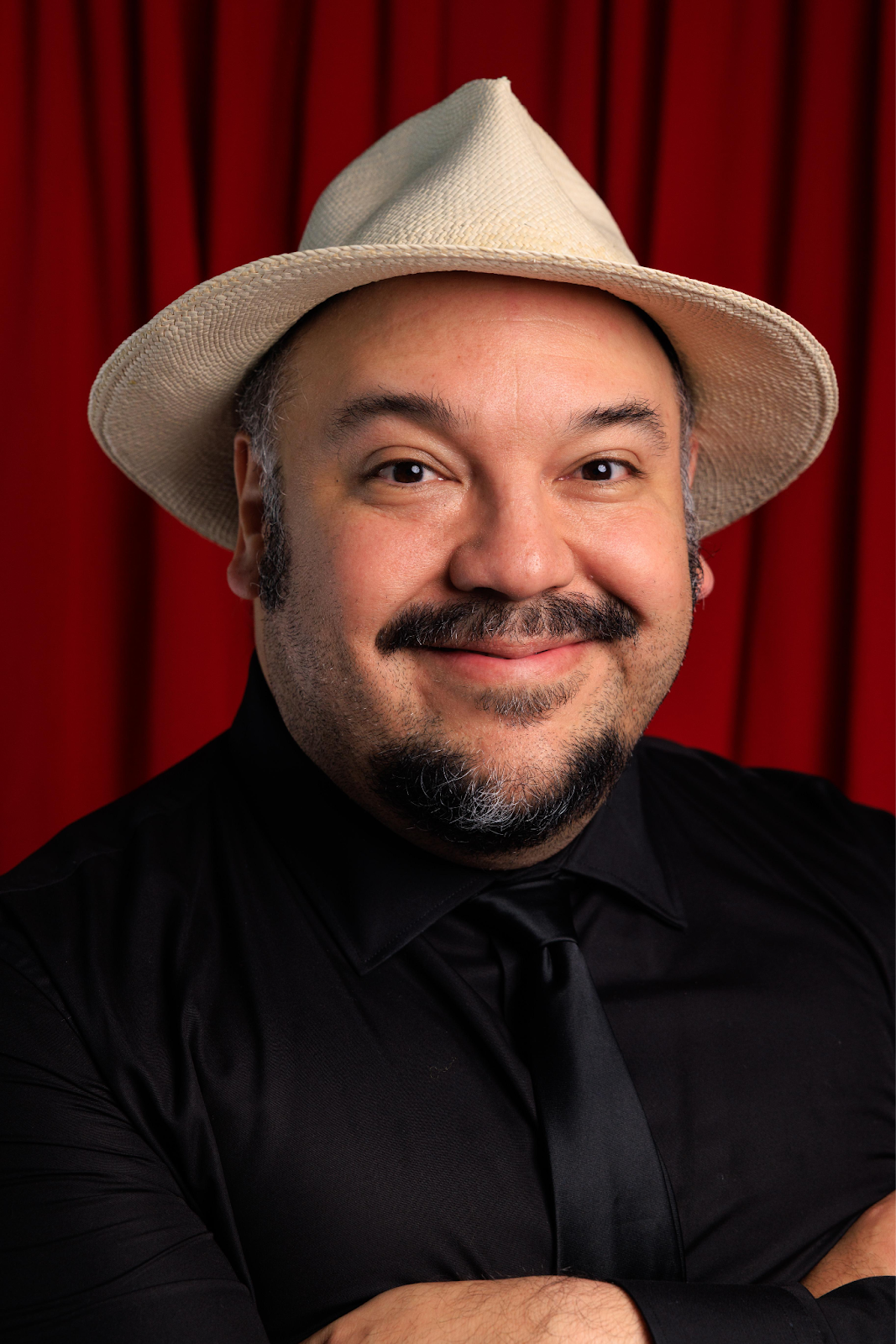
I had the pleasure of talking with Jorge Gutierrez, and if you listen closely to the rhythm of his speech, you can hear the faint, distorted feedback of a punk show in Tijuana mixed with the vibrant, chaotic colors of Mexican folklore. Gutierrez is not your typical Hollywood suit; he is a “mutant artist” operating in a town built on conformity, a creator who has managed to carve out a space for the weird, the loud, and the deeply sentimental in an industry that often prefers the safe bet.
Gutierrez, the mind behind The Book of Life and El Tigre, is 51 now, but he exudes the energy of someone who just discovered a new favorite band. His journey to the top of the animation world wasn’t a straight shot; it was a winding road paved with rejections, cancellations, and a late-in-life revelation that changed everything.
“I was not diagnosed autistic until I was 40,” Gutierrez told me, reflecting on a life spent feeling slightly out of tune with the rest of the orchestra. “But when I look back at some of the stuff that occurred to me when I was a kid, I think it’s pretty clear.”
For the young Gutierrez, the world was a noisy, overwhelming place. He didn’t speak until he was five. He found solace not in people, but in the precise, exaggerated clarity of cartoons. He became obsessed with Disney’s Pinocchio, seeing himself in the wooden boy who just wanted to be real. “I think that was me trying to connect,” he says.
Art wasn’t just a hobby; it was a survival mechanism. Moving schools frequently, Gutierrez was the perpetual new kid, a prime target for bullies until he pulled out his pencil. “I would start drawing, and that’s how people would get to know me,” he recalls. “Anytime bullies picked on me, I kind of won them over with drawings. So, drawings became not only a way to communicate but to survive.”
When he told his father — an architect who Gutierrez viewed as a superhero — that he wanted to be a filmmaker and painter, the reaction was grounded in the harsh reality of growing up in Mexico. “That’s like saying you want to be the Pope or you want to be Batman,” his dad joked. But Gutierrez, fueled by the stubbornness that he now recognizes as a trait of his neurodivergence, asked the question that defines all rebels: “Why is that not possible?”
That defiance became the ink in his pen. He devoured books on art, internalizing the advice to “draw what you know.” But for Gutierrez, drawing what he knew meant mythologizing his own life. The Book of Life, his breakout film produced by Guillermo del Toro, wasn’t just a fantasy; it was an autobiography written in code.
“Winning the heart of my then-girlfriend, now-wife, seemed like I had to die and go to another world to convince her family… that I was worthy of her,” he explains. Her family of doctors saw him as a “mutant artist” dragging her into a life of bohemian starvation. The film’s central thesis — “You have to kill who you’re going to be, to become who you really want to be” — was his declaration of intent.
His career has been anything but a steady climb. He describes the cancellation of his Emmy-winning Nickelodeon show El Tigre not as a tragedy, but as a necessary step on the “pyramid of success.” If El Tigre hadn’t been axed, he never would have ended up at DreamWorks, where he famously quit rather than turn The Book of Life into a “hip-hop salsa musical.”
“If I fail, at least I tried,” he says, a mantra that has seen him through the volatile tides of Hollywood. He looks at the careers of his heroes — Tim Burton, Alfonso Cuaron, Guillermo del Toro — and sees comfort in their failures. “A rough sea makes brave sailors.”
This bravery extends to his leadership style. Having worked his way up from the bottom, Gutierrez has seen the ugly side of the industry — leadership based on fear, burned-out crews, and broken families. He refuses to perpetuate it. “I’d rather have something good instead of perfect but have a happy crew,” he insists, “than have something perfect at the expense of people getting sick.”
Central to his story is the “muse,” his wife Sandra Equihua. Their romance is the stuff of punk rock legend, beginning in a mosh pit in Tijuana when they were 17. “I walked out of the mosh pit… and said, ‘That’s the girl I’m going to marry,’” he says. Despite warnings that two passionate Latino artists would destroy each other, they became the “Diego Rivera and Frida Kahlo of cartoons” — minus the disastrous divorces.
Now, with projects brewing at Netflix, Disney, and Warner Bros., Gutierrez is busier than ever. He views his autism not as a disorder, but as “wings” that allow him to fly. He navigates the industry with a simple, rock-and-roll philosophy: “Make death regret taking you.”
It is a fitting ethos for a man who has spent his life turning the noise in his head into visual symphonies for the world. Jorge Gutierrez isn’t just making cartoons; he’s proving that the wooden boy was real all along.
Diane: Welcome, Jorge. I’m so glad that you’re here, and I look forward to our conversation today. I want to get started by going back to the origin of how things began for you. How did you first discover your love for animation and visual storytelling, and what drew you to the medium as such a young creator?
Jorge: I was not diagnosed autistic until I was 40, but when I look back at some of the stuff that occurred to me when I was a kid, I think it’s pretty clear. I became obsessed with cartoons very early on because of the clarity of communication. It was very clear for me to read the expressions and actions of what the characters were trying to express. I was obsessed with the Walt Disney Pinocchio movie. If you look at that movie, it’s about a wooden boy who wants to be a real boy — a kid who doesn’t think he’s like the other kids. I think that was me trying to connect.
My “thing” used to get to know people was drawing all the time. I would just lose myself in my drawings. I changed schools a lot, and I was the kid who showed up with paper and pencils. I would start drawing, and that’s how people would get to know me. They were like, “Oh, that’s the artist.” Anytime bullies picked on me, I kind of won them over with drawings. So, drawings became not only a way to communicate but to survive.
Eventually, I became obsessed with home video. Once home video started happening, I could watch stuff over and over. It became very comforting to know where the stories were going. I realized, “I want to do this. This brings me so much joy and clarity; I want to do it.” When I was about 13 years old, I told my father I wanted to be a filmmaker, a painter, and a writer because those were the three things I loved the most. A family friend said, “That’s animation. You get to tell stories, you get to make little movies, and you get to make paintings move.” That was the origin. But as a kid in Mexico, saying you wanted to be an animator… my dad would joke, “That’s like saying you want to be the Pope or you want to be Batman.” That just wasn’t very realistic. I remember, like all rebels, asking, “Why? Why is that not possible? If I fail, at least I tried.”
Diane: Your work is so visually bold and emotionally layered. How did your early life experiences and your background shape your artistic voice?
Jorge: Reading a lot about how other artists took their personal life and put it on the canvas, the screen, or the pages of their books really inspired me. I read a lot of “how-to-be-an-artist” books where people would say, “Draw what you know, write what you know, paint what you know.” Everyone had the same message: start from inside and go outside.
In all my work, I really tried to ask myself: what are the most insane events in my life or the events that changed my life? And how do I extrapolate a fantasy story from this? For example, The Book of Life. Winning the heart of my then-girlfriend, now-wife, seemed like I had to die and go to another world to convince her family and everybody around me that I was worthy of her. I had to prove that being an artist was going to be a way for me to make a living and survive. Her dad was a doctor, and all her sisters were studying medicine. They saw me as this mutant artist who wanted to take her away to die of starvation in the bohemian life. That’s where The Book of Life came from — this idea that you have to die to prove to everybody how much you want something, reinvent yourself, and be reborn as a confident version of yourself. I love the saying, “You have to kill who you’re going to be, to become who you really want to be.” That’s where that film came from.
Then we had a TV show called El Tigre. It was a kid whose dad was a superhero, and his grandpa was a supervillain. He had to decide which side he was going to go with. He loved both, and both loved him. That’s what happened to me as a kid. My dad was an architect, so he could draw; I thought he was a superhero. My grandfather was a general in the Mexican army, which seemed like he was a supervillain. I idolized and loved both. My aunts would ask me, “When you grow up, are you going to be like your dad? Or are you going to be like your grandpa?” That’s where the show came from. When people look at our stuff and say, “There’s heart in it,” it’s because they’re based on real things. That’s the secret.
Diane: You shared that later in life you were diagnosed autistic, and knowing a little bit about you, your son’s diagnosis played a part. How did that realization help you better understand yourself as an artist and as a storyteller?
Jorge: My son Luka was diagnosed when he was two and a half. We were very surprised, but my parents’ reaction was, “There is no way he is autistic because he’s exactly like you at that age.” That was the big “aha” moment for me.
I did not speak until I was about five. I repeated things and made little voices, creating characters of myself to cope and regulate. When I turned 40, I said, “All right, I’ve done all the online tests.” Obviously, they tell you at the end that you cannot be diagnosed by the internet; you have to be diagnosed by a physician. So, I took the plunge and got tested. Sure enough, it was very clear that I was autistic. I’m 2e — twice exceptional. I’m very good at certain things and obviously not very good at other things.
Looking back at my life, replaying moments and events, I went, “Oh, that’s why.” That’s why when I went to a party when I was 16, and it was too overwhelming — the music and the people — I just had to get out of there. I threw up, and I hadn’t literally drank anything; I was just overwhelmed. Or that’s why when I do a presentation and talk to a bunch of people, afterward I pass out from exhaustion. That’s why when I go to a party, I literally have a plan: who I’m going to talk to, when I’m going to talk to them, and how I get out. I have all these coping mechanisms that I developed instinctively throughout my life.
Obviously, it’s very different for everyone. But for me, it’s really been positive. For any of the negative stuff, it’s been incredibly helpful in my career. I can’t imagine that I would get to do the stuff I do without being autistic. I know a lot of people hate saying it’s a superpower, but honestly, for me, it feels like it’s been wings that have allowed me to fly.
Diane: Talk about how you dealt with confidence issues or learned to trust your unique way of seeing the world.
Jorge: That’s something I feel very lucky about. Ever since I was a kid, while I cared what others thought, deep down, I didn’t really care what others thought. That fueled me to just pursue things. Part of being autistic is also being stubborn about certain things, so I just worked my way through.
One of the big things I figured out really early was that the more you do something, the better you get at it. If you get fast and have a very focused work ethic, you can get really good, really fast. I applied that to everything. For any assignment I would get, I would do ten times the assignment just to get better and then turn in the best one. I applied that to confidence where I would go, “I’m going to do this. And if you don’t like it, it’s okay. I’m going to make another one. If you don’t like that one, it’s okay. I’m going to make another one.”
When I get rejected or things don’t go my way, I lick my wounds and take the loss, but man, I come back way smarter and way more experienced. To me, they’re little stripes. I’m a tiger, and they’re just more experiences. That confidence inspires others around you. They go, “If that guy thinks we can do it, I think we can do it.” I’m a director and a showrunner, and I work with teams. A lot of times, when you’re the person in charge, if you’re not confident, it’s a disaster. You have to lead by example.
Diane: Staying on that theme, when you’re leading such a large creative team, what has this taught you about collaboration and communication?
Jorge: Thankfully, I’ve been part of other crews working my way up through the Hollywood system. I started at the bottom and slowly worked my way up. Over that journey, I got to experience inspiring leadership and not-so-inspiring leadership — chaotic leadership, or leadership based on fear and intimidation. Then there’s leadership based on kindness and taking chances. Anything I’ve ever done was because someone took a chance on me.
With that said, it’s a job. Obviously, the stakes are real regarding deadlines and finances, so I take that stuff really to heart. When I work with a team, I like to believe that a lot of autistic people can put themselves in someone else’s shoes very easily. I literally ask, “If I’m this artist, writer, or person, how do I set it up so that I’m setting them up for success? When I was in those positions, what really helped me and what didn’t?”
I really try to cater the experience to that person. Everybody is different. I have a gigantic Rolodex of personality traits. Artists are quirky and weird, but I’ve met thousands of them. So I can go, “Oh, you’re just like the 72 other guys I’ve worked with over the years that did that. I know exactly what you need.” I can process that information pretty fast.
Usually — what’s the saying? “You want to make God laugh, tell him your plans” — as much as I prepare, sometimes you can’t predict how people are going to react. But if you talk to most of my crews, they usually had a really good time. We are usually really efficient. I’m of the belief that a happy crew makes better shows. In Hollywood, a lot of times, unfortunately, they murder the crew to justify something being really good. I’m the opposite. I’d rather have something good instead of perfect but have a happy crew, than have something perfect at the expense of people getting sick, getting divorced, and relationships falling apart. I think it’s a crime that in the medium I’m in, which is very family-friendly and for kids, that we’re making shows celebrating people coming together and celebrating families, while behind the scenes doing the opposite and destroying families. There’s a moral ground where I go, “No, we have to practice what we preach.”
Diane: Talk a little bit about some of the projects you’ve been on that maybe got canceled and then led you to The Book of Life, and what’s going on now?
Jorge: When I looked at people’s careers — especially the people I admired, like Guillermo del Toro, Alfonso Cuarón, Tim Burton, Henry Selick — one of the first things I realized was their careers were not a straight line going up. Their careers were up and down. That gave me great comfort early on in knowing that every time they passed on one of my movies, killed one of my pilots, or things didn’t go my way, it was like the weather. These were things beyond me. And two, a rough sea makes brave sailors. The more I could navigate these things, the better I would get.
When The Book of Life happened, it was really interesting because we had a TV show at Nickelodeon called El Tigre. We only did one season, 26 episodes. It won five Emmys, which is the most Emmys a show has ever won for one season. When they canceled it, everybody was angry and devastated. I think I was the only guy who was kind of like, “Wow, I can’t believe they spent all that money to let us make this. I can’t wait to see what we do next.”
Because El Tigre was canceled, I got to go to DreamWorks to develop The Book of Life. I was there for a year. They wanted to pair me up with Lin-Manuel Miranda and make a hip-hop salsa musical New York version of The Book of Life. I politely said no and I quit. Everybody went, “Oh, if he’s not into it, he won’t do it.” Then the next studio that picked up The Book of Life was Reel FX in Texas. They basically grabbed the original idea and said, “We want to make your original version of it.” Guillermo del Toro got attached as a producer, we sold it to 20th Century Fox, and we got to make the movie.
But if you do the timeline: if El Tigre hadn’t been canceled, no Book of Life. Coco comes out, and then people would think I ripped off Coco. If it goes to DreamWorks and we make the hip-hop salsa musical version of it, honestly, I think it would have been awful, and I never would have worked again. So out of these failures, the thing that I’m most known for happened. To me, those were steps. In the pyramid of success, failures are the steps up.
Diane: So what are you working on now? Is there anything you can share at this point, and what big plans are in your foreseeable future?
Jorge: Oh my god. I’m working on so much stuff. Some of it is announced, some of it I can’t say what it is yet. But I’m working on six different things.
I just put up an adult animated pilot for the first time — like South Park or Rick and Morty — called El Guapo vs. The Narco Vampires. It’s up on YouTube and it kind of blew up. We’re figuring out where we’re going to do this and who is going to be financing it because it definitely blew up.
They just announced this: I’m developing the Speedy Gonzalez animated CG movie for Warner Brothers Pictures Animation. We just started that. I’m also developing a new movie at Netflix Animation, which they haven’t announced, but I can happily say it’s going to be as amazing as you can imagine. I’m also developing a limited animated series for The Walt Disney Company. That’s all I can say, but it is based on a very famous IP. I’m also talking to Nickelodeon about bringing back El Tigre as shorts first and then hopefully a movie.
I had a movie at Netflix called I Chihuahua with Gabriel Iglesias (“Fluffy”). Netflix was really nice and let me take the movie out. I’m hoping I’m going to get to make that with an independent distributor. So lots of stuff is brewing. I’ve never been busier, and honestly, I’ve never been happier. I’m 51, and I feel like I’m just getting started.
Diane: The 50s are the best decade ever, I can definitely say. As we start to wrap this up, I know that family is at the heart and soul, and you have such a great love story with your wife. You met so young; share a little of that story with us and how you work together.
Jorge: I met my wife when we were both 17, the summer we were high school juniors, on a blind date at a punk rock concert in Tijuana. She was two hours late, which already tells you what kind of girl she was. She was going to make me earn it. That night I went into the mosh pit — where you dance, get punched in the face, and there is mud everywhere. I walked out of the mosh pit, and they said, “She’s over there.” I saw her and said, “That’s the girl I’m going to marry.” I just knew.
I proposed two weeks later, and she, of course, said no. Eight years later, we got married. We survived finishing high school and college. I studied animation at CalArts; she studied graphic design at a university in Tijuana. We would just see each other every two or three weeks. She’s a brilliant artist, but there were no animation schools in Tijuana, let alone for the type of stuff she was doing. It was an osmosis of knowledge. I brought over books and movies, and we would study things together.
As soon as we graduated in 2000, we got married in 2001 and just started working together. We were warned by everybody: “You guys cannot work together. You’re both very passionate Latino artists; you’re going to get in fights, and your marriage is not going to survive this.” We said, “Well, if our marriage can’t survive working together, why are we together?”
We just went for it. We stepped on each other’s toes a lot in the beginning until we figured out how to dance better with each other. The biggest thing we learned was: let’s not both do the same thing. We started dividing and conquering. I like drawing monsters and super macho guys; she loves drawing cute things and sexy girls. I tend to write, and she’s really good at giving me notes and editing me.
Nickelodeon made us sign a deal for El Tigre saying if you get divorced, the show still goes, because they were so afraid we were going to get divorced. They would hear our arguments and yelling, but to us, being from Mexico, this is normal.
After El Tigre, I think the leadership part was not something Sandra enjoyed as much. The executive interactions and dealing with the networks wasn’t why she wanted to do this, so she took a backseat a little bit. When The Book of Life happened, she was an incredible designer; she designed all the beautiful girls in that movie. Then we had our son, Luka. She said, “All right, I’m going to be a part-time artist, part-time mom.” I said, “Yes, you will be amazing at both.”
After a while, she said, “You know what? I’m really happy with everything we’ve done together, but I kind of want to do some of my stuff on my own.” She did a kids’ book and is writing her third one right now. She has an illustration career on the side. We come together for projects and then go back and forth. I can’t imagine not having her next to me. I call her the muse because she really has inspired me.
I had this dream idea early on — very naive — but I told her, “I want to be the Diego Rivera,” the famous Mexican muralist, “and you’re Frida Kahlo,” the most famous female artist in the world. They were a couple, and it was a disaster — they would get divorced all the time — but when they came together, it was magical. I said, “That’s what I want for us. I want to be the Diego Rivera and Frida Kahlo of cartoons.” And it kind of happened.
Diane: That’s wonderful. There’s always a signature closing with Authority Magazine, and it’s five things that you wish you either knew or what you would share with a young creative person starting today.
Jorge: All right. Five things.
- One, which I keep reminding myself: Pain now or pain later. But there’s going to be pain. If you work really hard early, there’ll be less pain later. If you don’t work hard early, you’re going to pay for it later.
- Two: This too shall pass. I say that to myself every time something horrible happens, but also every time something wonderful happens. Appreciate the good moments because you don’t know if they’re ever going to come back. Appreciate both.
- Three: Never compete with anyone but yourself. Ask yourself, “Am I doing better than a month ago? Am I doing better than a year ago?” I tell students to look at their drawings or scripts from today and compare them to a year ago or five years ago. You’re going to see the growth. Only compare you to you because there’s always going to be someone better.
- Four: It’s easy to help those who can help you. But nobility is helping those who can’t help you. I believe in karma. Anything good that’s happened in my career usually came from me helping someone out that I didn’t think could help me. Then for some reason, something happened. Pay it forward. It makes a huge difference.
- Five: Make death regret taking you. Live such a great life that death regrets it.
Diane: I love that. That was beautiful. Thank you. This has been inspiring, engaging, and I’ve heard you speak and talk and this was like getting to know you all over again. So thank you, Jorge, so much.
Jorge: Thank you.
DS
Written by
Diane Strand
Writer & ContributorContributor at Authority Magazine covering leadership, innovation, and industry insights.

Published inAuthority MagazineTop Lessons, Top Authorities · 42K Followers
Exclusive, curated interviews with the leaders and changemakers shaping tomorrow. Leadership lessons, industry deep dives, and executive profiles.