The three character traits that have been most beneficial to my success as a criminal lawyer are that I am outspoken, charismatic, and strategic. Being outspoken means that I am not afraid to stand up for my clients in court, which is really what being a defence lawyer is all about.
Business
Jordana Goldlist: How Outspoken Strategy and High-Stakes Defense Built a Successful Criminal Law Practice
Top criminal defense attorney Jordana Goldlist shares how she overcame adversity, rejected big law factories, and built a thriving practice based on grit, strategy, and relentless advocacy.
The legal field is known to be extremely competitive. Lawyers are often smart, ambitious, and highly educated. That being said, what does it take to stand out and become a “Top Lawyer” in your specific field of law? In this interview series called “5 Things You Need To Become A Top Lawyer In Your Specific Field of Law”, we are talking to top lawyers who share what it takes to excel and stand out in your industry.
As a part of this interview series, I had the pleasure of interviewing Jordana Goldlist.
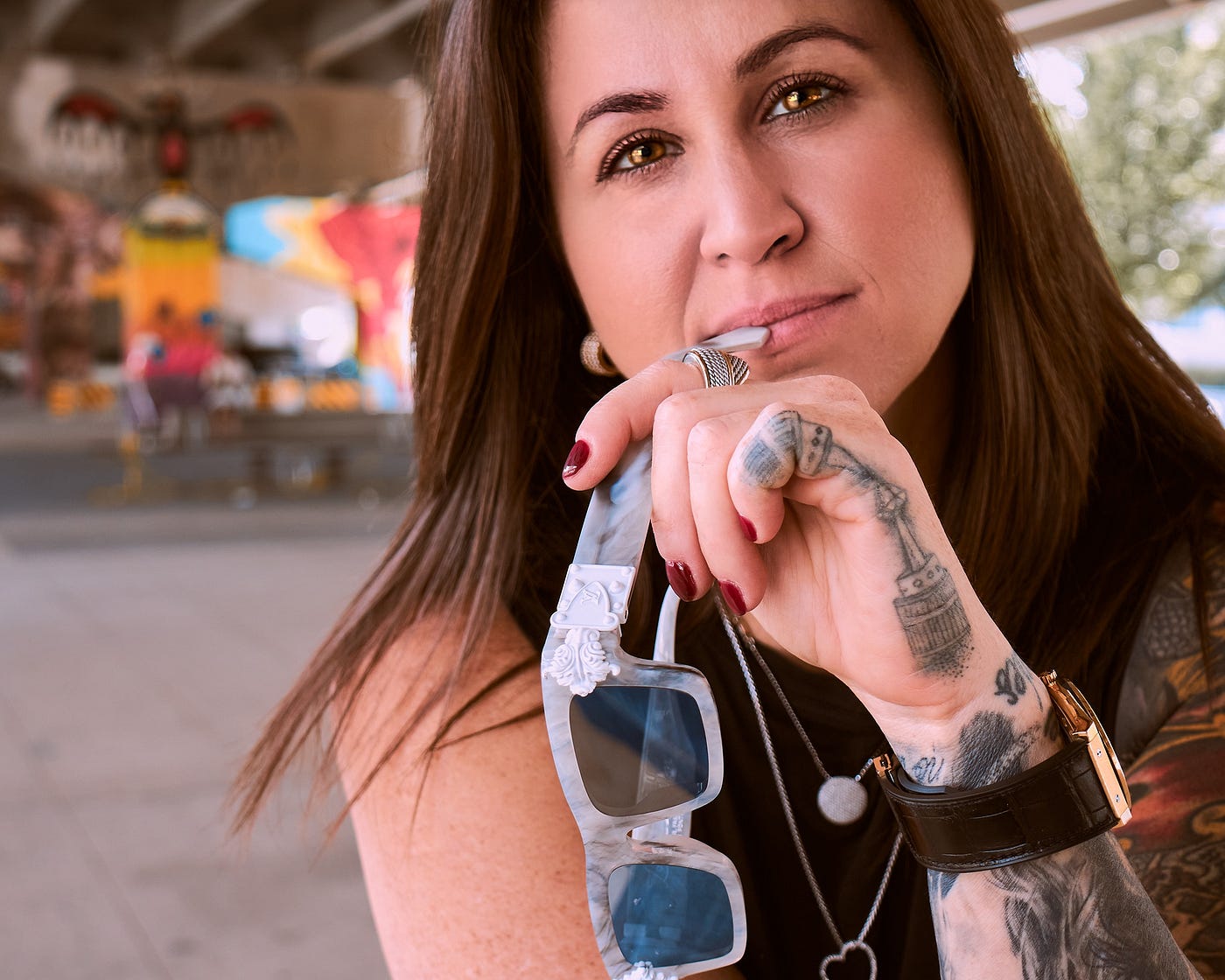
Jordana Goldlist is a sought-after criminal defence attorney. She focuses on high risk criminal litigation: homicide offences, the commercial drug trade, illegal firearm use and possession, and serious acts of violence. From Bail Hearing to Charter Application to Jury Trial, the goal is to ensure that you don’t get stuck in the trap of the Criminal Justice System. She prides herself on never taking the easy way out; if there is a defence to advance, then it is pursued, and while it is impossible to predict a result, she always promise a fight.
Thank you so much for joining us in this interview series. Before we dig in, our readers would love to get to know you a bit more. What is the “backstory” that brought you to this particular career path in Law? Did you want to be an attorney “when you grew up”?
I always wanted to be a lawyer, although my ambitions wavered as a teenager and into my early twenties. But, from the time I was 7 or 8 years old, I wanted to be a lawyer when I “grew up”. I watched as my stepdad was falsely accused of a crime and, during the year-and-a-half that he fought to prove his innocence, the lawyer he hired was the most important person in the world (or at least that was how it felt to me as a child). When the lawyer called, we all stopped talking — televisions were muted, people gathered by the phone. I did not understand what a lawyer actually did at the time, but I knew I wanted to be that important, that respected, and that admired.
Can you tell us a bit about the nature of your practice and what you focus on?
I am a criminal defence lawyer. My practice is focused on high-risk criminal litigation and I primarily represent people charged with murder, drug trafficking, and firearms offences. My office is located in downtown Toronto, Canada but I accept cases across the province.
You are a successful attorney. Which three character traits do you think were most instrumental to your success? What unique qualities do you have that others may not? Can you please share a story or example for each?
The three character traits that have been most beneficial to my success as a criminal lawyer are that I am outspoken, charismatic, and strategic. Being outspoken means that I am not afraid to stand up for my clients in court, which is really what being a defence lawyer is all about. It also means that I won’t stand down when my clients and I disagree. I am not judgmental, but I will say what I think and my clients respect that. Being charismatic helps me to win, especially in jury trials where many of my cases are litigated. I have always said that the jury trial is where the law meets theatre, and so having a personality that connects with an audience is essential. And finally, because I am strategic, I am always prepared for my cases and always know the specific path I am taking in their defence. I know what pieces of evidence I need from each witness and know how to fit the pieces together in the end. I also know when I need information from my clients so that I can scrutinize the police work or deconstruct a witness’ statement. Having a strategy for trial is absolutely essential for a successful defence.
Do you think you have had luck in your success? Can you explain what you mean?
The biggest insult someone can say to me is “you’re so lucky” or “it must be nice”. My success is based on hard work, long hours, seizing opportunities, taking risks, following a business plan, and then pivoting when that plan doesn’t work. Being a lawyer is one job but running a successful business is completely different. What I have accomplished is purely by design; I did not fall into my success, and it did not magically land in my lap.
Do you think where you went to school has any bearing on your success? How important is it for a lawyer to go to a top-tier school?
I definitely think it is important to go to a good school, not only for the reputation but for the quality of education. I have been an articling principle (supervising students before they become lawyers) for about eight years now, and I see the difference between a top-tier education and a second-rate one. I also know some firms that won’t even interview people who did not study at a top law school, so it matters where you attend. I went to Osgoode Hall Law School and I do think that it says something about my qualifications and capabilities to those in the legal community.
Based on the lessons you have learned from your experience, if you could go back in time and speak to your twenty-year-old self, what would you say? Would you do anything differently?
At 20 years old, I was a high school drop-out, fresh out of rehab. I spent my days just trying to stay sober and learning how to live again, after spending over two years out on the streets. My 20-year-old self would never believe that in 20 years I would own a successful criminal law firm, two properties, multiple investments, and a McLaren. My 20-year-old self would most likely call my 40-year-old self a liar! But if I could convince her to listen to me, I would tell her to stay focused and spend time getting to know herself without getting caught up with others who will not be there for the long haul and who would slow her down and distract her from her goals. Most importantly, I would tell her that family is everything and she should make up for lost time with her mom, who would prove to be her biggest supporter and who would be taken from her way before her time.
This is not easy work. What is your primary motivation and drive behind the work that you do?
When I first got sober, I could not imagine making it into law school. When I got into law school six years later, I could not imagine being a successful lawyer. When I started winning cases, I could not fathom running my own law practice. So now that I am running my own firm, I am driven by my own accomplishments. Each time I surpass my own expectations, I move the bar up a little bit farther. I think when you crawl your way out of the gutter, you work that much harder just to prove that you can.
What are some of the most interesting or exciting projects you are working on now?
I am really selective about my cases, so every case is interesting or exciting, or it’s for a client who I really care for. I especially enjoy murder cases because the stakes are so high. I also love fighting for clients whose constitutional rights have been trampled upon by the police. Winning those cases is my way of showing the client that their rights do matter and that they deserve the same respect and protections as everyone else, regardless of what they have done or where they come from. Those are the fights that feel personal to me.
Where do you go from here? Where do you aim to be in the next chapter of your career?
I am not sure that I will expand my practice, to be honest. I left a big law firm because I did not like the factory feeling, for myself or my clients. I wanted to focus on quality over quantity, so I have kept a smaller number of files and I have managed to find my niche market with a focus on murder, drug trafficking, and firearms offences. I am working on establishing a foundation to help others overcome adversity and achieve their own success, and I love speaking on panels and at conferences to try to educate people about the trap of the criminal justice system. I think I want my personal experience and successful career to help show people the potential of those of us who come from situations of struggle and to help inspire people trying to transition their lives by being an example that it can be done.
Without sharing anything confidential, can you please share your most successful “war story”? Can you share the funniest?
I will never forget my first murder trial. I spent about 50 hours preparing my client to testify and he just froze on the stand. Getting him to answer my questions was like pulling teeth. When we got to the part about him stabbing his best friend in the neck (in self defence), I asked him what was going through his mind as the victim staggered away and collapsed on the sidewalk. He was supposed to describe his emotional state and the fear he was experiencing in that moment. Instead, his answer was, “oh good, he’s gone.” I don’t know how I convinced the jury that he was not guilty of murder or why the prosecutor did not use that line in her closing address but, somehow, we kept going and secured a victory.
Ok, fantastic. Let’s now shift to discussing some advice for aspiring lawyers. Do you work remotely? Onsite? Or Hybrid? What do you think will be the future of how law offices operate? What do you prefer? Can you please explain what you mean?
For the first three months of the pandemic, I was shut out of the Courts and I closed my office. As I started to pay attention to the numbers I returned to the office, but only to meet with my associate and student. In June 2020, the courts announced they would be reopening the following month, so I reopened my office to prepare and started meeting with clients again right away. I have never shut back down and I operate just as I did before COVID controlled our lives. I think the Courts will remain hybrid but, as long as I can attend in-person for trials, I am okay with it. I have been staying out of jails with active outbreaks, but otherwise I meet my clients in person. I think Zoom has taken the humanity out of my profession (and the world at large), so I try to avoid it whenever possible.
How has the legal world changed since COVID? How do you think it might change in the near future? Can you explain what you mean?
COVID forced the courts to embrace technology in ways that many of us had been wanting for years. For example, before the pandemic we had to file paper copies of everything we were going to rely on in court. Now, we save thousands of dollars (and trees) by filing electronically. We used to have to drive for hours to get to a court appearance that would take half an hour or sometimes less. These short appearances can now be done via Zoom or teleconference. I think that the changes that have increased efficiency are here to stay, but I do hope that we return to a place where in-person trials are the norm instead of the exception.
We often hear about the importance of networking and getting referrals. Is this still true today? Has the nature of networking changed or has its importance changed? Can you explain what you mean?
I built my business on referrals. I do not pay for advertising or SEOs or to be at the top of Google searches for “best lawyer in Toronto” or anything of the sort. I never wanted random people calling me for legal advice and then questioning my credentials. I built my practice by doing good work and then asking my clients to refer people to me. I told my clients what type of files I would take to make sure that I was getting the work I wanted. So, I rarely get called to represent people on domestic assaults, impaired driving cases, or sexual offences. That is not my practice because that is not the practice I ever wanted. From the start, I focused on the types of files I enjoyed working on and then used my network of clients to build a business. I know some lawyers network with other lawyers for work, but I never wanted to rely on others to feed myself. And, to be honest, I like most of my clients more than I like most lawyers, so I would rather spend my time meeting with clients in jail then making small talk with lawyers in conference centers.
Based on your experience, how can attorneys effectively leverage social media to build their practice?
I think social media is a valuable tool for lawyers. #LawTwitter can help lawyers connect with other lawyers if that’s where you want to build traction, or to learn about new cases or current issues in the legal community. LinkedIn is also a great way to share successful results and articles that will allow other lawyers to see your work. I personally use Instagram and TikTok to share videos and news about topics I think will be relevant to my clients and also to showcase my personality. At the end of the day, there are hundreds of lawyers who do good work, so choosing the right lawyer comes down to finding someone who you connect with, trust, can talk to, and who you know will fight for you.
Excellent. Here is the main question of our interview. What are your “5 Things You Need To Become A Top Lawyer In Your Specific Field of Law?” Please share a story or an example for each.
- Dedication. Being a good criminal defence lawyer is a lot of work. The preparation that goes into a trial is substantial and time consuming, and legal issues can arise suddenly that require hours of research to contend with. In order to do a good job, you need to dedicate yourself to the case and be prepared to set everything else aside to stay focused.
- Support. As much as you need to do the work as an individual, it is essential to have support from other lawyers. I have been practicing criminal law for 12 years now and I still bounce ideas and defenses off of other lawyers to work through the issues. It’s important to have more experienced lawyers you can ask for advice and also colleagues who may have a different approach.
- Humility. I have always said that ego is often what most interferes with good lawyering. You cannot do a good job if you are scared to lose. Just like in every endeavour in life, high rewards come with high risks and sometimes there are losses. I know too many lawyers who will not take on risky cases or make uncertain arguments in court because they “might not win”. I think being successful in this field requires you to take the cases that you might not win and advance the uncertain arguments, because winning those cases is exactly what makes a lawyer stand out from the crowd.
- Thick skin. I don’t think you can survive this job if you are too sensitive and take criticism or mood swings to heart. The reality is that judges are going to test you, push you, and call you out on novel ideas and arguments. You have to be able to stand up for yourself and your client and argue back in an articulate, informed and respectful manner. Judges will question your position and you cannot take it as a personal attack; it is a challenge to your case and, if you have the caselaw and facts to support your position, you will succeed. In addition, clients are going to yell at you, whether you do something wrong or not, and you need to assert yourself without getting upset. I have so many clients without family support or friends they can call. That means I am the only person they have that they can vent to and express their fears and frustrations to, and it often comes out as anger. You have to know how to deal with people at their worst and be compassionate without falling into the role of social worker. I am very quick to set boundaries with my clients but, by the same token, I don’t get offended or upset when they call me screaming about their situation. Knowing how to navigate different types of personalities is essential in this business.
- Sense of Humor. People always think about the victims in tragedy and, of course, that makes sense, but when someone is arrested, their entire family suffers. My clients have mothers, fathers, siblings, and children that are left without a loved one if the person stays in jail. Even if released on bail, because of the nature of the charges I deal with, the conditions are often stringent. If I could not find humor in life, I would live in a very dark world. In order to have balance, I find things to laugh about every single day.
We are very blessed that some of the biggest names in Business, VC funding, Sports, and Entertainment read this column. Is there a person in the world, or in the US with whom you would love to have a private breakfast or lunch, and why? He or she might see this. :-)
I would love to do breakfast or lunch with Shonda Rhimes. I have such respect for her work and her accomplishments, and the interviews I have seen leave me so impressed. I also hope to write or develop a television series one day and would love to get her advice and guidance.
This was very inspiring. Thank you so much for the time you spent with this. We wish you continued success and good health!

Published inAuthority MagazineTop Lessons, Top Authorities · 42K Followers
Exclusive, curated interviews with the leaders and changemakers shaping tomorrow. Leadership lessons, industry deep dives, and executive profiles.