Contrary to many development philosophies, I believe that “more is not better”. I love finding rare pieces of land and seamlessly creating awe-inspiring living environments, all while preserving the natural topography.
Authority Magazine – Interview with David V. Johnson
[Three-sentence bio written in third person]
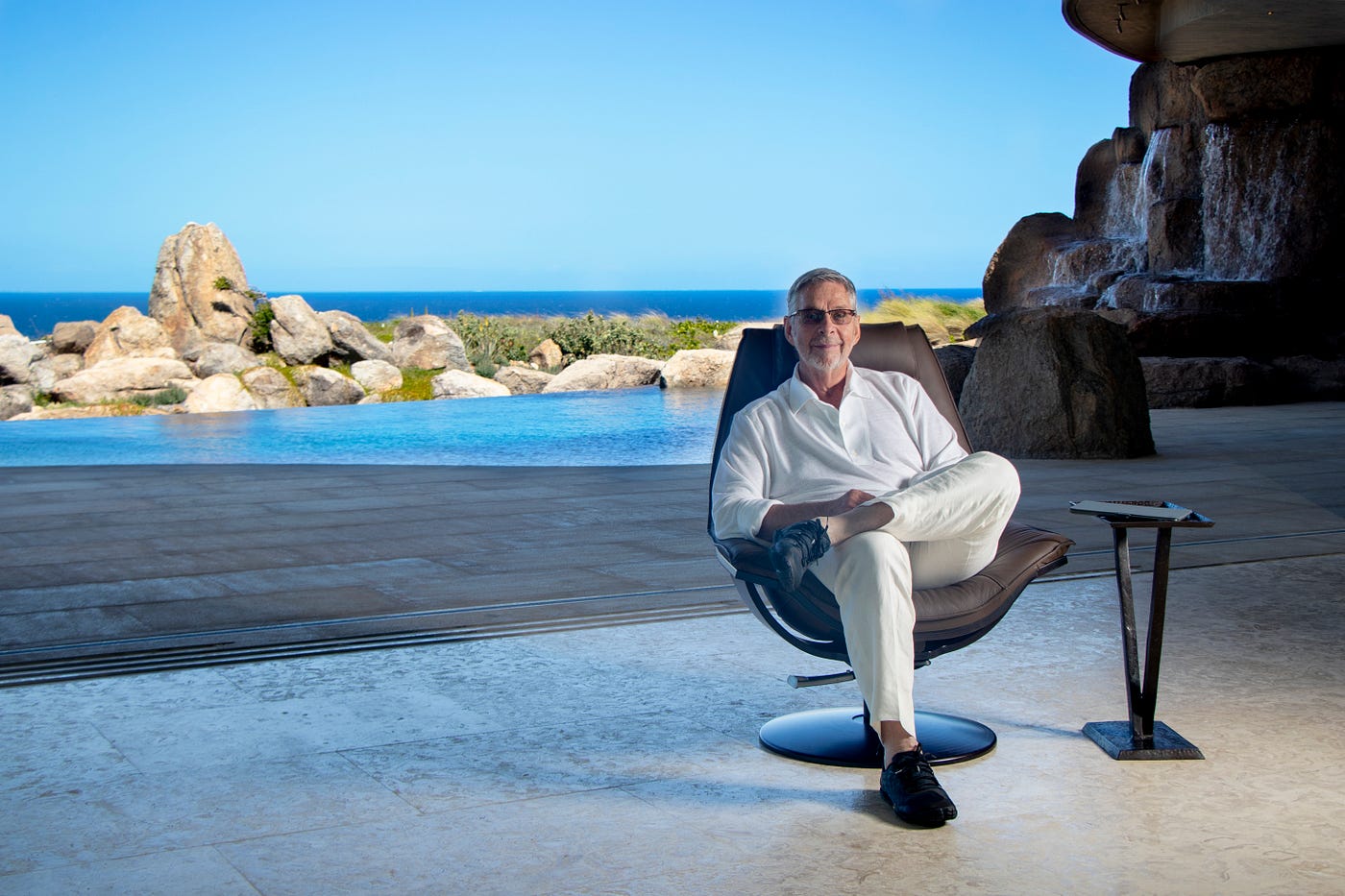
David V. Johnson, Chairman of Victor International, is the esteemed developer behind Oil Nut Bay with more than 40 years of industry-leading experience. A man with relentless drive, he broke his neck around 45 years ago and willed himself to walk after being told he would be permanently paralyzed. After creating 43 master-planned communities throughout Michigan, including the award-winning Bay Harbor, Johnson began his development Oil Nut Bay in the British Virgin Islands in 2004 as he sought to create a multi-generational destination for families to enjoy in harmony with nature.
Thank you so much for doing this with us! Before we dig in, our readers would like to get to know you a bit more. Can you tell us a bit about your “backstory”? What led you to this particular career path?
I have been an entrepreneur my whole life; in my teenage years I started with lawn businesses. Later in college I went into the gas station business with four friends. I ended up with 48% of the business and that became a life lesson for me at age 22 - it’s not good to not have control. I graduated from Michigan State University as a mechanical engineer.
It was when one of my fraternity brothers gave me a book on real estate that I decided to go into the real estate business and become a developer. I told myself, “I think I can do 10% of the real estate in the United States.” In 1974 I formed my own company and went out on my own. I was in charge of development, marketing and sales and then we had a brokerage business with 150 people and we were off to the 10% of the housing market - and then, I broke my neck.
I had bolts in my neck and doctors told me I would be paralyzed from the neck down, but I said “No, I’m going skiing in Aspen.” I had smashed my C6 vertebrae into 13 pieces and underwent surgery, and thankfully the pieces auto fused, and I healed.
I have always had a great attitude in life, but after breaking my neck, I decided I am not going to blame anyone for this, I am going to learn from it and every day going forward is going to be the best day of my life. Everything gets put in perspective when you think you might be paralyzed. I then decided I wanted to not do 10% of the market anymore but instead focus on creating one amazing development at a time that will last a lifetime and is in harmony with nature. In 1981 I began my first development on my own. I then went on to create Bay Harbor in Michigan, the largest reclamation project in the U.S., which later received the Award of Excellence by the Urban Land Institute for excellence in design, planning and development. All the homes are built with the premise that we are God’s caretakers of the land while we’re here and we should leave it better than we found it.
When I sought to create Oil Nut Bay, I fell in love with the destination. In Virgin Gorda, you have incredible trade winds, exceptional natural physical beauty, the greatest boating in the world, and a truly global marketplace – people from all around the world come here to enjoy the waters. My goal is to give them a special place to enjoy while fostering a great community that gives back to the BVI people.
Can you tell our readers what it is about the work you’re doing that’s disruptive?
Contrary to many development philosophies, I believe that “more is not better”. I love finding rare pieces of land and seamlessly creating awe-inspiring living environments, all while preserving the natural topography. My goal in development is to create something that doesn’t exist anyplace else, disrupting the existing marketplace. People will pay disproportionally for true quality and excellence, and a world full of incredible art and science. Create your own market, one that is most unique and physically beautiful, and people will pay for it – in our case at Oil Nut Bay, we have created an unrivaled destination that has resonated with well-traveled buyers and resort guests from around the world.
At Oil Nut Bay, our philosophy is to create a low-density resort development where families and multi-generational guests from around the world can enjoy themselves and we can give back to the BVI community. The resort is spread across 400 exquisite acres on Virgin Gorda in the British Virgin Islands, surrounded by the turquoise waters of the Caribbean Sea on one side and the Atlantic Ocean on the other. Guests stay in private villas custom-built into the island’s landscape, where the architectural designs meld cutting-edge, modern elements with natural elegance. The architectural guidelines at Oil Nut Bay ensure that the community blends seamlessly into the landscape and uses sustainable technologies. Natural materials and colors are required on all buildings, villas are held to one story with intermittent lower walk-out levels, extensive landscaping is required as well as turtle friendly lighting, and several resort buildings and villas are even designed with natural living green roofs.
Amenities include the Beach Club with three pools, a swim-up bar and fine dining; wellness center with gym, pickleball and tennis courts; an internationally approved heliport; Nut House Kids Club and world-class Marina Village with 101-slip marina, Nova overwater restaurant and bar, market, coffee shop and boutique.
For a fun and unique eco-tourism activity, owners and guests can explore the reefs with a turtle tagging boating adventure, where they swim alongside the beautiful animals and partake in free diving to safely catch the turtles alongside an on-board researcher. The turtles are then be measured, tagged and released, and guests can follow the animals’ adventures. Guests and owners also enjoy visiting our animal rescue barn on-site, with horses, emus, tortoises, flamingos and more. In addition, Oil Nut Bay recently unveiled a new interactive nature center to educate guests about the British Virgin Islands wildlife, topography and ocean conservation, as well as a new Ranger program for children. Nightly villa rentals range from $650 to $30,000 per night, homesites range from $1.95 million to $29.5 million and fully furnished luxury homes from $3.65 million to $27.5 million.
As sustainability is at the core of our design philosophy here at Oil Nut Bay, half of the 400 acres here remain designated green space. Although Oil Nut Bay was approved for 400 units, we will only allow 160, with 50 percent of the property dedicated to natural open space with conservation easements. Solar panels have been discreetly installed on rooftops and solar power generates electricity used for desalination water plants, air conditioning, refrigeration, hot water, community lighting and more. The community structures at Oil Nut Bay are built to LEED energy standards. Residents are highly encouraged to design and build their homes to LEED energy standards. To assist in these efforts, our Environmental Team will advise residents and builders how to plan and build structures that maintain the highest level of energy efficiency.
We designed everything with energy- and water-efficiency from the very beginning to preserve the natural beauty. For example, when we first installed roads to gain access, we made them invisible from the sea. All the utilities are under ground in conduit through granite and include water, sewage and fiber optics. We also create our own water through state-of-the-art desalinization plants, transforming sea water into drinking water; all buildings collect rainwater in cisterns. For landscape irrigation, we use recycled water from run-off. Our regenerative water treatment plant is incredibly efficient with 100 gallons of water per kW of electric energy, and it even recovers energy from the water making process.
On the community level, we created The North Sound Foundation, which supports the people of the Virgin Gorda Community. The North Sound Foundation works to support local cultural, environmental, heath, and educational services. For example, the foundation adopted Robinson O’Neal Primary School in the North Sound and spearheaded its reconstruction after heavy damage from Hurricane Irma, making it stronger, smarter, and greener, and supplying it with the latest educational technology. During the early months of COVID-19 pandemic, the North Sound Foundation raised more than $700,000 and provided meals to vulnerable people in the community through a soup kitchen; supported local schools with computers, headphones, and updated playground equipment; provided food vouchers to people in the community who have been laid off; and hosted youth summer programming and swimming instruction.
Can you share a story about the funniest mistake you made when you were first starting? Can you tell us what lesson you learned from that?
I had a handshake to buy 40 acres at $22,000 per acre, which was the seller’s list price. On a Friday night, we agreed, and they would send papers on Monday. A realtor went to the seller over the weekend and told him that I would pay $88,000 per acre – that’s a big difference of $2.4 million. I told him, “I paid you your full asking price.” He said, “Doesn’t matter.” In the end, I paid him the $88,000 per acre, costing myself an additional $2.4 million. I learned that nothing means anything until you get it in writing.
We all need a little help along the journey. Who have been some of your mentors? Can you share a story about how they made an impact?
Rich DeVos was a 30-year mentor for me. He had a long history in the BVI and formerly co-owned Peter Island. His family exited Peter Island, but he continued to come to me and say, “I did what you’re doing. The BVI is the best place.” He helped me select the site that has today become Oil Nut Bay.
I am thankful for the mentors in my own life, and in return I spend 50% of my time in life on people – I believe the secret ingredient to success is having the right people that can deliver on the dream, and I have that in my executive team and all the people they have brought on board. My great satisfaction is that I get to live in one of the greatest places on earth and meet the most interesting people who come to Oil Nut Bay.
In today's parlance, being disruptive is usually a positive adjective. But is disrupting always good? When do we say the converse, that a system or structure has ‘withstood the test of time’? Can you articulate to our readers when disrupting an industry is positive, and when disrupting an industry is ‘not so positive’?
Can you share some examples of what you mean?
As a developer, creating a place that has withstood the test of time is the ultimate dream. When it came to developing Oil Nut Bay, we wanted to disrupt the natural landscape as little as possible while simultaneously disrupting the real estate and resort marketplace by offering something very unique. I think when you create a place that stands out, it disrupts perhaps what others thought was impossible to build and captivates them in awe, that is certainly a positive achievement. We have now sold 67 properties at Oil Nut Bay and welcomed over 50 of the greatest owners who have built homes. This destination has disrupted their lives, and mine, for the better.
Likewise, disruption can involve positively impacting people, such as adding a new development – yes, there will be hoops with the government you enter through and hard work to build something from the ground up, but the act of placemaking will foster new jobs, economic opportunities, and in our case, teach others in the industry about sustainable design practices to better care for the natural landscape. Alternatively, I would view poor choices in development as rendering negative disruption on a community.
Can you share five of the best words of advice you’ve gotten along your journey? Please give a story or example for each.
God gave me the ability to see what could be, not what is. For example, in Michigan I took an abandoned cement plant, recognized its potential to transform it into something beautiful, and turned it into Bay Harbor, which became an award-winning reclamation project that is now a stunning destination for residents and vacationers. In Virgin Gorda, I took Oil Nut Bay, which was naturally stunning, and developed it sustainably, dedicated to making it better than anyone else, and leaving it beautiful.
Never give up. My career is built on being relentless – I have overcome a broken neck, weathered hurricanes, survived pandemics, and through it all, kept the mantra, “you don’t ever quit.”
Never run out of cash. I was once working for the biggest luxury developer in the country and he tried to go public, but he ran out of cash and ultimately, it ruined him. Witnessing that event taught me to never be in a position to have debt that would cause me to run out of cash.
Build with science and art in mind. As a developer, when you build something, it should last for 100 years – from the art of design and architecture, engineering, and more. Art is design, what we do with it, will stand as a testament for generations to come. I always challenge my team, “How can we build something that is beautiful and impressive, but also in harmony with the natural landscape?” That combination of artful design that supports the ecosystems around it, that represents a true pairing of art and science.
Education is a lifelong journey. My mother graduated the same year as I did – she was Magna Cum Laude at 64 years old. It is never too late to keep learning. I have learned to dedicate my life to education; for example, I have been a group leader at Harvard for the last 29 years, teaching on innovation, pace of change, technology, etc.
We are sure you aren’t done. How are you going to shake things up next?
We currently have over $150 million in development we’re building in the next 18 months. In addition to new real estate, we have incredible amenities we’ll be debuting next year – including an overwater luxury spa, a new sports courts center bar and a sport simulator. We like to ask ourselves how we can continue to enhance our guest and owner experience with our amenities.
Do you have a book, podcast, or talk that’s had a deep impact on your thinking? Can you share a story with us? Can you explain why it was so resonant with you?
I really admire How Will You Measure Your Life? by Clayton Christensen, he has also has written phenomenal books on disruption. It’s a business-focused book with incredible inspiration and wisdom on how to achieve a fulfilling life. I found it to resonate deeply with me for creating a well-balanced life centered on my passions – family, philanthropy, and real estate development.
My other favorite books include Simply Rich, by my mentor, Rich DeVos, and Good to Great by Jim Collins.
Can you please give us your favorite "Life Lesson Quote"? Can you share how that was relevant to you in your life?
“You have a choice in life to be angry and bitter or make it the best day of your life.”
Regarding my accident, I realized I could either be angry at the people who caused the accident, or I could be happy I wasn’t a quadriplegic. Every day is the best day of my life. It’s how you live your life every day that counts. Every day you wake up, you choose your attitude, no matter what’s going on in your life.
You are a person of great influence. If you could inspire a movement that would bring the most amount of good to the most amount of people, what would that be? You never know what your idea can trigger. :-)
I would like to continue to inspire others to practice environmental stewardship and to give back to others. My mission is to leave the world a better place, and at Oil Nut Bay we try to instill that passion into our owners, guests and their children and grandchildren – together we can make the land and sea better.
How can our readers follow you online?
Facebook: https://www.facebook.com/OilNutBay/
Instagram: https://www.instagram.com/oilnutbay/?hl=en