Not only did I not get fired but I gained the respect of the individual asking for coffee, as well as the rest of the team.
“5 Things You Need To Know To Successfully Manage a Team” With...
INTERVIEW QUESTIONS.
(If you are unable to download it, please click File-Download)
Please answer the questions, and leave the questions formatted as they are in the document. We may schedule a follow-up call or skype to round things out.
Please see the samples here
As a part of our series about the five things you need to successfully manage a large team, I had the pleasure of interviewing...
(please insert your bio, written in third person here. The answers to the questions below should be in first person)
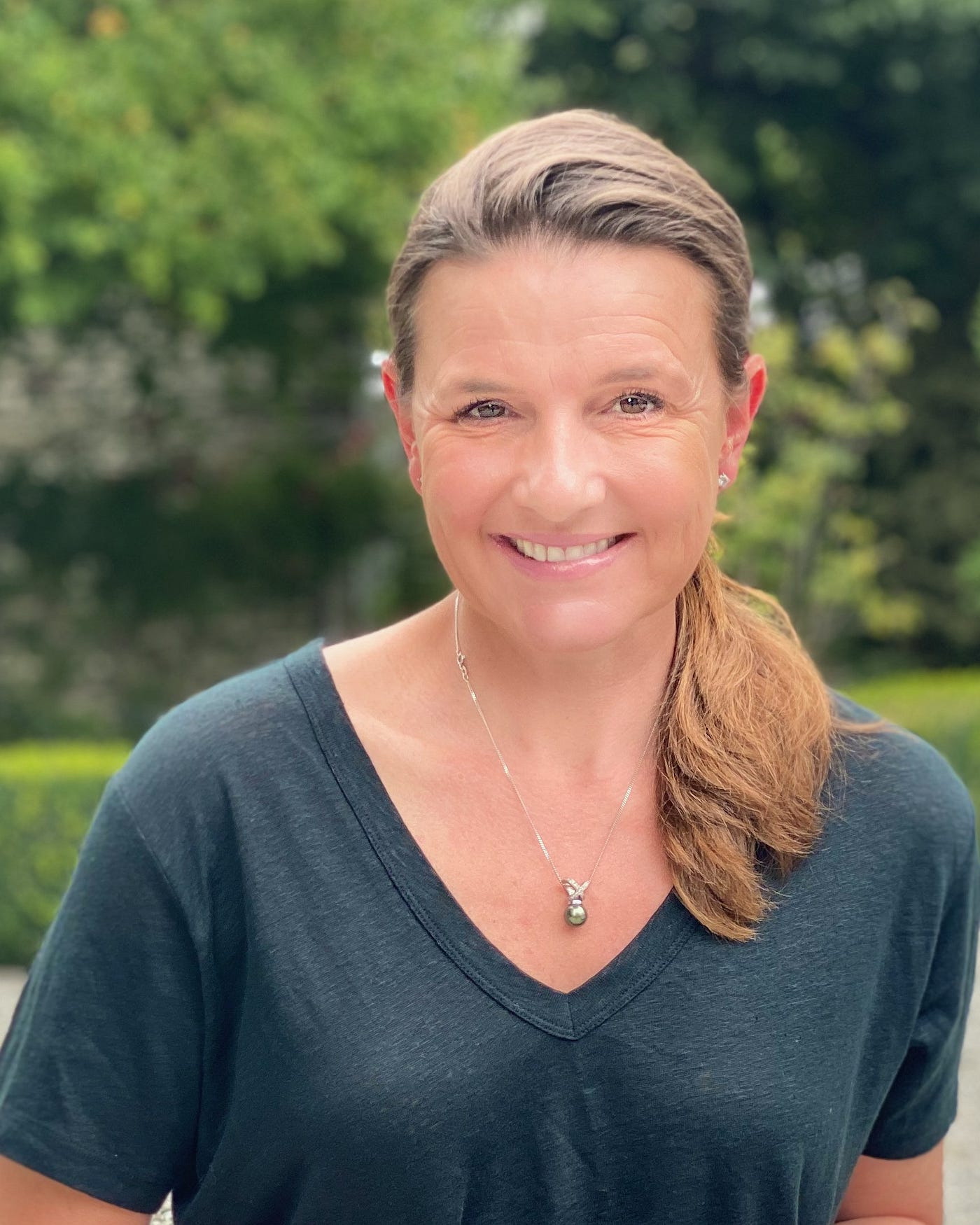
Jeannie Moravits Smith is America’s Leadership Advisor, who creates breakthrough experiences from the inside out, allowing her clients to increase positive intent & productivity, energy, alignment, connection, and engagement with themselves and others. She is the founder and CEO of Dynamism Leadership, formerly HR-Rx, a Leadership Coaching and Consulting firm established in 2005. Prior to establishing her own firm, she held executive leadership roles at a variety of organizations. Now with over three decades of experience, Jeannie has helped thousands of leaders learn how to energetically build their dream team to earn massive profits. She is an international best seller and award-winning author, speaker, strategic advisor, coach, and consultant. Jeannie holds certifications in Leadership Coaching, Energy Leadership, & Human Management, as well as a Master of Science degree in Human Resources. She and her team at Dynamism Leadership are passionate about making the world a better place by putting an end to unhealthy workplaces: in turn, creating environments where all staff members feel seen, heard, and included. As a result, their clients experience incredible savings in time, expenses, and energy. We are a team of experienced, educated, and energetic, fun individuals who know how to make things happen and intend to impact workplace change by our interactions with one leader at a time.
Thank you so much for doing this with us! What is your "backstory"?
During my undergraduate study, I stumbled across several human-centric courses. Not only did I really enjoy them, but the work was also extremely easy and interesting to me. This is when I discovered my passion for being the bridge between managers and employees, as well as between problems and solutions. I spent decades as a Human Resources leader in various companies in a variety of industries. I have helped leaders build organizations, define, and enhance their corporate culture, orchestrate mergers & acquisitions, and learn how to be authentically resilient. In 2004, I had an opportunity to move from San Diego to San Francisco to continue employment with a well-known software company, but decided to pass, as I had recently moved my mom across the country to be closer to me. Another move would not be good for her. While contemplating my next career move, I made the decision to start my own company and in 2005, founded HR-Rx, now Dynamism Leadership, where my incredible team and I help leaders build their dream teams to earn massive profits.
Can you share the most interesting story that happened to you since you started your career?
The most interesting story that happened to me since I started my career is the one when my core values were being compromised. It was a regular occurrence, but the day I stood up for myself while risking my job might be the most interesting. I had climbed the corporate ladder, had been promoted to Vice President of Human Resources, and was asked to partake in my first board meeting. I remember it like it was yesterday, as I entered the room, a senior board member asked me, the youngest and only female in the room, to get him some coffee. I had seconds to decide how I was going to respond, and I’m still thrilled that I handled it the way I did. Not only did I not get fired but I gained the respect of the individual asking for coffee, as well as the rest of the team. I encourage all of those with whom I partner to stand up for what they believe in, especially in defense of their own personal core values.
Can you share a story about the funniest mistake you made when you were first starting? Can you tell us what lesson you learned from that?
There are many mistakes I have made in my career, and I have learned something from each one of them. The one that gets quite a few laughs when I tell it, therefore making it the funniest, is the time I was in a series of meetings with many different leaders of an organization. During what was supposed to be a quick bio-break, I decided to take the stairs instead of the elevator and got locked in the stairwell. I was not able to get out of the stairwell nor could anyone hear me trying to get their attention through the little window in the door. I did not have my phone with me and had completely run out of options. The team thought either something bad happened to me in the restroom or I had ghosted them. I just sat down and laughed until an employee finally made the decision to take the stairs and discovered my locked-up self.
I ended up landing the project. The team and I laughed about it for years. Now I never let a door close behind me in a stairwell unless I have a resource, such as a key card, to get out and I always proactively communicate my plans to take the stairs just in case. It was a great lesson learned and one that brought much lighthearted joking for quite some time.
Ok, let’s jump to the core of our interview. Most times when people quit their jobs they actually “quit their managers”. What are your thoughts on the best way to retain great talent today?
This is true, although many employees will state “money”, “personal issues”, etc., as the reason for their resignation, most of the time it comes down to the relationship or lack of relationship they have with their direct manager. I have learned quite a bit over the last three decades in my human centric career and several thoughts come to mind. I’ll start with trust, something that is so important in any relationship including the professional work relationships we all have. Once trust is established, employees will begin to feel comfortable enough to tell the truth and not just what they believe their managers want to hear. That being said, my number one way to retain great talent is to show up in a manner to be trusted and to learn how to trust those with whom I work.
A survey conducted in 2019 revealed that employees said that their managers did not show respect for their work, behaved unprofessionally, or didn’t listen to their concerns. Many people also cited a lack of empathy from their leadership as a reason to want to search elsewhere for employment. In addition to individuals needing to feel trusted, they also need to feel empathy from their leaders. They want to feel seen and heard wholly as a human, both personally and professionally. This lack of respect, trust and empathy, unprofessionalism, and not listening are the same reasons many have been driven since 2020 to resign, creating the “Great Resignation.”
In my experience, leaders who take the time to listen, really listen to what is being said, as well as what is not being said, are the ones whose teams feel like they belong, and for whom they will not abandon by quitting. If leaders led more like a coach, with empathy, they would be able to establish trust with and for their staff members. A great way to gain trust is to communicate what is important, along with your expectations, ask thought provoking questions of your staff, and listen to what they are telling you. It is important for individuals to feel they belong - one way to do that is to trust that they have answers, that you hired them for a reason, and that they will get the job done with the guidance of your leadership and coaching skills.
How do you synchronize large teams to effectively work together?
Communicate, communicate, communicate - oh, and communicate a bit more. Seriously, communication is the key to success with everything we do, both personally and professionally. Lack of communication is what kills ideas and the ability for teams to be successful. My recommendation is to start with the end goals in mind and work backward to develop a solid plan, all while soliciting ideas from staff members in the development process. It’s important to take the time to plan, and then also take the time to communicate and execute against the co-created plan. There really is no such thing as too much communication. I’ve noticed that many leaders I work with tend to think that they do not need to communicate unless a major change has occurred. If you leave people in the dark, they create their own scenario and, in most cases, it is much worse than reality. Large teams can be managed the same as smaller teams: make sure everyone on the team has a chance to be seen, heard and that they feel included. Ask questions if you are unsure if individuals are feeling the sense of belonging for which you are striving. If you’ve built a culture of trust, they will tell you the truth. Listen to what they are saying and then act on it to make a difference for each member on the team.
Here is the main question of our discussion. Based on your personal experience, what are the “5 Things You Need To Know To Successfully Manage a Team”. (Please share a story or example for each, Ideally an example from your experience)
Trust and be trusted. Organizations and teams perform better when led by a trusted leader. I live my values in relationships with colleagues, clients, friends, and family, based on integrity. The leaders with whom I have partnered to build their dream teams have learned how to appreciate those who are willing to bring bad news to their attention and are not afraid to admit their own personal mistakes. I’ve always been a hard worker who gets things done. I’m also human and make mistakes, just like everyone else. I’ve always been one to fess up to any mistake I’ve made and proactively communicate a solution to the problem created by the mistake, which is one of the ways I have stood out as a leader in my career. Those who know me would say that I always tell the truth, even if it is inconvenient, and I help my clients learn how to do the same. Nothing destroys trust more than dishonesty. Successful leaders, including myself, naturally hold conversations in confidence and do not waste time with gossip or politics. This goes a long way in creating trust from team members. Lastly, I publicly encourage suggestions from everyone on the team and I listen to all the contributions with equal respect. I partner with leaders to help them make recognition and listening a regular practice. The benefit of doing so not only demonstrates that everyone has value, but reveals a diverse set of viewpoints, perspectives, solutions, and trust.
Communicate effectively and make it a regular part of the business routine. I use multiple modes of communication to ensure everyone receives key messages. When I take the time to get to know the team, I know how they best receive information. I always include the “why” in all that I communicate which makes a big difference for individuals who desire to understand the bigger picture beyond their assigned task at hand. Listening is such an important part of effective communication. I create opportunities for others to talk. I ask questions and then I listen - truly listen. So often people only listen to respond, only understanding a fraction of what is being shared. Active listening includes being aware of body language and intonation - listening for what is not being said. I live the values and messages I embrace, walk the talk, share good news and bad and, most importantly, I admit when I have made a mistake by communicating openly with all involved. These elements of effective communication are woven into all interactions I have with my clients with the hopes they too will make it a regular aspect in their roles as leaders.
Show empathy and lead with emotional intelligence to create an environment that is supportive of the best performance from everyone on the team. As a solid leader, I take the time to be a strong mentor and a strong support in helping others better themselves. I pride myself on being sensitive about what matters most to others and continually encourage the leaders I work with to do the same. Knowing that everyone is wired differently, I am mindful about embracing the differences and strategically leveraging them to create and sustain opportunities for my client’s businesses.
Treat others with dignity and respect while seeing change as a growth opportunity. Over the course of my career, I have had to address sensitive issues, communicate bad news, and have often been challenged with having to solve a diverse group of problems. One thing is for certain, I always treat others with dignity and respect. I have been recognized for how well I treat people, especially during difficult times. Openness to change refers to an individual’s level of acceptance and conscious awareness of the possibility that change may be needed across a range of situations and scenarios. I learned early in life that change is inevitable and when we flip our perspective to see change as a growth opportunity, change is welcomed. I was prepared for everything to change during an acquisition of a software company, during which I played a key role… and it did.
Show up authentically resilient. The ability to thrive when things become difficult depends upon our resilience and the choice we make, to continually show up authentically. Resilience is a function of our authenticity and attitude. I know firsthand how valuable being authentic is. It is “where the rubber meets the road…” In the workplace, when leaders show their true personality and are comfortable being themselves, their staff feels comfortable doing the same, giving trust a foundation upon which to grow, and staff members have a stronger sense of psychological safety. When leaders and staff show up authentically, they feel more valued for who they are and what they offer. As mentioned earlier in the interview, when we admit our own mistakes, we are showing the team it is ok for them to make mistakes too – it is how we learn. Lastly, continue to encourage productive discussions. Remember, we can never communicate too much. Others have told me that if they have an emergency or a crisis, they want me there. As a result of my high level of authentic resilience, I have been able to exhibit some of the most remarkable feats in short periods of time allowing for successful outcomes. Sharing my expertise with clients has opened their eyes to seeing more productive ways of showing up authentically.
What advice would you give to other CEOs or founders to help their employees to thrive?
Ask questions and listen actively, watching for physical cues and vocal hints, then ask more questions. When leaders show up in a coach capacity, it can be a game changer.
You are a person of great influence. If you could inspire a movement that would bring the most amount of good to the most amount of people, what would that be? You never know what your idea can trigger. :-)
At Dynamism Leadership, we are passionate about making the world a better place by putting an end to unhealthy workplace culture and creating environments where all staff members feel seen, heard, and included. We are a team of highly experienced, educated, and energetically fun individuals who know how to make things happen and intend to continue to impact change through our interactions with one leader at a time.
Can you please give us your favorite "Life Lesson Quote"? Can you share how that was relevant to you in your life?
“You can change anything you set your mind to.” It is all possible. My entire life I have been challenged with obstacles, several life-threatening. When told by others it was impossible, I found a way to make it happen. I continually approach each new day with a “glass half full” approach and know each day that “If there is a will, there is a way!” I have so many examples of how this life lesson has supported my success. Once I was told that I could not move the human resources function out of the corporate office and outsource it. I said, “Why not? Anything is possible.”
Thank you for these great insights!