I wanted to make it easy for people to be around me because I knew my family had sort of done me a favor by bringing me in a year earlier than they had intended for another child.
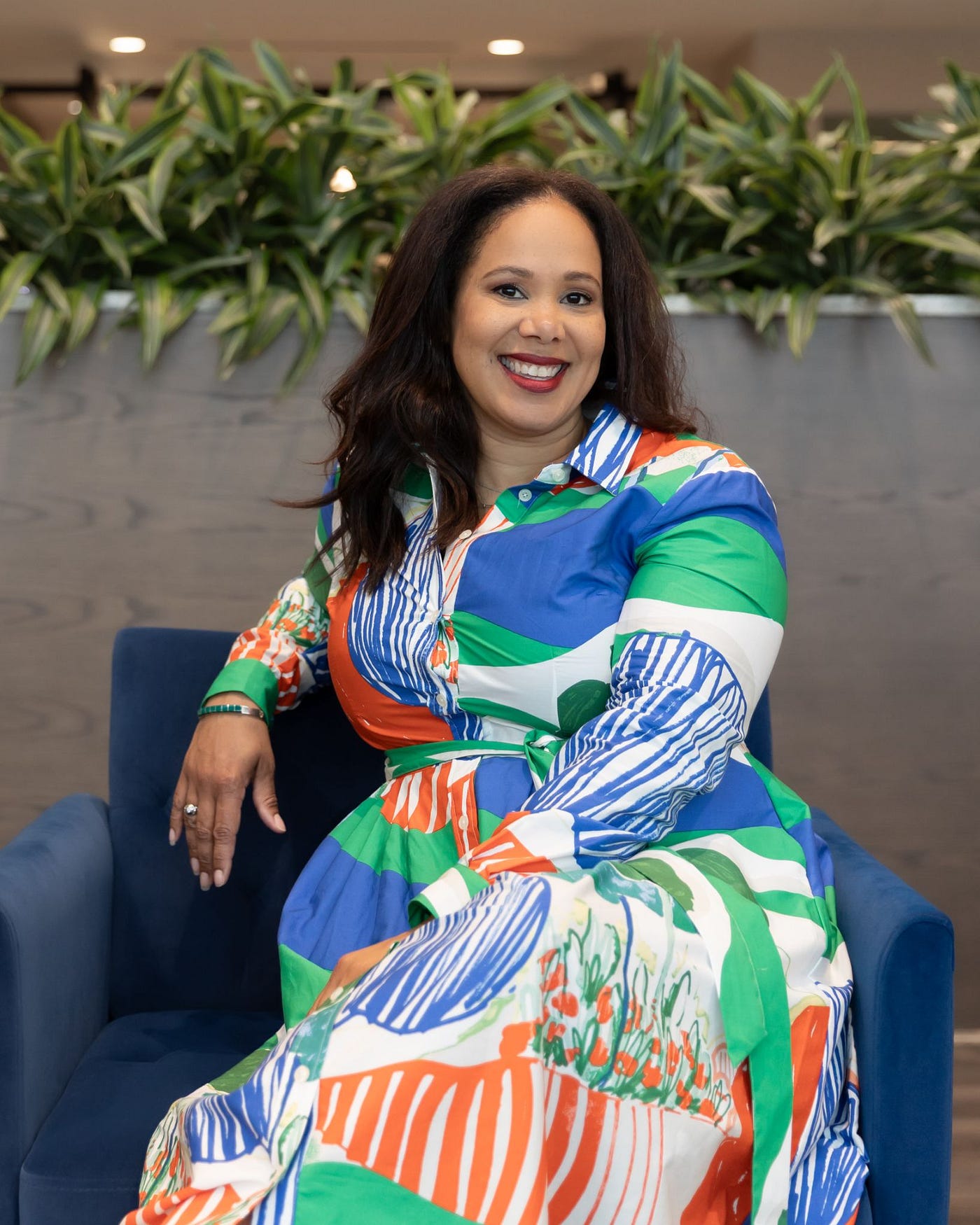
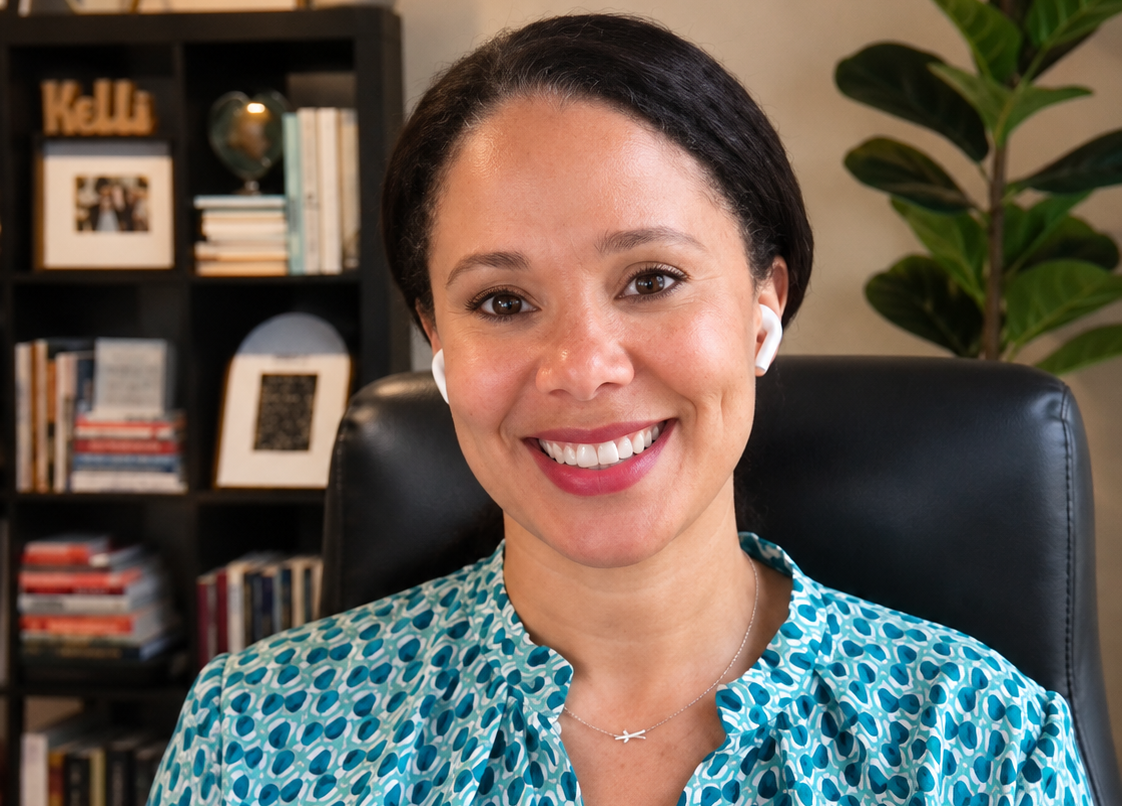
I had the pleasure of talking with Kelli Williams, a woman who spent much of her professional life learning how to succeed in rooms where she felt she could not fully be herself. One of the clearest lessons came early in her career, when a supervisor at a national bank called her into a conference room. Williams was doing well in sales and expected another encouraging conversation. Instead, her boss suggested that she remove a photograph of her seven-year-old son from her desk. Having a child that age, he explained, might confuse colleagues and complicate her prospects for advancement.
Williams had become a mother at seventeen. She had earned her college degree while raising her son and had gone on to pursue graduate studies, though she never completed her thesis or received a graduate degree. She was building a promising career. Yet the very person who had helped her develop professionally was now suggesting that part of her life was better kept out of sight. The experience reinforced an instinct she had been developing since childhood: belonging often seemed to require making herself smaller. She began adding what she now calls “masks,” protective layers that allowed her to appear successful while concealing the experiences that had shaped her.
It was an especially painful lesson for someone whose earliest memories of family were already complicated by questions of belonging. Born in St. Paul, Minnesota, Williams was placed for adoption by her biological parents and welcomed into a white family in a small Minnesota town when she was three months old. Her adoptive parents had planned to have another biological child, but changed those plans when the adoption agency called about her. Williams grew up knowing that her arrival had altered the family’s intentions. “I always just wanted things to be easy,” she recalls, describing her childhood desire to avoid inconveniencing the people who had welcomed her.
Race added another layer to her understanding of identity. For years, Williams and her older brother were the only Black children in her elementary school. When another Black girl arrived in fifth grade, Williams remembers being frightened of her, an uncomfortable admission she connects to the racial stereotypes she had absorbed from television and the news. Her family’s eventual move toward Minneapolis exposed her to more diversity, but also to new forms of exclusion. After rejecting a classmate’s invitation to homecoming, she was subjected to a racist insult. She would eventually attend four high schools in four years, learning to adjust her language and behavior to fit into predominantly white and predominantly Black environments alike.
At sixteen, Williams became pregnant. At seventeen, she gave birth to her first son. When she chose Iowa State University, her reasoning was remarkably practical: the route from Minnesota to Ames was straightforward enough to navigate without getting lost, an important consideration for a young mother traveling with a small child before GPS and smartphones.
The adaptability that helped Williams navigate those early years also became an asset in corporate America, although it came with costs she would understand more clearly later. Over more than two decades in marketing and advertising, she frequently found herself the only Black person in an agency or on a leadership team. Colleagues sometimes expected her to speak for entire demographic groups. She remembers being asked how to market to Asian men, despite having no particular expertise in that audience. Privately, she wondered, “How would I possibly know this?” Publicly, she supplied ideas rather than challenge the assumption behind the question.
Her career brought substantial responsibility. She led major advertising campaigns, including a nationwide multimedia effort with activations in Times Square and along the Hollywood Walk of Fame. She later became CEO of The BrandLab, a nonprofit focused on creating opportunities for young people historically excluded from marketing and advertising. Williams describes taking over an organization that needed significant rebuilding and leading it toward financial stability, growth, and expanded programming.
But Williams is careful not to confuse impressive outcomes with uncomplicated victories. One of her proudest advertising campaigns came at a considerable personal cost. Days before she was scheduled to leave for a two-week production trip, her husband ruptured his Achilles tendon. Their children were four and one. Williams arranged for her sister-in-law to help and went ahead with the assignment. The campaign succeeded. Looking back, she says simply, “I wish I had chosen differently.”
Another turning point came far from a corporate office. While preparing for the beach during a family vacation, Williams was approached by her young daughter, who told her, “I want to be beautiful like you one day.” Williams had spent years chemically straightening her hair and covering her freckles with makeup, even as she encouraged her daughter to love those same natural features. She decided to change her appearance, recognizing that the example she set mattered as much as the reassurance she offered. She is careful to distinguish the decision from an instantaneous transformation. That day marked the beginning of learning to feel comfortable with herself.
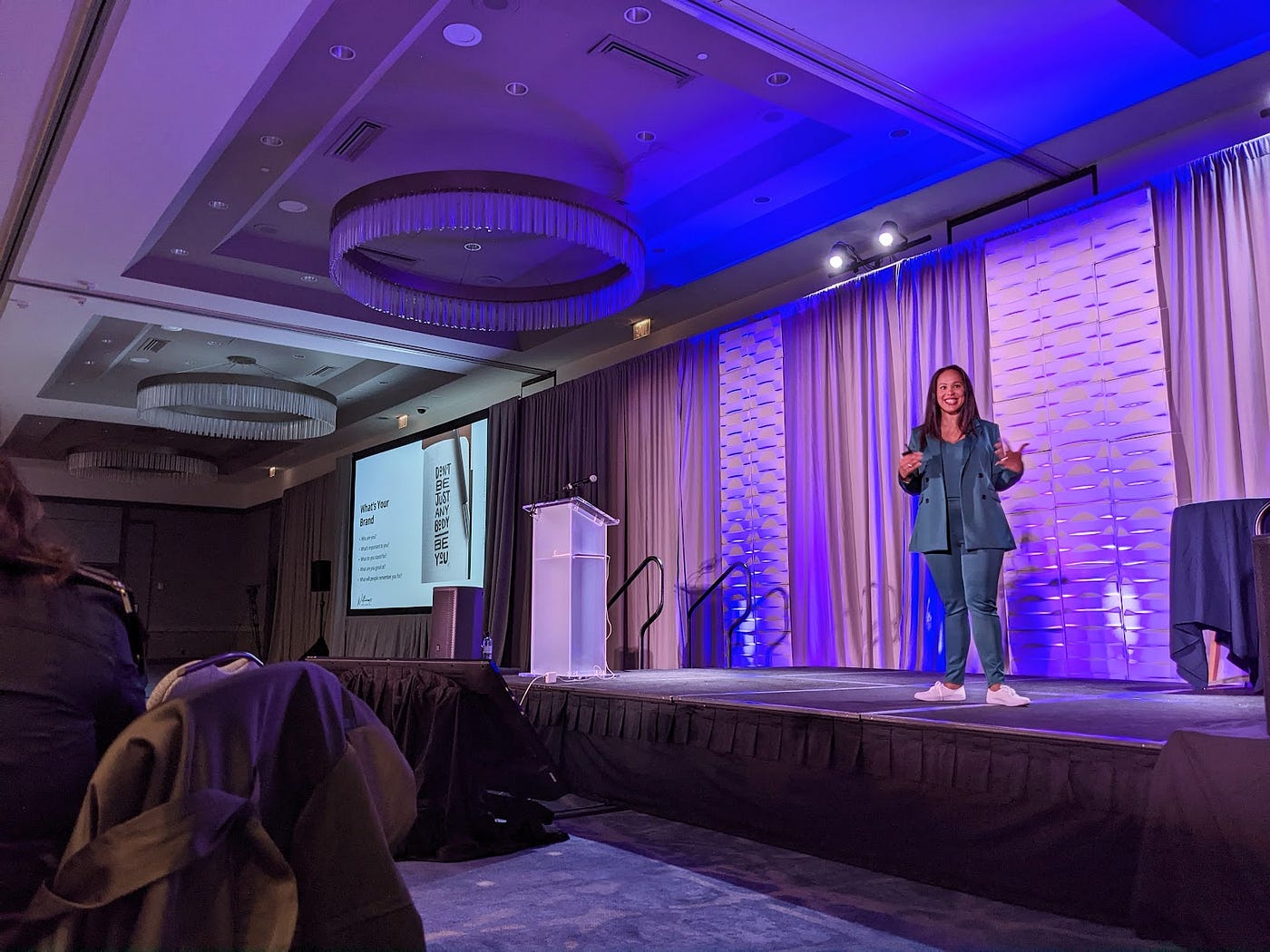
These experiences inform her current work as an executive coach, speaker, and founder of Legacy Rising. They also form the foundation of her forthcoming book, Dear Daughter: Rise in Your Full Power and Say the Hard Things Out Loud, planned for September 2027. Part memoir and part leadership guidance, the book examines the compromises women make to succeed and the difficulty of reclaiming parts of themselves they have learned to conceal. Her essay “The Puzzle,” written for the anthology Between Worlds, explores related questions of adoption, identity, and belonging, including her trip to the Democratic Republic of the Congo to meet members of her biological father’s family.
Williams now speaks about success in terms far removed from the corporate titles, budgets, and responsibilities that once defined it. Her concept of a “living legacy” emphasizes the decisions people make every day, especially the ways their behavior affects those watching them.
There is something revealing about the distance between the young mother who was advised to hide her son’s photograph and the woman now writing a book addressed to the next generation. Williams has learned that professional recognition does not necessarily bring personal freedom, and that speaking openly can require a different kind of courage from leading a large organization. Her story raises questions about the price of fitting in, the responsibilities that accompany success, and how a person learns to stop editing herself after spending years becoming exceptionally good at it.
Yitzi Weiner: Kelli, it’s a delight and an honor to meet you. Before we dive in deep and talk about your amazing work, our readers would love to learn about Kelli Williams’s personal origin story. Can you share with us a story of your childhood and how you grew up, and particularly the seeds and the genesis of all the amazing creativity and leadership that has come since then?
Kelli Williams: Absolutely. Thank you. Well, I am a Minnesotan, born and raised. I was born in St. Paul, Minnesota, to my biological mother, who was a teenager, and my biological father, who was finishing graduate school in Minnesota when they met. And when I was born, they placed me for adoption. I was adopted by a white family that lived in small-town Minnesota at about three months old. So, I’m adopted through Catholic Charities, which is a large organization that no longer does adoption, but did during the time in which I was adopted.
My parents had made the decision, my adopted parents, before they were married that they would adopt biracial children because in the ’70s what was happening, interracial relationships had recently been made legal, and there were a lot of biracial children that weren’t wanted by either side of the relationship. And so my parents decided to have two children and adopt two children. They had had my oldest brother, who was biological, adopted my sister and brother, and were planning to wait a little bit of time and then have another child biologically. So all of their kids would be spaced three years apart. And the adoption agency called and said, “We have another child who meets the same description of your other two adopted children. She’s already getting old at three months and it may be difficult for us to place her. Would you be interested in taking her?”
So, you know, one of the things that I realize looking back now is I wasn’t wanted by my biological parents, and my adopted parents changed their want for what they wanted in their final child to meet me. A lot of that origin story has created some of who I am in that I always just wanted things to be easy. I never wanted to upset people. I wanted to make it easy for people to be around me because I knew my family had sort of done me a favor by bringing me in a year earlier than they had intended for another child.
So I grew up in this small town in Minnesota, and I was the only Black child in my elementary school other than my brother, who’s two years older than me. And I never met another Black person until I was in the fifth grade when another girl moved to my small town with her dad, who taught at the local college. And candidly, I was scared of her. I was scared of her because I had never met another Black person other than my siblings. And everything I saw on TV, everything I saw on the news, was that Black people were scary. And so I was scared of her and didn’t want people to associate us with each other. It took me a lot of unlearning before I could fully accept who I was and embrace my culture and heritage. Yeah.
And so, I continued to grow up in this small town until I was going into high school. Going into high school, my parents made the decision to move my brother that’s two years ahead of me and myself to what is lovingly referred to as the Twin Cities. If you’re from Minnesota and you’re from Minneapolis or St. Paul, you know someone’s not from Minneapolis or St. Paul if they say the Twin Cities, because the Twin Cities means, you know, sort of the large array of space, including suburbs. And we moved to a second-tier suburb outside of Minneapolis and went to a very prestigious private school.
And that was my parents’ way of giving us access to more diversity. There were a few more children who looked like me in the school, but it was definitely not a diverse school. My brother and I were there for a short period of time, and then another kid in my class invited me to homecoming as a freshman. And I told him no. One of my really good friends I had grown up with since kindergarten was going to come down and take me to homecoming. And so I told this kid in my class no. And his response was to call me both the N-word and the B-word at 14, I think you are when you’re a freshman in high school.
And that started what I lovingly refer to as my high school tour. So I didn’t stay at that private school. I transferred to a Catholic school in downtown Minneapolis, and that was a school that was predominantly Black. So, it was a culture shock for me to be around that many people who actually looked like me or came from the culture I so desperately wanted to be a part of. And it’s when I think I learned how to code-switch. A lot of times people think about and talk about the idea of code-switching to try to fit in with someone that’s not like them. I was working to code-switch to fit in with people that actually were like me from a race and ethnicity perspective, but I wasn’t like them. And it took me a long time to realize that.
I ended up, over the duration of four years of high school, going to four high schools. My last and final high school was a school that I went to back in my hometown, my small town, because I had been skipping school with my boyfriend at the third school. And when I was at that final high school is when I found out I was pregnant with my first son. And so during that time frame of high school, a lot happened for me, and it was really formative into who I am, what I believed to be true, and also launched me very early into adulthood as I became a mom. I got pregnant at 16, and he was born when I was 17.
Yitzi Weiner: So, please tell us the next chapter. Tell us the story of what led to this successful career.
Kelli Williams: Yes. Yes. So, I went to Iowa State for college, and I picked Iowa State because it was straight down this highway that runs between Minnesota and Iowa, 35W. And if you go down 35, you can go directly from Minneapolis to Ames, Iowa, without getting lost. It’s a straight line. And with a really small child, that was important to me. So, I picked Iowa State literally because of how geographically easy it was to find. This was before cell phones and GPS, and I was there for college and then graduate school. Originally, similar to high school, right, trying to find myself, I wanted to be a lawyer and then I wanted to do TV news.
And then I started my career in sales at a large national bank, and while I was at that large national bank, I learned a lot about once again fitting in and code-switching to make sure that I was acceptable in that space. I remember times when I had just finished graduate school. I was buying a house, but hadn’t moved in yet, and started my job at this national bank in sales, and my son and I were staying at a long-term stay hotel. I didn’t want anybody to know that we sort of had unstable housing, right? And so I worked these untraditional hours from 10 to 7. He had a nanny that would pick him up from school. And I didn’t want to tell anybody because that wasn’t the same as anyone else, and it would have had me stand out in a way in which I wanted to fit in.
I also remember my boss, who I had really enjoyed, had learned a lot from, and I was really successful in sales. And so he invited me into a conference room to have a conversation one day, and I assumed, like many other conversations, it would be to talk about what I was doing well and to maybe give me some additional pointers. But the conversation was actually around the fact that I had a picture of a child who presented to be, at the time he was in second grade, so around seven, and how that was really confusing to people of how I could have a seven-year-old. And his recommendation, if I wanted to make it inside of the bank and to get ahead in my career, he suggested I take the picture of my son off my desk.
It’s one of those moments in my career that I remember like it was yesterday. I remember how I felt when he said it, and I remember going from feeling comfortable and feeling like I fit, even though I had, you know, sort of morphed myself to fit. And in a split second, moving from this feeling of sort of fitting in to knowing I needed to stop sharing as much of myself as I had, and I needed to put on additional layers of protection, or what I now call masks, so that people wouldn’t know the full me. That was my first job after graduate school. And that was a really quick awakening and change in my career that took me probably about 20 years to finally recognize and then start to do the work to take those masks off.
In addition to sales, which I was in for about two and a half, maybe three years, I then pivoted into marketing. I spent more than 20 years in marketing, in corporate marketing, advertising agencies, and in all of those spaces being in places and spaces where I was the only Black person in the advertising agency or on the leadership team, and had the experience very often of being the only person of color inside of those agencies where whenever there would be a marketing campaign that was targeting someone other than the dominant culture, even if I wasn’t on the campaign, even if it wasn’t my client, I would be pulled into brainstorming sessions and asked questions like, “Well, what do you think, Kelli? How would we market to Asian men?”
And in my mind, I would say, right, in my quiet voice, I would say, How would I possibly know this? But out loud, to fit in and to be accepted, I would have all sorts of ideas of how to market to Asian men, even though that’s not at all anything I know about. And the truth is, I couldn’t even tell you how to market to all Black or biracial women because I’m not a monolith. I can’t speak for everyone that shares an identity that I share. And so, that took me a long time to come to the place where I could start to share my truth and say, “These aren’t realistic questions.” And in fact, let’s talk about and unpack the bias that you have that believes that that’s an acceptable question.
Yitzi Weiner: So, please tell us about the amazing work you’re doing now. Tell us about your book. Tell us all about it.
Kelli Williams: Yes, I would love to. So, I’m currently working on two projects. I have an essay that’s going to be coming out next month that’s called “The Puzzle.” It’s part of an anthology by Publish Her, and the anthology is Between Worlds, and it highlights women who sit between sort of figurative worlds, similar to the experience that I had as a biracial person growing up in a white town, learning to stand between the two worlds that are my own identity.
“The Puzzle,” my essay, talks about my desire to learn about myself and to fill in the puzzle pieces of who I am, where I come from, and truly what makes me me. And it takes the reader through the letter I wrote to my biological mom when I was 16 and pregnant, wanting her to say, “Don’t give your baby up for adoption. I did it, being your biological mom, and it was the worst decision of my life. Don’t do it.” To which she responded and told me I should, and that she encouraged me to give my baby up.
It takes the reader from that place all the way through the decision I made four years ago to go to the Democratic Republic of the Congo to go meet my biological father’s family, and the journey to get there. And once I was there, realizing that I would never find myself in another country, on another continent, with people that I didn’t grow up with and didn’t know me intimately, because that’s not who I am. And the fullness of who I am lives here in my home with my family who loves me and knows me and accepts me exactly as who I am.
Yitzi Weiner: Do you have a relationship with your biological parents today?
Kelli Williams: I do not. So, what I discovered preparing for my trip to the Congo was that my biological father had actually passed away in 1989. And so, I never had the opportunity to meet him. I did, however, meet a biological brother, aunts, cousins, and I did meet my biological mother when I was 17, shortly after my son was born, and had the opportunity to meet her and her daughter, who is my half-sister. And I made the decision to not retain the relationship with my biological mother, but I’m still very good friends with my biological sister.
Yitzi Weiner: How about your parents who raised you? You’re very close with them?
Kelli Williams: Yes. Very close. Very close. Yes. My parents who raised me are right here in Minnesota. My entire nuclear family is here in Minnesota. Even the majority of my extended family, my adopted family, is in Minnesota. A lot of Minnesotans stay. We don’t usually go too far out of the state. And so everyone’s pretty close here. Yeah.
The second project I’m working on is my own initial book that’s called Dear Daughter, and it’s all about rising in our full authentic self and saying the hard things out loud. And so I wrote the book as a unique mixture where it’s part memoir, part leadership book, and a full love letter to women in business. I really think about the book as being the book I wish I had had earlier in my career so I could have felt more comfortable in who I was and knew that it would have been okay for me to truly be exactly who I was. That it would have been okay for me to say, “I’m not going to take the picture of my son off my desk because I’m his mom, and I’m really proud of him, and I love him to pieces, and fought really hard to keep him. I’m not going to take his picture off my desk.” Or, “I’m not going to change who I am or how I talk or how I interact because I’m smart and I’m qualified, and I don’t have to pretend to be someone that I’m not to fit into this organization.”
There’s a lot of lessons that I learned along the way. And I wrote the book in a way where I start with these personal stories, not because the reader would have necessarily lived the life I lived, but instead being able to say, “Here’s a story of experiences that I had and what you can learn from them that I think could be applicable to any woman.” I truly believe it’s my job to run my part of the relay of life and pass the baton to the generations of women that come behind me, with the baton really symbolizing the pathway of, “Here’s some, you know, really clear paths that I suggest you consider. Here’s some quicksand that I already stepped in. You don’t need to step there as well. And know you’re going to pave your own path. But I want to give you some tools, including this baton, to help you along the way. I want to walk alongside you.”
Yitzi Weiner: You probably have some amazing stories from your successful career. And I’m sure this is difficult to narrow down and single out, but can you share with our readers two stories that stand out in your mind from your career?
Kelli Williams: Absolutely. One, I would say I took over a Midwest-facing nonprofit that is focused on bringing young people who had historically been excluded from the marketing and advertising profession into the profession. Our programming had access and exposure programming for high school students through college into job placement, and I took over the nonprofit in a time in which it wasn’t very strong. There were a lot of things that needed to be addressed, and I stepped in as what I lovingly refer to as the turnaround CEO, and truly turned the organization around, brought us to a place of profitability, brought us to a place of growth, was able to walk alongside and provide programming to more young people than we ever had in the 15 years of the nonprofit’s existence, and cultivated a team to learn and to grow. And that is one of the things that I’m the most proud of in my career. I will also say transparently it was one of the hardest chapters in my career as well.
And so that for sure would be one of the things that I would point to. And I always like to share both pieces. These are the things I’m really proud of, and nothing’s ever perfect, because I believe that so often in our culture we see the perfect side, and then when things aren’t perfect in each of our own independent lives, we wonder what’s wrong with us. And the truth is nothing is perfect, right? And so I had significant success, I’m really proud, and it was really hard.
Another story I would share would go back to my marketing days. And so when I was a leader in an advertising agency, one of the largest conglomerates of agencies in the world, I had the opportunity to lead a multimedia nationwide campaign for a CPG organization, and we had the opportunity to do activations in Times Square, on the Hollywood Walk of Fame, and really help people have access to and learn about a new protein and how it could be used in day-to-day food.
It was so much fun. I learned a lot. I had the opportunity to lead multiple different agency partners, work with celebrities, and we produced significant return on investment for our client. What I will say around that one is the lead-up to that campaign kicking off and running for six months was my husband ruptured his Achilles tendon days before I was to leave for a two-week trip to shoot the commercial and do our first live activation in Hollywood. And we had at the time a four-year-old and a one-year-old, and my husband couldn’t drive and couldn’t carry our children. And as proud as I am of the work that I did and the campaign that we led and the results, I made the decision to leave my family at a really difficult time. I flew my sister-in-law in to sort of be the quasi-parent in that situation, but looking back, I wish I had chosen differently.
Yitzi Weiner: Can you share your favorite story that you share in the book?
Kelli Williams: My favorite story that I share in the book, that’s a hard one. I would say one of the most meaningful stories that I share in the book was a story with my daughter. So my daughter, of course, my book is called Dear Daughter. But it’s a story of when she was around seven or eight, and she is a competitive dancer. And so she had already had times in which she had worn makeup at that age on stage and had her hair straightened to be in a bun on stage. And we were on family vacation. And she came into the bathroom where I was getting ready to go to the beach. And she watched me getting ready and she said, “I want to be beautiful like you one day.”
And I looked at her through the mirror. I looked at myself through the mirror, and I recognized that I had been chemically straightening my hair for so many years, although I was telling her her curls were beautiful. I put on so much makeup and foundation to cover my freckles, although I looked at hers and counted them and told her how beautiful her freckles were. And I realized that I was saying, “Do what I say and not what I do.” And I needed to make a change. And that was the day that I stopped chemically relaxing my hair. That was the day that I stopped wearing so much makeup and became really comfortable in who I was visually, because my daughter looks just like me, and I wanted her to love who she looked like.
And it’s even probably an overstatement to say that was the day I became comfortable. It was the day I decided to learn how to become comfortable with how I looked naturally. Thank you.
Yitzi Weiner: You’ve been blessed with a lot of success and you must have learned a lot from your experiences. Looking back all the way to the beginning of your career, can you share the five things that you’ve learned over the years that someone starting out today can really benefit from?
Kelli Williams:
- I would say first and foremost, you don’t only find your voice once. A lot of times you have to learn how to find your voice over and over again until you really find it. And it’s important to recognize where you’re editing yourself and not being truly who you are and using your full voice.
- A second one I would say would be something like, stop avoiding saying the hard things out loud. It’s okay to say, “I believe this,” or “I see this thing as a potential concern,” or “I see this differently,” or even, “I need help.” It’s okay to say the hard things out loud.
- A third one would be you don’t need permission to lead. It took me a long time to realize that I didn’t need permission to lead. The leadership ability was inside of me, and I believe it’s inside of everyone.
- And I also think that success can make it hard for us to admit what the success is costing us. And the definition of success might not be the same for everyone, or when we recognize what success is costing us.
- And the final one would be tied to the baton. And that it’s really important to recognize the people coming behind you and how they’re watching you and how you’re showing up to them. They’re not just watching what you say, but what you do.
Yitzi Weiner: On a personal level, can you share some of the self-care routines that you do to help your body, mind, and heart to thrive?
Kelli Williams: Absolutely. I recently got a new puppy, and she and I spend a minimum of 30 minutes every day walking outside looking at the sun. You know, something that I’ve learned very recently is to take my sunglasses off and actually allow the sun in, because it’s soothing.
I also spend a lot of time by myself in reflection. I’m an introvert-extrovert, and I tried to pretend for a very long time that I was fully an extrovert. And when I came to the place where I was able to admit I’m actually more introverted than extroverted, I was able to recognize that I need time by myself, and I now give it to myself. Thank you.
Yitzi Weiner: Kelli, this is our final aspirational question. Because of the platform that you built and your amazing work, it’s not an exaggeration to say that you’re a person of great influence. If you could spread an idea or inspire a movement that would bring the most amount of good to the most amount of people, what would that be? Because you never know what your idea can spread and inspire.
Kelli Williams: I love that. I would say I really believe in my legacy framework. And my legacy framework, sort of the acronym of legacy, because I believe we’re all living in our living legacy. Legacy isn’t only something we leave behind, but it’s something that we live each and every day. And so legacy is about making daily decisions about how we show up, the good we do in the world, the joy we spread based on how we want to be remembered and how we want to be thought about while we’re still on the earth.
Yitzi Weiner: I love that. I was actually talking about this same thing with a person who was probably in his 20s, and he couldn’t understand why legacy is of value. “Why do I care what I leave behind?” And I realized that it must be an age thing because to me it’s intuitive. I’m 44. It’s intuitive. And you realize that you reach a certain point in your life where, yeah, legacy is important. So can you articulate to our readers why legacy is important, and also why would you only think about it when you reach a certain point in your life, not in your 20s?
Kelli Williams: Yeah. When I think about legacy, I think a lot about my children, and I think about how I want them to remember me and to see me. I want them to be proud of their mom and the decisions that their mom made to be a good person and to care for other people, to shatter the glass ceilings and to open the doors, and I even say to rip down the walls to allow other women, other women of color, to have access to the spaces that I’ve had access to. I want my children to know that I wasn’t perfect, but I tried really hard to be the best version of myself each and every day. And I want other women who I don’t know, because I don’t think that we always know who we’re impacting or who we’re influencing, I want other women to see me and see how seriously I take the idea of living in my living legacy and making decisions based on my legacy. To see that and to want to emulate that in their own lives in the way that’s meaningful to them.
Why women or people in general may not understand the importance of legacy earlier in our careers, I can only speak for myself, and I would say I didn’t realize the importance of legacy until I reframed the definition of success, right? When I had the belief that the definition of success was climbing the corporate ladder and making the most money that I possibly could, having the largest teams, being a global chief marketing officer, and having large budgets to oversee, that was my definition of success for a very long time.
And when I reached that level of success and then realized I wasn’t respected in my seat and that wasn’t something I wanted any longer, I had to reframe what success looked like. And for me today, success looks like having a life that allows for work and life integration. Work and life integration is different than balance. There are some weeks that my integration looks like I have a lot more kid and family activities and a little less work. And then there are weeks that it flips the other way, but those two pieces stay integrated for me because Kelli the mom and Kelli the leader are still the same Kelli. And when I was able to reframe that understanding and reframe what success looked like and the ability to live my life in this integrated way, I was able to recognize that I could make decisions each and every day to stand in that legacy, to not say yes to one more networking event when it took me away from family dinner.
Yitzi Weiner: Kelli, how can our readers continue to follow your work? How can they purchase your work, your books when they’re available? How can a reader support you and your work in any possible way?
Kelli Williams: Thank you. So all of my access to me is at KelliWilliamsSpeaks, and so I have kelliwilliamsspeaks.com for my website. I have KelliWilliamsSpeaks on LinkedIn, Instagram, and YouTube. And from my Kelli Williams Speaks website, you can get access to both my book website and my company site as well.
Yitzi Weiner: Kelli, it’s been an honor to meet you. You’re an amazing storyteller and I learned a lot from you. I wish you continued success and good health and blessings, and I’d love to do this again next year.
Kelli Williams: Yes, I would too. Thank you so much. This was fun. I really enjoyed getting to know you a little bit and speaking with you as well. And maybe next time I can interview you and learn more about your stories.