Thank you so much for joining us in this interview series! We really appreciate the courage it takes to publicly share your story. Before we start, our readers would love to “get to know you” a bit better. Can you tell us a bit about your background and your childhood backstory?
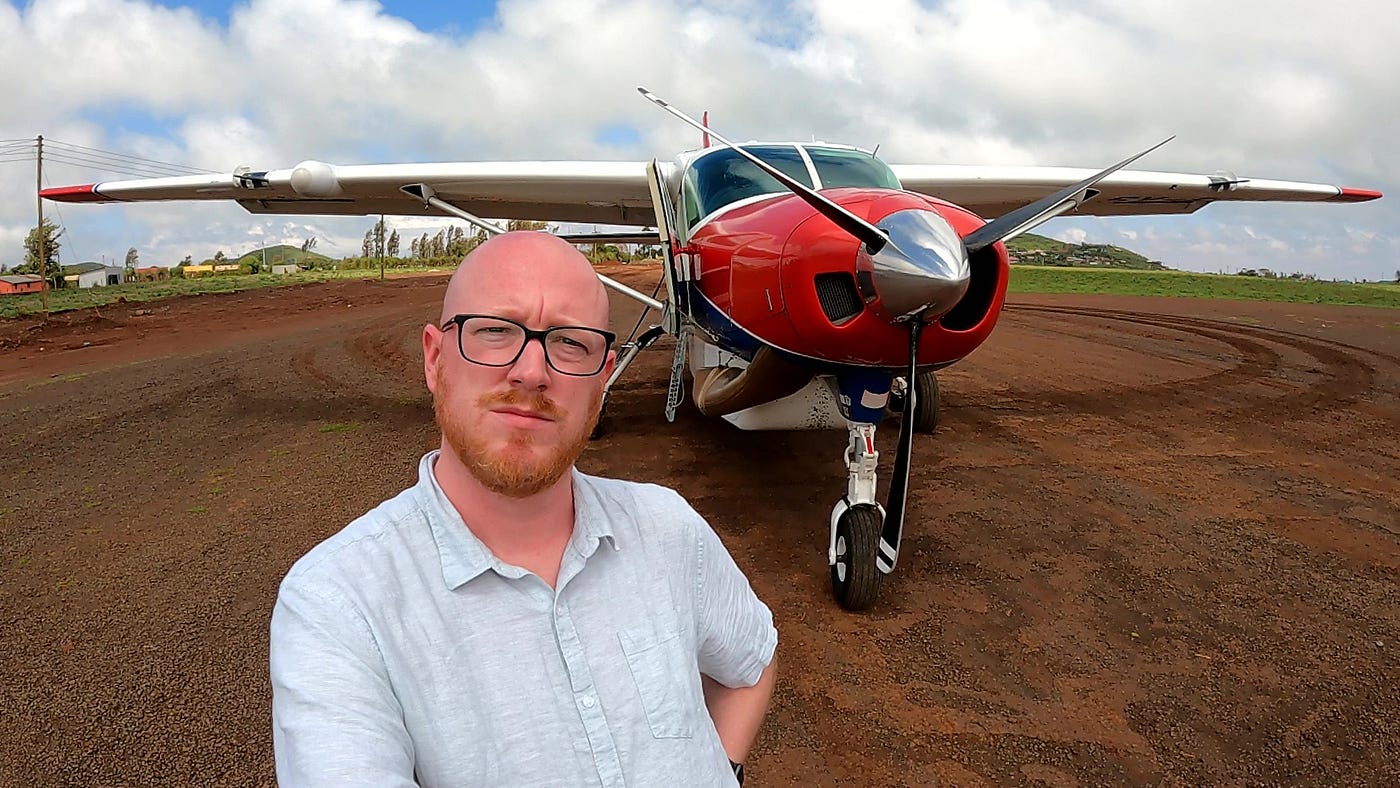
I’m Jay Hewitt and I’m an Ironman battling brain cancer. Two things I never thought would describe me. When I was 10 years old I saw Ironman for the first time on TV. I remember being blown away by these elite athletes that seemed superhuman. It seemed an impossible feat, especially for a kid like me. I came from a lower, middle-class family where there was too much chaos in the home to spend anytime dreaming of what you might become. Mental illness and substance abuse problems at home caused me to escape my house as often as possible. Soon, I found myself headed down the wrong path with the wrong people. I was aware that it was only a matter of time until I did something stupid that would be hard to recover from, but I didn’t know another way forward. Fortunately for me, I started to hang out with some friends at their church. The love and acceptance I found there (I know, that isn’t ever person’s experience at a church!) gave me hope. I put my trust in Jesus and faith became a big part of my life. Especially when faced with something as trying as a cancer diagnosis.
Can you please give us your favorite “Life Lesson Quote”? Can you share how that was relevant to you in your life?
“Dream like you’ll live forever, live like today is your last.” At first this seemed cliché. However, when faced with a horrible and terminal prognosis, it’s hard to know how to proceed, especially if you are holding onto the hope that you may outlive your prognosis.
Let’s now shift to the main part of our discussion about surviving cancer. Do you feel comfortable sharing with us the story surrounding how you found out that you had cancer?
Everything was going well until it wasn’t. Family life was fun, and my career was exciting. Then, out of nowhere I had a seizure. I had never experienced anything like this before and I had no idea what had hit me. I went to my general practitioner, then a neurologist, then a radiologist, back to my neurologist… and finally I got a phone call from an “unknown caller,” who turned out to be a neurosurgeon. Over the phone he told me that I had a Ping-Pong sized tumor in the center of my brain that would require brain surgery, if possible. And that was the start of it all.
What was the scariest part of that event? What did you think was the worst thing that could happen to you?
As I discussed my upcoming brain surgery with my surgeon, I learned that the surgery would be very high risk and would require me to remain awake during the proceeded. I imagined myself awake on the table, my head in a vice and my body strapped down. I imagined myself having a panic attack while being in that position. As I considered the possibility of a panic attack, I was overwhelmed by terrifying feelings of being trapped and hysteric. My surgeon could see the concern on my face. When I expressed my fear, he calmed my worried heart with one sentence: That has never happened before on my table.
How did you react in the short term?
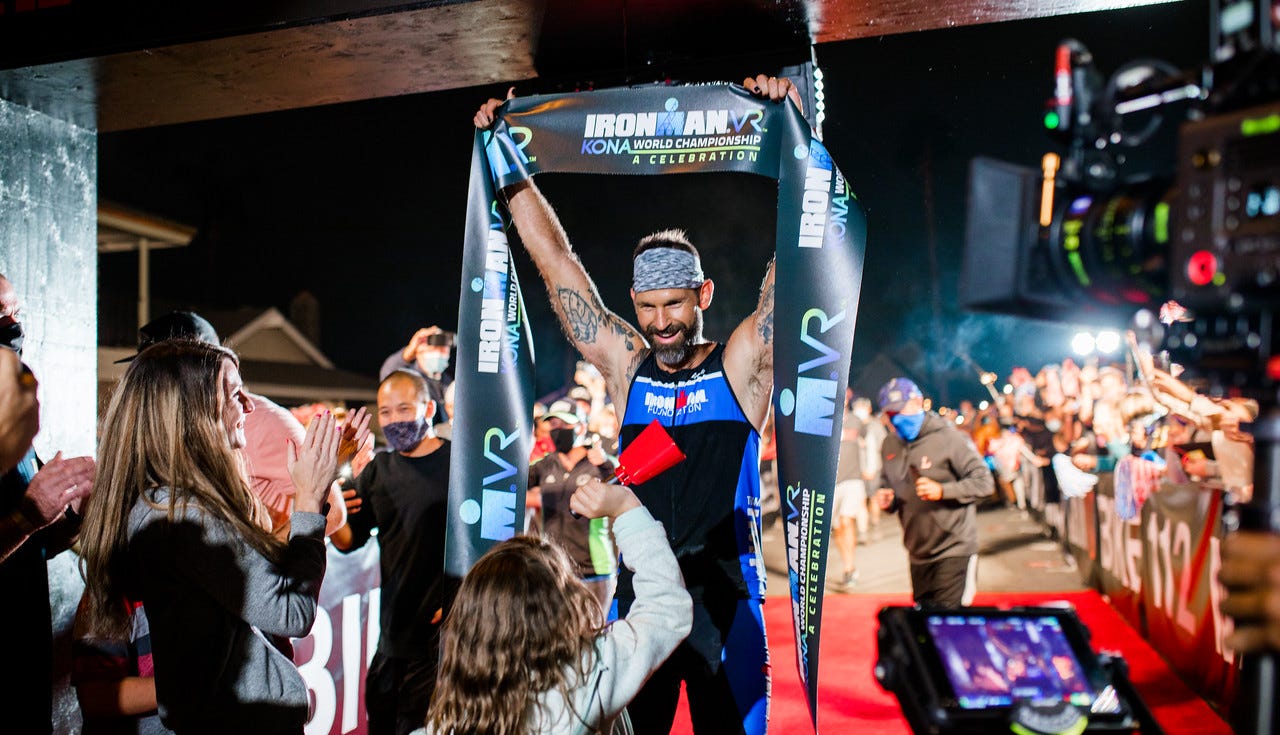
After hearing the three terrible words, You. Have. Cancer. followed by three more terrifying words, It. Is. Terminal. I went to the happiest place on earth — Dunkin Donuts. I bought some saturated fat in the form of a maple long john and prayed in the parking lot. I found comfort in an old Christian scripture that says, “When I am weak, then I am strong.” And then I got a crazy idea — What if I attempted an Ironman triathlon? What if I tried to complete a 140 mile triathlon while recovering from brain surgery and undergoing radiation and chemo therapy? Then, I passed the crazy idea past my wife Natalie, and with her support I signed up for an Ironman triathlon. To make my decision more binding, I told my young daughter Hero what I intended to do; I told her I was dedicating my race to her; a grand gesture of love and a way to show her that anything is possible if you hold onto hope and press on to the dreams God has placed in your heart. I wanted to be a living example of resilience for Hero.
After the dust settled, what coping mechanisms did you use? What did you do to cope physically, mentally, emotionally, and spiritually?
During the 18 months of surgery, radiation, chemo and training for Ironman there were three key practices I employed that helped me cope.
1) Daily exercise
2) Daily prayer, mediation, visualization, and gratitude
3) Daily dose of laughter.
Obviously, training for a 140 mile race kept me out and moving every day. Even when I was dealing with headaches, nausea, and fatigue, I would start my day with prayer — asking for strength. Then I would put my feet on the ground, get up and press on. Soon the difficult side effects of treatment were replaced with feel-good endorphins from exercise. As I would be swimming, cycling, and running I would also be practicing gratitude and meditation. Every day I would give thanks for the ability to move — something that was not guaranteed after my brain surgery. Although I was not grateful for my illness, I was grateful for so much surrounding my illness. I found that expressing my gratitude became a gateway to joy and joy became strength. After I would complete my training each day, I would cool down, stretch, and watch standup comedy to remind myself that laughter is good medicine.
Is there a particular person you are grateful towards who helped you learn to cope and heal? Can you share a story about that?
The list is long. I am fortunate to be a part of a very loving and nurturing community who has come together to help carry my burdens. In particular, my triathlon coach Margaret comes to mind. She has competed in Ironman at the world championship level and is also a breast cancer survivor. A friend of mine introduced us and she offered to coach me. As a rookie triathlete I jumped at her offer. Not only did she teach me the sport, she also took the time to design a training schedule specifically for my health considerations. Without her I would have never made it to the finish line.
In my own cancer struggle, I sometimes used the idea of embodiment to help me cope. Let’s take a minute to look at cancer from an embodiment perspective. If your cancer had a message for you, what do you think it would want or say?
Wow, that’s really cool. I’ve never participated in an exercise like this before. Hmm, let me think.
I think my brain cancer would want to say to me, “Every day is a gift, sustained by grace. Every body will come to an end at some point by some cause. Although that person sitting next to you may not have a diagnosis and prognosis, the two of you are not much different. This is life. It is fragile and finite. Embrace this weakness, let the vulnerability pull you closer to others, and enjoy life to the fullest.”
What did you learn about yourself from this very difficult experience? How has cancer shaped your worldview? What has it taught you that you might never have considered before? Can you please explain with a story or example?
I am weaker than I’d like to admit, but once I do, I become stronger than I ever imagined. In the beginning of this whole ordeal, while I was sitting in a waiting room trying to figure out what was happening to my body, I received a text message. It was from a woman that Natalie and admired and trusted. She wrote, “God put you on my heart. Is there anything I can be praying for you for?” It was a sweet text, but I definitely didn’t want to respond honest and openly. I sat in the waiting room and struggled to formulate a response. Finally, I just decided to tell it like it was. I wrote a novel of a text reply and told her everything. Her response was kind and unintrusive. It was a watershed moment for me. I realized right then and there that I needed to let people in and I needed to let people help me. The road I was walking was too difficult to walk alone. But if I would let others in and let them help me, I would be able to go much further than I could ever endure on my own. From that moment on I realized that not admitting weakness is in itself a weakness; embracing vulnerability takes strength and creates strength.
How have you used your experience to bring goodness to the world?
Most importantly, I have used my cancer journey combined with my Ironman journey to help my daughter Hero see an example of resilience and witness strength being born from weakness. I asked a friend of mine to capture some of this on film, which is has now become an international award winning documentary that can be viewed on Amazon Prime (release Nov 23) called Dear Hero. I continue to accept speaking engagements where the emotions of hope and inspiration seem palpable amongst those in the room. These experiences prompted me to write a book titled I Am Weak I Am Strong: Building a resilient faith for a resilient life (November 14, Zondervan) in order to help those who are looking for hope as well as those who have big dreams and need to access the endurance necessary to accomplish the calling they have on their life.
What are a few of the biggest misconceptions and myths out there about fighting cancer that you would like to dispel?
There is a myth out there that it’s better to say nothing at all than to say something stupid. Sure, you don’t know what to say to your friend with cancer, but a simple, “I care about you and I’m here for you,” is better than avoiding them. Years back my friend’s wife got cancer and I felt terrible for him… so I avoided him! Ouch. I had no idea what to say to him so I said nothing. Since then I have apologized and he was gracious. Others have done the same to me. I don’t hold it against them, and when a few have apologized they find nothing but grace from me. And those who have said unhelpful things to me, I do not get offended — I simply reframe their words to mean, “I care about you and I’m here for you.”