This is more an observation than a story, but I think what’s been most interesting for me is to realize how much senior leaders experience the same self-doubt, the same concerns about what others think of us, the same fear about making decisions, the same anxiety about interviews and presentations etc. as the rest of us.
5 Ways That Businesses Can Help Promote The Mental Wellness Of Their Employees
INTERVIEW QUESTIONS.
(If you are unable to download it, please click File-Download)
Please answer the questions, and leave the questions formatted as they are in the document. We may schedule a follow-up call or skype to round things out.
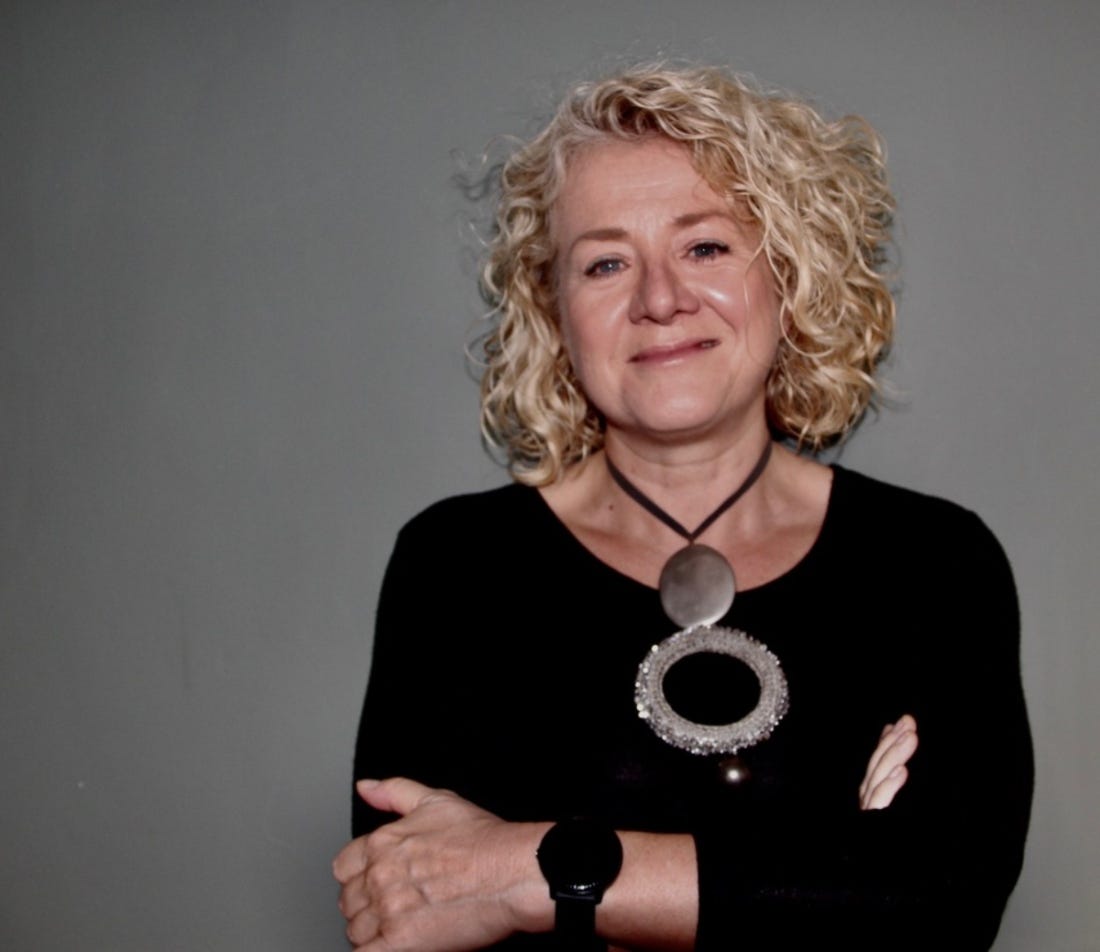
As a part of my series about the “5 Ways That Businesses Can Help Promote The Mental Wellness Of Their Employees” I had the pleasure of interviewing Janie van Hool.
Janie is an author, speaker, facilitator, and teacher in the art of brilliant communication supporting business leaders to connect with and inspire their people.
Her book - The Listening Shift - draws on the learning and experiences she gained as a RADA-trained classical actress, a voice teacher (she has an MA in Voice Studies), from her research into Performance Psychology at Edinburgh University and from her years volunteering as a listener for Samaritans in the UK (Samaritans is a charity whose mission is to reduce the incidence of suicides by providing distressed callers with a confidential space to talk and be listened to.)
Thank you so much for doing this with us! Before we dive into our discussion, our readers would love to “get to know you” a bit better. Can you share with us the backstory about what brought you to your specific career path?
My dream was to become a classical actor working on stage in London but when I started my training, I discovered that there was so much more to the process of performance than I realized. I began to love the rehearsal process – the research, insight and understanding of character, the technical skills needed to perform at your best night after night, the importance of voice and body to an actor. After I had my first daughter, I recognized that touring the country with a baby wasn’t going to work for us as a family and it seemed a natural opportunity to use my skills differently to support other actors, so I took an MA in Voice to help me teach performers in training and in productions. A chance encounter and conversation whilst on holiday led me to a coaching engagement with the MD of a bank in London who became a client for many years, and this was the start of my business teaching exceptional communication skills to senior leaders in organizations around the world. This is the perfect role for me because an actor’s skills are critical to successful influencing in leadership, so I feel I have a lot to bring that makes a difference to organizational culture.
Can you share the most interesting story that happened to you since you started your career?
This is more an observation than a story, but I think what’s been most interesting for me is to realize how much senior leaders experience the same self-doubt, the same concerns about what others think of us, the same fear about making decisions, the same anxiety about interviews and presentations etc. as the rest of us. And yet, in public, people will mostly see a confident, authoritative figure and assume that they are fine – that they don’t experience any of that. It’s such a privilege to have had these concerns shared with me and that insight has raised my own confidence. I know that there is often a gap between what people seem to be… and what they are really experiencing. It means I can be more myself, more authentic. And I hope that sharing this knowledge helps others to feel the same way.
What advice would you suggest to your colleagues in your industry to thrive and avoid burnout?
I ask people to avoid the addictiveness of being busy. We wear ‘busyness’ like a badge of honor – somehow, it’s become a sign of success, when I see it as the reverse. It suggests we say ‘yes’ to too much, whilst probably saying ‘no’ to our own families and not taking enough time to recharge our batteries, reflect and rebuild. I think if we all projected a less frenetic, ‘always-on’ quality, it would lift everyone and give us all permission to live in a more balanced way. Maybe turn our phones off for a while each day!
What advice would you give to other leaders about how to create a fantastic work culture?
Number 1 – learn to listen well. People just don’t pay enough attention to this essential skill… we spend a couple of hours on a course and come away thinking listening is about matching body language and nodding when people speak, but listening is the fundamental root of a fantastic work culture. It is how we learn what our people think and feel, what our customers want and expect. It’s the foundation of engaging and supporting people experiencing mental health crises, and it sets a culture on the path to inclusivity. Real listening stops us judging others or becoming defensive and it makes sure we are paying attention to how people are really feeling. It’s something we absolutely must start taking more seriously. At least as seriously as we take the art of speaking!!
Can you please give us your favorite "Life Lesson Quote"? Do you have a story about how that was relevant in your life?
My favorite quote – or the one I tend to rely on above all others – is a translation of something written by Aristotle. “You are what you continually do… excellence then is not an act, but a habit.” It’s relevant to every area of my life because I believe in ritual – not obsessively – but I think if you want to get better at anything e.g., fitness, diet, sleep, public speaking, social skills, listening – whatever it is – you need to commit to doing it regularly. No exceptions. For example, if you want to be able to manage nerves when speaking in public, you need to practice the art of state management in a way that works for you. You need to experiment with what techniques work for your mind and body and practice them so frequently that they become second nature when you are in a performance-pressured situation.
Ok thank you for all that. Now let’s move to the main focus of our interview. As you know, the collective mental health of our country is facing extreme pressure. In recent years many companies have begun offering mental health programs for their employees. For the sake of inspiring others, we would love to hear about five steps or initiatives that companies have taken to help improve or optimize their employees mental wellness. Can you please share a story or example for each?
There are so many steps that could make a difference – I have noticed these five being particularly pertinent and having a positive impact on employees. Underlying all of them for me is leadership that is committed to helping its people. If a leader asks themselves ‘what would be helpful for this person, or people’, then they are considering their colleagues and, consequently, their mental wellness. If we all did more of this for each other, it would have a fantastic impact. https://youtu.be/MnkGibDkIkg
Challenging how we use time during our interactions
Everyone’s schedule is back-to-back, and everyone is madly busy – especially during the pandemic lockdown, I notice people are going straight from meeting to meeting at the click of a button. In essence we have simply migrated our way of running meetings face-to-face and just shifted it online. This puts us in a permanent state of stress –online exchanges are exhausting, draining us mentally and emotionally. I have a wonderful client who ensures his people are only in meetings for the first 2 days of the week – and makes it clear that his teams are not available for meetings outside of those days at all. Of course, things still get done – his people have more time available because they’re not in meetings constantly! They also feel valued and supported by their leader, which benefits their sense of wellbeing.
Compassionate email culture
Most people have an avalanche of emails in their inbox and spend a huge amount of their precious – and often highly-qualified time – managing this. I have clients who will spend their Sunday afternoons clearing their inbox, which is not a way to enhance wellbeing. Companies are starting to implement policies that put rules around emails – e.g., I have a couple of clients that offer ‘email-free’ days and others ring-fence time spent on emails to an hour in the morning and another later in the day. I would like to see us all think more carefully about what we are sending to colleagues – does someone really need copying in; could the message be better as a call or face-to-face conversation or simply stop and think about whether sending this email is helpful to the other person or people or is it simply passing on a problem?
Learn to listen well
This is a big priority for me – and the main reason behind writing my book ‘The Listening Shift’. Everyone is so busy, and many people are stressed, neither of which is conducive to creating a listening environment. I have a couple of clients who run listening sessions weekly, without fail. Issues may be raised that are properly heard and acknowledged without defensiveness, which is powerful. People are feeling valued as a result and that their ideas and suggestions are appreciated. Listening doesn’t have to mean agreeing, but it’s the recognition and acknowledgement of input that is having such a good impact on the culture of the team. In some bigger organisations, I see that the board, or Chair, will undertake a listening tour of the business to find out more from people working ‘on the ground’. It’s easy for senior leaders to think they know what’s going on in their business, but these in-person listening conversations give far more data and insight. It’s a big commitment from senior stakeholders but reaps massive rewards and goodwill from people across the business. I’m putting energy into creating more of these experiences across organizations everywhere!
Focus on connecting conversations – not difficult ones
Learning and development priorities in organizations often focus on how people face into difficult conversations and offer training accordingly. These difficult conversations mostly arise from a lack of understanding between the parties because listening, empathy and rapport building have been missed as an opportunity. Recently, I’ve been running workshops on how to connect in conversation focusing on how to listen, the anatomy of a question and how to use it to ask great questions that build relationships quickly and meaningfully. People have been inspired by the impact a connecting conversation can have – it’s profound. Businesses that are engaging with this work are finding that if conflict conversations do arise, they are productive because of the foundation of connection and trust built by these sessions. Connection is essential to wellbeing, too, so it’s good investment of time and budget spend.
Celebrate leaders who collaborate… and not ‘hero’ leaders
I notice that many of the leaders I work with feel obliged to be the ones with all the answers, all the ideas but this feels very dated. Hero leaders aren’t great for our wellbeing – their style of leadership takes individual agency away and can leave people feeling helpless, demotivated, and disconnected. I have a client who has a strategy day coming up with her leadership team. Her intention is to start the day with genuine inquiry about everyone’s wellbeing; then to create spaces in the room where key team challenges are written on the wall and to announce that she will leave them to share thoughts and ideas for a couple of hours before coming back to hear and discuss their solution proposals together. This includes wanting to understand how they worked together during the session to find out how she can serve them in future conversations by taking the approach that works for them. This facilitative approach, along with her intention to connect with her people, is a great example of how a leader can work with, and for, their people. More collaborative engagement like this would create positive change in workplace wellbeing.
These ideas are wonderful, but sadly they are not yet commonplace. What strategies would you suggest to raise awareness about the importance of supporting the mental wellness of employees?
I think the pandemic has helped raise awareness of the mental health crisis and research is showing that people are more compassionate… probably because it’s been an emotional time and many people have been profoundly affected by circumstances beyond their control. I hear very reactive responses to employees speaking up about their mental health and I suspect organizations are feeling concerned about mismanaging mental health issues and their responsibilities. I think the shift from problem to opportunity is an important one – the language matters. Mental wellness as opposed to mental health is an important shift… the conversations will feel less threatening, so leaders will be able to listen. The real key to enhancing mental wellness, though, is to make sure it doesn’t end up as a commitment on paper. Each interaction matters – we all need to take care of ourselves and our own mental health, but we also need to remember to take care of each other.
From your experience or research, what are different steps that each of us as individuals, as a community and as a society, can take to effectively offer support to those around us who are feeling stressed, depressed, anxious and having other mental health issues? Can you explain?
This is a great question because it reminds us that we can all play our part rather than relying on the system, organization, or Government to solve it for us. The answer is… stop telling people what to do. Stop giving advice to someone who is trying to express an emotional or mental health concern. Let them talk, give them the space to explore what’s going on for them and encourage them to share as much as they feel comfortable to share. When we hear people express that they are depressed or anxious, for example, it’s natural to want to help them by saying ‘Oh! You should talk to the Doctor!’, ‘Why don’t you take up yoga?’ or, worse, ‘You shouldn’t be talking like that! You’ve got so much to be thankful for!’. We feel uncomfortable in conversations where people we know and care about are feeling distressed but if we can learn to give those people the space to talk, to know that they have been heard and not judged or treated as a problem to solve, then we are offering effective support that makes a real difference.
Habits can play a huge role in mental wellness. What are the best strategies you would suggest to develop good healthy habits for optimal mental wellness that can replace any poor habits?
I agree – getting into good habits is essential. These are my five favorites – or the ones I seem most likely to be able to hang onto no matter how difficult the situation is:
Go to bed in the day you got up in. In other words, … no staying up beyond midnight! I can let hours slip by and then my sleep is affected, I wake up late and then I feel miserable. So, this one is key for me to make sure I get a good quality 7 hours and good sleep is essential for mental wellbeing.
Treat yourself. I need a treat each day – no matter how small – because that lifts my spirits. But it must be a good quality treat – if it’s something to do with sugar or alcohol that I’ll feel bad about later, or the next day, then I try to avoid it. A treat isn’t something you know you’ll regret later!
Read – reading is a great distraction and I love reading about other people’s lives – fiction or non-fiction. I think reading allows us to develop empathy and perspective, which can be so valuable in trying to manage our mental wellness. Try to replace hours of social media scrolling with a good book.
Be grateful. It’s easy to feel frustrated or hard-done by – especially if your mental health is suffering. I try to practice gratitude constantly. I make myself acknowledge the smallest thing – 5 quiet minutes, a nice coffee, no traffic on the road etc. to feel that the day is going well. And the big things, too – family, friends, good health. It can be easy to overlook the big things that we take for granted.
Get worries out of your head and onto a page. I’m a catastrophiser – I think very far ahead and panic about what might happen. This is unhelpful, so as a positive habit, I acknowledge that I’m feeling worried and write down exactly what’s going on in the moment. It’s also important to stick to facts to try and keep calm. Writing it down is helpful because when I look at what’s on the page, it doesn’t look so bad.
Do you use any meditation, breathing or mind-calming practices that promote your mental wellbeing? We’d love to hear about all of them. How have they impacted your own life?
I discovered hot yoga about 15 years ago and found it completely transformative. It’s an uncomfortable practice – you’re literally dripping with sweat holding difficult poses in extreme heat. I found I had to be absolutely focused on what I was doing and to calm the voice in my head that kept telling me to leave the room! Afterwards, I would feel incredibly energized and calm. For me, this is the perfect meditation – I’m doing something challenging that needs focused attention combined with effective breathing to manage my thoughts, emotions, and body. I enjoy exercise, but I do see that some gym-based sessions can be performed mindlessly and don’t have the completeness of mind, body, and spirit that yoga offers. It’s a personal choice, of course, but I can’t recommend it highly enough. I feel much more in charge of myself since taking it up.
I also practice a breathing technique (again, yoga-based) called 4,7,8. It’s a simple, quick, transformative exercise I use whenever I feel nervous, under pressure or if I wake up in the night. You breathe in through your nose for a count of 4, hold your breath for a count of 7 and then breathe out through your mouth for a count of 8. Repeat 4 times – although sometimes I do 8 if I’m enjoying it! I can rely on this to sort me out every time.
The last practice I use is self-encouragement – I have a mantra that I repeat when I’m feeling worried or nervous, which is to say, ‘I trust myself’. That phrase may not work for everyone, but it’s important to coach yourself through challenging times – whether they are moments, hours, days, or weeks. Only you can know what you would benefit from hearing and the repetition of it is very soothing. It can also help to make it rhythmic or attach it to a musical phrase. At the very least, doing this enables you to replace harsh, negative, or critical thoughts with positive and encouraging ones.
Is there a particular book that made a significant impact on you? Can you share a story?
I am an avid reader with very eclectic taste –I see reading as a route to understanding people and becoming more empathetic. Other people’s lives and experiences fascinate me, so my book choice might seem an odd one, but the book that made the biggest impact on me in recent times was ‘The Narrow Road to the Deep North’ by Richard Flanagan. It won the Man Booker Prize in 2014. At its heart, it’s a love story – but wrapped around that is the devastating journey of men captured in the second world war and forced to work on the Burma railway. The themes are powerful – leadership, community, loyalty, resilience. It also made me grateful for the sacrifices made by those people that fought in the second world war – and in any other war. One of those ‘perspective prompting’ moments for me.
You are a person of great influence. If you could start a movement that would bring the most amount of good to the most amount of people, what would that be? You never know what your idea can trigger. :-)
I would start a listening movement – have children taught how to do it in early years education, at secondary school, university and in organizations as adults to encourage people to communicate differently. If we can listen to each other’s perspectives, we will leap forward in mental wellness, inclusion, and equality, among so many other things. We must start with a different intention – to listen, understand, acknowledge. Then we will have our turn to be heard.
What is the best way our readers can further follow your work online?
I’m on LinkedIn - linkedin.com/in/janie-van-hool-523621 and my website is www.voicepresence.co.uk
Thank you for the time you spent sharing these fantastic insights. We wish you only continued success in your great work!
Thank you!