The four-day week isn’t the point, though — the point is to build a great company. For some businesses that might mean a new schedule. For others it might be a better PTO policy, more open communication or simply meeting with each person on the team to understand what they need.
When it comes to designing the future of work, one size fits none. Discovering success isn’t about a hybrid model or offering remote work options. Individuals and organizations are looking for more freedom. The freedom to choose the work model that makes the most sense. The freedom to choose their own values. And the freedom to pursue what matters most. We reached out to successful leaders and thought leaders across all industries to glean their insights and predictions about how to create a future that works. As a part of our interview series called “How Employers and Employees are Reworking Work Together,” we had the pleasure of interviewing Jake Kurtz.
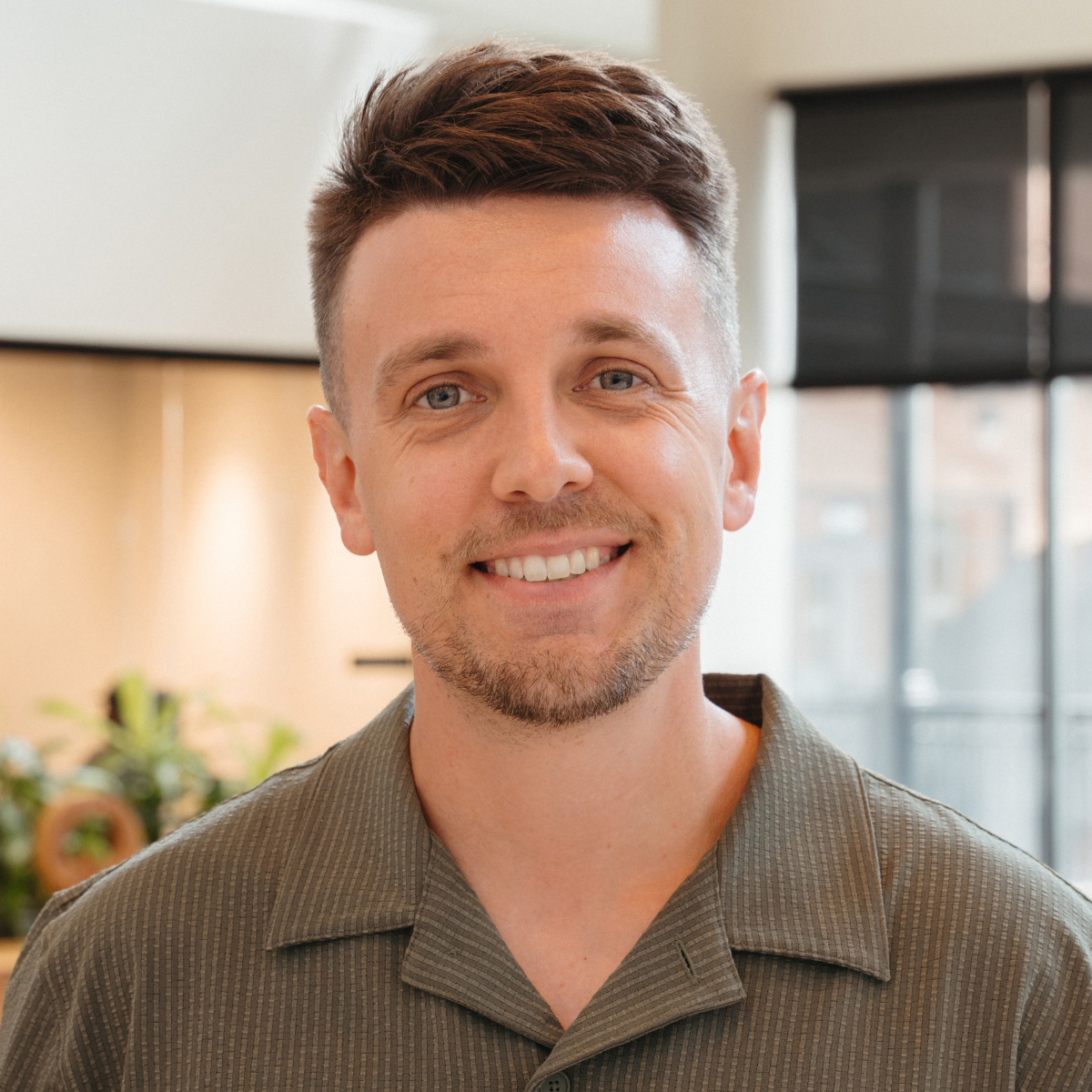
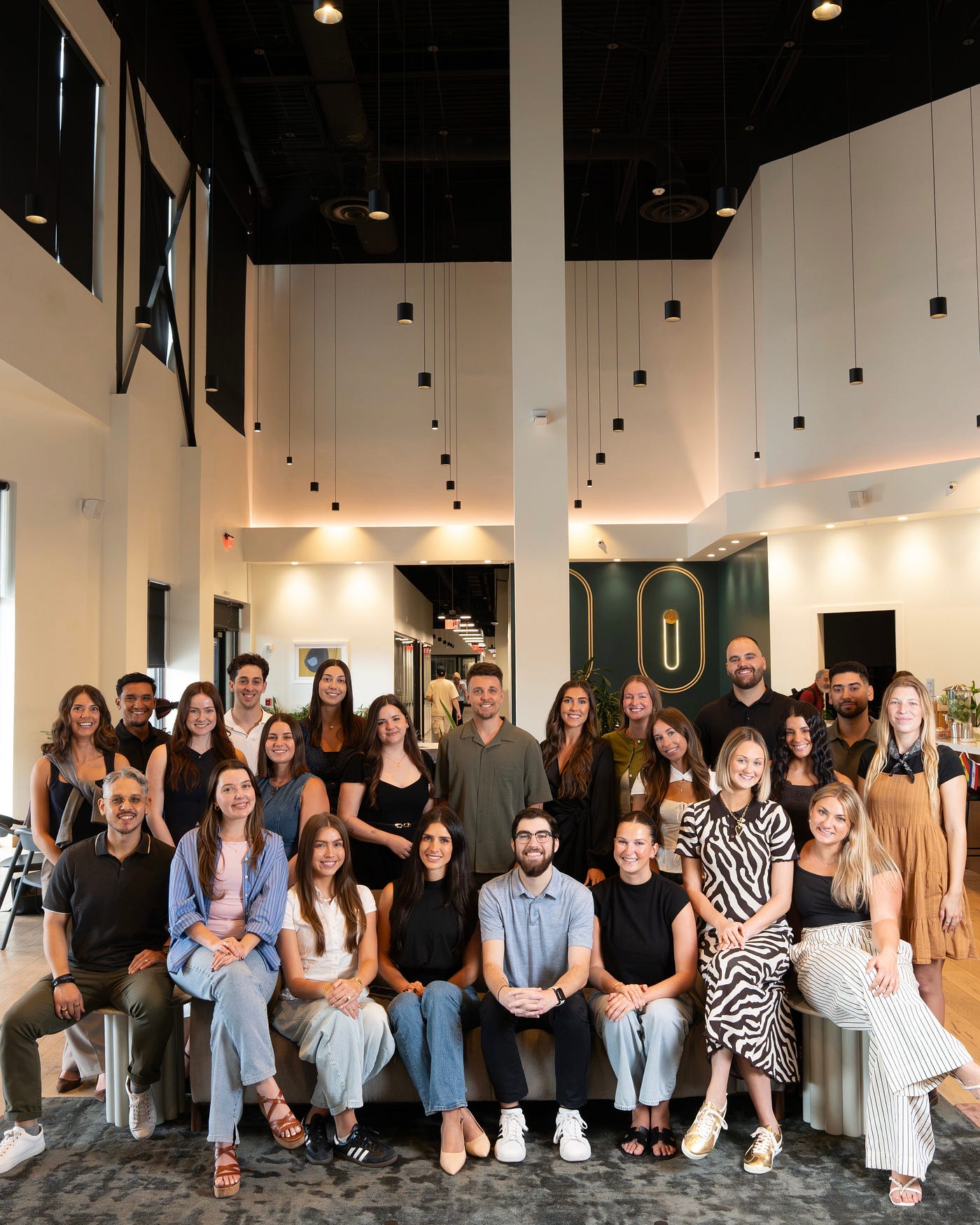
Jake Kurtz is the founder and CEO of Brick Media, a Tampa-based social media agency built for established brands. Brick provides social media management, paid social (Meta, TikTok, LinkedIn), and content production for clients in law, healthcare and aesthetics, hospitality, professional services, B2B, and multi-location consumer brands. Clients include The Florida Aquarium, The Hiatus Hotel, Cappy Law, Tampeno Fish and Meat Market, and the Ryan Nece Foundation. Since January 2023, Brick has run on a four-day workweek: four 9-hour days, Monday through Thursday, with full salaries. In that time, revenue has grown 287% compared with 2022, and the client roster went from 56 in all of 2022 to 85 in the first half of 2026. The team has grown to more than 20 people. This campaign builds Jake’s personal brand as a founder who scaled a company with an unconventional model. His message is bigger than the four-day week: “The four-day workweek isn’t really the point. The point is to build a great company.” He believes growth and a fulfilling life outside work don’t have to compete, and that every company should ask what helps its own team thrive.
Thank you so much for joining us in this interview series! Our readers would like to get to know you a bit better. Can you please tell us about one or two life experiences that most shaped who you are today.
Moving from Pittsburgh to Tampa Bay in my early 20s was a huge one. Pittsburgh will always be home to some extent, but moving over 1,000 miles away from everything I ever knew pushed me to grow up faster and work on myself more. I had to put myself out there, meet people, and figure things out as I went. Tampa is where I’ve built my business and my community, and it’s hard to imagine what my life would look like if I hadn’t made that move. It gave me confidence that I could take a chance without knowing exactly how everything would turn out.
Another was quitting my 9-to-5 in 2018 to go all in on Brick Media. Walking away from a steady paycheck made things feel very real, especially because most of my family always envisioned me taking the safer route. I had to learn how to handle uncertainty, make big decisions, and eventually become someone other people could depend on for their livelihoods. Building Brick has taught me a lot about myself, including where I need to grow. Even to this day. It’s also shaped how I think about success. I want to build something I’m proud of and create opportunities for people, while still having time for my wife, my faith, and a life outside of work.
Let’s zoom out. What do you predict will be the same about work, the workforce and the workplace 10–15 years from now? What do you predict will be different?
People will still want to do work that matters, with people they trust, for leaders who treat them well. Clients will still want great results. Good leadership will still come down to communication and actually caring about your team.
What changes is how we define success. For a long time, the hustle mindset said building something real meant giving up everything else: longer hours, missed dinners, no time off. I think that’s already starting to break down. I’ve built Brick into a growing company while still making real time for my marriage, my health and the people I care about, and I don’t see those as competing. Over the next 10 to 15 years, I think more founders will reject the idea that a successful business requires a lack of personal life, and more companies will design their schedules on purpose instead of by habit.
What advice would you offer to employers who want to future-proof their organizations?
Question the way things have always been done, and then test it. When I asked my team “What if we didn’t work Fridays?” back in 2023, we didn’t flip a switch overnight. We ran a 90-day pilot from January through March, watched client results and listened to the team. It worked, so we made it permanent in April.
The four-day week isn’t the point, though — the point is to build a great company. For some businesses that might mean a new schedule. For others it might be a better PTO policy, more open communication or simply meeting with each person on the team to understand what they need. I’m always experimenting with something. The companies that last will be the ones willing to keep asking better questions.
What do you predict will be the biggest gaps between what employers are willing to offer and what employees expect as we move forward? And what strategies would you offer about how to reconcile those gaps?
Well, honestly, I think the biggest gap will be around how much a job will take up and have in someone’s life. Employers want people who are committed, responsive, and willing to step up. Employees want flexibility and the ability to actually disconnect when the workday ends. Those expectations can work together, but companies have to be intentional about it.
There’s also a gap in how each side defines flexibility. An employer might think, “We let you work from home twice a week.” An employee might think, “That’s great, but I’m still answering messages every single night.” Policies don’t matter if the everyday expectations don’t match it.
My advice to employers would be to ask your team what would actually improve their experience, then get specific about what the business needs to still grow and succeed. What hours require coverage? What does great performance look like? What qualifies as something that needs a response after work? Leaving those things unspoken creates frustration on both sides.
At Brick, we’ve had a four-day workweek for about four years. That comes with clear expectations about getting the work done and taking care of clients. Other businesses could start with less drastic things like clearer boundaries around after-hours communication, remote work policies, PTO policies, or perks that may be meaningful to people.
Employees have a responsibility here, too. More flexibility requires accountability, ownership and follow-through. I think the companies that handle this well will be clear about what they need from their team members, starting at the hiring and training phase.
A few years ago, we simultaneously joined a global experiment together during COVID called “Working From Home.” How will this experience influence the future of work?
It proved that work doesn’t have to look one specific way to get done. Once people saw that, it got a lot easier to ask “What else could we rethink?” I don’t think we would have been as open to testing a four-day week without that moment.
It also showed us what we lose when we’re never together. Our team is mostly remote, with one required office day each week. That day matters. The lesson I took from remote work is to be intentional, keep what helps the team do great work and let go of what’s just habit.
What societal changes do you foresee as necessary to support a future of work that works for everyone?
We need to change how we define a good worker. For a long time, being busy was the badge of honor. I’d love to see us value being effective over being busy. I’d also like to see more business owners share what’s working and what isn’t, honestly. Some companies have tried a four-day week and walked it back, and that’s useful information too. I don’t want another business owner to look at us and think the takeaway is that they need to stop working Fridays. Maybe there’s a better way for their team and you won’t know until you test it and find out.
What is your greatest source of optimism about the future of work?
More leaders are willing to ask the question. When we started our pilot, it felt unusual. Now I hear from business owners all the time who want to know how we made it work.
Our own team gives me a lot of optimism too. After the pilot, 100% of our team wanted to keep going, and we’ve been flooded with applications ever since. People want to do great work and still have a life outside of it. I don’t think you have to pick one or the other.
What innovative strategies do you see employers offering to help improve and optimize their employee’s mental health and wellbeing?
The simplest one is giving people time back. A three-day weekend every week changes how people show up on Monday. Beyond time off, it’s the small things. We cut our meetings from 90 minutes to 30. We offer unlimited PTO and encourage people to actually use it. Leaders also have to model it. I took my first real two-week vacation without checking email, and this October I’m stepping away from the business for the entire month. If the boss never unplugs, the team won’t either.
For a while it seemed like there was a new headline every day. ‘The Great Resignation’. ‘The Great Reconfiguration’. And now the ‘Great Reevaluation’. What are the most important messages leaders need to hear from these headlines? How do company cultures need to evolve?
The message underneath all of those headlines is that people are done accepting that a good career has to cost them everything else. For a long time, the hustle mindset told us the only way to build something was to be always on. I don’t believe that, and I don’t think most people do anymore.
At Brick, we made an intentional decision to build a company where great work and a full life outside of it can exist together. The question we keep asking is “What does our team need to do their best work here?” The answer might not look the same for every company, and that’s OK. Cultures need to evolve from one-size-fits-all policies to honest conversations about what really moves the needle for their own people.
Let’s get more specific. What are your “Top 5 Trends To Track In the Future of Work?” (Please share a story or example for each.)
1. Output over hours. When we moved to a four-day week, we had to get serious about where our time was going. Our meetings used to run 90 minutes. Now they rarely go past 30. Less time didn’t mean lower quality work. It meant smarter work.
2. Intentional scheduling. Time blocking is becoming a real skill. Every week I brain dump everything onto paper, divide the list across the week and then move it into my calendar as time blocks. I try to be strict but stay flexible, and our team has started doing the same.
3. Small experiments over big overhauls. Our four-day week started as a 90-day test. Testing first let us learn without betting the whole company on a guess. I think more leaders will pilot changes before committing to them.
4. Leaders building teams that don’t need them every day. For years I was the operator in every decision. Taking a full month off this October is the ultimate test of the systems we’ve built. The best leaders will be the ones whose companies can run well without them in the room.
5. Rested teams that think ahead. When people have energy, they’re proactive. Recently our team helped connect a few of our clients, and they ended up throwing a block party and launching an apparel collaboration together. Nobody asked us to do that. It happened because the team was thinking “How can we be more helpful?” Companies that care for their people will see more of those moments.
With AI and automation reshaping industries, what role do reskilling and upskilling play in preparing employees for the future? What can companies do to help their workers transition into new roles created by AI?
I don’t think the answer is to fear it — I think it’s to stay curious. Companies should treat learning as part of the job, not something people have to figure out on their own time. Give the team space to try new tools, share what they find and get better together. The people who keep learning will be the ones who grow into whatever roles come next.
As AI takes on more administrative or operational tasks, what will the role of managers look like in the future? How can leadership evolve to focus more on innovation, emotional intelligence, and strategic vision?
Managers will spend less time managing tasks and more time leading people. That means knowing your team. I meet with every person on our team. It’s not on a rigid schedule, but it’s organized and it’s a priority. Those conversations are where I learn what’s working, what’s frustrating people and where we can improve. No tool replaces that.
With AI streamlining many processes, do you think employees will have more freedom and flexibility to achieve a better work-life balance? How can companies leverage AI to support employee well-being in new ways?
It’s possible, but it won’t happen on its own. Time saved only turns into balance if leaders decide it should. Otherwise, it just fills up with more work. That was our lesson with the four-day week. Life’s more than work, but that doesn’t mean less work or lower quality work has to be done. We can just be smarter about how we do it. Companies have to make a deliberate choice to give some of that time back to their people.
I keep quotes on my desk and on scraps of paper to stay inspired. What’s your favorite “Life Lesson Quote”? And how has this quote shaped your perspective?
One of my favorites comes from the Bible, and it is “The Lord is my shepherd, I lack nothing.” — Psalm 23:1.
As an entrepreneur, it’s easy to live in a constant state of wanting more. More growth, more clients, more services, more profit margin, more progress. I can hit a goal and almost immediately start thinking about the next one without really appreciating what just happened.
This verse reminds me to trust God’s guidance and ability to provide. I have to keep my faith first because I don’t have to have every answer or control every outcome. This verse also makes me pause and appreciate what’s already in my life.
This verse often sits on my desk, and it’s helped me realize I can be both ambitious and content at the same time. It took me a while to realize that because it doesn’t seem possible at first glance. I can work toward something bigger, while being grateful for where I am today. That’s something I’m still learning each and every day, but this verse helps take some of that constant pressure off.
We are very blessed that some of the biggest names in Business, VC funding, Sports, and Entertainment read this column. Is there a person in the world, or in the US, with whom you would love to have a private breakfast or lunch, and why? He, she, or they might just see this if we tag them.
For me, the natural answer here is Gary Vaynerchuk. I just love his perspective on life and his mindset really helped me in the early days of Brick Media. I’ve already gotten to meet him a few times, and I was lucky enough to ask him a question on his podcast. But a private breakfast or lunch would be great. Another one would be Tom Brady, because even though he broke my heart several times as a Steelers fan, it’s hard to deny his greatness. He is the true GOAT of sports. Now that he’s transitioned into the business and media world, I’d be curious to pick his brain on what he’s learned, both on and off the field. I also talked to Oprah’s podcast team about getting on an episode to talk about work trends, but I’m still waiting on that one to come to fruition!
Our readers often like to continue the conversation with our featured interviewees. How can they best connect with you and stay current on what you’re discovering?
I share what I’m learning about building a business and building a life on Instagram, TikTok and YouTube at @thejakekurtz, and on LinkedIn at Jake Kurtz. You can also find my Substack and everything else at https://thejakekurtz.com/. To learn more about Brick Media, visit brickmediagroup.com.
Thank you for sharing your insights and predictions. We appreciate the gift of your time and wish you continued success and good health.