The one thing I didn’t truly understand about entrepreneurship was that oftentimes when you make a mistake, the people who end up getting hurt aren’t you, but the people around you. And that is not easy to deal with.
Business
Jack Burlinson of StageGlass: The Accidental Real Estate Discovery That Drove A Tech Dropout To Build A Proptech Startup
StageGlass founder and CEO Jack Burlinson shares how dropping out of Stanford to fix real estate inefficiencies taught him invaluable lessons in team building, resilience, and listening to market feedback.
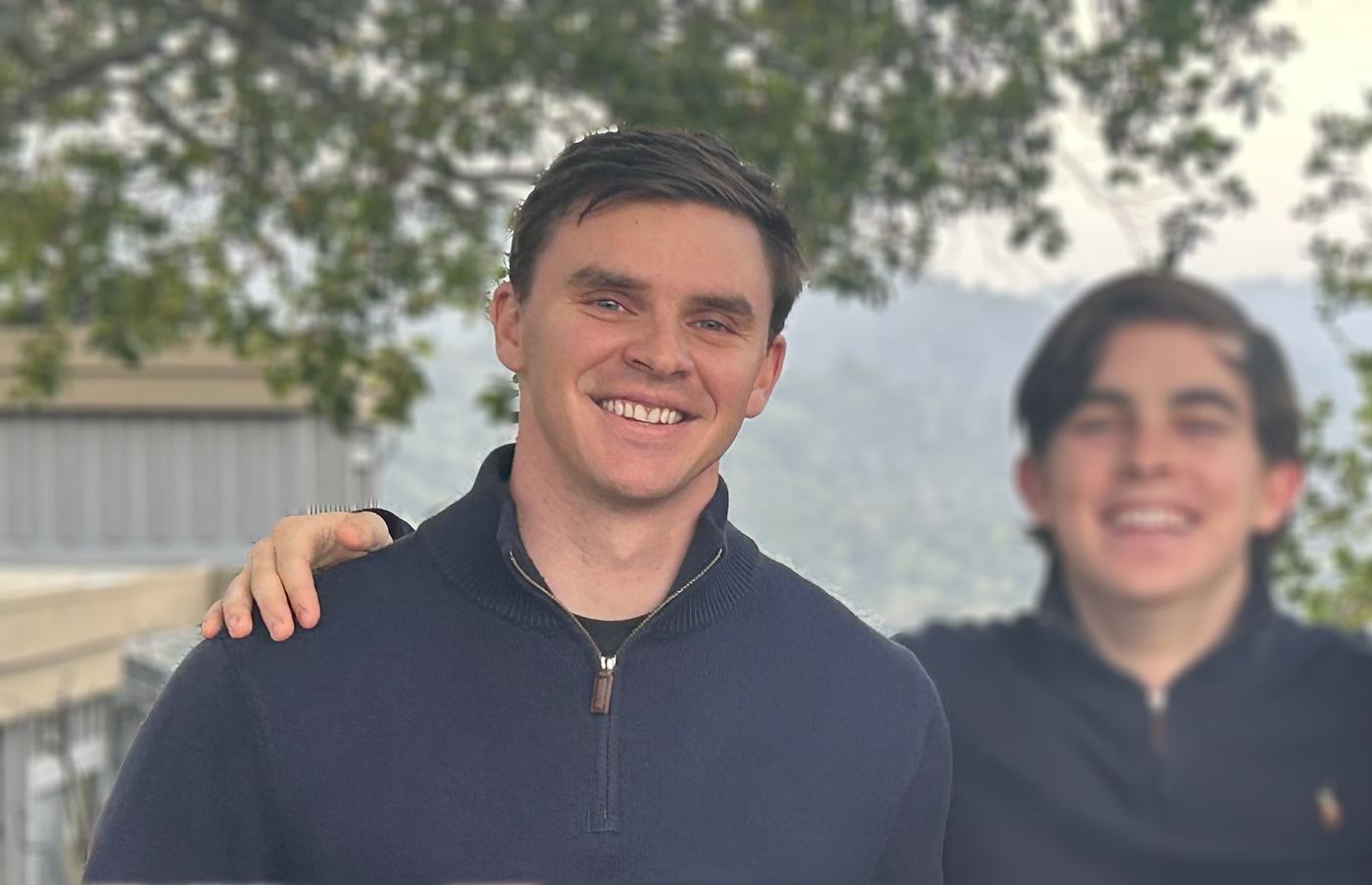
Taking the risk to start a company is a feat few are fully equipped for. Any business owner knows that the first few years in business are anything but glamorous. Building a successful business takes time, lessons learned, and most importantly, enormous growth as a business owner. What works and what doesn’t when one starts a new business? What are the valuable lessons learned from the “University of Adversity”? As part of this interview series, I had the pleasure of interviewing Jack Burlinson.
Jack Burlinson is the founder and CEO of StageGlass, a national proptech startup company offering a new all-in-one insights platform for builders to help prevent change orders and increase lead-to-sale conversions by transforming early-stage blueprints into interactive 3D sales experiences. Growing up in the backyard of Silicon Valley, Jack was destined for a career in technology. He enrolled at Stanford University as a computer science and economics major before realizing that major inefficiencies in the real estate marketplace needed a correction, which became his full-time focus. Jack founded StageGlass in 2021 and hasn’t looked back.
Thank you so much for joining us in this interview series! Can you tell us a story about what brought you to this specific career path?
Absolutely, thanks for having me. My career path was entirely accidental. I found inspiration when I wasn’t expecting it or really looking for it at all.
It started when my parents split. I was still studying computer science at Stanford at the time, but I was close enough to go home to spend time with each of them during this tough time.
I was watching my dad as he was looking for a new place. He was on the phone with my aunt, a real estate agent, when she said something interesting: “The best deals are the ones that look horrible on Zillow.”
To me — this was a bit confusing. I thought pricing residential real estate was a very simple formula, with location and square footage being the only real variables that matter. But it turned out I was wrong. Super wrong.
Why? Because emotions drive residential real estate. How you present a property has a huge impact on how a homebuyer feels. And that feeling is the difference between them saying “I might be able to get behind this” to “This is the One.”
I had a hunch that this phenomenon wasn’t just relegated to the Bay Area, and I was right. After running a regression over 15,000 homes across the country, and accounting for 20 different variables — I found that the combination of a virtual tour and staging (both real or digital) would lead to an 8–12 percent increase in final sale price. Or, in other words, over a $40,000 increase per property.
After figuring this out, I dropped out of Stanford immediately. This inefficiency was too large and too pronounced and I knew more than enough about related new technologies that could make a 10x better solution than anything that existed. And I never looked back.
Can you tell us a story about the hard times that you faced when you first started your journey?
When I dropped out, I had an immense amount of confidence. I had just burned the boats and went all in. I had to be confident. Unfortunately, there is often an inverse correlation between confidence and competence. As it turns out, I was *delusional*.
I knew far less about both real estate and technology than I thought I did. I tried doing everything on my own only to realize almost immediately how difficult I had just made my life.
So I turned to the experts. The challenge, though, was that because I wasn’t an expert — I also couldn’t tell who really knew their stuff either. Since their competence wasn’t obvious to me, I over-indexed their level of conviction.
An unexpected consequence of hiring people who aren’t a great fit is that they bring on more people who don’t fit. Before I could blink, I had constructed a team that was too large and moved too slowly for a start-up just getting its bearings.
Unfortunately, I had to let go of a significant amount of the team. It was demoralizing. And expensive. The one thing I didn’t truly understand about entrepreneurship was that oftentimes when you make a mistake, the people who end up getting hurt aren’t you, but the people around you. And that is not easy to deal with.
Our team now wouldn’t place such a strong emphasis on maintaining exceptionally high hiring standards had I not made the blunders that I did. High hiring standards are a blessing. But part of me wishes I never ended up incidentally hurting those I hired.
Where did you get the drive to continue even though things were so hard?
“Drive to get through things” implies that there’s a choice to quit. I never gave myself a second option. I unenrolled in school, so I couldn’t go back. And a bunch of people had placed faith in me. I was not going to let them down and I also wasn’t going to let myself down.
Friends, especially other founder friends, kept me grounded. They made it clear I wasn’t alone. And they’d share stories of mistakes they made so that I didn’t ever get too demoralized. But most importantly, they pushed me. The things I thought were impossible were things that they would nonchalantly believe were totally doable. And interestingly enough, this nonchalance made me believe that it was possible for me, too.
So, how are things going today? How did grit and resilience lead to your eventual success?
While we’re still early on at our company, I’m confident we’ve built the right team and have partnered with some key early customers with whom we can grow alongside.
What brought me into this space was the realizations I made surrounding how effective presentation can make a huge difference in a listing’s performance, but our focus now is actually quantifying that effect and using the interactivity and feedback of this new technology to the greatest effect.
Because we’re built on a video game platform, we have access to unprecedented interactivity and analytics about those interactions. But we still want to make sure the scene looks right, and there’s this constant tension between visual improvements and making it a useful platform for builders throughout their development process, from making sure their plans are as they expect to showcase the home in a way that resonates with their audience.
Resilience has come into play the most in pivoting from being primarily a visualization product to now focusing on data and insights. The true grit is consistently evident when taking feedback from the great partners we’ve had the privilege to work with, and learning from early customers and adopters to figure out what they need and how we can build it.
Grit and resilience are subjective terms that mean different things to different people. To me the people of StageGlass have an admirable balance of both, and we I find the old adage to be true — that if you do what you love, you’ll never work a day in your life.
Together, we’ve learned the importance of finding customers you genuinely want to help with a problem they genuinely need to solve. We’ve cultivated a strong team of people who not only love working with each other but also are driving concrete solutions for our customers. And we’ve had the pleasure of working with investors who found themselves inspired and now believe in the vision of our company.
Learning these lessons has taken time, but we are at a pivotal point with our offer and starting to gain real traction. It’s an exciting time for everyone at StageGlass.
Can you share a story about the funniest mistake you made when you were first starting? Can you tell us what lesson you learned from that?
I’ve made a lot of less than funny mistakes, but one of the funnier ones is when I tried to pitch StageGlass to someone who had built an extremely similar company about 10 years ago.
I get on the call that one of my investors had set up, and I’m expecting a general like, “What does StageGlass do, why is it important?” Instead, the investor immediately starts asking very specific, very pointed questions about our technology and development process — he knew every question to ask.
I’m answering these rapid-fire questions, just confused. So I say to him, “Wow, you really did your research.”
He responded by basically saying, “You have no idea who I am, do you.” He proceeds to tell me about a company he built that did a very similar thing as what StageGlass is building our product with, though focused on a slightly different market and sticking closer to a pure visualization. But the core technology was the same.
From that day forward, I’ve learned to always Google the person you’re about to get on a call with and ask for a little more context in the introduction!
What do you think makes your company stand out? Can you share a story?
What makes StageGlass stand out is that we’re not just one thing. I’m a big believer in innovation that comes from putting established industries together and seeing what happens. With StageGlass, we have amazing technologists using cutting-edge video game technology and automation processes — even since we started, going from Unreal 4 to Unreal 5 — as well as pixel streaming, with a deep customer centrism that stems from the experience of people in and around residential real estate.
Our solution in itself is also something that is really different: helping homebuilders bridge the gap in understanding the difference between the floorplans they’re building and the customers they’re building for, in a way that really has never been done before. We can do that both because of how quickly we can build the scenes and because of how in-depth the analytics are of the engine itself, and get it to homebuyers wherever they are with pixel streaming, and then learn from their behavior what is and isn’t selling or working for the homebuilders — at a resolution never really possible before.
Which tips would you recommend to your colleagues in your industry to help them to thrive and not “burn out”?
Make time to take care of yourself. I’ve done the opposite sometimes, and there is a stark difference in my clarity of thought between when I’ve gotten enough sleep, actually eaten something and had a chance to move and get sunlight — it’s astounding. You get so much out of the time you put in when you can really focus and go deep — it’s about focusing on maximizing output, rather than maximizing time spent.
More often than not, the longer I spend on something, the worse it ends up being.
None of us are able to achieve success without some help along the way. Is there a particular person who you are grateful towards who helped get you to where you are? Can you share a story?
It’s really hard to pick just one. We wouldn’t be here without these three: Sam Lurye, Raj Sandhu, and Clare Tandy.
Sam was the first founder who really believed in me. Sam dropped out of Stanford about a year before I did and frankly, I thought it was a terrible decision. Little did I know I’d be following in his footsteps a year later. Once I’d made that decision, it was his couch that I crashed on while coming up with the full business idea, and it was him who introduced me to all of our first investors.
Speaking of — Raj was the first person to bet on StageGlass. He took a bet on me before I had really fleshed out the ideas of StageGlass. And over the years, he’s provided me with guidance and encouragement. And when things finally click and we’ve built the infrastructure to dramatically improve the online sales process for new construction and beyond, he’ll get the bragging rights for being first.
Finally, Clare was my first hire that made it feel like we were a company — not just a collection of intelligent individuals — and started helping me see how we as a whole could be greater than the sum of our parts. I’d crossed paths with her in high school and briefly at Stanford, but we reconnected at a Christmas party of all things, and I talked her into leaving PayPal. She’s a brilliant leader and a phenomenal thought partner. With her on board, I became certain in our team to get where we need to go.
How have you used your success to bring goodness to the world?
While we work every day to build our success and StageGlass becomes more known to key players in the industry,, I have full faith that our company will bring some good to the world.
Buying a home is one of the most important purchases someone will make in their lifetime, and with new construction, it’s quite challenging to truly understand exactly what you’re buying before it’s been built.
It’s risky and scary and honestly something I personally wouldn’t do without a product like StageGlass. I’ve heard too many stories of people being “surprised” by what they’re buying — and it’s unfortunate, because now you have buyer’s remorse on the most expensive purchase of your life.
I want to make sure people are able to not just see properties as they’ll be constructed, but as they could be lived in. In the exact way that person would live in them. And with this, I think we’d improve the lives of both builders and home buyers alike.
What are your “5 things I wish someone told me when I first launched my business,” and why? Please share a story or example for each.
1 .Baking a cake works much better when you use eggs, milk, flour, and sugar, rather than garlic and onions.
The most important thing that you can do in order to hire the right people for your company is actually figure out the jobs that need to be done. To extend the metaphor — you can bring in the most amazing garlic or local farmer’s market greens, but if you try to make a cake with those ingredients, it will be rather unpleasant to eat.
You can hire a team of amazing people who are all totally wrong for the business you need to build. I found this especially being in a field that skews toward technical directors when really I needed a good engineering leader. Once we found the right person for the right job, we started moving much more quickly because the business needs — the recipe plus the ingredients and the right people — were a strong, complementary match instead of at odds.
2 . You cannot outsmart your customers’ feelings.
You can’t logic your way into making a customer feel some type of way about your product or marketing.
At the end of the day, it doesn’t matter how compelling of a story you tell your team or your investors — if your customers aren’t agreeing with what you tell them, you won’t sell anything and your company will die.
You can’t force desire, so it doesn’t matter how you feel about it if they don’t want it.
3. Complexity is a labyrinth. You can feel like you’re making progress,only to end up back where you started.
It’s easy at first glance to look at a challenge and start thinking about how complicated it will be to address.
I’ve found that this is almost never a good first step; instead, I ask, “What if this were simple? What if this were easy?”
By asking this, I can start to differentiate between the parts of the puzzle that do and don’t matter, and then prioritize my time and effort on the parts that actually do, instead of spending too much time sorting through complexity for its own sake.
4. Don’t make irreversible decisions when in a highly emotional state.
Every single bad decisionI regretted or thought better of later — I was in a highly emotional state.
Emotions are dangerous because they can help you tell really compelling, yet completely untrue stories about yourself and the world around you.
Recognizing you’re in an emotional state and deciding to wait to make a decision is a very good practice.
And even more than that, figuring out what things are actually problems vs. what things are problems because of my reaction to them is just as important. It’s important to recognize that how strongly you respond to something emotionally may actually have nothing to do with how important that thing is.
5. Take Advice in Context
Some of my biggest mistakes have come from following objectively good advice, but at the wrong time. I’ve worked with coaches who would have been amazing for me if I was two more years into it, and listened to advisors who I didn’t realize had their own biases that should have changed how I took their advice.
Early on, I spent a lot of time reading about how to run a great company, but didn’t realize some of the things only applied to something more mature than a 15-person startup. A lot of theories around process, organization, and things that I look forward to being more relevant, but instead slowed us down a little bit by trying to do a lot of things at once. Now, we’re focusing on making sure that the guidance we follow is really relevant and keeping in mind the tidbits that aren’t quite yet.
Can you share a few ideas or stories from your experience about how to successfully ride the emotional highs & lows of being a founder”?
The thing that I’ve found most useful is building a supportive leadership team around me. It is so much easier to sleep at night when you know the people around you have your back and will do not just as good, but a better job in a lot of cases as you would in handling tough situations.
You are a person of great influence. If you could start a movement that would bring the most amount of good to the most amount of people, what would that be? You never know what your idea can trigger. :-)
Improving people’s sleep quality. I literally handed my first executive a pair of blue light blocking glasses as their onboarding present.
Sleep and rest has such a huge impact on your quality of life. It makes it easy to think clearly, feel good, and maximize your potential, and it’s something I — and a lot of people — are absolutely guilty of trying to sacrifice in search of more time or more impact. The reality is, you’re only cheating yourself.
How can our readers further follow your work online?
Check us out at stageglass.com, and www.linkedin.com/company/stageglass. You can find me specifically at @jfbrly on Twitter.
This was very inspiring. Thank you so much for joining us!
About the Interviewer: Douglas E. Noll, JD, MA was born nearly blind, crippled with club feet, partially deaf, and left-handed. He overcame all of these obstacles to become a successful civil trial lawyer. In 2000, he abandoned his law practice to become a peacemaker. His calling is to serve humanity, and he executes his calling at many levels. He is an award-winning author, teacher, and trainer. He is a highly experienced mediator. Doug’s work carries him from international work to helping people resolve deep interpersonal and ideological conflicts. Doug teaches his innovative de-escalation skill that calms any angry person in 90 seconds or less. With Laurel Kaufer, Doug founded Prison of Peace in 2009. The Prison of Peace project trains life and long terms incarcerated people to be powerful peacemakers and mediators. He has been deeply moved by inmates who have learned and applied deep, empathic listening skills, leadership skills, and problem-solving skills to reduce violence in their prison communities. Their dedication to learning, improving, and serving their communities motivates him to expand the principles of Prison of Peace so that every human wanting to learn the skills of peace may do so. Doug’s awards include California Lawyer Magazine Lawyer of the Year, Best Lawyers in America Lawyer of the Year, Purpose Prize Fellow, International Academy of Mediators Syd Leezak Award of Excellence, National Academy of Distinguished Neutrals Neutral of the Year. His four books have won a number of awards and commendations. Doug’s podcast, Listen With Leaders, is now accepting guests. Click on this link to learn more and apply.

Published inAuthority MagazineTop Lessons, Top Authorities · 42K Followers
Exclusive, curated interviews with the leaders and changemakers shaping tomorrow. Leadership lessons, industry deep dives, and executive profiles.